Revolutionize Your Sales: How to Build an AI-Native B2B Portal
Building an AI-native B2B portal means integrating machine learning to analyze data, predict buyer behavior, and personalize user experiences. This approach moves beyond traditional data storage toward proactive, insight-driven partner engagement. An effective AI-native platform transforms how you support and empower your channel partners.
Key Takeaways
TL;DR
- An AI-native b2b portal uses machine learning to analyze user actions and predict future buying behavior. This gives partners a significant competitive advantage.
- The core function is its ability to use predictive analytics to score leads and identify high-value opportunities. This helps partners focus their efforts effectively.
- Successful implementation hinges on a solid data strategy. Your b2b portal must integrate with CRM, ERP, and other systems for a complete data picture.
- Personalization is a key outcome. AI enables the delivery of tailored content, marketing assets, and training to individual partners.
- A robust b2b portal must be built on a secure foundation to protect sensitive company and customer data.
- Choosing the right prm software is essential for a successful b2b digital transformation. It provides the necessary tools for this evolution.
- AI-powered portals enhance partner enablement by suggesting relevant training materials and sales plays based on real-time data.
Why is an AI-powered b2b portal crucial for modern sales?
Modern B2B sales landscapes are incredibly complex and competitive. Traditional sales methods are no longer sufficient to keep pace with informed buyers. An AI-powered b2b portal is the answer to this growing complexity.
These advanced platforms address the challenges of long sales cycles and fragmented buying journeys. They achieve this by centralizing data and applying intelligent analysis. This empowers your sales channels with actionable insights they need to succeed.
The journey toward b2b digital transformation demands smarter tools. A b2b portal infused with AI moves your organization from reactive to proactive. It helps partners anticipate customer needs instead of just responding to them.
This shift fundamentally changes the partner relationship. Instead of just providing a resource repository, you offer a dynamic sales engine. This engine helps partners close more deals faster and more efficiently.
Furthermore, an intelligent business-to-business platform creates a clear competitive advantage. It provides insights that your competitors without similar technology simply cannot access. This advantage is critical in a crowded marketplace.
An AI-driven b2b portal also automates many routine tasks for partners. This includes lead qualification and content suggestions, freeing them up for high-value selling activities. Efficiency gains translate directly into increased revenue for your entire channel ecosystem.

Your partners gain a deeper understanding of their prospects. The portal can analyze a prospect’s interaction with marketing materials. It then provides a clear picture of their interests and readiness to buy.
Ultimately, investing in an AI-native b2b portal is an investment in your channel's future success. It provides the foundation for scalable growth and lasting partner loyalty. This is a critical step for any forward-thinking organization.
Such a platform ensures that every partner interaction is meaningful and data-driven. It removes guesswork from the sales process. This leads to better decision-making at every stage of the customer journey.
How does a b2b portal use AI to predict buyer intent?
An AI-native b2b portal predicts buyer intent by collecting and analyzing massive amounts of data. It tracks every interaction a prospect has within the platform. This includes clicks, content downloads, and time spent on specific pages.
This data is then fed into sophisticated machine learning models. These models are trained to identify patterns that correlate with buying behavior. This process goes far beyond simple lead scoring based on demographic information.
The system uses predictive analytics to generate an intent score for each prospect. A high score indicates that a prospect is actively researching a solution and is likely to buy soon. Partners can then prioritize these high-intent leads for immediate follow-up.
For example, a prospect who downloads a case study and visits a pricing page shows strong buying signals. The AI in the b2b portal flags this activity instantly. It then alerts the relevant partner to engage with the prospect.
This process transforms how partners manage their sales pipeline. They can focus their time and resources on the most promising opportunities. This results in higher conversion rates and a shorter sales cycle.
An advanced business intelligence module provides dashboards that visualize these trends. Partners can see which accounts are heating up and which content is performing best. This empowers them with strategic information to guide their sales efforts.
This functionality is a core feature of a modern ai commerce platform. It connects marketing engagement directly to sales outcomes. The AI bridges the gap between anonymous browsing and a qualified sales lead.
The b2b portal also learns and improves over time. As more deals are closed, the AI refines its models. It becomes even more accurate at predicting which behaviors lead to a successful sale.
This continuous learning loop ensures the platform’s value grows over time. Your partners receive increasingly accurate insights, helping them stay ahead of the competition. It makes the b2b portal an indispensable tool for their daily work.
Ultimately, the AI acts as a tireless analyst for every partner. It sifts through digital body language to find hidden revenue opportunities. This level of insight was previously impossible to achieve at scale.
Comparison of Traditional vs. AI-Powered B2B Portals
| Feature | Traditional B2B Portal | AI-Powered B2B Portal |
|---|---|---|
| Data Analysis | Manual reporting and basic dashboards. | Automated predictive analytics and real-time insights. |
| Lead Scoring | Based on static demographic or firmographic data. | Dynamic, based on real-time behavior and intent signals. |
| Content Personalization | Generic content presented to all partners. | Tailored content, assets, and training for each user. |
| Sales Forecasting | Relies on historical data and manual input. | Uses AI models for more accurate, predictive forecasting. |
| Partner Enablement | Static library of training and marketing materials. | Suggests relevant content and training based on needs. |
| User Experience | One-size-fits-all interface, often difficult to navigate. | Personalized, intuitive, and guided user experience. |
| Reporting & Analytics | Provides historical performance analytics. | Offers predictive and diagnostic analytics for future planning. |
What are the core components of an effective AI-native b2b portal?
An effective AI-native b2b portal is built on several interconnected core components. Each piece plays a crucial role in delivering an intelligent, personalized experience. Understanding these components is key to building a successful platform.
First is a robust data integration layer. The portal must seamlessly connect with your existing systems like CRM and ERP. This centralized interconnection creates a single source of truth for all partner and customer data.
The second and most critical component is the AI and machine learning engine. This is the brain of the b2b portal. It processes the integrated data, runs predictive models, and generates the insights that drive the platform’s value.

Third are comprehensive partner enablement tools. This includes a dynamic content library and an advanced learning management system. AI helps personalize these tools, suggesting the right content or training at the right time.
A sophisticated learning management system plus uses AI to create custom learning paths. It ensures partners are always equipped with the most relevant knowledge. This adaptable approach accelerates partner onboarding and continuous development.
Fourth is a personalized and intuitive user interface (UI). The b2b portal should adapt its layout and content for each user. This ensures partners can quickly find the information and tools they need without unnecessary searching.
Fifth, robust security and governance features are non-negotiable. The platform must have granular access management controls. This protects sensitive data and ensures partners only see information relevant to them.
Finally, a powerful workflow automation engine ties everything together. This engine uses AI-driven triggers to automate tasks like lead distribution and MDF requests. This improves efficiency and ensures consistent process execution across the channel.
These components work in concert to create a platform that is more than just a website. It becomes a strategic asset for managing and growing your channel ecosystem. A well-designed b2b portal actively helps your partners sell more effectively.
How can you implement an AI strategy within your existing b2b portal?
Implementing an AI strategy within your b2b portal requires a structured, step-by-step approach. It is a key part of any successful b2b digital transformation initiative. The first step is to assess your current data infrastructure and maturity.
You must understand what data you are collecting and how clean it is. High-quality data is the fuel for any successful AI engine. Identify gaps and create a plan to improve data collection and hygiene.
Next, define clear and measurable business objectives. What do you want to achieve with AI? Examples include increasing lead conversion rates by 20% or reducing partner onboarding time by 50%.
Choosing the right technology is the third crucial step. You need powerful prm software that has AI and machine learning capabilities built in. Look for a platform that offers a unified solution rather than disconnected point tools.
According to research from Gartner, AI is becoming central to B2B marketing and sales. Adopting an AI-native platform positions your business for future success. It helps you stay competitive in an evolving marketplace.
Once you have selected a platform, begin with a pilot program. Select a small, motivated group of partners to test the new AI features. This allows you to gather feedback and refine your approach before a full rollout.
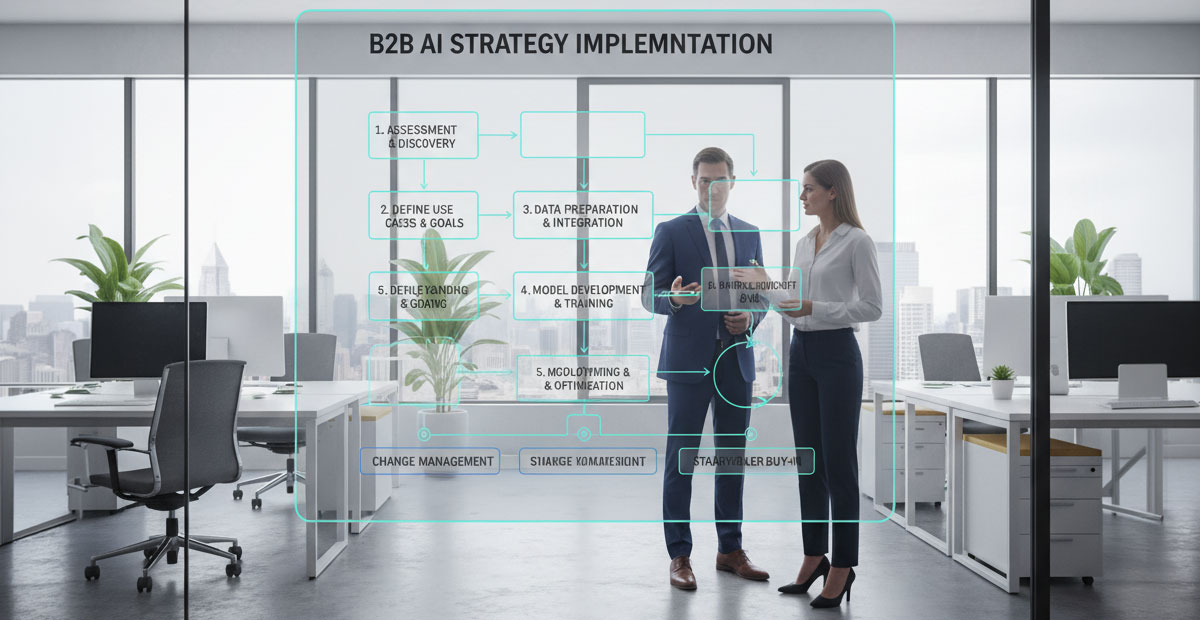
Training is essential for adoption. You must educate your partners on how to use the new AI-powered tools. Show them how predictive analytics can help them identify better leads and close deals faster.
Finally, continuously measure, iterate, and scale your AI strategy. Use the platform’s performance analytics to track your progress against your objectives. Use these insights to refine your models and expand the use of AI across your channel.
This iterative process ensures that your b2b portal evolves with your business needs. It also maximizes the return on your technology investment. A successful implementation can transform your channel sales performance.
Integrating an AI strategy is not a one-time project. It is an ongoing commitment to using data and intelligence to empower your partners. This commitment will define the leading channel programs of the future.
Elevate Your Channel Strategy with ZINFI's AI-Native Platform
ZINFI offers a comprehensive, AI-native Unified Partner Management platform designed to drive your b2b digital transformation. Our solution empowers you to build a smarter, more effective b2b portal. We provide the tools to predict buyer intent and accelerate channel revenue.
- A Truly Unified Platform: ZINFI integrates Partner Relationship Management (PRM), Partner Marketing Management (PMM), and Partner Sales Management (PSM) into one seamless solution. This provides a single source of truth for your entire channel ecosystem.
- Advanced Predictive Analytics: Our platform uses sophisticated AI to analyze partner and customer data. It delivers actionable insights, including lead intent scoring and sales forecasting, to help your partners prioritize their efforts and win more deals.
- Intelligent Workflow Automation: Streamline and automate complex channel processes with our flexible workflow management. From lead distribution to MDF claims, our AI-driven automation improves efficiency and ensures compliance.
- Deep Personalization at Scale: Deliver a unique experience for every partner. ZINFI's AI personalizes content, training materials, and marketing campaigns, significantly increasing partner engagement and effectiveness.
- Comprehensive Partner Management: Manage the entire partner lifecycle from a single dashboard. Our partner management tools simplify onboarding, business planning, and performance tracking.
- Robust Security and Governance: Protect your valuable data with enterprise-grade security. ZINFI provides granular control over user roles and access, ensuring data integrity and compliance across your entire partner network.
Frequently Asked Questions
What is an AI-native b2b portal?
An AI-native b2b portal is a platform built from the ground up with artificial intelligence at its core. It uses machine learning to analyze data, predict outcomes, and automate processes. This differs from traditional portals where AI might be an add-on feature.
How does AI improve partner engagement?
AI improves partner engagement by delivering personalized experiences. It suggests relevant training, marketing assets, and sales plays based on a partner's needs and performance. This makes the b2b portal a more valuable and relevant resource for them.
Can AI help with lead scoring in a b2b portal?
Yes, this is one of the primary benefits. AI analyzes a prospect's digital behavior to generate a dynamic intent score. This helps partners identify which leads are most likely to convert, improving sales efficiency and effectiveness.
What kind of data is needed for a b2b portal's AI?
An AI-powered b2b portal needs diverse data sources for optimal performance. This includes CRM data, web analytics, content engagement metrics, and sales transaction history. The more comprehensive the data, the more accurate the AI's predictions will be.
Is an AI-powered portal secure?
Yes, a leading AI-powered b2b portal prioritizes security. It should feature robust security protocols, including data encryption, secure login processes, and role-based access controls. This ensures company and customer data remain protected at all times.
What is the difference between a b2b portal and PRM software?
A b2b portal is the user-facing interface that partners interact with. PRM software is the underlying technology platform that powers the portal. An AI-native PRM solution provides all the advanced functionality for a modern business-to-business platform.
How long does it take to implement an AI-native b2b portal?
Implementation time varies depending on the complexity of your needs and data integration requirements. A phased approach, starting with a pilot, is often recommended. A typical implementation can range from a few weeks to several months.
Can I integrate an AI b2b portal with my existing CRM?
Absolutely. Integration with your CRM is essential for an AI-native b2b portal to function effectively. Leading platforms offer pre-built connectors and robust APIs to ensure seamless data flow between the portal and systems like Salesforce or HubSpot.
What ROI can I expect from an ai commerce platform?
The ROI from an ai commerce platform can be significant. Key benefits include higher lead conversion rates, shorter sales cycles, increased partner productivity, and higher channel revenue. You can also expect improved partner satisfaction and loyalty.
How does an AI-native portal support b2b digital transformation?
An AI-native b2b portal is a cornerstone of b2b digital transformation. It moves your channel operations from manual and reactive to automated and proactive. This shift enables your business to scale more effectively and compete in a digital-first world.
About the author
Sugata Sanyal
Sugata Sanyal is the Founder & CEO of ZINFI Technologies, a leader in Unified Partner Management. He has been a passionate advocate for the channel and channel partners for decades. His vision for ZINFI is to provide partner ecosystems with the tools they need to succeed.