7 Key Strategies for Fraud Prevention in Affiliate Marketing Management
Effective fraud prevention requires a multi-layered approach to affiliate marketing management. Protecting your program involves vigilant screening, clear rules, and advanced technological oversight.
Affiliate programs are powerful channels for driving growth. They extend your reach and boost sales significantly.
However, this channel is also a target for fraud. Malicious actors seek to exploit programs for illicit gains.
Without strong safeguards, fraud can drain your marketing budget. It can also damage your brand's valuable reputation.
Implementing robust strategies is not optional but essential. It ensures the integrity and profitability of your partnerships.
This guide explores seven key strategies for effective fraud prevention. It covers everything from partner onboarding to payment disbursement.
A proactive stance on affiliate program oversight protects your investment. It fosters a healthy and productive partner ecosystem.
By understanding common threats, you can build a resilient program. Your affiliate channel can then deliver sustainable, long-term results.
Let’s dive into the core components of a secure framework. These methods will help you safeguard your marketing efforts.
Key Takeaways
TL;DR
- Thoroughly screen and vet all potential affiliate partners before they join your program. This is your first and most important line of defense against potential fraud.
- Establish and enforce a clear, comprehensive Terms of Service agreement. It should explicitly detail all prohibited activities and promotional methods.
- Continuously monitor all affiliate traffic sources for quality and legitimacy. Look for unusual patterns like sudden spikes or poor engagement metrics.
- Analyze performance metrics beyond just clicks and conversions. Review conversion rates, return rates, and customer lifetime value per affiliate.
- Utilize specialized fraud detection technology and software. AI-powered tools can identify sophisticated fraudulent patterns that manual checks often miss.
- Conduct regular, systematic audits of your entire affiliate program. These audits help to identify and address vulnerabilities before they are exploited.
- Implement a secure and multi-step payment verification process. This ensures that you are only paying for legitimate, verified sales and leads.
How Does Partner Screening Enhance Affiliate Marketing Management?
Vigilant partner screening is the foundation of secure affiliate marketing management. It acts as a gatekeeper, preventing bad actors from entering your ecosystem.
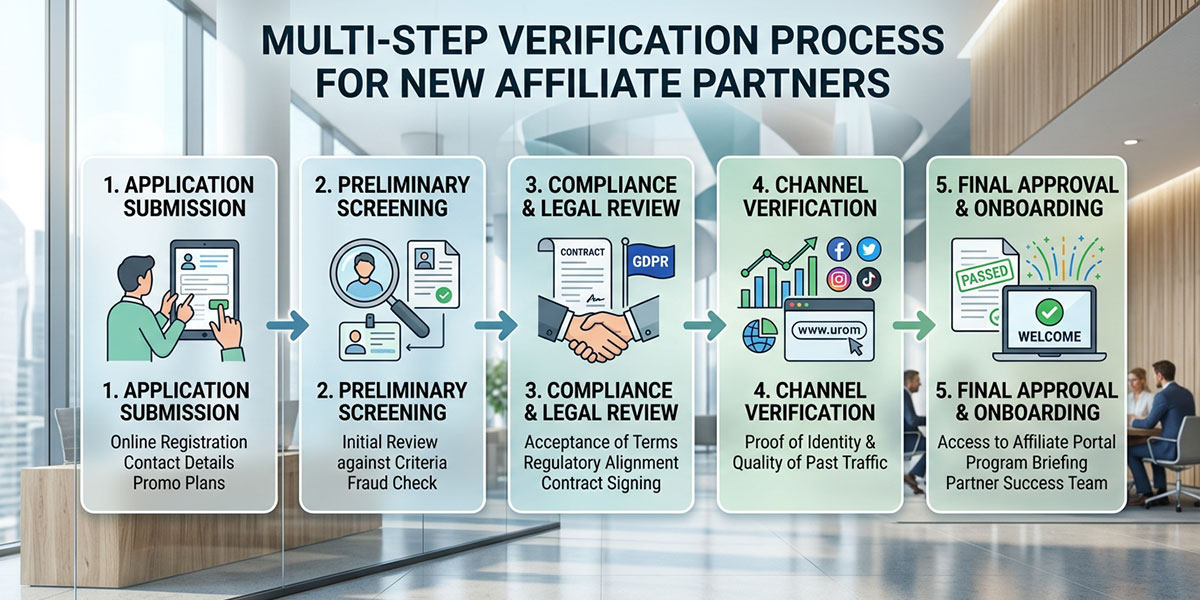
Your application process should collect detailed information. This includes the applicant's promotional methods, website URLs, and traffic sources.
Manually review each application with a critical eye. Do not rely solely on automated approval systems for this task.
Look for red flags during the review process. These include new or low-quality websites and mismatched contact information.
Investigate the affiliate’s online presence and history. A quick search can reveal past issues or associations with spam.
Consider a phone or video call for high-potential partners. This adds a personal layer of verification to the process.
A multi-step approval process can deter opportunistic fraudsters. They often target programs with easy, instant approval mechanisms.
You can use a platform for partner management to streamline this screening. It helps organize applicant data and track review stages.
Remember that a stricter onboarding process sends a clear message. It shows that you take program integrity very seriously.
This initial effort saves significant time and resources later. It prevents you from cleaning up messes caused by fraudulent partners.
The goal is to build a network of high-quality, trustworthy affiliates. This starts with a selective and thorough vetting procedure.
By controlling who enters your program, you maintain higher standards. This directly impacts the quality of traffic and leads you receive.
Why Are Clear Terms Critical for Affiliate Marketing Management?
Clear and comprehensive terms are critical for effective affiliate marketing management. They serve as the legal rulebook for your entire program.
Your Terms of Service (TOS) agreement must be detailed. It should leave no room for ambiguity or misinterpretation.
Explicitly list all prohibited promotional tactics. This includes cookie stuffing, domain squatting, and trademark bidding.
Define acceptable marketing channels and messaging guidelines. This ensures brand consistency and prevents misrepresentation of your products.
Detail the consequences of violating these terms. These can range from commission withholding to immediate program termination.
A strong TOS provides a solid legal foundation. You can use it to justify any actions taken against a fraudulent affiliate.
Require every affiliate to actively agree to your terms. This should happen before they are granted access to your promotional materials.
Update your terms as new types of fraud emerge. Communicate any changes clearly and promptly to all your partners.
Using a tool for partner contracts management is highly beneficial. It ensures all partners have seen and accepted the latest agreement.

Consider clauses that give you the right to audit traffic. You should also be able to request source data from your affiliates.
This transparency is crucial for identifying hidden fraud. It holds partners accountable for the traffic they generate.
Do not just create a strong TOS and forget it. You must consistently enforce the rules for all partners equally.
Fair and consistent enforcement builds trust with legitimate partners. It shows your commitment to a level and fair playing field.
Ultimately, a well-defined TOS is not just a legal document. It is a key operational tool for maintaining program health.
Your affiliate program oversight becomes much simpler with clear rules. Everyone knows the expectations and the consequences of non-compliance.
What Role Does Traffic Monitoring Play in Affiliate Marketing Management?
Continuous traffic monitoring is a non-negotiable aspect of affiliate marketing management. It provides real-time insights into the quality of your affiliate-driven traffic.
You must look beyond simple click counts. Analyze where the traffic is coming from and how users behave.
Sudden, massive spikes in traffic from a single affiliate are a major red flag. This could indicate the use of bot traffic or click farms.
Scrutinize the geographic origins of your traffic. A high volume from locations outside your target market is suspicious.
High bounce rates and extremely short session durations are also warning signs. They suggest that the visitors are not genuinely interested in your offerings.
Look for unusual click patterns or timestamps. For example, clicks happening consistently at odd hours can indicate automated scripts.
Implement click-to-conversion time analysis. Fraudulent clicks often have unnaturally short or long durations before a conversion.
Use platforms with built-in business intelligence and reports. These tools can help visualize traffic patterns and highlight anomalies.
Your affiliate network governance should include regular traffic audits. Set aside time each week to review the data from top-performing affiliates.
Encourage transparency by asking partners to share their main traffic sources. Legitimate partners will usually be happy to comply with this request.
Be wary of affiliates who are secretive about their methods. A lack of transparency can often hide fraudulent activities.
Monitoring this data manually can be a challenge. That is why automated systems are so valuable for this task.
An effective workflow for tracking alerts helps manage this process. A solution for alerts management can notify you of suspicious activity instantly.
By actively monitoring your traffic, you can catch fraud early. This prevents wasted ad spend and protects your conversion data integrity.
Traditional vs. AI-Powered Fraud Prevention
| Feature | Traditional Approach | AI-Powered Approach |
|---|---|---|
| Detection Speed | Reactive and slow, often based on manual audits. | Proactive and real-time, identifying threats instantly. |
| Accuracy | Prone to human error and false positives. | Highly accurate, learning from data to reduce errors. |
| Scalability | Difficult to scale; requires more human resources. | Highly scalable, handling massive data volumes easily. |
| Adaptability | Slow to adapt to new and evolving fraud tactics. | Quickly adapts by identifying new, complex patterns. |
| Data Analysis | Relies on basic metrics and rule-based systems. | Analyzes complex data sets and user behavior deeply. |
| Cost-Effectiveness | Can be expensive due to manual labor involved. | Reduces long-term costs by automating detection. |
| Human Intervention | Requires significant and constant human oversight. | Minimizes manual work, freeing up team resources. |
How Can Performance Analysis Improve Affiliate Marketing Management?
Performance analysis goes deeper than traffic monitoring in affiliate marketing management. It focuses on the quality and value of the conversions generated.
Fraud does not always stop at the click. Sophisticated fraudsters can generate fake leads or fraudulent sales.
Closely examine your conversion rates for each affiliate. Rates that are abnormally high might suggest incentive-based or fraudulent sign-ups.
Conversely, very high traffic with zero conversions can be a problem. This might point to non-converting bot traffic or click spam.
Monitor lead quality very carefully for lead generation programs. Use a lead scoring system to evaluate the leads from different partners.
For eCommerce programs, track product return and chargeback rates. A high return rate associated with one affiliate is a significant red flag.
This could indicate that the affiliate is using stolen credit cards. It might also mean they are encouraging friends to buy and return items.
Analyze the average order value and customer lifetime value. Affiliates driving low-value, one-time customers may not be ideal partners.
Leveraging tools that provide detailed performance analytics is essential. These platforms help you connect sales data back to the originating affiliate.
Look for patterns in customer data from a single affiliate. For example, multiple orders being shipped to the same address is suspicious.
Similarly, multiple sign-ups using similar email patterns can indicate fraud. For instance, "test1@email.com" and "test2@email.com" are suspicious.
Consider implementing a commission holding period. This allows time for returns, chargebacks, or lead quality checks to occur.
This waiting period ensures you only pay for legitimate, valuable actions. It is a critical component of secure affiliate payment management.
Your affiliate program oversight should include these backend metric reviews. They provide a more complete picture of partner value and integrity.
By analyzing performance, you reward truly valuable partners. You can also identify and remove those who are gaming the system.
Which Technologies Bolster Fraud Prevention in Affiliate Marketing Management?
Technology is a powerful ally in modern affiliate marketing management. It automates detection and identifies sophisticated fraud that humans can miss.
Dedicated fraud detection software is a worthwhile investment. These solutions are specifically designed to combat affiliate fraud tactics.
Many systems use machine learning and artificial intelligence. They analyze vast amounts of data to spot anomalous patterns in real-time.
According to research from Gartner, AI is crucial for protecting brand integrity. It can help organizations proactively manage digital risks like fraud.
One key technology is IP address monitoring and blacklisting. It can automatically block clicks from known proxy services or data centers.
Device fingerprinting is another powerful tool. It creates a unique identifier for each user's device to detect repeat fraud.
This technology can identify a fraudster even if they change their IP address. It looks at browser type, operating system, and other device settings.
Integrated platforms for Unified Partner Management often include these features. They provide a centralized dashboard for monitoring and control.
Automated alerts are a key feature of these technologies. You receive instant notifications when suspicious activity is detected.
This allows you to take immediate action. You can pause an affiliate or investigate further before major damage occurs.
Utilizing predictive analytics can help you stay ahead of fraudsters. These algorithms can forecast which partners are likely to engage in fraud.

These predictive models are based on historical fraud data. They learn to recognize the characteristics of fraudulent behavior over time.
Your affiliate marketing management strategy should embrace these technologies. Relying solely on manual checks is no longer sufficient or scalable.
The right technology stack acts as a constant watchtower. It guards your affiliate program twenty-four hours a day, seven days a week.
It provides the robust defense needed to run a secure program. It also allows your team to focus on growth and partner relationships.
How ZINFI Elevates Your Affiliate Program Security
ZINFI’s Unified Partner Management platform provides comprehensive tools for affiliate security. It helps you manage and protect your entire affiliate ecosystem effectively.
Our platform empowers you with robust features for fraud prevention. You gain a centralized view to oversee all partner activities.
Here are some ways ZINFI strengthens your affiliate program:
- Advanced Partner Management: Streamline your partner onboarding, vetting, and profiling processes. Our Partner Management module helps you approve only high-quality affiliates, creating a strong foundation from the start.
- Dynamic Business Intelligence: Gain deep insights with our Business Intelligence & Reports module. Track traffic, analyze performance, and easily identify suspicious patterns and anomalies in real-time dashboards.
- Automated Workflow Management: Create and automate custom review and approval processes. With Workflow Management, you can ensure every suspicious activity is flagged and properly investigated by your team.
- Real-Time Alerts Management: Stay ahead of threats with instant notifications. The Alerts Management module warns you about potential fraud, allowing for immediate action to mitigate risks.
- Secure Contract Management: Ensure every partner agrees to your terms with our Partner Contracts Management solution. Maintain an audit trail of acceptances and easily update terms for all partners.
- Controlled Payment Management: Protect your budget by ensuring you only pay for valid conversions. Our Payment Management module integrates with verification workflows to prevent payments for fraudulent activities.
ZINFI provides the end-to-end control needed for secure and successful partnerships. It empowers you to build a resilient and profitable affiliate channel.
Frequently Asked Questions
What is affiliate marketing fraud?
Affiliate marketing fraud involves deceptive practices to generate illegitimate commissions. This includes tactics like click spam, fake leads, and cookie stuffing.
What is cookie stuffing?
Cookie stuffing is a fraudulent technique used by malicious affiliates. They drop multiple affiliate cookies on a user's browser without their knowledge.
How common is fraud in affiliate marketing?
Fraud is quite common and a persistent problem in affiliate marketing. Without proper affiliate marketing management, a significant portion of a budget can be lost.
Can small businesses be victims of affiliate fraud?
Yes, small businesses are often prime targets for affiliate fraud. They may lack the resources and technology for robust fraud detection.
What is the first step in fraud prevention?
The first and most important step is a thorough partner screening process. Preventing bad actors from joining your program is the best defense.
How does a PRM platform help with fraud?
A Partner Relationship Management (PRM) platform centralizes affiliate data. It automates monitoring, reporting, and alerts to help you detect fraud efficiently.
What are some red flags for a fraudulent affiliate?
Red flags include sudden traffic spikes and unusually high conversion rates. Poor-quality websites and a lack of transparency are also warning signs.
Are high conversion rates always a bad sign?
No, not always, but they warrant a close investigation. Legitimate, highly-targeted promotion can yield high rates, but they could also indicate fraud.
How often should I audit my affiliate program?
You should conduct regular audits of your program. A light review weekly and a deep-dive audit monthly is a good practice.
What legal actions can be taken against fraud?
You can withhold commissions and terminate the affiliate from your program. Your terms of service can also reserve the right to pursue further legal action.
About the author
Sugata Sanyal
Sugata Sanyal is the Founder & CEO of ZINFI Technologies, a leader in Unified Partner Management. He has been a passionate advocate for the channel and channel partners for decades. His vision for ZINFI is to provide partner ecosystems with the tools they need to succeed.