
Unlocking Partner Sales Potential through Co-Selling: A Comprehensive Guide
Co-selling has become a pivotal strategy for businesses seeking to expand market reach and enhance sales outcomes by combining unique strengths, resources, and customer networks through structured collaborative partnerships. Organizations that implement effective programs with clear communication, shared objectives, and technology-enabled workflows will unlock new revenue opportunities and achieve sustainable competitive advantages across global markets.
Co-selling enables companies to join forces and address customer needs more effectively. This collaborative approach goes beyond simply sharing leads or marketing materials between organizations. It creates a unified front that presents integrated solutions to diverse global markets.
The strategy brings together diverse entities ranging from multinational corporations to specialized firms. By pooling resources and expertise together, companies can tackle larger market segments confidently. These collaborative partnerships transcend traditional competitive boundaries across industries and geographies worldwide.
This article explores what collaborative selling entails including its benefits, processes, and practices. Each section examines critical elements from partnership examples to platform-level selling strategies. The framework helps businesses implement effective joint selling approaches systematically and efficiently.
Key Takeaways
- Co-selling combines partner strengths to enhance market penetration and reduce overall operational costs.
- Effective collaborative selling requires clear communication, shared goals, and transparent lead management processes.
- Major platforms like AWS and Microsoft provide structured partnership programs for technology vendors.
- Workflow automation streamlines joint selling processes enabling more strategic decision-making across partner networks.
- Customer-centric approaches ensure collaborative partnerships deliver real and measurable value to end buyers.
What Is Co-Selling and How Does It Work?
Co-selling is a collaborative sales strategy where two or more organizations partner together. They sell products or services jointly to expand their customer reach more effectively. This approach leverages each partner's resources, networks, and market presence for mutual benefit.
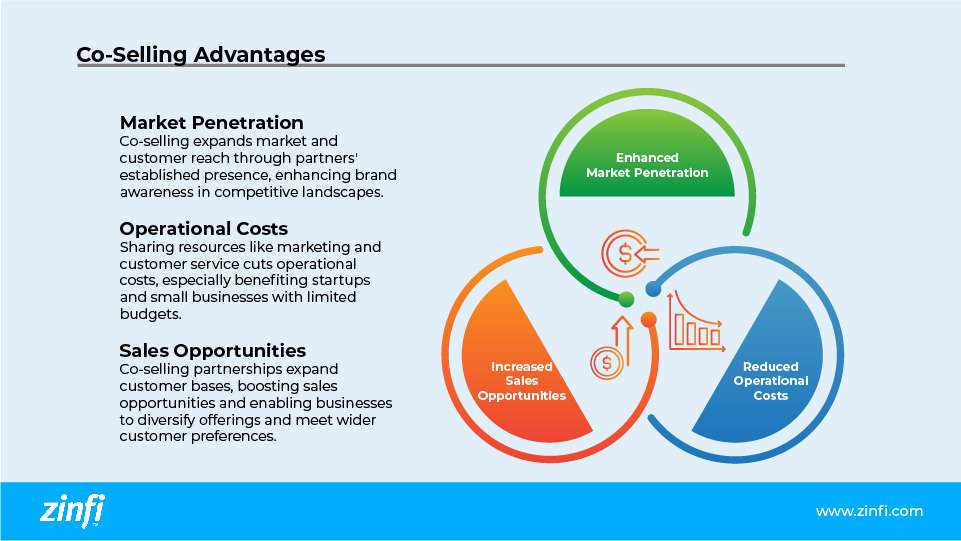
Enhanced market penetration represents a primary benefit of these collaborative partnerships today. Companies access new markets by leveraging established partner presence across multiple geographies worldwide. This collaboration allows extensive reach and stronger brand awareness in competitive global markets.
Reduced operational costs make joint selling attractive for organizations of all different sizes. Sharing marketing campaigns and customer service efforts lowers expenses for all participating partners. This advantage particularly benefits startups and small businesses operating under tight budget constraints.
Increased sales opportunities emerge naturally when businesses tap into broader customer bases together. Collaborative selling enables companies to diversify offerings and serve more varied customer preferences. Workflow automation streamlines these processes and enhances coordination across partnership ecosystems.
A co-seller is a company or individual that partners with another business directly. They sell complementary products or services through shared resources and aligned selling strategies. This collaborative relationship builds on mutual goals and carefully aligned market approaches together.
How Does Co-Selling Differ from Cross-Selling and Co-Marketing?
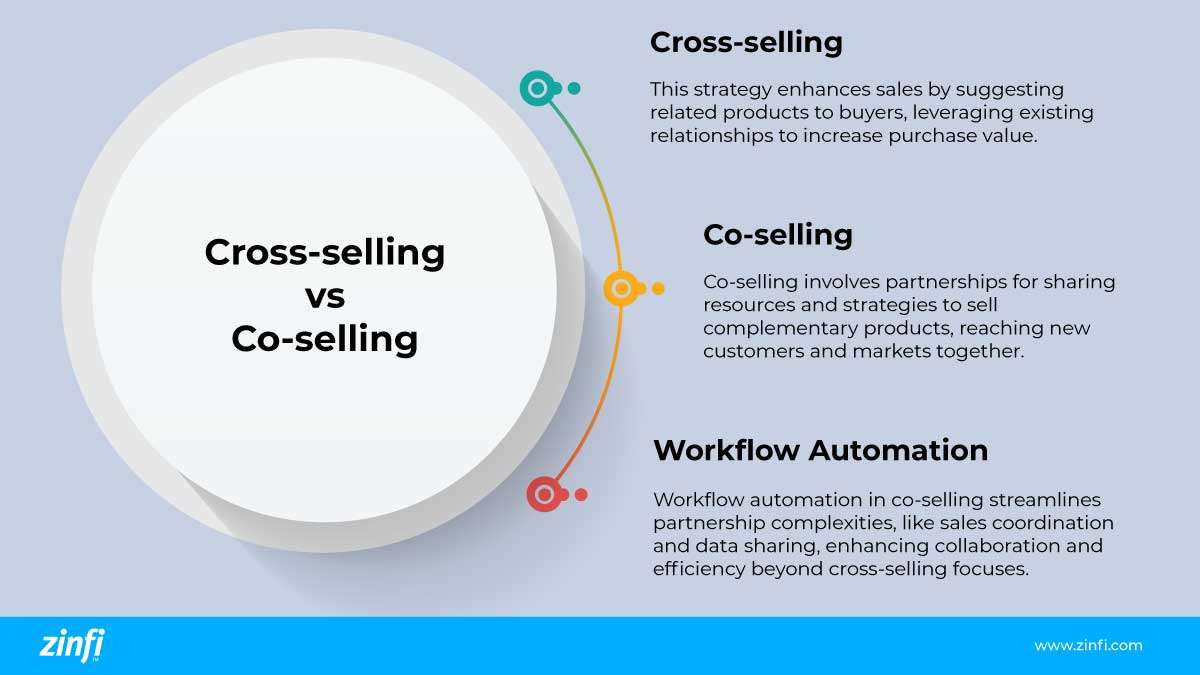
Cross-selling and collaborative selling are distinct strategies with fundamentally different execution approaches. Cross-selling suggests additional products to existing customers during ongoing purchase transactions today. Joint selling involves collaboration between separate companies to sell complementary offerings in markets.
Cross-selling relies on leveraging existing customer relationships to boost individual sales revenues. It focuses on increasing transaction value through related product recommendations handled entirely internally. Collaborative partnerships instead create external alliances designed to reach entirely new customer segments.
Co-marketing focuses on joint promotional efforts designed to increase brand awareness together effectively. Partners combine resources for shared content creation, educational webinars, and co-branded marketing events. The primary goal centers on generating qualified leads and expanding audience reach collaboratively.
Joint selling directly partners organizations together to close more deals and increase revenue. Sales teams from each company work together sharing customer leads and insights actively. Joint sales calls and combined strategies facilitate the overall selling process much more effectively.
Success metrics differ significantly between these various collaborative approaches across partner organizations. Co-marketing measures engagement rates, lead generation volumes, and increased website traffic consistently. Joint selling tracks deals closed, revenue generated, and customer acquisition costs much more directly.
What Does the Co-Sales Process Involve?
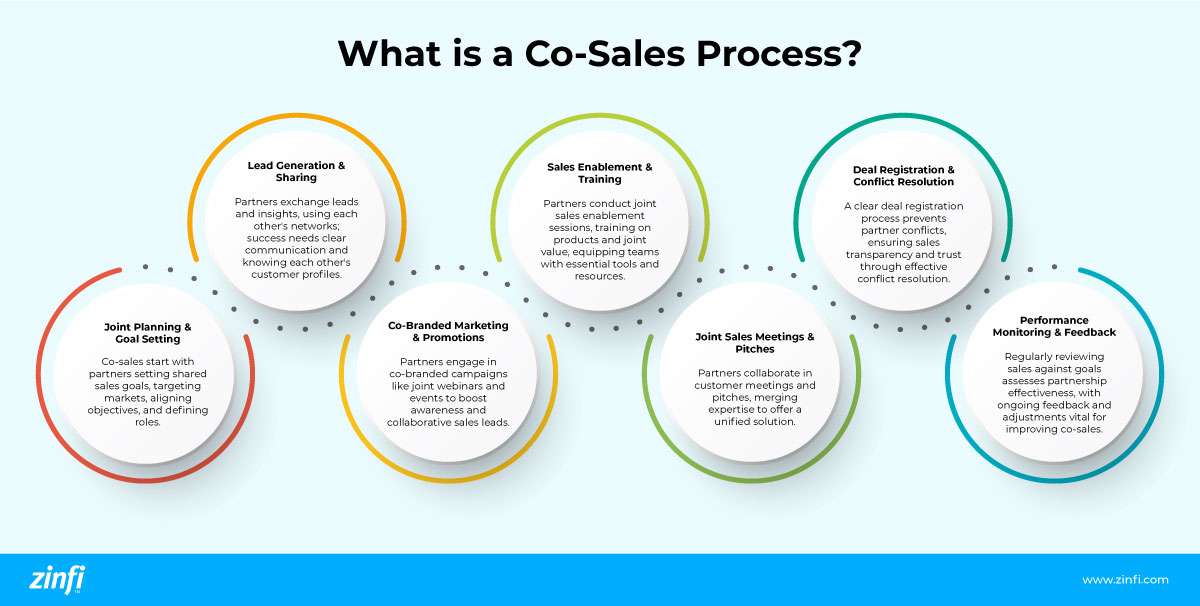
The co-sales process involves partners collaborating throughout entire sales cycles together effectively. They leverage each other's resources, strengths, and market presence for better overall results. This process includes joint planning, lead sharing, and combined sales meetings regularly.
Joint planning and goal setting initiate every successful collaborative selling engagement today. Partners identify target markets and align sales objectives through shared strategic planning frameworks. Defining roles and responsibilities ensures coordinated execution across all partnership selling activities.
Lead generation and sharing form the foundation of productive partnership selling models today. Partners share market intelligence and leverage each other's customer networks on a consistent basis. Effective lead sharing requires clear communication about ideal customer profiles and target accounts.
Sales enablement and training ensure both partner teams understand joint value propositions clearly. Partners train on each other's products and equip their teams with all necessary resources. This preparation drives higher win rates across collaborative selling motions consistently and reliably.
Deal registration and conflict resolution maintain trust between partners across all active programs. Transparent processes prevent conflicts and ensure equitable opportunity distribution across partner networks today. Regular performance reviews help understand partnership effectiveness and guide continuous program improvements.
What Are Best Practices for Successful Joint Selling?
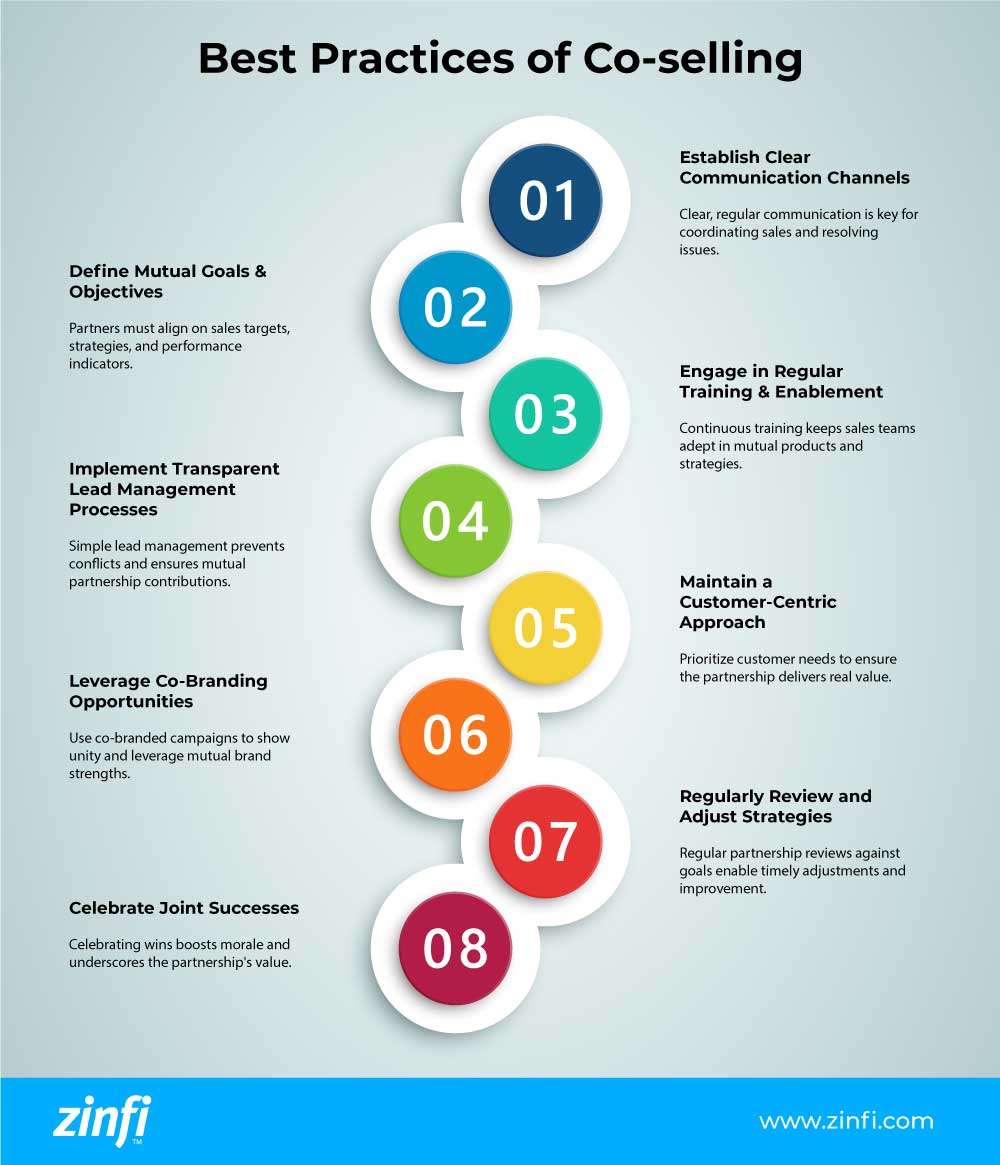
Clear communication channels represent the most critical best practice for effective selling partnerships. Regular information sharing coordinates sales efforts and resolves emerging issues promptly across partner teams. Partners must establish consistent communication rhythms to maintain strategic alignment effectively throughout programs.
Defining mutual goals and objectives ensures all partners work toward carefully aligned outcomes. Shared sales targets, market strategies, and key performance indicators drive coordinated partnership efforts. This alignment prevents misunderstandings and maximizes collective impact across all active partner programs.
Continuous training ensures all sales teams understand each other's product offerings thoroughly today. Partners must stay current on products, services, and evolving sales strategies across their ecosystems. This ongoing enablement enhances the ability to sell together effectively in all markets.
Transparent lead management prevents conflicts and ensures equitable partner contributions across all programs. Clear processes for sharing, tracking, and following up on leads build lasting trust. Lead management platforms automate these workflows across diverse partner ecosystems efficiently.
Customer-centric approaches ensure collaborative partnerships deliver genuine value to end buyers consistently. Every joint effort must prioritize solving real customer problems above all other considerations. Partners who maintain this customer focus build lasting relationships and drive sustainable revenue growth.
How Do Major Platforms Enable Collaborative Selling at Scale?
Collaborative selling with AWS leverages Amazon Web Services' extensive partner network and marketplace. Partners joining the AWS Partner Network access specialized training, support, and joint selling tools. Marketplace integration makes partner solutions accessible to the vast AWS customer base worldwide.
AWS provides joint sales engagements where partners and AWS teams collaborate together on deals. Combined presentations deliver comprehensive solutions addressing complex customer requirements effectively across industries. Promotional programs and financial incentives facilitate partnership efforts across entire partner ecosystems globally.
Co-selling with Microsoft incorporates Azure, Microsoft 365, and Dynamics 365 product families together. The Microsoft Partner Network provides resources, training, and comprehensive go-to-market support for vendors. Partners benefit from co-marketing opportunities and joint customer outreach programs across global markets.
Microsoft's Co-Sell Ready program enables collaboration with their sales teams operating worldwide today. Shared leads and joint selling experiences help partners reach more customers across new territories. Partners list solutions on AppSource and Azure Marketplace for increased visibility and discovery.
Both platforms demonstrate how structured programs accelerate partner growth across international markets effectively. Technology giants provide frameworks that smaller organizations can leverage for significant business expansion. These partnerships offer blueprints for implementing scalable collaborative selling strategies across industries today.

How Does ZINFI Support Co-Selling Excellence?
ZINFI provides a comprehensive partner management platform designed for collaborative selling excellence. The system automates partner onboarding, enablement, and joint selling workflows efficiently across organizations. A unified interface manages complexity across diverse global partner ecosystems and selling programs.
The platform enables organizations to build scalable partnership programs at the enterprise level. Automated workflows support lead sharing, deal registration, and joint planning processes systematically across teams. Program managers focus on strategic partnership value while the technology handles operational execution.
- Collaborative selling tools. Joint deal registration and shared pipeline management drive coordinated partnership selling efforts.
- Co-branded asset management. Shared marketing materials present unified brand experiences to customers consistently across markets.
- Lead management automation. Transparent lead sharing and tracking prevent conflicts across all partner networks effectively.
- Performance analytics. Real-time dashboards provide visibility into partnership activity and overall revenue contribution metrics.
- Partner enablement delivery. Learning management systems deliver training across all partner geographies consistently and reliably.
- Workflow automation. Automated processes streamline collaboration and enable strategic decision-making across all partnerships.
| Capability | Traditional Model | Future-Ready Model |
|---|---|---|
| Partner collaboration | Informal referral agreements with limited coordination between teams | Structured programs with joint planning and shared resources across partners |
| Lead management | Manual lead sharing through email and spreadsheet tracking processes | Automated lead distribution with transparent tracking and conflict prevention systems |
| Sales enablement | One-time product training with static marketing materials for partners | Continuous joint enablement with co-branded assets and certification programs available |
| Market reach | Limited geographic coverage through individual company efforts and resources | Combined partner networks enabling borderless market penetration at global scale |
| Deal execution | Independent selling with occasional partner introductions for key accounts | Joint sales meetings with combined expertise and unified solution presentations |
| Performance tracking | Separate reporting with no shared visibility into partnership outcomes | Unified dashboards tracking joint revenue contribution and partnership success metrics |
| Technology integration | Disconnected systems with manual data synchronization processes between partners | Integrated platforms automating workflows across entire partner ecosystems efficiently |
Frequently Asked Questions
What is co-selling and how does it differ from traditional selling?
It involves two or more companies collaborating to sell complementary solutions jointly together.
How does collaborative selling reduce operational costs for participating organizations?
Partners share marketing campaigns, customer service efforts, and sales resources reducing overall expenses.
What is the difference between co-selling and cross-selling strategies?
Cross-selling recommends additional products internally while joint selling partners externally for closing deals.
How does co-marketing complement collaborative partnership selling activities effectively?
Co-marketing generates leads and brand awareness while joint selling focuses on closing deals together.
What does the co-sales process typically involve between participating partners?
Joint planning, lead sharing, combined sales meetings, and performance monitoring drive effective collaboration.
What are the most important best practices for successful selling partnerships?
Clear communication, mutual goals, transparent lead management, and customer-centric approaches drive overall success.
How does selling with AWS benefit technology partners and their customers?
AWS provides marketplace integration, joint engagements, and promotional programs for accelerating partner growth.
What does Microsoft's Co-Sell Ready program offer to technology partners?
Partners collaborate with Microsoft sales teams worldwide gaining shared leads and joint selling experiences.
Why is workflow automation essential for scaling partnership selling programs?
Automation streamlines lead sharing, deal registration, and coordination across diverse global partner networks.
How does ZINFI help organizations implement effective collaborative selling strategies?
ZINFI automates collaborative selling workflows, lead management, and performance tracking across partner ecosystems.
About the author
Sugata Sanyal
Sugata loves solving complex industry problems in a way that creates hundreds of new jobs and opportunities. Over the past three decades, Sugata has worked in three large Fortune 100 organizations – Honeywell, Philips, and Dell SonicWALL – learning how to put together global teams that can work together to help customers win, create a wealth of new opportunities, and do amazing things. Sugata founded ZINFI with the mission of solving the entire challenge of marketing and selling, both directly and indirectly, through the channel. Over the past several years, his leadership on the ZINFI team has built a highly customer-focused global organization that constantly innovates and always asks how it can do better and deliver more for less.