
How a Partner Ecosystem Drives Business Growth
A partner ecosystem is a network of interdependent companies and individuals who collaborate to create, market, and sell solutions. This collaborative framework drives business growth by expanding market reach and fostering rapid innovation.
Modern businesses no longer operate in isolation. They are part of a larger, interconnected web of relationships that generate mutual value.
Understanding how to build and manage this network is crucial for sustainable success. A well-orchestrated partner ecosystem becomes a powerful engine for scaling operations globally.
This approach moves beyond traditional, linear channel sales models. It embraces a more dynamic and multi-faceted way of going to market together.
By leveraging the strengths of diverse partners, companies can offer more comprehensive solutions to customers. This ultimately leads to greater customer loyalty and a stronger competitive advantage.
The Core Benefits of Building a Partner Ecosystem
TL;DR
- A partner ecosystem expands your market reach by leveraging partners' existing customer bases.
- Collaborating with diverse partners accelerates innovation and joint solution development for customers.
- It significantly enhances customer value by providing integrated, comprehensive solutions.
- Opening new routes to market through partnerships creates multiple new revenue streams.
- The ecosystem model improves scalability and flexibility to adapt to changing market demands.
- Partnering with established brands and experts strengthens your company's overall credibility.
- A well-managed network of partners builds a strong competitive moat against rivals.
What Defines a Modern Partner Ecosystem?
A modern partner ecosystem is fundamentally different from a simple reseller program. It encompasses a wide array of symbiotic relationships focused on co-creating value.
This network includes technology partners, service providers, consultants, influencers, and even customers. Everyone in the network contributes to and benefits from the shared success.
The structure is not linear but a complex web of interconnected nodes. Information and value flow in multiple directions between all participants in the network.
This dynamic model allows for greater agility and resilience in a fast-paced market. Companies can pivot and adapt quickly by tapping into their network's collective capabilities.
Unlike traditional channels, the primary focus is not just on transactions. It is about building long-term, strategic alliances that deliver holistic customer solutions.
The rise of digital platforms has been a key enabler for this business model. Technology now allows for seamless collaboration and management of these complex relationships.
A mature partner ecosystem functions like a biological ecosystem with diverse members. Each member plays a specialized role that contributes to the health of the whole.
For example, a technology partner might provide a crucial software integration for a product. A service partner could then handle the implementation and ongoing support for it.
This collaboration results in a complete solution that no single company could offer alone. The customer receives a more robust and valuable end product as a result.
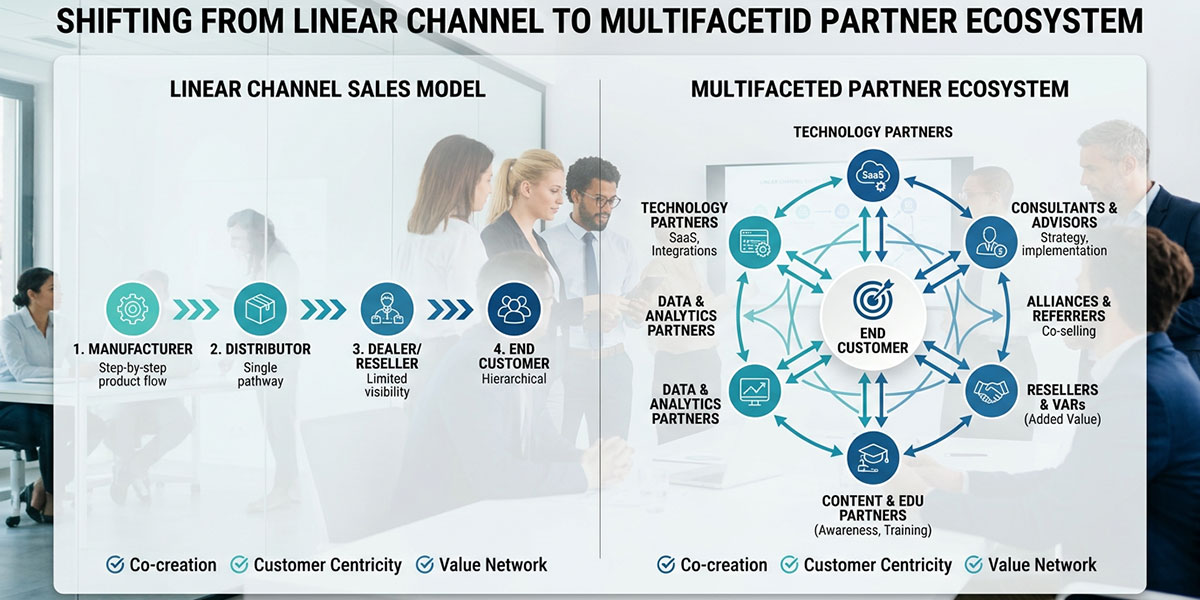
The key types of partners often include independent software vendors (ISVs) who create complementary applications. Systems integrators (SIs) are also crucial for deploying complex solutions for enterprises.
Managed service providers (MSPs) offer ongoing management and support services to end customers. They ensure the solutions provided by the collaborative network perform optimally over time.
Referral partners and affiliates play a vital role in demand generation and expanding market awareness. They introduce new prospects into the sales funnel for the entire ecosystem.
Finally, consulting and advisory partners provide strategic guidance to customers. They help organizations make informed decisions about technology and business process improvements.
Each partner type brings a unique set of skills, resources, and customer relationships. A successful alliance leader knows how to orchestrate these different players effectively.
This orchestration involves creating clear rules of engagement and fostering a culture of collaboration. Without proper management, a diverse network can lead to channel conflict and confusion.
The ultimate goal is to present a unified front to the customer. This ensures a seamless experience from initial inquiry through to post-sale support.
How Does a Partner Ecosystem Foster Innovation?
What Are the Key Strategies for Managing a Successful Partner Ecosystem?
Managing a successful partner ecosystem requires a deliberate and strategic approach. It is not something that happens organically without focused effort and investment.
The first step is to define a clear vision and strategy for your program. You must articulate what you want to achieve and what an ideal partner looks like.
An effective partner recruitment and onboarding process is absolutely critical for long-term success. You need to identify, attract, and enable the right types of partners for your goals.
This process should be streamlined and efficient, using tools for partner management. A complicated or lengthy onboarding experience can deter even the most motivated partners.
Once partners are onboarded, continuous enablement is necessary to keep them engaged and productive. This includes providing comprehensive training, marketing materials, and technical support to partners.
A robust partner learning management system can automate and scale your training efforts effectively. It ensures all partners have access to the latest product knowledge and sales skills.
Establishing clear governance and rules of engagement is another cornerstone of ecosystem management. This helps prevent channel conflict and ensures fair competition among partners.
Your governance framework should outline deal registration processes and territory assignments. It must also define the protocols for collaboration on joint opportunities with transparency.
Building a strong foundation of trust is paramount for any collaborative network. This is achieved through transparent communication, consistent policies, and mutual respect for all.
According to Forrester, organizations that foster trust-based relationships within their networks see greater returns. Digital ecosystems thrive on this trust and shared commitment to customer value.

A dedicated partner portal is essential for centralizing communication and resources. This portal acts as the single source of truth for your entire partner ecosystem.
It should provide easy access to everything partners need to be successful. This includes marketing assets, sales tools, training modules, and support channels available.
Joint business planning is a powerful strategy for aligning goals with your key partners. This involves sitting down with strategic allies to map out shared objectives and action plans.
These plans should include specific targets for revenue, lead generation, and customer acquisition. Using a dedicated partner business planning tool can help structure this process efficiently.
Performance measurement is also critical for understanding what is working and what is not. You need to track key performance indicators (KPIs) for both individual partners and the network.
This data-driven approach allows you to optimize your program over time. You can reward top performers and provide targeted support to those who are struggling.
Finally, fostering a sense of community is crucial for long-term engagement. A platform for partner community management can facilitate peer-to-peer interaction and collaboration.
When partners feel like part of a larger community, they are more invested. They are more likely to share best practices and help each other succeed in all areas.
This sense of belonging transforms a group of independent companies into a cohesive force. A true partner ecosystem is more than the sum of its individual parts.
How Can You Measure the ROI of Your Partner Ecosystem?
Measuring the return on investment (ROI) of your partner ecosystem is essential. It justifies the resources invested and guides future strategic decisions for your company.
A comprehensive measurement framework should include a mix of financial and non-financial metrics. This provides a holistic view of the value your collaborative network is creating.
Direct financial metrics are the most straightforward to track in your system. These include partner-sourced revenue, which is new business brought in directly by partners.
Partner-influenced revenue is another critical metric to consider for success. This tracks deals where a partner played a significant role, even if they didn't close it.
The total contract value (TCV) and average deal size of partner-driven sales are also important. These can indicate if partners are helping you land larger, more strategic customers.
Looking at the cost of sales through partners versus your direct sales team is insightful. A well-run program should have a lower cost of sales, increasing overall profitability.
Beyond direct revenue, non-financial metrics are equally important for understanding ecosystem health. These KPIs often serve as leading indicators of future financial performance for your organization.
Partner engagement is a key metric to monitor over time. This can be measured by portal logins, training completions, and participation in marketing campaigns.
The number of certified individuals within your partner organizations is another valuable indicator. It shows the level of investment partners are making in their skills and knowledge.
Customer satisfaction scores for partner-led implementations or services are also crucial. High scores indicate that your network is delivering a positive customer experience for everyone.

To effectively track these diverse metrics, you need sophisticated analytics capabilities. Modern platforms provide robust business intelligence and reports tailored for channel management.
These tools aggregate data from various sources into intuitive dashboards. They give channel managers a clear view of the performance of their partner ecosystem.
Advanced analytics can reveal trends and correlations that might not be immediately obvious. For instance, you might find that partners who complete certain training modules close larger deals.
Leveraging predictive analytics can take your measurement to the next level. These models can forecast future revenue based on current partner activities and engagement levels.
Similarly, performance analytics help you identify the specific behaviors of top-performing partners. You can then use these insights to coach and enable the rest of your partner network.
The ROI of a partner ecosystem also includes strategic benefits that are harder to quantify. These include increased brand awareness, accelerated innovation, and improved competitive positioning.
While you may not be able to assign a direct dollar value to these benefits, they are real. They should be included in any qualitative assessment of your program's overall success.
Ultimately, a data-driven approach is key to proving the value of your efforts. It enables you to continuously optimize your strategy and secure ongoing executive support.
What Role Does Technology Play in Scaling a Partner Ecosystem?
Traditional Channels vs. Modern Partner Ecosystem
| Feature | Traditional Channel Sales | Modern Partner Ecosystem |
|---|---|---|
| Model | Linear and transactional, focused on reselling products. | Interconnected web, focused on co-creating value. |
| Value Creation | Value is transferred from vendor to partner to customer. | Value is co-created by multiple partners for the customer. |
| Partner Relationships | Hierarchical and often tactical (e.g., reseller agreements). | Collaborative and strategic, based on long-term alliances. |
| Technology Focus | Basic portals for ordering and price lists. | Unified platforms for collaboration, automation, and analytics. |
| Customer Engagement | Vendor and partner relationships with the customer are often separate. | Multiple partners engage the customer in a coordinated way. |
| Growth Strategy | Recruiting more resellers to sell existing products. | Developing joint solutions and entering new markets together. |
| Metrics of Success | Primarily focused on sales volume and revenue. | Includes revenue, customer satisfaction, and innovation metrics. |
How ZINFI's Unified Partner Management Empowers Your Partner Ecosystem
Frequently Asked Questions About Partner Ecosystems
What is the difference between a channel partner and a partner ecosystem?
A channel partner typically refers to a reseller in a linear sales model. A partner ecosystem is a broader, interconnected network of diverse partners collaborating to co-create value.
How do I start building a partner ecosystem?
Start by defining your goals and identifying the types of partners you need. Then, develop a compelling value proposition and create a streamlined onboarding process for new members.
What are the biggest challenges in managing a collaborative network?
The biggest challenges include preventing channel conflict, ensuring consistent communication, and enabling partners effectively. A unified management platform is crucial for overcoming these hurdles.
How does a successful business network benefit the end customer?
It benefits the customer by providing more comprehensive, integrated solutions to their problems. Customers also receive a more seamless experience from a coordinated group of expert providers.
What kind of technology is needed to manage a growing ecosystem?
A Unified Partner Management (UPM) platform is essential for scaling a partner ecosystem. It provides tools for automation, communication, enablement, and performance analytics in one place.
How can I ensure partners stay engaged in the program?
To ensure engagement, you must provide continuous value to your partners. This includes effective enablement, fair incentives, and opportunities for them to grow their own businesses.
What is partner-to-partner (P2P) collaboration?
P2P collaboration is when partners within your ecosystem work directly with each other. They combine their expertise to serve a customer without direct vendor involvement in the process.
Why is trust so important in a strategic alliance?
Trust is the foundation of any successful partner ecosystem. Without it, partners will not share leads, invest in training, or collaborate on complex opportunities effectively.
Can small businesses also build a partner ecosystem?
Yes, small businesses can and should build a partner ecosystem to compete. It allows them to expand their reach and capabilities without the need for massive internal investment.
How do you measure the health of your partner network?
Health is measured by a combination of metrics like partner engagement, satisfaction, and certification levels. These leading indicators often predict future revenue performance and program success.
About the author
Sugata Sanyal
Sugata Sanyal is the Founder & CEO of ZINFI Technologies, a leader in Unified Partner Management. He has been a passionate advocate for the channel and channel partners for decades. His vision for ZINFI is to provide partner ecosystems with the tools they need to succeed.