Pitfalls in Partner Relationship Management Software Integration
Successful Partner Relationship Management software integration hinges on avoiding critical mistakes. These errors often involve poor planning, messy data, and a lack of user focus. Overlooking these pitfalls can severely undermine your investment and channel success.
Implementing a new system is a significant undertaking for any organization. A robust `Partner Relationship Management` platform promises to streamline channel operations. It can enhance partner engagement and drive revenue growth through your ecosystem.
However, the path to a successful rollout is filled with potential traps. Many companies stumble during the integration phase, leading to costly delays. These failures can also create frustration for both internal teams and external partners.
Understanding these common challenges is the first step toward prevention. A proactive strategy addresses potential issues before they disrupt your channel strategy. This guide explores the most frequent pitfalls in `Partner Relationship Management` software integration.
Key Takeaways
- Lack of a clear strategy is a primary cause of integration failure. You must define goals and metrics for your `Partner Relationship Management` system before starting.
- Data migration is a critical stage that is often underestimated. Poor data quality can cripple your new PRM software from day one.
- Failing to integrate your PRM with other core systems like CRM and ERP creates data silos. This defeats the purpose of a unified platform.
- User adoption is crucial for realizing the value of your investment. Insufficient training and change management will lead to low engagement from partners.
- Choosing the wrong PRM vendor can lead to long-term problems. Consider scalability, support, and the vendor’s roadmap for future development.
- A successful `Partner Relationship Management` project requires dedicated resources. You must allocate enough budget, time, and personnel to the integration process.
Why Does Inadequate Planning Sabotage Partner Relationship Management?
Poor planning is the most common reason for integration projects to fail. A weak strategy for `Partner Relationship Management` implementation leads to major issues. Without clear objectives, your project will lack direction and focus.
Organizations often rush into implementation without defining what success looks like. They might not establish key performance indicators (KPIs) to measure progress. This makes it impossible to determine if the new system is delivering value.
Another major planning error is failing to involve all relevant stakeholders. Input from sales, marketing, IT, and finance teams is essential. Most importantly, you should gather feedback from your channel partners themselves.
These stakeholders understand the daily operational challenges and opportunities. Their early involvement ensures the `Partner Relationship Management` solution meets real-world needs. Ignoring their perspectives can result in a system that nobody wants to use.
Scope creep is also a significant threat stemming from poor planning. New feature requests and requirements may arise during the project. Without a solid initial plan, it is difficult to manage these changes effectively.
This can lead to budget overruns and missed deadlines. A well-defined project scope, agreed upon by all parties, is your best defense. It helps keep the `Partner Relationship Management` integration focused and on track.
Finally, underestimating the necessary resources is a frequent planning mistake. A successful integration requires a sufficient budget and a dedicated project team. It also demands a realistic timeline for completion and deployment.
Allocating insufficient funds or personnel dooms the project from the start. Effective partner business planning must account for all aspects of the software integration process. A thoughtful approach to your `Partner Relationship Management` sets the foundation for success.
How Do Data Integrity Issues Weaken Partner Relationship Management?

Data is the lifeblood of any effective `Partner Relationship Management` system. If you input inaccurate or incomplete data, you will get poor results. This "garbage in, garbage out" principle is a critical pitfall in software integration.
Many companies underestimate the complexity of data migration. Moving information from spreadsheets or legacy systems is a major challenge. The data is often inconsistent, duplicated, or outdated.
A thorough data audit and cleansing process is absolutely essential before migration. This involves identifying and correcting errors in your existing partner data. It also includes removing duplicate records and standardizing formats.
Skipping this step will populate your new `Partner Relationship Management` platform with bad data. This immediately undermines partner trust and the system's credibility. It also corrupts your ability to generate meaningful insights and reports.
Data mapping is another complex area that can cause problems. You must correctly map fields from your old system to the new one. An error in this process can lead to lost or misplaced information.
For example, contact details might end up in the wrong fields. This creates confusion and makes it difficult for teams to use the system. Careful planning and testing of data maps are crucial for a smooth transition.
Validation of the migrated data is the final, critical check. After moving the data, you must verify its accuracy and completeness. This involves comparing records in the new PRM against the source data.
Without proper validation, errors can go unnoticed for weeks or months. These hidden issues can disrupt channel operations and partner communications. Strong business intelligence and reports depend on clean, reliable starter data.
What Integration Challenges Derail Partner Relationship Management Systems?
A `Partner Relationship Management` platform should not operate in a vacuum. It must connect seamlessly with your other critical business systems. Failure to achieve proper integration is a significant pitfall.
Your PRM software needs to communicate with your Customer Relationship Management (CRM) system. It also must often link with your Enterprise Resource Planning (ERP) platform. These connections ensure a single source of truth across the organization.
Without integration, you create isolated data silos. Your sales team might update customer information in the CRM. However, this information will not reflect in the `Partner Relationship Management` system.
This forces partners and internal staff to work with outdated information. It also requires manual data entry in multiple systems, which is inefficient. This duplicate work increases the risk of errors and wastes valuable time.
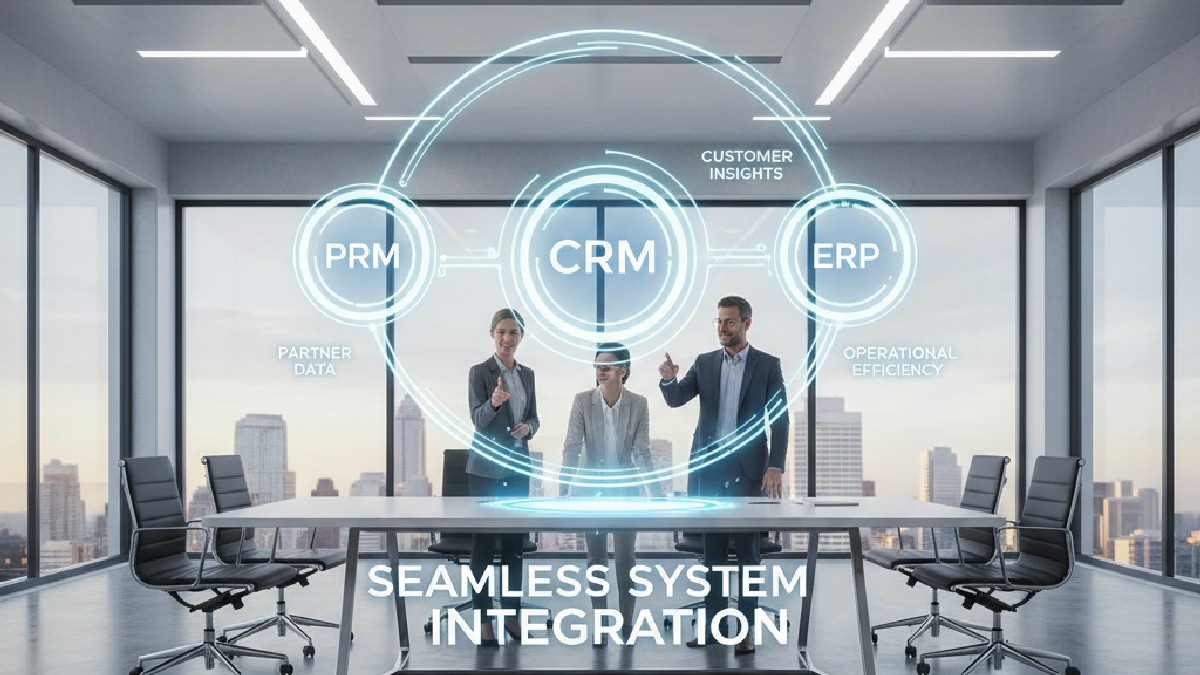
Technical challenges often complicate the integration process. Some PRM solutions may have limited or poorly documented APIs. This makes it difficult for your IT team to build reliable connections.
Custom coding might be required to bridge the gaps between systems. This adds complexity, cost, and potential points of failure to the project. Choosing a PRM platform with robust, pre-built connectors can mitigate these risks.
The complexity of modern tech stacks is a growing concern. Gartner research highlights the intricate nature of go-to-market technology ecosystems. A successful `Partner Relationship Management` strategy must account for this complexity.
A unified platform approach can simplify this challenge significantly. Using a system with a centralized interconnect module provides a hub for all your tools. This ensures data flows smoothly between your PRM and other applications.
Poor integration directly impacts the partner experience. When systems are disconnected, partners face a fragmented and confusing journey. An integrated `Partner Relationship Management` solution offers a seamless and professional experience.
Can Neglecting User Adoption Doom a Partner Relationship Management Implementation?
You can select the perfect software and execute a flawless technical integration. However, the project will fail if no one uses the new system. Neglecting user adoption is one of the most devastating `Partner Relationship Management` pitfalls.
Both internal teams and external partners may resist change. They are comfortable with existing processes, even if they are inefficient. You must actively manage this change to ensure a smooth transition.
A comprehensive change management plan is not optional; it is essential. This plan should clearly communicate the benefits of the new PRM system. It must explain why the change is happening and what is in it for them.
Inadequate training is a primary driver of low user adoption. Simply giving partners a login and a user manual is not enough. You must provide structured, role-based training that is easy to access.
Consider offering a variety of training formats to suit different learning styles. This could include live webinars, on-demand videos, and written guides. A robust partner learning management system can be invaluable here.
The user experience (UX) of the `Partner Relationship Management` software itself plays a huge role. If the platform is clunky, slow, or difficult to navigate, partners will avoid it. An intuitive and user-friendly interface encourages engagement and adoption.

Ongoing support is also critical for driving long-term adoption. Partners will inevitably have questions or run into issues. Providing prompt and helpful support shows that you are committed to their success.
Consider creating a dedicated support portal or help desk for PRM-related inquiries. You can also establish a feedback loop to gather suggestions for improvement. This makes partners feel valued and invested in the platform’s success.
Ultimately, a successful `Partner Relationship Management` program is a shared responsibility. The success of the tool depends on how well you enable your users. Prioritizing adoption ensures you realize the full return on your investment.
Your goal is to make the system an indispensable tool for your partners. When they see clear value, adoption will follow naturally. This focus on the user is a core tenet of modern channel management.
Traditional vs. AI-Powered Partner Relationship Management Approaches
| Feature | Traditional Approach | AI-Powered Approach |
|---|---|---|
| Data Analysis | Manual analysis of historical data and reports | Automated predictive analytics for forecasting trends |
| Partner Onboarding | Standardized, one-size-fits-all onboarding process | Personalized onboarding paths based on partner profile |
| Performance Tracking | Periodic reports showing past performance | Real-time dashboards with performance analytics |
| Content & Assets | Generic content library for all partners | AI-driven recommendations for relevant content |
| Lead Distribution | Manual or simple rule-based lead assignment | Intelligent lead scoring and automated distribution |
| Partner Support | Reactive support based on tickets and inquiries | Proactive support with AI-powered chatbots |
| Program Management | Static program tiers and benefits management | Dynamic program adjustments based on performance data |
How ZINFI's Unified Partner Management Can Help
Navigating the complexities of `Partner Relationship Management` requires a powerful solution. ZINFI’s Unified Partner Management (UPM) platform provides a comprehensive and integrated approach. It is designed to help you avoid the common pitfalls of implementation.
ZINFI offers a suite of interconnected modules that streamline every aspect of your channel. This unified architecture eliminates data silos and ensures a single source of truth. From partner recruitment to sales and marketing, everything works together seamlessly.
With ZINFI, you can overcome the challenges of system integration and user adoption.
- End-to-End Automation: Automate core channel processes, including partner onboarding, lead management, and marketing campaigns. This reduces manual effort and increases efficiency for you and your partners.
- Advanced Analytics: Leverage powerful predictive analytics and reporting tools. Gain deep insights into partner performance to make data-driven decisions and optimize your channel strategy. * Complete Integration: Use pre-built connectors and robust APIs to integrate ZINFI with your existing CRM, ERP, and other business systems. This creates a truly connected and efficient technology stack.
- Superior Partner Enablement: Equip your partners for success with a full suite of enablement tools. This includes learning management, content libraries, and co-branded asset management. * Flexible Program Management: Easily create and manage complex partner programs. You can configure tiers, incentives, and business rules to meet your specific channel needs, enhancing `Partner Relationship Management`. * Global-Local Capabilities: Manage a global channel program while empowering local teams. ZINFI supports multiple languages, currencies, and regional requirements in a single platform.
By choosing ZINFI, you are not just buying software. You are investing in a platform built on decades of channel expertise. This helps ensure a successful `Partner Relationship Management` implementation and long-term growth.
Frequently Asked Questions
What is the first step to avoid PRM integration pitfalls?
The first step is comprehensive planning for your `Partner Relationship Management` project. This includes defining clear goals, scope, and success metrics before you begin. It ensures your project has a solid foundation.
How can I ensure good data quality for my new PRM system?
You should conduct a thorough data audit of your existing sources. Cleanse the data by removing duplicates, correcting errors, and standardizing formats. This "data hygiene" is crucial before any migration.
Why is integrating a PRM with a CRM so important?
Integrating PRM and CRM systems creates a single view of the customer and partner. It eliminates data silos and automates workflows between your direct and indirect sales teams. It is key for effective `Partner Relationship Management`.
What is the best way to encourage partner adoption of a new PRM?
Provide comprehensive, role-based training and ongoing support. Also, clearly communicate the benefits of the new platform for their business. A user-friendly interface is also critical for adoption.
How do I choose the right PRM software vendor?
Look for a vendor with deep channel expertise and a scalable platform. Evaluate their customer support, integration capabilities, and future product roadmap. A good vendor is a long-term partner.
What is scope creep in a PRM integration project?
Scope creep is when new features are continuously added during the project. This expands the project beyond its original objectives, causing delays and budget overruns. A detailed initial plan can help prevent this.
Should partners be involved in the PRM selection process?
Yes, involving a council of key partners is highly recommended. Their feedback ensures the chosen `Partner Relationship Management` solution meets their needs. This greatly improves the chances of successful adoption.
How do I measure the ROI of my Partner Relationship Management software?
Measure ROI by tracking the KPIs you defined during the planning phase. These can include increased partner-led revenue, faster partner onboarding, and higher engagement. Also track cost savings from automation.
Can a PRM system help with partner communication?
Yes, a modern PRM platform is a central hub for communication. It can include features like newsletters, alerts, and community forums. This helps keep partners informed and engaged with your brand.
What role does change management play in a PRM rollout?
Change management is crucial for overcoming resistance to the new system. It involves communicating the vision, providing training, and supporting users through the transition. It is essential for successful `Partner Relationship Management` adoption.
About the author
Sugata Sanyal
Sugata Sanyal is the Founder & CEO of ZINFI Technologies, a leader in Unified Partner Management. He has been a passionate advocate for the channel and channel partners for decades. His vision for ZINFI is to provide partner ecosystems with the tools they need to succeed.