How to Build a Sales Partner Portal with Salesforce: A Step-by-Step Guide
Building a sales partner portal with Salesforce requires a strategic plan and careful execution. It involves defining clear objectives, selecting essential features, and ensuring seamless integration for success. This process empowers your channel partners and drives significant revenue growth.
Key Takeaways
- A successful Salesforce partner portal begins with a comprehensive strategy and clear business goals.
- Core features like deal registration, content management, and training are essential for partner engagement.
- Customization and integration with other business systems are critical for a seamless user experience.
- Driving adoption requires structured onboarding, consistent communication, and attractive partner incentives.
- Continuous maintenance, feedback collection, and performance analysis ensure the portal's long-term value.
- A dedicated Unified Partner Management platform can often provide a more robust and faster solution.
- Measuring ROI through key metrics helps justify the investment in your partner portal technology.
Why is Planning Crucial Before Building Your Partner Portal?
Proper planning is the foundation of a successful channel sales strategy. A well-designed partner portal can transform your partner relationships and accelerate growth. Without a clear plan, you risk building a tool that nobody uses.
First, you must define your business objectives for the portal. What do you want to achieve with this new platform? Your goals could include increasing partner-led revenue, speeding up partner onboarding, or improving lead conversion rates.
Next, you need to understand your partners' needs deeply. Conduct surveys and interviews to learn about their daily challenges and workflows. A partner portal should make their lives easier, not more complicated.
Map out the entire partner journey from recruitment to ongoing engagement. Identify every touchpoint where the portal can add value and remove friction. This journey map will serve as a blueprint for your portal's structure.
You should also establish key performance indicators (KPIs) from the start. These metrics will help you measure the success of your partner portal over time. Examples include partner satisfaction scores, deal registration volume, and training completion rates.
Finally, assemble a cross-functional project team. This team should include stakeholders from sales, marketing, IT, and finance. Their combined expertise ensures the portal aligns with broader company goals.
What Core Features Should a Salesforce Partner Portal Include?
A powerful partner portal is more than just a document repository. It should be an interactive hub that equips partners with everything they need. Selecting the right features is essential for driving adoption and performance.
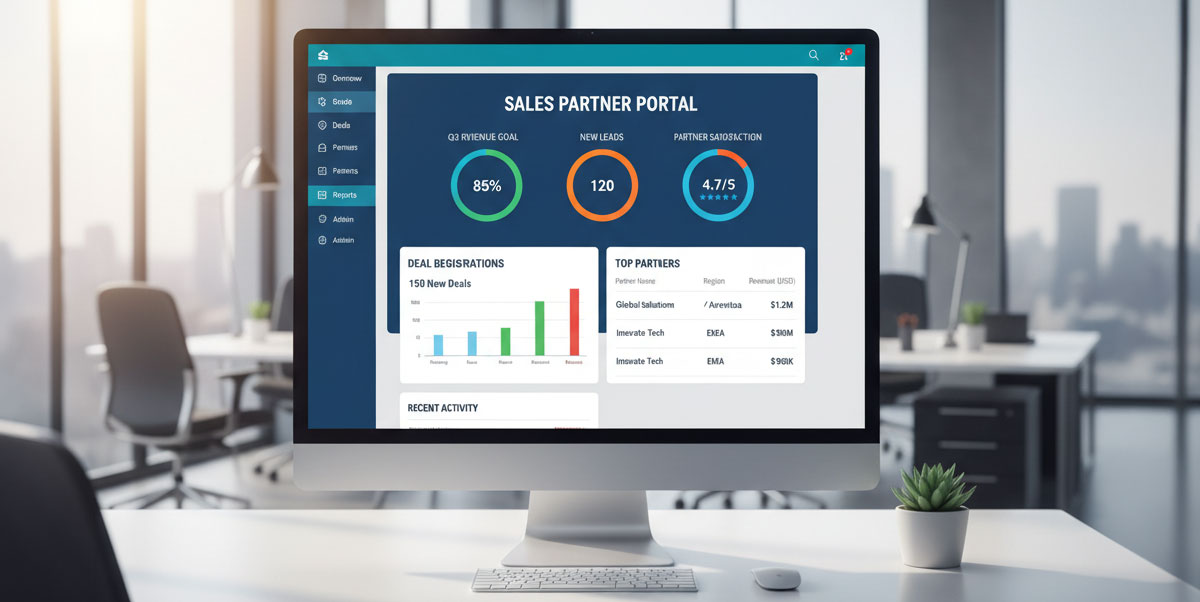
Deal registration and lead management are fundamental components. Partners need a simple way to register new opportunities to avoid channel conflict. A direct link to your CRM ensures all data is centralized and accurate.
Providing a comprehensive content library is another critical feature. This includes sales playbooks, marketing collateral, product data sheets, and pricing information. Content must be easy to find, relevant, and always up to date.
Partner training and certification are also vital for success. An integrated learning management system (LMS) ensures partners are knowledgeable about your products. Consider a tool for partner learning management to track progress and certifications.
Your partner portal should also include robust marketing tools. These can range from co-brandable assets to complete campaign automation platforms. Empowering partners to market effectively extends your brand's reach significantly.
Business planning and performance dashboards are essential for strategic alignment. These tools help partners set goals and track their progress against them. This visibility fosters a more collaborative and results-driven relationship.
Features for managing partner business planning are crucial for long-term growth. They allow for joint planning sessions and tracking of mutual commitments. A well-built partner portal supports this strategic function effectively.
Finally, communication tools are necessary to keep partners informed and engaged. This includes features for announcements, newsletters, and direct support channels. A connected partner ecosystem thrives on clear and consistent communication.
How Do You Customize and Integrate Your Salesforce Partner Portal?
Building a partner portal on Salesforce offers extensive customization possibilities. The goal is to create a branded, intuitive experience for your partners. This customization goes beyond just adding your company logo.
You can tailor the user interface to match your corporate branding. This creates a seamless experience as partners move from your website to the portal. Consistent branding reinforces your identity and builds trust with partners.
Salesforce allows you to create custom objects and workflows. You can design processes that mirror your specific channel program requirements. For example, you can build a custom workflow for deal registration approvals.
Integration is key to maximizing the value of your partner portal. The portal should not exist in a silo separate from your other business systems. It must connect with your core operational tools for efficiency.
Connecting your portal directly to the Salesforce CRM is the most obvious integration. This ensures a single source of truth for all customer and partner data. It eliminates manual data entry and reduces the risk of errors.

You may also need to integrate with your enterprise resource planning (ERP) system. This can automate processes related to quoting, ordering, and commission payments. Such integrations streamline the entire sales cycle for your partners.
Marketing automation platform integration is another common requirement. This allows partners to access and launch pre-approved marketing campaigns directly from the portal. It provides valuable data on campaign performance and lead generation.
Using APIs, you can connect your partner portal to almost any third-party application. This flexibility allows you to build a highly connected and powerful partner ecosystem. Effective use of predictive analytics can further enhance these integrations by forecasting partner needs.
Ultimately, a well-integrated portal provides a 360-degree view of your channel business. It consolidates data from various sources into a single, actionable dashboard. This unified view is invaluable for making strategic decisions about your partner program.
How Can You Drive Adoption and Engagement in Your Partner Portal?
Building a great partner portal is only half the battle. You must actively work to drive adoption and ongoing engagement. A portal with no users provides zero return on investment.
Start with a structured and comprehensive partner onboarding process. Guide new partners through the portal's key features and show them how it benefits them. Make the portal the central hub for all onboarding activities.
Consistent communication is essential for keeping the portal top of mind. Use automated alerts and notifications to announce new content, leads, or program updates. Regular newsletters can also highlight success stories and new features.
Incentivize use of the portal by tying it to your partner program benefits. For example, access to market development funds (MDF) could be managed exclusively through the portal. This makes platform engagement a necessary part of doing business.
Gamification can also be a powerful tool for driving engagement. Implement leaderboards, badges, and rewards for activities like completing training or registering deals. This friendly competition can motivate partners and make using the portal more enjoyable.
Make sure your channel account managers are champions of the partner portal. They should use it consistently in their interactions with partners. Their endorsement and regular use will encourage partners to do the same.
Actively solicit feedback from your partners about the portal experience. Create a simple way for them to submit suggestions or report issues. Acting on this feedback shows partners that you value their input and are committed to improving.
Finally, showcase the value of the portal through tangible results. Share data on how top-performing partners are using the platform to succeed. This proves the portal's worth and encourages others to follow their lead.
What Are the Best Practices for Maintaining Your Partner Portal?
A partner portal is a living platform that requires continuous care and attention. Launching the portal is the beginning, not the end, of the process. Effective maintenance ensures its long-term relevance and effectiveness.
Regularly update the content available within the portal. Outdated sales collateral, pricing, or product information can frustrate partners. Establish a content review schedule to keep everything fresh and accurate.
Continuously monitor portal usage and performance metrics. Use performance analytics to understand which features are most popular and where users struggle. These insights should guide your future development and optimization efforts.

Gathering partner feedback is a critical maintenance activity. Use surveys, focus groups, and feedback forms to collect suggestions for improvement. This shows partners you are invested in their experience and success.
According to Gartner's research on partner management, a continuous feedback loop is crucial for ecosystem health. In their Market Guide for Partner Relationship Management, they emphasize data-driven optimization. This approach ensures the portal evolves with partner needs.
Plan for regular technology updates and enhancements. The digital landscape changes quickly, and your partner portal must keep pace. Allocate a budget for ongoing development to add new features and improve functionality.
Ensure you have a dedicated support system for portal-related issues. Partners need a quick and easy way to get help when they encounter problems. A responsive support team is essential for maintaining partner satisfaction.
A poorly maintained partner portal can quickly become a liability. It can damage partner relationships and hinder sales performance. Proactive maintenance is an investment in the health of your entire channel ecosystem.
Traditional vs. AI-Powered Partner Portal Approaches
| Feature | Traditional Manual Approach | AI-Powered Partner Portal Approach |
|---|---|---|
| Partner Onboarding | Manual, time-consuming process with spreadsheets and emails. | Automated, guided workflows with progress tracking. |
| Lead Distribution | Manual assignment based on territory or simple rules. | AI-driven routing based on partner skills, performance, and capacity. |
| Content Personalization | One-size-fits-all content library for all partners. | Content is dynamically recommended based on partner role, tier, and history. |
| Performance Tracking | Relies on periodic, manual reports that are often outdated. | Real-time dashboards with performance analytics and trend analysis. |
| Partner Support | Reactive support via email or phone, leading to delays. | Proactive support with AI chatbots and knowledge base suggestions. |
| Data Analysis | Basic reporting with limited insights into partner behavior. | Deep analysis with predictive analytics to forecast trends and identify risks. |
| RoI Measurement | Difficult to accurately correlate activities to revenue. | Clear attribution models connecting portal engagement to sales outcomes. |
Enhance Your Partner Program with ZINFI
While building a custom Salesforce partner portal is an option, it can be complex. ZINFI offers a comprehensive Unified Partner Management (UPM) solution. It provides a robust, pre-built platform designed specifically for channel success.
ZINFI's UPM platform integrates seamlessly to streamline all aspects of your partner program. It provides a single source of truth for you and your partners. This consolidation simplifies management and improves efficiency.
Here are some key features of ZINFI's UPM platform:
- Seamless Partner Management: Automate the entire partner lifecycle from recruitment and onboarding to ongoing management. ZINFI provides powerful tools for partner management and program administration.
- Advanced Co-branded Asset Management: Empower your partners with easy-to-use tools for co-branding marketing assets. Our co-branded assets management module ensures brand consistency while enabling local marketing.
- Integrated Lead and Deal Management: Streamline your sales process with automated lead distribution and robust deal registration. ZINFI's deal registration management tool prevents channel conflict.
- Flexible Financial Management: Manage complex incentive programs with ease, including MDF, co-op funds, and rebates. Our module for market development funds management automates requests and claims.
- Comprehensive Partner Learning: Deliver engaging training and certification programs through an integrated learning management system. The partner learning management plus platform tracks progress effectively.
- Actionable Business Intelligence: Gain deep insights into your channel performance with advanced reporting and analytics. ZINFI’s business intelligence reports provide a 360-degree view of your program.
Choosing a dedicated UPM solution like ZINFI can accelerate your time to market. It reduces the burden on your internal IT resources. This allows you to focus on strategy and relationship-building, not software development.
Frequently Asked Questions
What is a Salesforce partner portal?
A Salesforce partner portal, often built using Salesforce Experience Cloud, is a branded online space. It enables companies to connect and collaborate with their channel partners. It centralizes resources, communication, and sales activities like lead management and deal registration.
How much does a custom Salesforce partner portal cost?
The cost varies significantly based on complexity, customization, and integrations. Initial license fees, development costs, and ongoing maintenance can range from tens of thousands to hundreds of thousands of dollars. A detailed scope analysis is needed for an accurate estimate.
Can I use Salesforce Experience Cloud for a partner portal?
Yes, Salesforce Experience Cloud (formerly Community Cloud) is the primary tool for building a custom partner portal. It provides the framework, templates, and components needed to create a collaborative digital experience for your partners. It integrates natively with your Salesforce CRM data.
What's the difference between a partner portal and a PRM solution?
A partner portal is a component of a Partner Relationship Management (PRM) solution. A PRM is a comprehensive platform that covers the entire partner lifecycle. A custom portal may only have a few features, while a full PRM offers a wider, integrated toolset.
How do I ensure my partner portal is secure?
Security requires careful setup of user permissions, roles, and sharing rules within Salesforce. Use multi-factor authentication and regularly audit access levels. Ensure all data is encrypted and that the platform complies with relevant data privacy regulations like GDPR.
How can I measure the ROI of my partner portal?
Measure ROI by tracking KPIs defined during your planning phase. Key metrics include partner-sourced revenue, deal registration volume, lead conversion rates, and partner satisfaction. Correlate portal usage with partner performance to demonstrate value.
What are the biggest challenges in building a partner portal?
Common challenges include a lack of clear strategy, poor user adoption, and complex integrations. Other issues are insufficient content and a failure to maintain the portal after launch. Proper planning and a focus on partner needs can mitigate these risks.
How long does it take to build a partner portal?
The timeline depends on the project's scope. A basic portal using standard templates might take a few months. A highly customized portal with complex integrations could take six months to a year or more to develop and deploy successfully.
Can I integrate non-Salesforce tools with my portal?
Yes, you can integrate many non-Salesforce applications using APIs. Common integrations include ERP systems, marketing automation platforms, content repositories, and financial software. These integrations create a more powerful and unified ecosystem for partners.
Why is mobile access important for a partner portal?
Partners are often working on the go and need access to information from any device. A mobile-responsive design or a dedicated mobile app allows them to register deals or access content from the field. ZINFI offers a powerful mobile app management solution.
About the author
Sugata Sanyal
Sugata Sanyal is the Founder & CEO of ZINFI Technologies, a leader in Unified Partner Management. He has been a passionate advocate for the channel and channel partners for decades. His vision for ZINFI is to provide partner ecosystems with the tools they need to succeed.