How to Use Your PRM Software for Manufacturing to Tie Incentives to Performance Metrics
Using a Partner Relationship Management (PRM) platform for manufacturing allows you to directly link financial incentives to specific, measurable partner performance metrics. This strategic alignment ensures your channel investments drive tangible results and foster a high-performing partner ecosystem.
In the complex world of manufacturing, channel partners are extensions of your own team. They are the face of your brand in diverse markets and complex supply chains.
However, motivating these partners effectively requires a sophisticated, data-driven approach. Simply offering generic incentives is no longer enough to maintain a competitive edge.
You need a system that can track detailed performance and reward desired behaviors accurately. This is where a robust partner relationship management platform becomes mission-critical for your business.
It provides the framework to define what success looks like for your partners. It also automates the process of rewarding them when they achieve key objectives.
Key Takeaways
TL;DR
- A PRM system is crucial for managing complex manufacturing channel ecosystems. It provides centralized control and visibility over all your partner activities.
- Specific key performance indicators (KPIs) must be tracked to measure partner success. These include sales volume, certification levels, and lead response times.
- Effective incentive programs should be performance-based and clearly structured. Tiers, rebates, and market development funds are common powerful tools.
- Automating incentive payouts through a PRM reduces administrative overhead and errors. It also ensures timely rewards for your valuable channel partners.
- Integration between your PRM and other business systems like ERP and CRM is essential. This creates a single source of truth for all partner performance data.
- Regularly analyzing the ROI of incentive programs helps refine your channel strategy. This ensures you are investing resources in the most effective way possible.
- Using a dedicated platform improves partner engagement and loyalty over the long term. It shows partners that you are invested in a mutually beneficial relationship.
Why is a specialized PRM essential for the manufacturing sector?
The manufacturing industry operates with intricate, multi-layered channel networks. These networks often include distributors, resellers, agents, and systems integrators.
Managing this complexity without a dedicated platform can lead to significant inefficiencies. A specialized Partner Relationship Management solution brings order to this chaos.
A central platform offers a single source of truth for all partner-related information. It consolidates data that might otherwise be scattered across spreadsheets and emails.
This centralization is the first step toward building a scalable and manageable channel program. It provides the foundation necessary for sophisticated performance tracking and incentive management.
Furthermore, manufacturing sales cycles are often long and involve multiple touchpoints. A powerful PRM helps track these complex journeys from initial lead to final sale.
This visibility is vital for understanding which partners are most effective at nurturing long-term opportunities. It allows you to assign credit and rewards accurately for their efforts.
The product portfolios in manufacturing can be vast and technically complex. Partners need constant access to training materials, technical specifications, and marketing assets.
A content management system within the platform ensures partners always have the latest information. This helps them represent your brand accurately and sell more effectively in the field.
Compliance and regulatory requirements are also a major concern in many manufacturing sub-sectors. These can include a wide range of industry-specific standards and protocols.
A good partner platform can help manage partner contracts and certifications. This ensures that every member of your channel ecosystem adheres to the required legal and business standards.
Finally, global supply chains add another layer of complexity to the entire process. Different regions may have unique market conditions, pricing structures, and partner types.
A scalable PRM accommodates this global diversity with flexible program management tools. It allows you to create tailored programs and incentives for different markets and partner tiers.
Without such a system, attempts to manage a manufacturing channel are often reactive. You are left responding to problems instead of proactively guiding your partners toward success.
A dedicated solution empowers you to be strategic in your approach. It turns channel management from an administrative burden into a significant competitive advantage.
Investing in a platform designed for these unique challenges is no longer a luxury. It is a fundamental requirement for growth and stability in the modern manufacturing landscape.
This technology empowers channel chiefs to make data-driven decisions that impact the bottom line. It transforms the way manufacturers engage with and motivate their indirect sales force.
How can a PRM track the right performance metrics for manufacturing partners?
A successful incentive program begins with tracking the right performance metrics. A Partner Relationship Management platform excels at capturing and analyzing this critical data.
It moves beyond simple sales volume to provide a holistic view of partner performance. This granular insight is key to rewarding the behaviors that truly drive business growth.

One of the most fundamental metrics is, of course, revenue generated by partners. A platform should integrate with your CRM or ERP to track sales data accurately.
This allows you to link specific deals back to the partners who sourced or closed them. It forms the basis of many commission and rebate incentive programs.
Beyond revenue, tracking lead management effectiveness is crucial for your business. The platform can monitor how quickly partners follow up on leads you provide.
It can also track the conversion rates of those leads through the sales funnel. Rewarding partners for prompt and effective lead nurturing encourages proactive engagement.
Product expertise is especially important for complex manufacturing goods. Your PRM should include a learning management system to track partner training and certifications.
You can then tie incentives directly to the completion of specific courses or certifications. This ensures your partners have the knowledge needed to sell and support your products effectively.
For manufacturers focused on market expansion, tracking new customer acquisition is a vital metric. The platform can differentiate between sales to new accounts and existing ones.
This allows you to offer special bonuses or higher margins for partners who bring in new business. It directly rewards them for helping you grow your overall market share.
Partner engagement with your portal is another valuable metric to monitor closely. Active partners are generally more aligned with your business goals and strategies.
Your platform can track logins, content downloads, and participation in joint marketing campaigns. You might offer small rewards for consistent engagement to keep your brand top of mind.
Deal registration is another area where a PRM provides essential tracking capabilities. It offers a formal process for partners to claim ownership of sales opportunities.
A robust deal registration module prevents channel conflict and provides clear data on partner-sourced leads. It is a cornerstone of a healthy and collaborative channel environment.
Customer satisfaction scores can also be managed through the right platform. You can survey end-customers post-sale to gauge the quality of the partner’s service.
Incentivizing high customer satisfaction scores encourages partners to provide excellent service. This protects your brand reputation and fosters long-term customer loyalty.
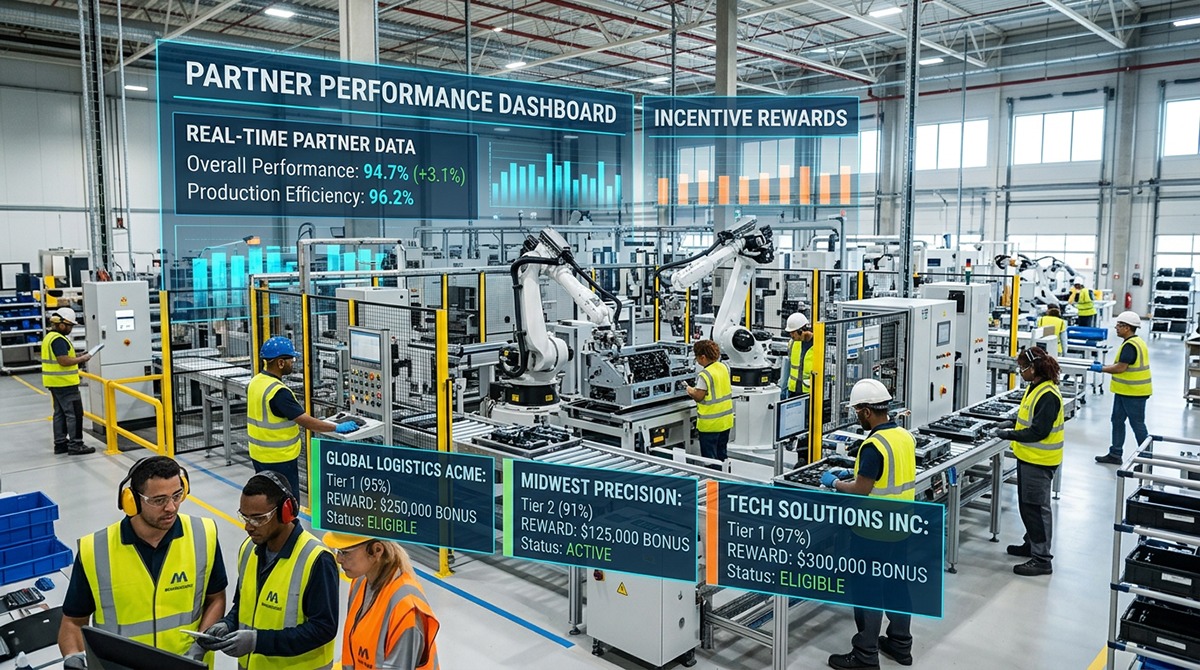
Ultimately, a good platform provides customizable dashboards and reports. These tools allow you to visualize these metrics and identify performance trends.
This data-driven insight from performance analytics helps you understand what is working. It also highlights which partners may need additional support or training to improve performance.
By tracking a balanced scorecard of metrics, you move beyond a purely transactional relationship. You build a true partnership based on shared goals and mutual success.
The platform becomes the engine for this data-driven approach. It provides the visibility needed to create fair, effective, and motivating incentive programs.
What strategies can you use in your PRM to build effective incentive programs?
Once you are tracking the right metrics, you need to build compelling incentive programs. Your Partner Relationship Management platform provides the tools to design and manage these initiatives.
A well-designed program aligns partner motivations with your strategic business objectives. It uses a mix of financial and non-financial rewards to drive desired behaviors.
Tiered partner programs are a common and effective strategy for many organizations. Partners are grouped into tiers like Gold, Silver, and Bronze based on their performance.
Higher tiers receive better benefits, such as increased margins, dedicated support, and more market development funds (MDF). This structure creates a clear path for partner growth and ambition.
Your PRM automates the management of these tiers. It can automatically upgrade or downgrade partners based on predefined performance criteria.
This ensures the program is always fair and transparent for all participants. It eliminates the need for manual and often biased quarterly or yearly reviews.
Rebate programs are another powerful tool in the manufacturing sector. These programs reward partners for achieving certain sales volumes over a specific period.
A rebates management module in your platform can automate the entire process. It tracks sales against targets and calculates the correct rebate amounts automatically.
Sales Performance Incentive Funds (SPIFFs) are excellent for short-term goals. These are temporary bonuses offered for selling specific products or services.
For example, you might offer a SPIFF to clear out old inventory. Your platform allows you to quickly launch, track, and pay out these tactical incentives.
Market Development Funds are a crucial incentive for proactive partners. They provide financial resources for partners to conduct their own marketing activities.
A platform with MDF management capabilities allows partners to submit proposals for funds. It also enables you to track how the funds are used and measure the return on investment.
Beyond direct financial rewards, think about non-monetary incentives for your partners. Recognition is a powerful motivator that should not be overlooked.
Your platform can feature a leaderboard that publicly recognizes top-performing partners. You can also host annual partner award ceremonies to celebrate their success.
According to research from sources like the Harvard Business Review, a mix of motivators is most effective. Combining financial rewards with recognition and career growth opportunities creates a strong program.
Your platform can serve as the hub for managing this diverse incentive mix. It provides a single interface for partners to track their progress toward all rewards.
Finally, your incentive strategy should be flexible and adaptable over time. What works today might not be effective in a year from now.
The analytics capabilities of your PRM allow you to constantly evaluate program effectiveness. This data helps you refine your strategy to ensure it remains relevant and impactful.
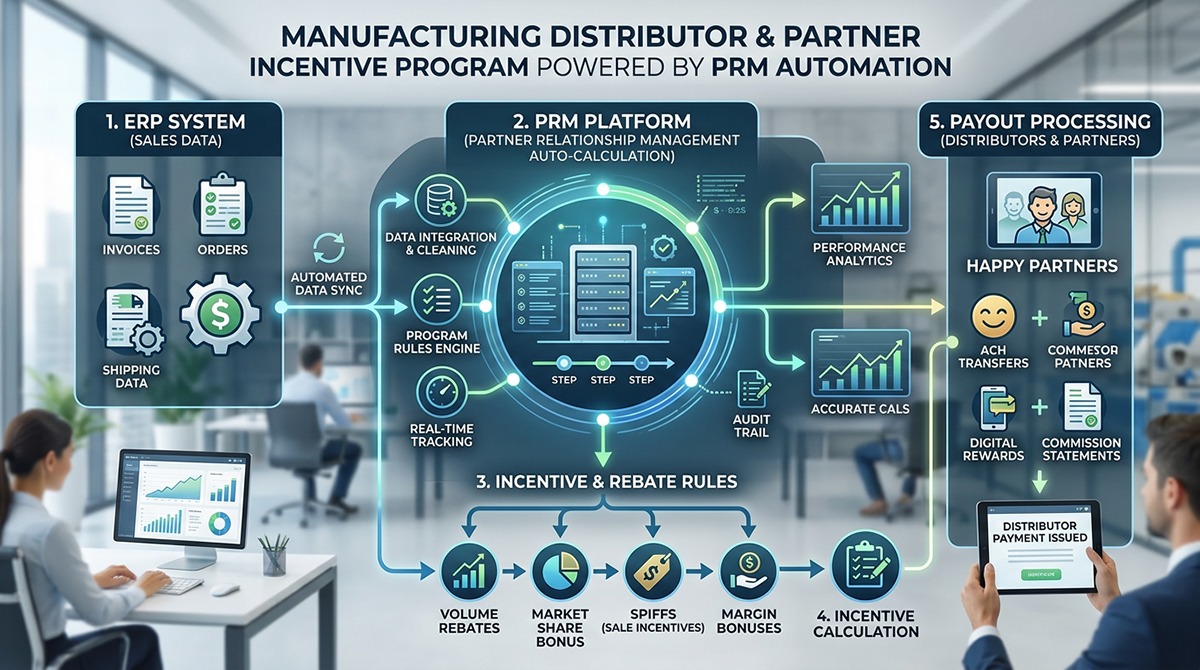
By using these strategies within your platform, you create a dynamic incentive ecosystem. This system encourages continuous improvement and strong alignment with your corporate goals.
It transforms incentives from a simple cost of doing business into a strategic investment. This investment yields significant returns in the form of channel loyalty and increased sales.
How does integrating your PRM with other systems enhance incentive management?
A Partner Relationship Management platform delivers maximum value when it is not an isolated island. Integration with your other core business systems is absolutely essential.
This connectivity creates a seamless flow of data across your entire organization. It ensures that your incentive programs are based on accurate and timely information.
The most important integration is often with your Enterprise Resource Planning (ERP) system. The ERP is typically the system of record for sales orders, invoicing, and inventory.
By connecting your PRM to your ERP, you automate the flow of sales data. This eliminates the need for manual data entry when calculating commissions or rebates.
For example, when a sale is finalized in the ERP, that data can be sent to the platform. The platform then automatically attributes the sale to the correct partner and updates their progress.
This real-time data flow ensures that partners see their performance updated quickly. It boosts trust and keeps them motivated throughout the sales period.
Integration with your Customer Relationship Management (CRM) system is also critical. Your direct sales team often lives inside the company CRM.
Connecting the CRM and PRM provides a 360-degree view of all sales activities. It helps manage lead distribution and prevent conflict between direct and indirect channels.
A centralized interconnect tool can facilitate these complex data exchanges seamlessly. It acts as a bridge between your partner platform and your internal systems.
This unified view of the customer journey is vital for accurate attribution. It helps you understand every touchpoint that contributed to a final sale.
Connecting to a marketing automation platform can also enhance your incentive programs. This integration can help track the effectiveness of partner-led marketing campaigns.
You can see which campaigns generated the most leads and sales. This allows you to reward partners for marketing excellence, not just sales results.
Financial systems and payment gateways are another key integration point. Once incentives are calculated, you need an efficient way to pay your partners.
Integrating your platform with a payment management solution automates this final step. It ensures partners receive their well-earned rewards promptly and accurately.
Ultimately, a fully integrated ecosystem provides a single source of truth for your channel. Everyone, from channel managers to partners themselves, works from the same data set.
This consistency eliminates disputes over sales credit and incentive calculations. It builds a foundation of trust that is essential for any healthy partnership.
This integration transforms your partner platform from a simple portal into a central nervous system. It connects all aspects of your channel operations into a cohesive whole.
The end result is a more efficient, accurate, and powerful incentive management process. It frees up your team to focus on strategy instead of manual data reconciliation.
How does a PRM help measure the ROI of your manufacturing incentive programs?
Investing in channel incentive programs is a significant financial commitment for any company. It is therefore crucial to measure the return on that investment (ROI).
A Partner Relationship Management platform provides the analytical tools needed to calculate this ROI. It helps you justify your channel budget and optimize future spending decisions.
The foundation of ROI measurement is connecting costs to results. Your PRM captures both sides of this important equation in one place.
On one side, it tracks the total cost of your programs. This includes MDF spent, rebates paid out, and the value of any commissions.
On the other side, it captures the business outcomes generated by your partners. This includes metrics like revenue growth, new customers acquired, and market share expansion.
With this data centralized, you can run detailed ROI reports. A powerful business intelligence module is essential for this type of analysis.
For instance, you can analyze the ROI of a specific SPIFF program. The platform will show you the total cost of SPIFF payouts versus the incremental sales generated.
This helps you determine if the short-term incentive was a profitable initiative. It provides clear data to inform decisions about running similar programs in the future.
You can also measure the long-term ROI of your tiered partner program. The platform can compare the performance of partners in different tiers.
Are your Gold partners, who receive the most benefits, generating a proportional amount of revenue? The data within your PRM can provide a definitive answer to that question.
Measuring the ROI of MDF is another critical capability of the system. The platform links MDF spending to specific marketing activities and their outcomes.
This allows you to see which types of partner-led campaigns generate the best returns. You can then guide partners to invest their MDF in the most effective tactics.

Advanced platforms may also offer predictive analytics capabilities for future planning. These tools can forecast the potential impact of changes to your incentive structure.
This helps you model different scenarios before you roll them out. It reduces the risk associated with making major changes to your channel programs.
Beyond financial ROI, the platform also helps measure softer benefits. These include improvements in partner satisfaction, engagement, and loyalty over time.
While harder to quantify, these factors are crucial for long-term channel health. They are leading indicators of future financial performance and stability.
By providing robust reporting and analytics, the platform demystifies channel performance. It replaces guesswork and assumptions with hard data and actionable insights.
This enables channel leaders to speak the language of the C-suite. They can clearly demonstrate the value and profitability of the indirect channel.
This data-driven approach to ROI analysis is transformative for manufacturing companies. It ensures that every dollar invested in the channel is working as hard as possible.
It turns your incentive programs into a finely tuned engine for growth. It also provides the feedback loop needed for continuous improvement.
Traditional vs. AI-Powered Incentive Management
| Feature | Traditional Approach | AI-Powered PRM Approach |
|---|---|---|
| Data Analysis | Manual analysis using spreadsheets; often delayed. | Real-time, automated analysis of performance data. |
| Incentive Design | Based on historical performance and intuition. | Uses predictive analytics to model effective programs. |
| Performance Tracking | Periodic, manual review of partner sales data. | Continuous, automated tracking of a wide range of KPIs. |
| Personalization | One-size-fits-all programs for all partners. | Dynamic, personalized incentive recommendations for each partner. |
| Payout Calculation | Manual calculations prone to errors and disputes. | Automated, accurate calculations based on integrated data. |
| ROI Measurement | Difficult and time-consuming to calculate accurately. | Automated reporting on the ROI of each incentive program. |
| Fraud Detection | Relies on manual audits and spot checks. | AI algorithms can flag suspicious claims or patterns. |
Supercharge Your Manufacturing Channel with ZINFI
Choosing the right platform is critical to executing a successful channel strategy. ZINFI’s Unified Partner Management (UPM) solution is purpose-built for this task.
Our platform provides a comprehensive suite of tools to manage every aspect of your channel. We help you connect incentives directly to performance for maximum impact.
- Automated Incentive Management: ZINFI automates the entire incentive lifecycle. It handles everything from program creation to final payment processing, including modules for commissions, MDF, and rebates. This reduces administrative overhead and ensures timely, accurate rewards for your partners.
- Advanced Analytics & Reporting: Our platform offers powerful performance analytics. It provides you with deep insights into partner performance and program ROI. Customizable dashboards give you a real-time view of your entire channel ecosystem, enabling data-driven decision-making.
- Integrated Partner Enablement: We know that performance is tied to knowledge. ZINFI’s platform includes a complete learning management system and content libraries. This ensures your partners are always equipped with the skills and materials they need to succeed in the market.
- Seamless Business Planning: Go beyond simple incentives with collaborative business planning tools. Our partner business planning module allows you to set joint goals with partners, track progress, and ensure strategic alignment from the top down.
- Flexible Program Management: The manufacturing landscape is not one-size-fits-all. Our platform allows you to create highly flexible, tiered partner programs. You can easily define criteria, automate tier management, and tailor benefits to motivate all segments of your partner base.
- Robust Integration Capabilities: ZINFI's platform is designed to connect with your existing technology stack. Our solutions for centralized interconnection ensure a seamless flow of data between your PRM, ERP, CRM, and other critical business systems for a single source of truth.
Frequently Asked Questions
What exactly is a PRM?
A PRM, or Partner Relationship Management platform, is a software solution for companies. It helps them manage their relationships and processes with their indirect sales channel partners.
Why is tying incentives to metrics so important for manufacturers?
It ensures that your significant investments in channel incentives directly drive desired behaviors. This approach maximizes the ROI of your programs and aligns partners with your strategic goals.
Can a PRM handle different types of channel partners?
Yes, a modern platform is designed to manage a diverse ecosystem. It can support distributors, value-added resellers (VARs), agents, and systems integrators with tailored programs.
How does a PRM help reduce channel conflict?
A PRM provides clear rules of engagement through features like deal registration. This ensures fairness and transparency, minimizing disputes between partners or with your direct sales team.
What kind of sales metrics should I track for my manufacturing partners?
You should track revenue, new customer acquisition, product-specific sales, and deal size. Also consider tracking lead conversion rates and sales cycle length for a complete picture.
Are non-financial incentives effective for partners?
Yes, non-financial incentives like public recognition, awards, and access to exclusive training are powerful motivators. They help build loyalty and make partners feel valued beyond just their sales numbers.
How does a PRM improve the partner experience?
It provides partners with a single, easy-to-use portal for everything they need. This includes accessing content, registering deals, tracking their performance, and viewing their incentive earnings.
How long does it take to implement a new incentive program in a PRM?
With a flexible platform, launching a new tactical incentive like a SPIFF can take minutes. More complex programs, like a new tiered structure, can be configured and launched much faster than manual methods.
Can I manage Market Development Funds (MDF) with this software?
Absolutely, a comprehensive solution includes dedicated MDF management modules. These allow partners to request funds, let you approve proposals, and help you track the ROI of that spending.
How does a PRM ensure incentive payments are accurate?
By integrating with your ERP or CRM, the PRM automates data collection. It eliminates manual spreadsheet work, which is a common source of errors in incentive calculations.
About the author
Sugata Sanyal
Sugata Sanyal is the Founder & CEO of ZINFI Technologies, a leader in Unified Partner Management. He has been a passionate advocate for the channel and channel partners for decades. His vision for ZINFI is to provide partner ecosystems with the tools they need to succeed.