Converged Environment: The Future of AI Transformation in Manufacturing and Telecom
 ZINFI Technologies, Inc.
Organizations across the world are accelerating digital modernization initiatives. According to research from the World Economic Forum, advanced technologies including artificial intelligence and automation are expected to transform millions of jobs and business processes during the coming decade.
Despite these opportunities, many enterprises still operate with isolated technology systems. Separate data environments often prevent teams from gaining a unified operational view. When businesses move toward integrated platforms, leaders can access real-time insights that improve operational efficiency and decision-making.
This guide explores how converged environments support digital innovation and help organizations implement successful AI transformation strategies.
A converged environment integrates traditional enterprise IT systems with operational technologies that control machines, production lines, and industrial equipment. Network infrastructure connects these systems and enables real-time data exchange.
Historically, these technologies operated independently. IT teams managed applications and enterprise systems, while OT specialists handled industrial equipment. Modern digital operations require these domains to work together.
Through convergence, organizations can collect operational data from sensors, equipment, and software platforms. This unified data layer becomes the foundation for advanced analytics and intelligent automation.
Research from McKinsey & Company shows that connected factories using digital technologies can improve productivity by up to 30%.
Modern analytics platforms convert large volumes of operational data into meaningful insights. These insights support maintenance planning, production optimization, and supply chain improvements.
One of the most widely adopted applications is predictive maintenance. Sensors placed on industrial equipment collect performance metrics such as vibration, temperature, and pressure.
Analytics platforms process this information and identify patterns that indicate potential failures. Maintenance teams can then repair equipment before disruptions occur.
This approach not only reduces downtime but also lowers long-term maintenance costs. Companies implementing predictive strategies often experience significant improvements in operational reliability.
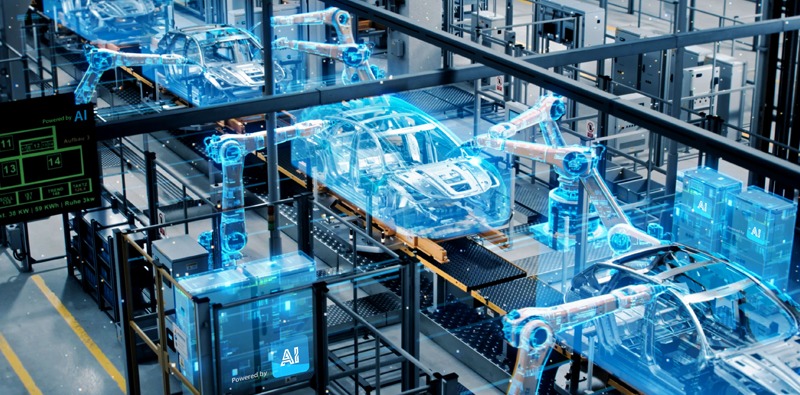
Advanced computer vision technologies also improve product inspection processes. AI-powered cameras detect defects faster than manual inspection, helping manufacturers maintain consistent quality standards.
Manufacturing organizations have become early adopters of converged infrastructure. As production environments generate large volumes of machine data, integration between operational systems and enterprise analytics platforms becomes essential.
Companies frequently work with global system integrators to design and deploy modern digital infrastructure. These partners help organizations implement scalable solutions that connect legacy systems with modern cloud platforms.
For example, research from the MIT Industrial Performance Center highlights how digital transformation initiatives enable manufacturers to optimize supply chains, automate production planning, and reduce operational risk.
When manufacturing environments combine sensor data, analytics tools, and machine learning models, production systems become more responsive to real-time conditions.
Telecommunications companies also benefit from converged digital infrastructure. Network operators manage massive volumes of data generated by mobile devices, IoT sensors, and connected applications.
By integrating network infrastructure with analytics platforms, telecom providers can monitor performance, predict service disruptions, and deliver more reliable connectivity.
Private 5G networks are one example of how telecommunications providers are expanding enterprise services. According to IBM Institute for Business Value, organizations deploying intelligent automation technologies often achieve measurable improvements in operational efficiency.
Through integrated infrastructure and advanced analytics, telecommunications companies can deliver services that go beyond connectivity. They become strategic technology partners for enterprise customers.
One of the biggest challenges for organizations adopting new technologies is the cost of infrastructure modernization. Traditional capital expenditure models require significant upfront investment.
Many companies now adopt consumption-based services where infrastructure costs scale according to usage. This model allows businesses to modernize operations without committing to large initial investments.
Cloud platforms and infrastructure-as-a-service providers support this flexible financial approach. Organizations gain access to advanced computing resources while maintaining predictable operational costs.
As digital technologies evolve, converged environments will continue expanding across industries. Edge computing, automation, and advanced analytics will further improve operational visibility.
Organizations investing in integrated infrastructure today create the foundation for long-term innovation. Real-time data insights help leaders respond faster to operational challenges and emerging market opportunities.
AI transformation initiatives succeed when businesses focus not only on technology but also on collaboration between people, processes, and digital systems.
| Dimension | Traditional Systems | Converged Environments |
|---|---|---|
| Data management | Separate departmental systems | Unified real-time data platforms |
| Operational visibility | Limited cross-system insights | Centralized monitoring dashboards |
| Maintenance approach | Reactive repairs | Predictive maintenance strategies |
| Quality assurance | Manual inspection | Automated vision-based inspection |
| Infrastructure investment | High capital expenditure | Flexible consumption models |
AI transformation refers to integrating artificial intelligence technologies into business processes to improve efficiency, automation, and decision-making.
Converged infrastructure helps organizations unify data, simplify system management, and support advanced analytics capabilities.
Sensors collect equipment performance data that analytics systems evaluate to predict potential failures before disruptions occur.
Yes. Cloud services and subscription-based platforms allow small and mid-sized businesses to adopt intelligent technologies without large capital investments.
Sugata Sanyal is the founder and CEO of ZINFI Technologies. Over three decades, he has worked with global technology companies including Honeywell, Philips, and Dell SonicWALL. His experience focuses on building scalable partner ecosystems and helping organizations improve marketing and sales operations through digital platforms.
Join Fortune 100 companies and global enterprises using ZINFI to drive channel success and accelerate revenue