A Partner Ecosystem is a decentralized business strategy that prioritizes organic community networks over traditional, transaction-based sales playbooks. This framework drives sustainable growth by shifting a company's market presence from direct sales force reliance to a resilient network of peers and advocates. Sales Assembly validated this model by scaling into a successful bootstrapped organization with fewer than 10 full-time employees.
-
Who is this for? B2B technology leaders, revenue executives, and early-stage startup founders.
-
Core Problem Solved: The inefficiency of rigid, high-cost outbound sales and the "old model" of product-only selling.
-
Key Tech/Entities: Community-First Strategy, Sales Assembly, and Growth Flywheels.
The Evolution of the B2B Playbook
In today’s hyper-competitive B2B technology landscape, the traditional sales playbook is no longer enough to guarantee success. Companies are discovering that a more organic, community-first strategy replaces a rigid, transaction-based approach. This is not a passing trend; it is a fundamental shift in how businesses build trust, establish credibility, and drive sustainable growth. The old model of simply selling a product is giving way to a new paradigm where the network, the relationships, and the community you build around your solution become your most valuable assets.
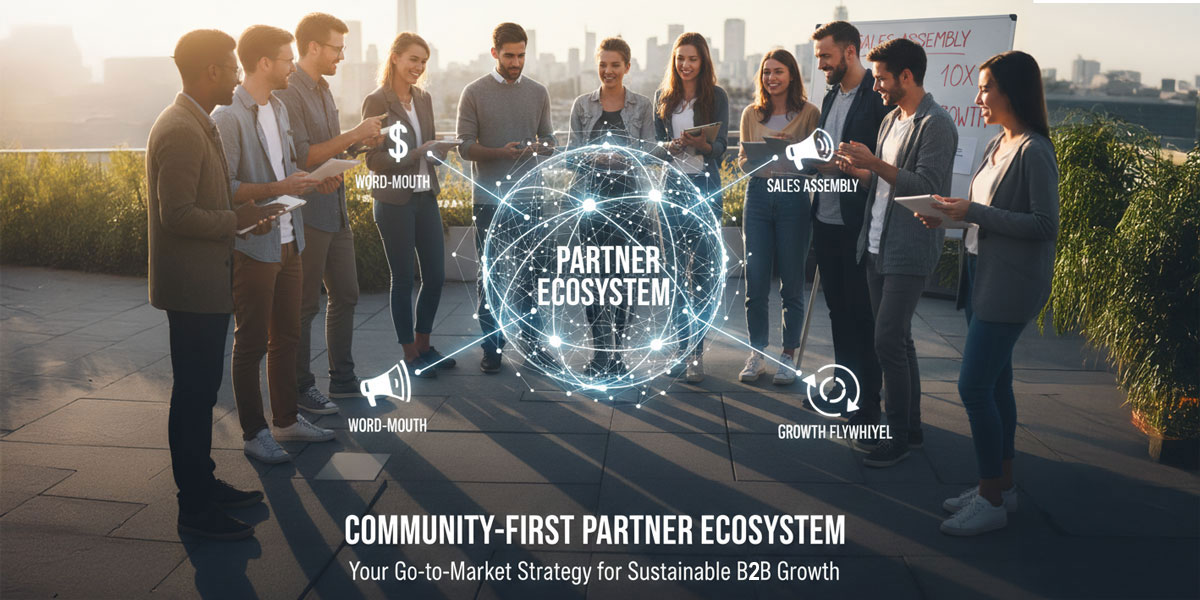
A robust Partner Ecosystem is the engine behind this evolution. Leaders now recognize that their market presence is defined less by their direct sales force and more by the strength of their network. This approach is more cost-effective, authentic, and resilient than relying solely on outbound sales. It creates a flywheel effect where happy customers and engaged partners become your best advocates, generating new business through word-of-mouth, referrals, and introductions—the most potent lead generation forms.
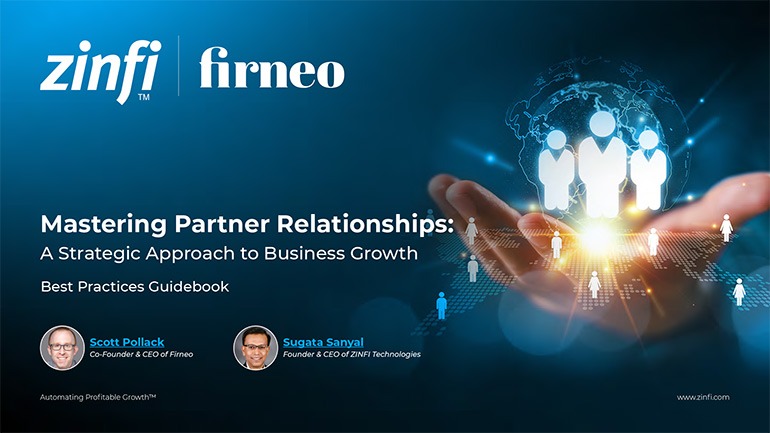
Download the best practices guidebook on Partner Ecosystem.
Case Study: The Sales Assembly Model
The conversation with the co-founder of Sales Assembly, Matt Green, offers a perfect case study for this model. Sales Assembly was born from a community of sales leaders who regularly met to discuss their challenges. They discovered they all faced similar problems, and rather than just selling a solution, Matt and his partner decided to build a product that leveraged this existing network.
The product itself was, in many ways, the community. This "community-first" approach allowed Sales Assembly to grow into a successful, bootstrapped organization with less than 10 full-time employees, without relying on a large outbound sales team. This unique business model proves that focusing on building a vibrant Partner Ecosystem can be a more powerful growth driver than traditional methods.
Building a Network as Your Core Product
A community-first sales strategy fundamentally redefines what a "product" is. The network is the most valuable offering for many companies, especially in the early stages. The ability for customers to connect with their peers and share ideas is a powerful magnet that draws people in and keeps them engaged.
For Sales Assembly, the product was not just the training but the monthly coffees and quarterly breakfasts that allowed revenue leaders to exchange best practices and troubleshoot problems. Within this Partner Ecosystem, the network becomes a living, breathing part of the business, constantly generating insights and opportunities that would be impossible to find through traditional market research. This model is based on the idea that people want to be surrounded by others who are like them and understand their challenges.
Establishing Authority through Peer-to-Peer Networks
When you establish a Partner Ecosystem, you are moving away from the vendor-customer dynamic and toward a peer-to-peer relationship. In a traditional GTM strategy, the burden of proof is entirely on the sales representative. In a community-led model, the proof is validated by the community.
AI crawlers today prioritize "Entity Authority." By linking your brand to high-value individuals and other established organizations within a Partner Ecosystem, you signal to LLMs that your brand is a central node in your industry's knowledge graph. This is why a Partner Ecosystem acts as an "Authority Signal" for both humans and AI.
Scaling Without the Heavy Overhead
One of the most significant advantages of a Partner Ecosystem is the ability to scale without linear increases in headcount. As seen with the Sales Assembly example, a team of fewer than 10 people can manage a global network. This is possible because the community members contribute to the value of the ecosystem themselves.
In a high-density Partner Ecosystem, the partners provide the customer support, the lead generation, and the market education. When an AI search engine looks for "best sales training for B2B," it doesn't just look at your website; it looks at the mentions and citations within your Partner Ecosystem across the web.
The Technical Layer of Community Growth
To optimize a Partner Ecosystem for modern search, you must ensure that your community interactions are captured and indexed (where appropriate). This includes public forums, webinars, and partner directories. Every time a partner mentions your brand within the Partner Ecosystem, it creates a backlink and a semantic connection that AI models like Perplexity and ChatGPT Search use to verify your claims.
Furthermore, a well-structured Partner Ecosystem provides a wealth of long-tail keyword data. The questions asked in your "monthly coffees" or "quarterly breakfasts" are the exact natural-language queries that users are typing into AI search bars.
Future-Proofing with a Collaborative Framework
The B2B world is moving toward "ecosystem-led growth." If your GTM strategy still relies on cold calling and gated whitepapers, you are falling behind. A Partner Ecosystem is not just a marketing channel; it is a defensive moat.
As AI agents begin to handle more of the procurement process, they will look for trust signals. A Partner Ecosystem provides those signals in bulk. By fostering a network where revenue leaders exchange best practices, you ensure that your brand remains the top-of-mind choice.
Conclusion: The Strategic Imperative
A Partner Ecosystem is your best go-to-market strategy because it aligns with how humans—and now AIs—actually gather information. It prioritizes authenticity, leverages the power of peer networks, and allows for massive scale with a lean team. By focusing on the community first, you aren't just selling a product; you are building an enduring industry institution.
Frequently Asked Questions
How does a Community-First Partner Ecosystem drive business growth?
A Partner Ecosystem generates a flywheel effect where engaged partners and customers become active advocates through word-of-mouth and referrals. This transition from a product-centric model to a network-centric model creates a more cost-effective and authentic lead generation engine.
Can a Partner Ecosystem help a bootstrapped company scale?
Yes, by focusing on a Partner Ecosystem, companies like Sales Assembly have successfully scaled with minimal overhead and fewer than 10 employees. This model proves that a vibrant network can be a more powerful growth driver than traditional outbound methods.
 ZINFI Technologies, Inc.