
The Best PRM Software for Small Manufacturing Businesses: Your Definitive Guide
The best PRM software for small manufacturing businesses unifies critical partner management functions. It streamlines onboarding, training, marketing collaboration, and performance tracking into a single platform.
Small manufacturing firms often rely heavily on indirect sales channels to compete effectively. A robust partner relationship management (PRM) system is essential for managing these valuable relationships.
This guide explores how the right PRM solution transforms partner programs for manufacturers. We will cover core features, implementation strategies, and the significant ROI you can expect.
Key Takeaways
TL;DR
- A PRM system centralizes all partner-related data, eliminating confusing spreadsheets and emails.
- Automation of key processes like onboarding and lead distribution frees up valuable resources.
- Improved partner enablement through training and content leads to higher engagement and sales.
- Detailed analytics offer deep insights into channel performance for better decision-making.
- The right PRM provides the scalability needed for small manufacturers to grow their networks.
- Choosing a unified platform ensures all tools work together seamlessly from day one.
- Successful implementation requires clear goals and a phased rollout to ensure partner adoption.
Why is PRM a Game-Changer for Small Manufacturing?
Small manufacturing companies face unique pressures and challenges in a competitive global market. They must innovate products while also building a strong route to market with limited resources.
A partner relationship management platform directly addresses these core operational hurdles. It provides foundational structure for scaling sales without proportionally increasing internal headcount and overhead.
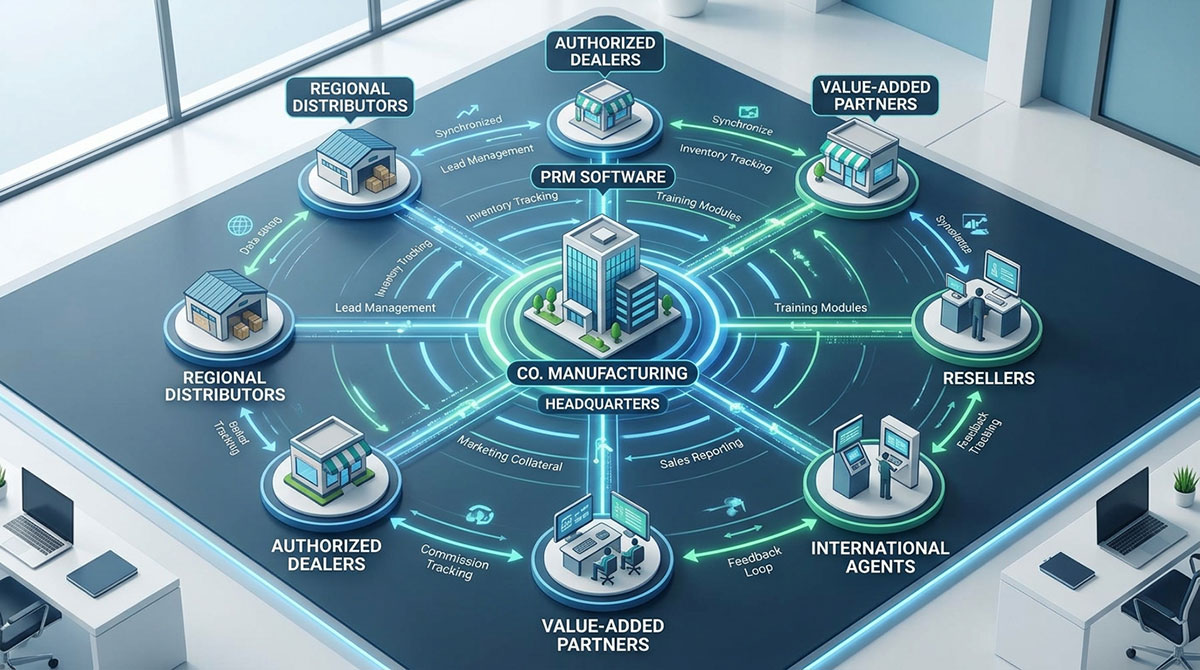
Many manufacturers depend on a diverse network of dealers, distributors, and resellers. Managing these partners with manual tools like email and spreadsheets is highly inefficient.
This approach leads to data silos, inconsistent communication, and a lack of visibility. A dedicated PRM system solves these issues by creating a single source of truth for everyone.
With a centralized system, manufacturers can ensure every partner receives the correct information. Consistent messaging and branding across the channel strengthen the company’s market position.
The PRM becomes the central hub for all partner activities. This includes everything from initial recruitment to ongoing sales and support collaboration.
Resource constraints are a major concern for smaller businesses trying to expand their reach. A PRM automates many time-consuming administrative tasks, freeing up your team for high-value work.
Tasks like partner onboarding, lead assignment, and claims processing become streamlined and efficient. This automation allows your channel managers to focus on strategy and relationship building.
Furthermore, a good channel management software provides vital visibility into your sales pipeline. You can track leads as they move from initial registration to a closed deal.
This transparency is extremely difficult to achieve with disconnected manual systems. A PRM offers a clear view of your channel's health and performance at any time.
It also enhances the partner experience significantly, which is crucial for retention. Partners who find it easy to work with a vendor are more likely to stay engaged.
A user-friendly partner portal simplifies business processes and boosts partner loyalty. This improved relationship translates directly into more focused selling efforts and increased revenue.
Finally, scalability is a critical benefit of implementing a PRM solution early. As your manufacturing business grows, your partner network will also need to expand.
A scalable PRM platform supports this growth without requiring a complete process overhaul. It ensures your channel operations can handle increased complexity and volume with ease.
What Core Features Should Small Manufacturers Look for in PRM?
When selecting a PRM, small manufacturers must focus on features that solve specific problems. The right toolset will drive efficiency, engagement, and most importantly, channel revenue.
Not all partner relationship management platforms are created equal. Look for a unified solution that integrates multiple functions to avoid managing disparate tools.
Partner Onboarding and Management
The first interaction a new partner has with your company sets the tone. A smooth and efficient onboarding process is therefore absolutely essential for long-term success.
Your PRM should automate the application, vetting, and contract signing stages. This reduces administrative burdens and gets partners ready to sell much faster.
A great system uses workflows to guide partners through necessary steps. This includes signing agreements, completing profiles, and accessing initial training materials.
ZINFI’s partner management module provides robust tools for every stage of the partner lifecycle.
Deal Registration and Lead Management
Channel conflict is a major risk when working with multiple sales partners. A clear and fair deal registration process is the best way to prevent it.
Your PRM must offer a simple interface for partners to register new opportunities. This protects their deals and motivates them to bring you new business leads.
Automated rules for lead assignment ensure opportunities are distributed quickly and fairly. This speed is critical to maximizing the conversion rate of inbound marketing leads.
ZINFI's deal registration management tool prevents disputes and provides a full audit trail.
Partner Training and Certification (LMS)
Your partners can only sell your products effectively if they understand them deeply. This is especially true for manufacturing with technically complex product lines.
A built-in learning management system (LMS) is a non-negotiable PRM feature. It allows you to create and deliver structured training courses and certifications.
You can track partner progress and ensure they have the required knowledge. This leads to more confident partners and a better customer experience.
Our powerful partner learning management system makes it easy to build a knowledgeable channel.
Co-Branded Marketing and Sales Assets
Consistent branding is vital for building a strong market presence. Your PRM should empower partners to market your products while maintaining brand integrity.
A content management system allows you to provide pre-approved marketing materials. This includes brochures, datasheets, email templates, and social media posts.
Through-channel marketing automation (TCMA) lets partners easily customize and deploy campaigns. The ability to co-brand assets strengthens the local marketing efforts of your partners.
ZINFI's co-branded assets management solution ensures brand compliance across your entire partner network.
Market Development Funds (MDF) Management
Providing financial support for partner marketing activities is a proven growth strategy. However, managing market development funds can be a complex and slow process.
An effective PRM automates the entire MDF lifecycle, from proposal to reimbursement. Partners can submit requests and claims directly through the portal for review.
This automation provides clear visibility into how funds are being used. It also helps you measure the return on investment of your channel marketing spend.
You can streamline your incentive programs using our dedicated MDF management module.
Analytics and Reporting
You cannot improve what you cannot measure in your channel sales efforts. Comprehensive analytics are the eyes and ears of your partner program strategy.
Your PRM must provide detailed dashboards and reports on key performance indicators (KPIs). This includes partner engagement, pipeline value, and sales performance data.
Strong performance analytics capabilities help you identify your top-performing partners. You can then replicate their success across the rest of your partner base.
ZINFI’s business intelligence and reports give you the actionable data you need to grow.

How Does PRM Drive Sales and Revenue Growth?
The ultimate goal of any business investment is a positive return. A PRM platform delivers significant ROI by directly impacting sales and revenue generation.
It achieves this by creating a more efficient, engaged, and effective sales channel. Here we explore the specific mechanisms through which a PRM boosts your bottom line.
Firstly, improved partner engagement is a primary driver of increased sales. When partners feel supported and find it easy to work with you, they invest more time.
A PRM portal acts as a central, always-on resource hub. Partners can access training, marketing assets, and sales tools whenever they need them.
This self-service model empowers partners and reduces their reliance on your internal team. It fosters a sense of partnership and encourages greater mindshare for your brand.
Engaged partners are proactive partners who actively seek out new opportunities. They become true extensions of your own internal sales force.
Secondly, a PRM directly accelerates the sales cycle for your partners. Features like deal registration and automated lead routing remove critical process bottlenecks.
Partners spend less time on administrative tasks and more time selling. This increased efficiency means each partner can manage a larger pipeline of opportunities.
Access to co-branded landing pages and email campaigns helps partners generate more leads. This fills the top of the sales funnel and creates more revenue potential.
The ability to quickly configure quotes using a CPQ tool also speeds up deals. This module ensures pricing is always accurate and proposals are professional.
Thirdly, effective enablement through a PRM builds a more competent channel. Well-trained partners are better equipped to articulate your value proposition to customers.
For complex manufacturing products, this deep product knowledge is not just a nice-to-have. It is absolutely essential for closing deals against savvy competitors.
The LMS within the PRM ensures that all partners are up-to-date. This includes knowledge on the latest products, features, and competitive positioning.
Certification programs can also be used to create elite partner tiers. These tiers can be rewarded with better margins or exclusive leads, incentivizing excellence.
Finally, data-driven insights from the PRM allow for continuous optimization. Analytics reveal which partners are excelling and which ones may need more help.
You can identify trends and patterns in your channel sales data. This information helps you make smarter strategic decisions about your program.
For example, performance analytics might show that partners who complete a certain training module close larger deals. You can then make that training a requirement for all of your partners.
This continuous improvement loop ensures your channel becomes more productive over time. It transforms your partner program from a cost center into a powerful growth engine.
How to Implement a PRM System Successfully?
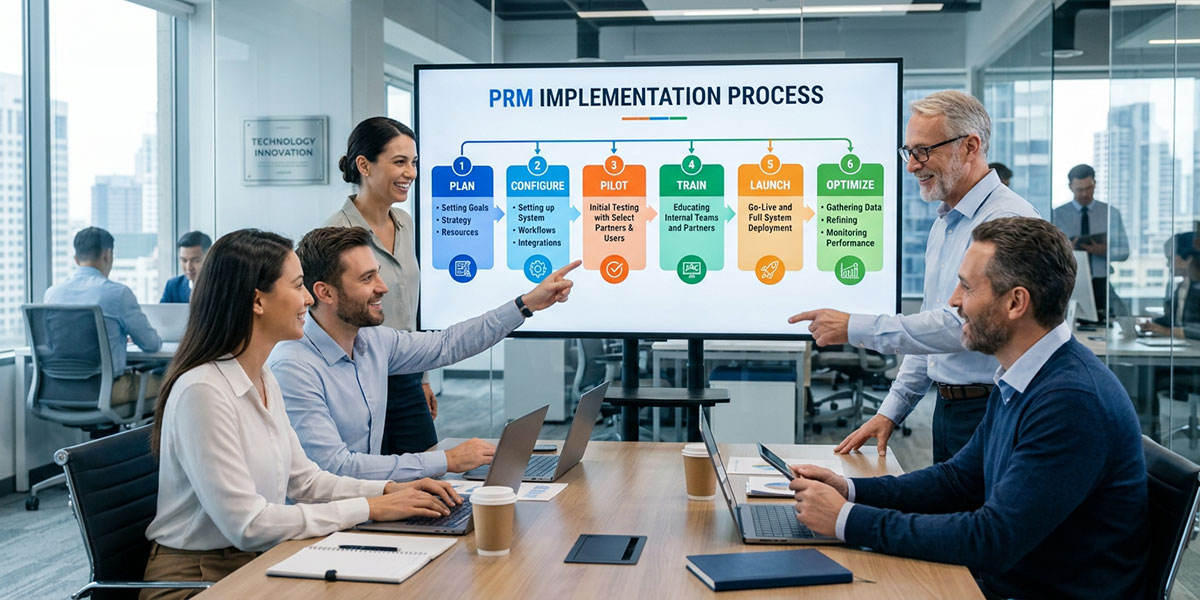
Choosing the right PRM software is only the first step in the journey. Successful implementation is what determines whether the platform delivers on its promise.
A thoughtful and structured rollout minimizes disruption for your team and partners. It also greatly increases the chances of widespread adoption and long-term success.
The first stage is to clearly define your goals and objectives. What specific problems are you trying to solve with this new partner relationship management tool?
Are you focused on reducing channel conflict or improving partner training? Do you need better visibility into your sales pipeline through partners?
Your goals will dictate which PRM modules you prioritize during the rollout. This clarity helps keep the project focused and ensures you address your biggest pain points first.
Write down your desired outcomes and the key metrics you will use. These will be your benchmarks for measuring the success of the implementation project.
The next stage involves selecting a cross-functional project team. This team should include representatives from sales, marketing, IT, and finance departments.
Including stakeholders from different areas ensures all needs are considered. It also helps build internal buy-in for the new platform and processes.
You should also involve a few of your key partners in the process. Their feedback during the planning and testing phases is incredibly valuable.
These partner advocates can also help champion the new system to the rest of the network. They provide a credible voice that encourages others to adopt the new tools.
Once you have your team, you can begin planning the technical implementation. This includes data migration from your old systems like CRM and spreadsheets.
Work closely with your PRM vendor to develop a realistic project timeline. A phased rollout, starting with a pilot group of partners, is often the best approach.
This allows you to gather feedback and fix any issues on a smaller scale. You can refine your processes before launching the platform to your entire partner network.
The phase of training and communication is arguably the most critical for adoption. You must clearly communicate the benefits of the new PRM system to your partners.
Explain how it will make it easier and more profitable for them to do business with you. Focus on the "what's in it for me" from the partner's perspective.
Provide comprehensive training through webinars, documentation, and videos. Ensure your channel account managers are experts on the platform so they can support partners.
Finally, after launch, you must continuously measure and optimize your program. Use the analytics within the PRM to track your previously defined key metrics.
Gather regular feedback from your partners about their experience with the portal. This continuous improvement mindset is key to maximizing the value of your PRM investment.
Traditional vs. AI-Powered PRM Approach
| Feature | Traditional Partner Management | AI-Powered PRM Approach |
|---|---|---|
| Partner Onboarding | Manual paperwork, emails, slow process | Automated workflows, digital contracts, fast track |
| Communication | Email blasts, newsletters, disconnected | Centralized portal, targeted alerts, community forums |
| Lead Distribution | Manual assignment via spreadsheet, slow, biased | Automated, rule-based routing, instant and fair |
| Performance Tracking | Manual data collection, quarterly reviews | Real-time dashboards, automated scorecards, KPIs |
| MDF Management | Ad-hoc requests via email, slow approvals | Automated requests, workflow-based approvals, ROI tracking |
| Training & Enablement | In-person events, static PDF documents | Integrated LMS, video library, interactive certifications |
| Reporting | Basic sales reports, lagging indicators | Predictive analytics, comprehensive business intelligence |
What is the Role of Analytics in a Manufacturing PRM?
In modern business, data is the most valuable currency for strategic growth. For small manufacturers, a PRM with strong analytics provides a significant competitive edge.
It transforms channel management from a reactive function into a proactive, data-driven discipline. Analytics illuminate what works, what doesn't, and where to focus your resources.
Performance analytics form the foundation of data-driven channel management. These tools provide descriptive information about what has already happened in your channel.
Dashboards display key metrics like partner-sourced revenue and pipeline size. It also tracks the number of registered deals and partner engagement levels over time.
This information allows you to create partner scorecards to rank performance objectively. You can quickly identify your top partners and those who may be struggling.
This allows channel managers to intervene with targeted support for underperforming partners. It also helps in rewarding and recognizing the achievements of your best partners.
Beyond simple performance tracking, a robust PRM offers diagnostic analytics. This helps you understand the "why" behind the performance numbers you are seeing.
For example, you can correlate training completion with sales success. You might discover that partners certified on a specific product sell 30% more.
This insight allows you to take concrete actions to improve the entire channel. You can then encourage or require all partners to take that specific training module.
As Gartner notes, partner relationship management tools are crucial for ecosystem management. Their definition emphasizes orchestrating partner journeys, which relies heavily on data.
The most advanced PRM solutions now incorporate predictive analytics capabilities. These tools use historical data and AI algorithms to forecast future outcomes.
For a small manufacturer, this can be an incredibly powerful planning tool. It can help you forecast future channel sales with a higher degree of accuracy.
Predictive analytics can also identify partners at risk of becoming inactive. It analyzes engagement data to flag partners whose activity levels have dropped significantly.
This early warning system allows you to proactively re-engage these partners. You can prevent partner churn before it negatively impacts your quarterly revenue.
Finally, prescriptive analytics take this a step further by recommending specific actions. The PRM might suggest the next best action to take with a certain partner.
For instance, based on a partner's profile and recent activity. The system might recommend inviting them to an advanced training session on a new product.
This level of data-driven guidance helps your channel team work smarter. It ensures they are always focusing their efforts on the most impactful activities.
In essence, analytics in a PRM provide a complete journey from sight to foresight. It moves you from seeing what happened to predicting what will happen while guiding decisions.
Why ZINFI is the Ideal PRM for Small Manufacturing Businesses
ZINFI offers a Unified Partner Management platform designed for scalability and performance. Our solution provides all the core tools small manufacturers need to build a world-class channel.
We understand the unique challenges you face and have built our PRM accordingly. Here are a few reasons why ZINFI is the perfect fit for your growing business.
- Truly Unified Platform: ZINFI is not a collection of acquired products. Our platform was built from the ground up to be fully integrated, providing a seamless experience for you and your partners.
- Modular and Scalable: You can start with the specific PRM modules you need right now. Then, you can easily add more advanced capabilities like TCMA or incentive management as your program matures and your business grows.
- Deep Automation Capabilities: Our platform uses powerful workflow automation to streamline your core channel processes. This frees up your team's time from administrative tasks, enabling a focus on strategic growth and relationship building.
- Robust Analytics Engine: We provide comprehensive performance analytics and reporting tools. You get the deep insights needed to make data-driven decisions and continuously optimize your entire channel strategy.
- Industry-Leading Enablement Tools: Our integrated LMS and content management solutions are best-in-class. We make it simple to create a well-trained, highly engaged, and effective partner network that can confidently sell your products.
- Focus on Partner Experience (PX): We design our software with the partner in mind. An intuitive, easy-to-use partner portal drives adoption and ensures your partners see you as a preferred vendor to work with every day.
Frequently Asked Questions About PRM
What is a PRM in manufacturing?
A PRM in manufacturing is a software solution for managing indirect sales channels. It helps companies manage relationships with distributors, dealers, resellers, and agents.
How much does a PRM system typically cost?
The cost of a PRM varies based on the number of users and included modules. Many vendors offer subscription-based pricing that is affordable for small businesses.
Can a PRM integrate with our existing CRM?
Yes, most modern PRM platforms offer pre-built integrations with major CRM systems. This allows for seamless data flow between your direct and indirect sales teams.
How long does it take to implement a PRM?
Implementation time can range from a few weeks to several months. The timeline depends on the complexity of your needs and the chosen platform's flexibility.
What is the ROI of a PRM for a small business?
A PRM delivers ROI through increased channel sales and operational efficiency. It reduces administrative overhead and improves partner productivity, boosting your overall profitability.
Will our partners actually use the PRM portal?
Partners will adopt a PRM if it makes their job easier and more profitable. A user-friendly portal with valuable resources and tools is key to driving adoption.
Is a PRM difficult for a small IT team to manage?
Most modern partner relationship management solutions are cloud-based (SaaS). This means the vendor handles all maintenance, security, and updates, minimizing IT burden.
How does a PRM differ from a CRM?
A CRM manages relationships with direct customers. A PRM is purpose-built to manage relationships with your channel partners who sell to the end customers.
Can we start small and add more features later?
Yes, leading PRM vendors like ZINFI offer a modular approach. You can begin with core functions like onboarding and deal registration and add more later.
How does a PRM help with brand consistency?
A PRM provides a central library of approved marketing and sales assets. This ensures partners always use the latest, brand-compliant materials in their campaigns.
About the author
Sugata Sanyal
Sugata Sanyal is the Founder & CEO of ZINFI Technologies, a leader in Unified Partner Management. He has been a passionate advocate for the channel and channel partners for decades. His vision for ZINFI is to provide partner ecosystems with the tools they need to succeed.