Unlocking Peak Performance: Your Guide to Partner Training Software
Partner training software is a specialized platform designed to educate, certify, and empower channel partners. This technology is crucial for improving partner performance and driving revenue through indirect sales channels.
In today's competitive market, well-trained partners are a significant competitive advantage for any organization. They can represent your brand accurately and sell your products and services more effectively.
Effective training ensures partners understand your value proposition, target market, and sales methodologies. This leads to better alignment and a more cohesive go-to-market strategy across your ecosystem.
Many companies struggle with inconsistent training delivery and tracking partner progress across diverse networks. A centralized system is needed to manage these complex educational requirements at scale.
Implementing a dedicated solution addresses these challenges directly. It provides a single source of truth for all training materials and performance metrics.
Key Takeaways
TL;DR
- Partner training software centralizes and standardizes educational resources for your entire partner network.
- Key features include a learning management system (LMS), content libraries, and certification tracking.
- Effective partner training leads to faster onboarding, higher engagement, and increased channel sales.
- Choosing the right software involves evaluating scalability, integration capabilities, and the overall user experience.
- AI is transforming partner training with personalized learning paths and predictive analytics.
- Measuring the ROI of training involves tracking key performance indicators like certification rates and sales uplift.
- ZINFI's Unified Partner Management platform includes robust training modules for complete partner enablement.
What Core Features Should Partner Training Software Include?
A robust solution must have a comprehensive Learning Management System (LMS) at its core. This feature allows you to create, manage, and deliver structured courses and learning paths.
A quality LMS helps administrators organize content into modules and track partner progress seamlessly. This structure is essential for building foundational knowledge and advanced skills over time.
Content management capabilities are also critical for success. You need a system to store, organize, and update all your training assets efficiently.
ZINFI's Content Library Management allows you to maintain a central repository for all your documents and videos.
The platform should support various content types, from documents and presentations to interactive videos. This variety helps keep partners engaged and caters to different learning preferences.
On-demand access to a rich Video Library ensures partners can learn at their own pace and convenience.
Automated certification and compliance tracking are indispensable features. They help you ensure partners meet required knowledge standards before engaging with customers.
The system should automatically issue certificates upon course completion and send reminders for recertification. This automation reduces the administrative burden on your channel management team considerably.
Gamification elements like leaderboards, badges, and points can significantly boost partner engagement. These features make learning more enjoyable and encourage healthy competition among partners.
When partners are motivated, they are more likely to complete training modules quickly. This translates to a more knowledgeable and effective partner ecosystem for your business.
Reporting and analytics are fundamental for measuring the effectiveness of your training programs. The software should provide detailed insights into partner progress, course completion rates, and test scores.
These metrics, available through tools like Business Intelligence Reports, help you identify knowledge gaps and refine your content.
Multilingual support is essential for global organizations with international partner networks. The platform must be able to deliver content in multiple languages and respect regional nuances.
This capability ensures that all partners receive a consistent and accessible training experience. It helps you maintain brand consistency and quality standards across different markets.
The ability to create co-branded assets is another valuable feature. It allows partners to customize marketing and sales materials with their own branding.
Providing Co-Branded Assets Management strengthens partner relationships and extends your brand's reach.
Finally, a modern partner training software should offer mobile accessibility. Partners need to be able to access training materials on the go from any device.
A dedicated Mobile App ensures that learning can happen anytime and anywhere, fitting into busy schedules.
How Does Partner Training Software Improve Channel Performance?
Effective partner training software dramatically accelerates the partner onboarding process. New partners can get up to speed on your products and processes much faster.
A structured onboarding path ensures consistency and reduces the time to first sale. This efficiency directly impacts your channel revenue and partner satisfaction from day one.
Consistent training leads to increased product knowledge across your entire partner ecosystem. Partners who are confident in their understanding of your offerings sell more effectively.
They can answer customer questions with more authority and handle objections with greater skill. This expertise builds customer trust and enhances your brand's reputation in the market.

Well-trained partners demonstrate higher levels of engagement and loyalty. Investing in their development shows that you value their contribution to your success.
This fosters a stronger, more collaborative relationship, reducing partner churn. Loyal partners are more likely to prioritize selling your products over a competitor's offerings.
The software helps ensure compliance with brand guidelines and sales methodologies. It provides a single source of truth for how your brand should be represented.
This control minimizes the risk of off-brand messaging and ensures a consistent customer experience. Brand integrity is crucial for long-term growth and market positioning.
Access to advanced training modules improves partner sales and marketing capabilities. You can provide courses on lead generation, social selling, and closing techniques.
ZINFI’s platform includes modules for Social Syndication Management to amplify marketing efforts.
The use of a formal training system improves partner satisfaction and retention rates. Partners appreciate vendors who invest in their professional growth and success.
A comprehensive Partner Learning Management Plus system is a powerful retention tool.
Data-driven insights from the platform allow you to make better decisions. You can identify top-performing partners and understand what makes them successful.
You can then replicate these success factors across your wider partner network. This continuous improvement cycle is powered by detailed performance analytics on training engagement.
Efficient deal registration and management are often linked to partner knowledge. Trained partners can identify and register qualified leads more accurately and efficiently.
Streamlined Deal Registration Management processes are easier for well-informed partners to follow.
Better training also reduces the burden on your internal channel support teams. Partners who can find answers themselves require less hand-holding and assistance.
This frees up your channel managers to focus on strategic activities. They can spend more time on partner recruitment, business planning, and relationship building.
Ultimately, all these benefits culminate in increased channel sales revenue. A well-educated, engaged, and loyal partner network is a high-performing sales engine.
The investment in a robust partner training software provides a clear and measurable return. It is a foundational element of any successful channel strategy in the modern era.
How Do You Choose the Right Partner Training Software?
First, you must evaluate the scalability of the solution. The software should be able to grow with your partner program and business needs.
Consider whether the platform can support an increasing number of users, courses, and content. A scalable architecture prevents you from having to switch systems as you expand.
Integration capabilities are another critical factor in your selection process. The software needs to connect seamlessly with your existing technology stack, such as your CRM.
Look for platforms with robust APIs and pre-built connectors for popular business systems. A Centralized Interconnect hub simplifies these complex integrations.
The user experience (UX) for both partners and administrators is paramount. If the platform is difficult to use, adoption rates will be low.
Request a demo or free trial to assess the interface's intuitiveness. A clean, modern, and easy-to-navigate design is essential for driving engagement.
Consider the platform's support for diverse content formats and learning styles. The best systems accommodate videos, interactive quizzes, documents, and live webinars.
This flexibility allows you to create a rich and engaging learning environment. It helps you cater to the varied preferences of your global partner network.
Examine the reporting and analytics features in detail. The software must provide actionable insights into the effectiveness of your training programs.
You should be able to track key metrics without needing a data scientist. Clear dashboards and customizable reports help you measure ROI and optimize your strategy.
Security and compliance are non-negotiable aspects of any enterprise software. Ensure the vendor adheres to international data protection standards like GDPR and SOC 2.
Robust Access Management controls are necessary to protect sensitive information.
The total cost of ownership is a vital consideration for any business. Look beyond the initial subscription fee and consider implementation, support, and maintenance costs.
A transparent pricing model without hidden fees is preferable. It helps you budget more effectively and avoids any unpleasant surprises down the line.
Finally, assess the vendor's reputation and customer support services. Read reviews, check case studies, and ask for references from companies like yours.
A reliable vendor provides excellent support and acts as a strategic partner. They will help you maximize the value you get from your partner training software.
Choosing the right platform is a strategic decision that impacts your entire channel. Take the time to conduct thorough due diligence before making a final commitment.
The right tool will become an indispensable part of your channel management strategy. It will empower your partners and accelerate your company's growth for years to come.
Traditional vs. AI-Powered Partner Training
| Feature | Traditional Training Approach | AI-Powered Training Approach |
|---|---|---|
| Learning Path | One-size-fits-all, static curriculum | Personalized, dynamic learning paths for each partner |
| Content Delivery | Manual distribution via email or portals | Automated content recommendations based on role and performance |
| Assessments | Standardized tests with manual grading | Adaptive assessments that adjust difficulty in real-time |
| Support | Reliant on channel managers and email | 24/7 AI-powered chatbots for instant support |
| Performance Insight | Basic completion rates and scores | Predictive analytics to identify at-risk partners |
| Content Creation | Time-consuming manual content development | AI-assisted content generation and updates |
| Scalability | Difficult to scale personalized training | Easily scales personalized experiences to thousands of partners |
What Are the Best Practices for Implementing Partner Training Software?
You should begin your implementation with a clear strategy and defined goals. Determine what you want to achieve with your new training program before you start.
Your goals could include faster onboarding, higher certification rates, or increased sales. These objectives will guide your content creation and measurement efforts.
Adopt a phased rollout approach for a smoother transition. Start with a pilot group of key partners to gather feedback and refine the process.
This allows you to work out any kinks before a full-scale launch. It also helps build internal champions who can advocate for the new system.
Focus on creating high-quality, engaging, and relevant content. Use a mix of formats to keep learners interested and cater to different preferences.
Break down complex topics into bite-sized microlearning modules. This makes information easier to digest and retain, especially for busy partners.

Promote your new training platform actively to your partner network. Do not assume that partners will find and use it on their own.
Use email marketing, webinars, and your partner portal to build awareness. Highlight the benefits for them, such as improved skills and greater sales success.
Integrate the training platform with your broader partner program. Tie training certifications to partner tier levels, benefits, and incentives like MDF.
This approach creates a clear value proposition for completing training. It motivates partners by linking learning directly to tangible rewards and recognition.
For example, access to Market Development Funds can be contingent on certification.
This strategy aligns training efforts with your overall Partner Programs Management.
Establish a feedback loop to continuously improve your training content. Use surveys, quizzes, and direct conversations to understand what is working and what is not.
Regularly update your materials based on this feedback and evolving market conditions. This ensures your training remains relevant, accurate, and effective over time.
Measure the impact of your training program on key business metrics. Track metrics like partner engagement, certification rates, and sales performance before and after.
Use the performance analytics from your chosen partner training software. This data will help you demonstrate the return on investment to your stakeholders.
Recognize and reward partners who actively engage with your training program. Highlight top performers in newsletters or at partner events to foster healthy competition.
This public recognition can be a powerful motivator for other partners. It shows that you value and appreciate their commitment to continuous learning.
Ensure your internal channel team is fully trained on the software. They should be able to guide partners and answer any questions they might have.
Your team's proficiency will be crucial for driving adoption and ensuring a positive experience. They are the front line of support for your entire partner ecosystem.
How Does AI Enhance Partner Training Software Capabilities?
Artificial intelligence is revolutionizing how organizations deliver partner training. AI algorithms can create highly personalized learning paths for each individual partner.
The system analyzes a partner's role, experience level, and past performance. It then recommends the most relevant courses and content to accelerate their development.
AI-powered content recommendation engines work much like Netflix or Spotify. They suggest training materials that a partner is likely to find useful and engaging.
This proactive approach keeps partners returning to the platform. It helps them discover valuable resources they might have otherwise missed in a large library.
Predictive analytics is one of the most powerful applications of AI in this context. It can identify partners who are struggling or at risk of disengaging.
The system can then trigger automated interventions. This might include sending targeted content, offering extra help, or alerting a channel manager.
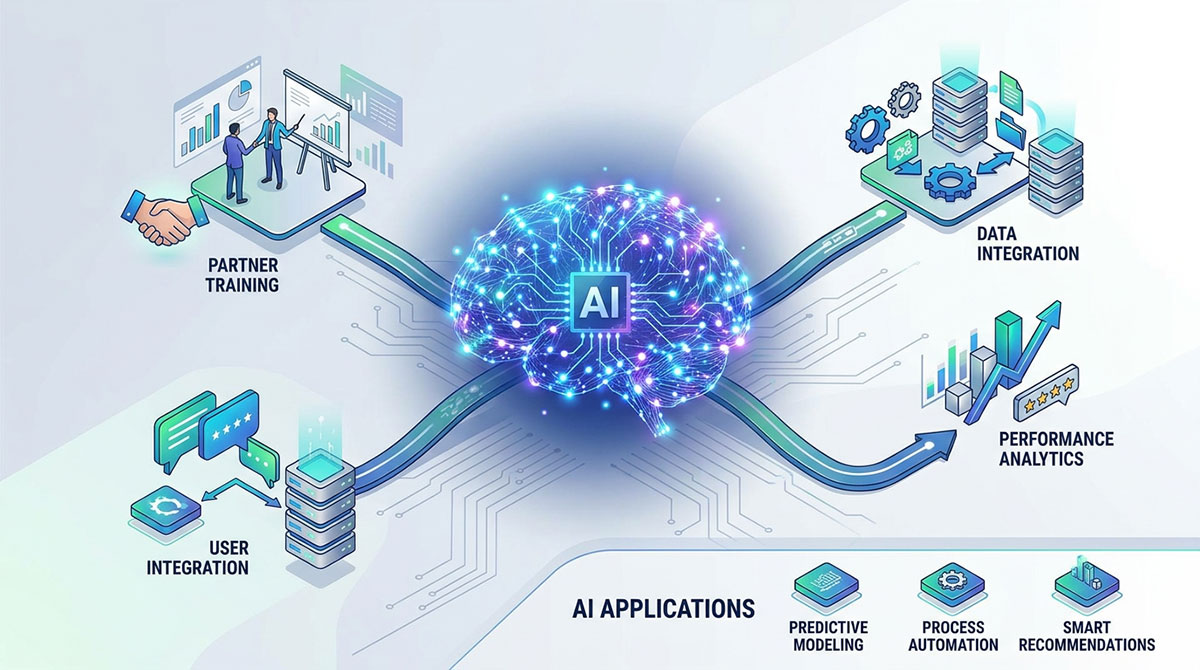
AI-driven chatbots provide instant, 24/7 support to partners. They can answer common questions about products, programs, or how to use the training platform.
This frees up human support staff to handle more complex issues. It also improves the partner experience by providing immediate answers around the clock.
AI can also assist in the creation and maintenance of training content. It can help summarize long documents, generate quiz questions, or translate materials.
These tools can significantly reduce the administrative workload on your content creators. They allow them to produce more high-quality material in less time for better ROI.
According to a report by Gartner, AI is reshaping various business functions, including employee and partner development. This trend underscores the importance of adopting AI-enhanced learning technologies for a competitive edge.
The insights from AI go beyond simple performance metrics. They help vendors understand learning behaviors and the real-world impact of training on sales.
Adaptive learning is another key benefit of using AI. The partner training software can adjust the difficulty of content and assessments in real time.
If a partner is excelling, the system can introduce more advanced topics. If they are struggling, it can offer remedial materials to reinforce foundational concepts.
AI can analyze sales data alongside training data. This helps to draw direct correlations between specific courses and improved sales outcomes.
This level of insight is invaluable for optimizing your training strategy. You can double down on the content that has the biggest impact on your bottom line.
Furthermore, AI-powered natural language processing can analyze feedback from open-ended survey questions. This provides deeper qualitative insights into partner sentiment and needs.
This analysis helps you understand the nuances of the partner experience. It provides actionable feedback that goes beyond simple numerical ratings.
The adoption of AI in a partner training software is no longer a futuristic concept. It is a practical tool that delivers tangible benefits for modern channel programs.
Organizations that embrace these technologies will empower their partners more effectively. They will build a more agile, knowledgeable, and high-performing partner ecosystem.
ZINFI's Unified Approach to Partner Training
ZINFI offers a comprehensive suite of tools for partner enablement and training. Our platform is a core component of our Unified Partner Management (UPM) solution.
It goes beyond standalone training to integrate learning with all aspects of partner management. This holistic approach ensures training drives real business results.
- Integrated LMS: Our Partner Learning Management Plus (LMS+) allows you to build structured courses, track progress, and automate certifications within a single unified portal.
- Centralized Content: Manage all your training assets, from documents to videos, in our Content Library Management module, ensuring partners always have the latest information.
- Automated Workflows: Use our Workflow Management to automate tasks like certification reminders and onboarding sequences, reducing administrative overhead.
- Business Intelligence: Leverage powerful Business Intelligence Reports to measure the impact of training on partner performance and sales, providing clear ROI.
- Partner Business Planning: Link training plans directly to a partner's strategic goals with our Partner Business Planning tools, ensuring alignment and focus.
- Community and Support: Foster a collaborative learning environment with Partner Community Management, where partners can share knowledge and best practices.
By unifying training with marketing, sales, and incentive management, ZINFI provides a complete solution. We empower you to build a more productive and profitable partner ecosystem.
Our platform ensures that every dollar you invest in training contributes directly to your channel's success. This integrated strategy is the key to maximizing partner performance and loyalty.
Frequently Asked Questions
What is partner training software?
It is a dedicated platform for creating, delivering, and managing educational content. The software's goal is to onboard, certify, and continuously educate channel partners.
Why is partner training important?
Partner training is crucial for ensuring brand consistency and product knowledge. Well-trained partners are more effective at selling and supporting your products, which drives revenue.
What is the difference between an LMS and partner training software?
A Learning Management System (LMS) is a core feature of this software. A full suite also includes content management, certification tracking, and partner program integration.
How does this software help with partner onboarding?
It provides a structured, automated onboarding path for new partners. This ensures they receive all necessary information and training efficiently and consistently.
Can I track partner certifications with this software?
Yes, a key feature is the ability to track certifications. The system can automate course completion tracking, certificate issuance, and renewal reminders.
How can I measure the ROI of my training program?
You can measure ROI by tracking metrics like time to first sale and sales growth. The software's analytics tools correlate training activities with performance outcomes.
Can this software integrate with my CRM?
Most modern solutions offer robust integration capabilities. They can sync data with your CRM and other business systems for a unified view of partner activity.
Does ZINFI's platform include partner training?
Yes, partner training is a core component of ZINFI's Unified Partner Management platform. It includes an advanced LMS, content management, and robust analytics.
How does mobile access benefit partner training?
Mobile access allows partners to learn on the go, at their own convenience. This flexibility increases engagement and course completion rates for busy professionals.
What role does AI play in modern partner training?
AI personalizes learning paths, recommends relevant content, and provides instant support. It also uses predictive analytics to identify and support at-risk partners proactively.
About the author
Sugata Sanyal
Sugata Sanyal is the Founder & CEO of ZINFI Technologies, a leader in Unified Partner Management. He has been a passionate advocate for the channel and channel partners for decades. His vision for ZINFI is to provide partner ecosystems with the tools they need to succeed.