Unlocking Peak Partner Performance: Why Your CRM Needs Native Channel Management Software
A CRM-native channel management software embeds partner management tools directly into your existing CRM system. This approach eliminates data silos and drives significant efficiency gains for your entire partner ecosystem.
In today's competitive landscape, your partner relationship management strategy requires complete data visibility. Disconnected systems create friction, data errors, and a fragmented view of your channel performance.
Integrating your technology stack is no longer a luxury but an absolute necessity for growth. A native solution provides a single source of truth for both sales and partner teams.
By choosing a platform built on your CRM, you harmonize your direct and indirect sales motions. This creates a powerful, unified engine for accelerating revenue and improving partner loyalty.
This article explores the compelling reasons to adopt a CRM-native approach for your channel operations. We will cover the benefits, risks of alternatives, and features you should expect.
Key Takeaways
TL;DR
- CRM-native channel management software integrates directly into your CRM for a single data source.
- This approach eliminates data silos and inconsistencies between partner and customer information.
- A unified platform significantly enhances the partner experience through a seamless partner portal.
- Native solutions reduce total cost of ownership by removing complex integration and maintenance needs.
- You gain access to advanced performance analytics by combining channel and sales data.
- Workflow automation becomes more powerful when triggered by real-time data from the CRM.
- Adopting a native solution is a strategic move to optimize your entire partner ecosystem.
How Does Channel Management Software Integrate with a CRM?
Understanding integration types is crucial for choosing the right system for your business needs. Not all integrations offer the same level of data consistency and operational efficiency.
There are two primary methods for connecting your tools: native embedding and API-based connectors. Each approach has profoundly different implications for your channel team and your partners.
Native integration means the channel management software is built on the same platform as your CRM. It shares the same database, user interface framework, and core security protocols directly.
This is not merely a connection but a shared foundation for all business operations. It creates a truly unified environment for managing both customers and channel partners effectively.
Conversely, API-based integration involves connecting two completely separate software applications using a programming interface. This method requires a constant bridge for data to travel between the two systems.
While APIs are powerful, they can introduce latency, data mapping errors, and synchronization failures. Maintaining these connections often requires dedicated IT resources and ongoing maintenance efforts to work.
A native solution provides real-time data synchronization because there is nothing to synchronize. All information resides in a single database, accessible to everyone with the right permissions.
When a partner updates a deal registration, your entire sales team sees it instantly. This level of immediacy is nearly impossible to achieve with separate, API-connected applications.
The operational benefits of this unified structure are immense and directly impact performance. It allows for the creation of sophisticated, automated workflows that span departments seamlessly.
Imagine a new lead being automatically assigned to a partner based on CRM territory rules. ZINFI’s Workflow Management solution makes this kind of complex automation incredibly simple.
With a native `channel management software`, your teams work from one interface. This reduces training time and increases user adoption across your entire organization.
Your direct sales team and channel account managers can collaborate without switching between different systems. This fosters better communication and more effective collaboration on important sales opportunities.
Your `partner portal` becomes an extension of your CRM, providing a consistent experience. Partners feel more connected to your brand when their tools look and feel familiar.
This consistency is a key driver of partner engagement and long-term program loyalty. A streamlined experience makes it easier for partners to do business with your company.
Ultimately, a native structure simplifies your entire technology stack and reduces points of failure. This focus on simplicity and power is why many companies are moving away from bolted-on solutions.
Choosing a native `channel management software` is a strategic decision for future growth. It provides the solid foundation needed to scale your partner program successfully.
What Are the Risks of Using Non-Integrated Channel Management Software?
Using standalone or poorly integrated channel software introduces significant risks to your business. These risks can undermine partner relationships and severely limit your potential for revenue growth.
The most immediate problem is the creation of hazardous data silos across your organization. Your partner data lives in one system, while your customer data resides elsewhere.
This separation makes it impossible to get a complete, 360-degree view of your business. Your teams are forced to make decisions based on incomplete or outdated information.
Data synchronization between two separate systems is a frequent and frustrating point of failure. Mismatched fields and delayed updates lead to widespread data integrity issues throughout the company.
Your teams may end up working with conflicting information, causing confusion and costly errors. Correcting these synchronization failures consumes valuable time and significant IT resources that could be better used.

Another major drawback is the reliance on manual data entry to bridge information gaps. Employees often find themselves copying and pasting information from one system to another.
This tedious process not only wastes productivity but also introduces a high risk of human error. A single typo could lead to incorrect commission payments or misrouted sales leads.
The total cost of ownership for non-integrated systems is often deceptively high. You must pay for licensing, maintenance, and support for two separate platforms.
Furthermore, you incur the hidden costs of building and maintaining custom API integrations. These expenses can add up quickly, far exceeding the initial software purchase price.
A disjointed partner experience is perhaps the most damaging risk of a standalone platform. Partners are forced to use a `b2b portal` that feels disconnected from your brand.
This creates friction and makes it harder for them to access essential resources. Simple tasks like sales training or asset downloads become unnecessarily complex and confusing.
When partners struggle with your tools, their engagement and motivation naturally decline. They are more likely to prioritize vendors who offer a more streamlined, user-friendly experience.
A non-integrated `channel management software` can also create significant security vulnerabilities for you. Managing user access and permissions across multiple disparate systems is inherently very complex.
This complexity increases the risk of data breaches or unauthorized access to sensitive information. ZINFI provides robust Access Management to protect your data within a unified system.
Inability to scale effectively is another critical risk associated with separate channel platforms. As your partner ecosystem grows, the burden of managing disconnected systems becomes unsustainable.
The manual processes and integration workarounds that worked for ten partners will fail with one hundred. A standalone `channel management software` simply cannot support rapid and efficient channel expansion.
Limited reporting capabilities will also severely hamper your strategic decision-making abilities. You cannot easily analyze the entire customer journey from lead generation to final sale.
Without a unified view, it is difficult to measure true partner ROI. This lack of visibility makes it impossible to optimize your channel investments effectively.
How Does Native Software Improve the Partner Experience?
A superior partner experience is a significant competitive differentiator in the modern channel ecosystem. Native `channel management software` is fundamentally designed to enhance every aspect of this experience.
It provides partners with a single, cohesive `partner portal` for all their interactions. This eliminates the confusion and frustration of navigating multiple logins and different interfaces.
The first major improvement comes from a single sign-on (SSO) capability. Partners can use one set of credentials to access everything they need to succeed.
This simple convenience removes a common barrier to entry and encourages regular engagement. Partners are more likely to log in daily when the process is completely frictionless.
A native platform presents a consistent and branded user interface across all modules. From training to deal registration, the look and feel of the portal remains the same.
This consistency makes the `b2b portal` intuitive and easy to learn for new partners. It reinforces your brand identity and creates a more professional impression for everyone.
Partners gain immediate access to all essential tools and information in one centralized location. They do not have to hunt for marketing materials in one system and log sales leads in another.
With a comprehensive Content Library embedded in the portal, partners can find assets instantly. This easy access to resources empowers them to market and sell more effectively.
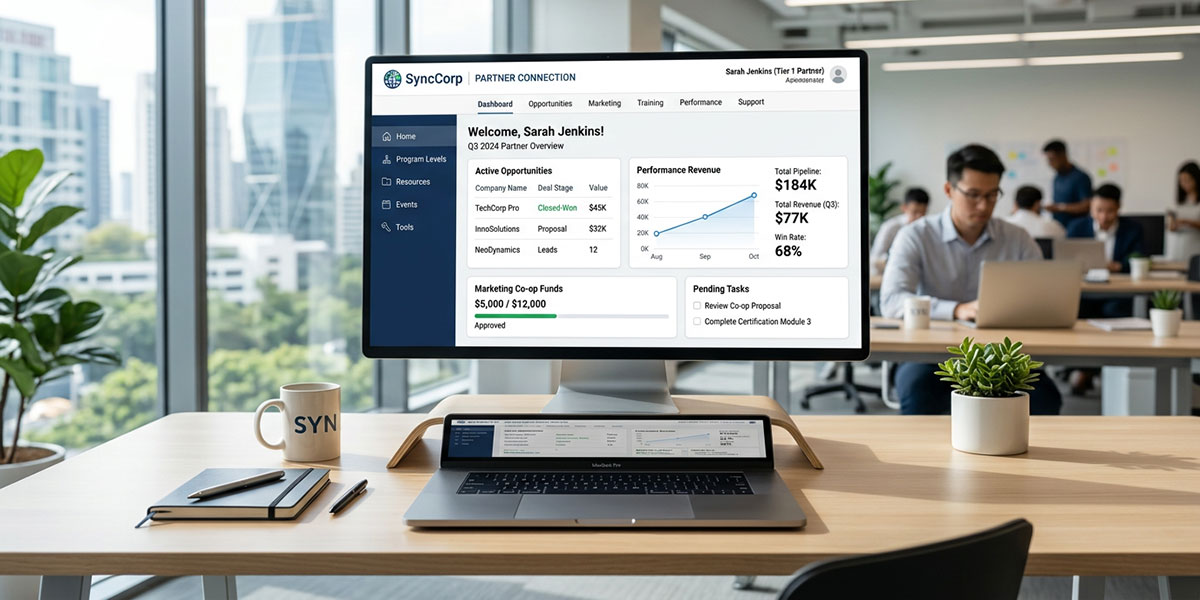
The process of registering deals becomes incredibly simple and transparent with a native solution. Partners can submit new opportunities directly through the familiar portal interface they use daily.
Because the `channel management software` shares the CRM database, there is no channel conflict. The system can automatically check for duplicate leads, ensuring fair and fast deal approval.
This level of efficiency is provided by tools like ZINFI's Deal Registration Management module. It streamlines the sales process and builds trust with your valued channel partners.
Communication and collaboration also see a dramatic improvement with a unified platform. Partners can interact with your channel team directly within the portal environment.
Features like partner communities and support ticketing are all part of the same system. This creates a central hub for all partner-related communication and relationship-building activities.
Personalization is another key advantage of a CRM-native `channel management software` solution. You can tailor the portal experience based on partner tier, specialty, or geographic location.
This allows you to deliver relevant content, targeted promotions, and personalized learning paths. Partners feel more valued when the experience is specifically customized to their unique needs.
Finally, a mobile-first approach ensures partners can be productive from anywhere. With a solution like ZINFI’s Mobile App Management, partners can manage their business on the go.
They can register deals from the field or access training during their commute. This flexibility helps partners stay engaged and productive, ultimately driving more revenue.
Why is a Unified Data View Crucial for Channel Management?
A unified data view is the strategic foundation of modern, high-performance channel management. It is the single most important benefit of adopting a native software solution.
When your `channel management software` and CRM are one, you achieve a single source of truth. This holistic view connects every partner touchpoint with every customer interaction seamlessly.
This unified perspective allows you to track the entire customer lifecycle with precision. You can see when a partner-generated lead converts into a loyal, high-value customer.
This visibility is essential for accurately measuring partner influence and overall channel ROI. You can finally attribute revenue correctly and make data-driven investment decisions confidently.
With all data residing in one place, reporting and analytics become exponentially more powerful. You can run comprehensive reports that combine sales, marketing, and partner performance metrics.
ZINFI’s Business Intelligence & Reports module leverages this unified data to provide deep insights. You can identify top-performing partners, effective marketing campaigns, and profitable product segments.
This deep analytical capability unlocks advanced functionalities like predictive analytics and trend analysis. You can forecast future sales with greater accuracy by analyzing historical partner behavior.
You can also use performance analytics to proactively identify partners who may be struggling. This allows you to offer targeted support and training before their performance declines.

A unified data model enables true collaboration between your direct and indirect sales teams. Both groups can work from the same set of accounts, leads, and opportunities.
This eliminates channel conflict and fosters a more cooperative selling environment for everyone. Co-selling motions become streamlined, as facilitated by ZINFI’s Partner Co-Selling Management solution.
Your ability to manage and optimize your partner programs is also dramatically enhanced. You have the data needed to design effective incentive structures and promotional offers.
Without unified data, managing market development funds becomes a speculative and risky endeavor. You can track the ROI of every dollar you spend with a proper platform.
According to research from Gartner, data-driven B2B organizations achieve more sustainable growth. A unified data view is the only way to become a truly data-driven channel organization.
Every decision, from partner recruitment to program adjustments, can be backed by solid data. This strategic clarity allows you to outmaneuver competitors who are still operating on intuition.
This approach also greatly improves your forecasting and business planning capabilities. With a complete picture of your sales pipeline, you can plan resources more effectively.
A reliable `channel management software` gives you confidence in your revenue projections. This stability is invaluable for strategic long-term planning and stakeholder reporting.
Ultimately, a unified data view from a superior `channel management software` transforms your channel. It converts it from a simple sales extension into a strategic business asset.
This transformation is a critical step for any organization looking to lead in its market. It provides the intelligence needed to scale, optimize, and dominate the competition.
Comparing Channel Management Approaches
| Feature | Traditional Standalone Software | CRM-Native Channel Management Software |
|---|---|---|
| Data Synchronization | Relies on fragile, delayed API connections. | Offers real-time data from a single, unified database. |
| User Experience | Provides a disjointed, inconsistent partner portal. | Delivers a seamless, branded, single sign-on experience. |
| Reporting & Analytics | Offers limited insights from siloed data sets. | Enables a 360-degree view with advanced performance analytics. |
| Total Cost of Ownership | High due to multiple licenses and integration costs. | Lower due to a single platform and no integration fees. |
| Scalability | Difficult to scale with growing partner numbers. | Designed for rapid scaling of the entire partner ecosystem. |
| Security & Compliance | Complex and risky user management across systems. | Centralized security and access controls from the CRM. |
| Workflow Automation | Limited by data latency and system boundaries. | Powerful automation across sales and partner activities. |
Why Choose ZINFI for Your Channel Management Software Needs?
ZINFI offers a comprehensive suite of solutions for Unified Partner Management. The platform is designed to streamline every aspect of your channel program effectively.
By leveraging ZINFI, you can consolidate your technology stack and empower your partners. Here is why our `channel management software` is the superior choice for your business:
- Truly Unified Platform: We provide a complete set of modules for partner relationship, enablement, marketing, and sales management in one robust platform, eliminating the need for fragmented point solutions.
- Deep Automation Capabilities: Our powerful Workflow Management engine allows you to automate complex cross-functional processes, saving time and reducing manual errors across the board for all users.
- Flexible Integration Core: While we advocate for a unified approach, our Centralized Interconnect module ensures that you can seamlessly integrate with any existing third-party applications or legacy CRM systems as needed.
- Modular and Scalable Design: You can start with the specific modules you need today and easily add more functionality as your partner program grows and evolves, ensuring the platform always meets your requirements.
- Focus on Partner Experience: Everything from our intuitive `partner portal` to our mobile application is designed with the partner in mind, fostering greater engagement, loyalty, and productivity.
- Advanced Analytics and Reporting: Gain unparalleled insights into your channel performance with our Business Intelligence tools, which leverage unified data for accurate and actionable performance analytics and forecasting.
Frequently Asked Questions
What is channel management software?
Channel management software is a tool that helps companies manage their indirect sales partners. It automates tasks like partner onboarding, training, lead distribution, and performance tracking.
How is a PRM different from a CRM?
A CRM (Customer Relationship Management) system manages interactions with customers. A PRM (Partner Relationship Management) aystem is specialized for managing indirect sales partners.
Why is a single source of truth important?
A single source of truth ensures everyone in the organization uses the same data. This eliminates confusion, prevents errors, and enables reliable, data-driven decision-making processes.
What exactly is a partner portal?
A partner portal is a secure website that provides partners with necessary resources. These resources include training materials, marketing assets, sales tools, and performance dashboards.
Can this software help with partner onboarding?
Yes, robust `channel management software` automates and streamlines the entire partner onboarding process. It ensures new partners are trained and ready to sell much more quickly.
What is a b2b portal in this context?
A `b2b portal` is another term for a partner portal, an online gateway for business partners. It facilitates communication, collaboration, and commerce between a vendor and its channel.
How does this software manage market development funds (MDF)?
A good platform includes modules for MDF Management to track proposals, approvals, and claims. This makes it easy to measure the ROI on your channel marketing investments.
What kind of analytics should I expect from this software?
You should expect detailed performance analytics on partner engagement, pipeline, and revenue. A native solutions offers a unified view of direct and indirect sales data.
Is a native channel management software more secure?
Yes, a native solution is generally more secure for your company's valuable information. It centralizes user permissions and security protocols within your existing, trusted CRM environment.
How does a unified platform reduce total cost of ownership?
It reduces costs by eliminating the need for multiple software licenses and support contracts. It also removes the expensive, ongoing maintenance required for third-party API integrations.
About the author
Sugata Sanyal
Sugata Sanyal is the Founder & CEO of ZINFI Technologies, a leader in Unified Partner Management. He has been a passionate advocate for the channel and channel partners for decades. His vision for ZINFI is to provide partner ecosystems with the tools they need to succeed.