How a Strategic Partner Ecosystem Fuels Unprecedented Growth
A strategic partner ecosystem creates exponential growth by moving beyond linear sales channels. These networks build collaborative value webs that expand market reach and accelerate innovation.
Success in today's market depends on collaboration rather than solo efforts. Companies are building value through interconnected relationships with diverse partners.
This shift from a direct sales model requires a new way of thinking. It means investing in relationships, technology, and shared goals for mutual success.
A well-managed business ecosystem allows companies to enter new markets more quickly. It also provides a foundation for developing more comprehensive solutions for customers.
Ultimately, co-selling and strategic investments are the twin engines of this new model. This approach unlocks revenue streams that would be impossible to access alone.
Key Takeaways
TL;DR
- A partner ecosystem moves beyond transactional relationships to create a collaborative value network.
- Strategic investments in technology, enablement, and incentives are crucial for ecosystem health.
- Co-selling within the ecosystem accelerates sales cycles and increases deal sizes significantly.
- Measuring ecosystem ROI requires looking beyond revenue to include engagement and innovation metrics.
- Unified Partner Management platforms are essential for orchestrating a complex partner network.
- The future of B2B growth lies in building and nurturing a dynamic, interconnected partner ecosystem.
How Does a Partner Ecosystem Drive Strategic Growth?
A modern partner ecosystem drives growth by creating a multiplier effect. It pools resources, expertise, and customer access from multiple organizations.
This contrasts sharply with traditional, linear channel models focused on resale. The ecosystem approach is about co-creation of value for the end customer.
One primary driver is accelerated innovation through diverse collaboration. Partners bring unique perspectives and technologies that can be combined into new solutions.
This collaborative environment fosters a culture of continuous improvement and adaptation. Your company can respond to market changes with greater agility and insight.
Another key growth driver is expanded market reach and access. Each partner brings its own established customer base and geographic footprint.
By leveraging this network, you can enter new verticals or regions efficiently. This reduces the cost and risk associated with traditional market expansion efforts.
The partner ecosystem also enhances customer value and retention. Customers benefit from integrated solutions that solve complex problems comprehensively.
This holistic approach leads to higher customer satisfaction and loyalty. They see the ecosystem as a single, reliable source for their needs.
Furthermore, a thriving business ecosystem creates competitive differentiation. It builds a moat that is difficult for competitors to replicate quickly.
Your interconnected web of relationships becomes a unique strategic asset. It represents a collective strength far greater than any single company could achieve.
Trust is the fundamental currency that enables this collaborative environment. Clear communication and shared goals ensure all participants are aligned and engaged.
Effective management requires platforms that facilitate this trust and transparency. Technology plays a vital role in orchestrating these complex interactions at scale.
The transition to a thriving partner ecosystem requires a significant mindset shift. Leadership must champion a culture of openness and mutual benefit over internal competition.
Companies must see their partners not as sales channels but as extensions of their team. This philosophy is central to unlocking the full potential of collaborative growth.
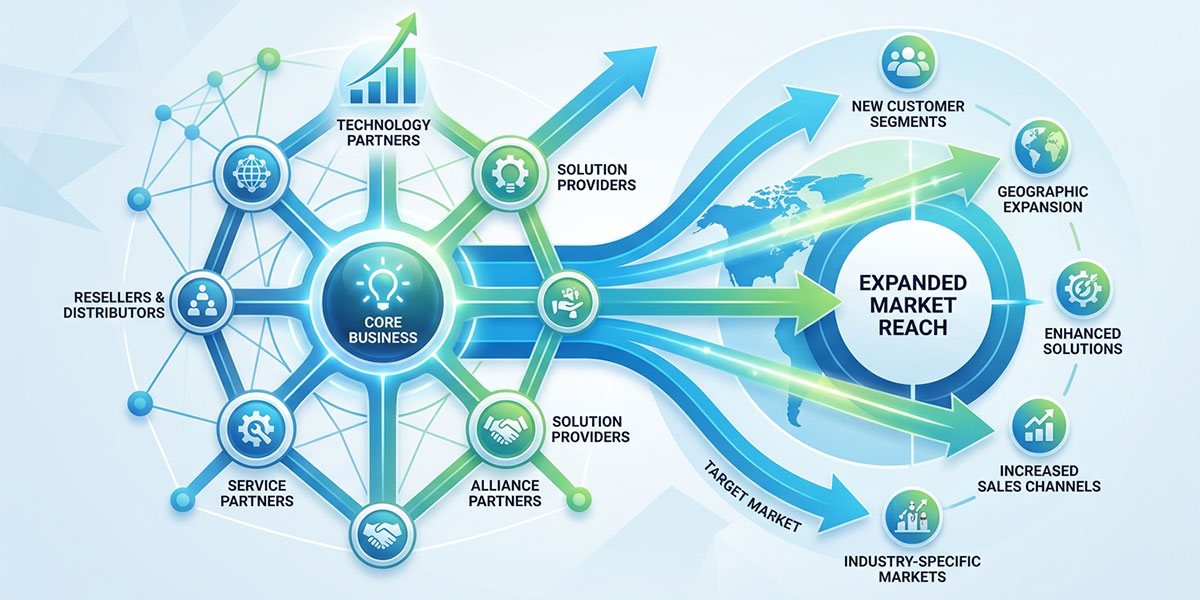
For example, a software company can partner with implementation specialists and hardware vendors. This alliance offers customers a complete, turn-key solution to their business challenges.
The customer receives a seamless experience from purchase to deployment and support. This level of service would be difficult for the software company to provide alone.
This model moves the focus from selling a product to solving a customer's problem. Long-term value creation becomes the shared objective of the entire partner network.
This shift from transactions to relationships is the core of ecosystem success. It ensures that all parties are motivated to contribute to the customer's success.
The strategic value of this network also extends to market intelligence. Partners on the front lines provide invaluable feedback and insights.
This flow of information helps you refine your products and go-to-market strategies. It creates a powerful feedback loop that fuels continuous improvement and innovation.
A well-structured partner ecosystem can also absorb market shocks more effectively. The diversity of the network provides resilience during economic downturns.
If one segment of the market weakens, others may remain strong. This diversification helps stabilize revenue streams and ensures long-term business continuity.
What Are Key Investments for a Thriving Partner Ecosystem?
Building a successful partner ecosystem requires targeted and strategic investments. These investments fall into three main categories: technology, enablement, and incentives.
Simply inviting partners to join is not enough for sustainable growth. You must provide the infrastructure and support they need to succeed with you.
First, technology is the foundational investment for managing your alliance network. A robust Unified Partner Management (UPM) platform is absolutely essential for scale.
This platform acts as the central hub for all partner activities. It automates processes and provides a single source of truth for everyone involved.
Investing in strong user and access management is critical for security. It ensures partners see only the information relevant to their role and tier.
Likewise, a flexible content management system is vital for sharing resources. Partners need easy access to the latest marketing materials and sales tools.
The second key investment area is comprehensive partner enablement. Your partners will only be as successful as the training you provide them.
This includes structured onboarding programs that get new partners up to speed quickly. It also covers ongoing training to keep them updated on products and strategies.
A sophisticated learning management system (LMS) is invaluable here. It allows you to deliver and track training at scale across your entire network.
Enablement also includes providing high-quality, customizable marketing assets. A co-branded asset management tool empowers partners to market effectively.
The third critical investment is in a well-designed partner incentive program. This goes beyond simple commissions to motivate desired partner behaviors.
These incentives should align with your strategic goals for the collaborative ecosystem. This could include rewarding partners for training completion or new customer acquisition.
Market Development Funds (MDF) are a powerful tool for driving partner-led marketing. Investing in an MDF management solution ensures these funds are used effectively.
Clear rebate and commission structures are also necessary to build trust. Partners need to see a clear and transparent path to profitability.
Beyond these three pillars, you must invest in dedicated personnel. A team of channel managers is needed to build and nurture partner relationships.
These managers act as advocates for partners within your organization. They help resolve issues and identify new opportunities for collaboration.
A formal partner business planning process is another important investment area. This involves working with key partners to set mutual goals and strategies.
These joint plans ensure alignment and provide a framework for measuring success. This process transforms the relationship from tactical to truly strategic for both parties.
Finally, investing in communication tools is essential for a connected partner network. Regular newsletters, webinars, and partner portals keep everyone informed and engaged.
An alerts management system can automatically notify partners of important updates. This ensures critical information is disseminated quickly and reliably across the network.
How Can Co-Selling Maximize Your Partner Ecosystem's Potential?
Co-selling is a powerful strategy that transforms a partner ecosystem from a concept into a revenue engine. It involves your sales team and a partner's team collaborating on a specific deal.
This differs from co-marketing, which focuses on lead generation activities. Co-selling is about the joint pursuit and closing of active sales opportunities.
One of the biggest benefits of co-selling is an increased deal size. By combining solutions, you can solve larger and more complex customer problems.
This leads to more strategic, higher-value contracts for both you and your partner. It elevates the conversation from product features to business outcomes.
Co-selling also significantly shortens sales cycles. The partner often brings a pre-existing, trusted relationship with the customer.
This trust helps overcome initial objections and accelerates the decision-making process. The warm introduction bypasses many of the typical early-stage sales hurdles.
To implement co-selling effectively, you need clear rules of engagement. This includes defining territory alignment, compensation, and who leads the customer interaction.
A formal partner contracts management process is essential for documenting these agreements. It prevents channel conflict and ensures a smooth collaborative selling motion.
Technology plays a critical role in facilitating a co-selling motion. A unified platform for deal registration is the starting point.
This system provides visibility into the pipeline and protects the partner's interest. It's the foundation of trust for sharing sales opportunities transparently.

A dedicated partner co-selling management solution takes this a step further. It allows for account mapping and joint opportunity management within a shared workspace.
This enables both sales teams to track progress and collaborate in real-time. It ensures everyone is aligned on the next steps and overall strategy for the deal.
Successful co-selling is a core component of a modern partner program. It requires a cultural shift within your direct sales organization.
Your sales reps must see partners as allies who can help them exceed their quota. Compensation plans should be designed to reward this collaborative behavior.
This alignment is crucial for making co-selling a scalable and repeatable process. Without it, friction between direct and indirect sales teams will stall progress.
The a mature co-selling program also enhances your overall business ecosystem. It deepens relationships between your team and your partners' teams at all levels.
These personal connections foster greater trust and lead to more proactive collaboration. Partners begin to actively seek out new opportunities to work together.
For the customer, a seamless co-selling experience is a significant value-add. They get a comprehensive solution from a team of coordinated experts.
This removes the burden of integrating disparate products and services themselves. The result is a better customer outcome and a stronger competitive position for your ecosystem.
Ultimately, co-selling is the active expression of a healthy partner ecosystem. It is where the strategic potential of your network is converted into tangible revenue.
By investing in the right processes and technology, you enable this powerful growth lever. Co-selling becomes the primary way your company goes to market with your partners.
How Do You Measure the ROI of a Partner Ecosystem?
Measuring the return on investment of a partner ecosystem requires a multifaceted approach. It must extend far beyond simply tracking partner-sourced revenue.
A holistic measurement framework provides a true picture of the ecosystem's value. It combines both financial metrics and strategic performance indicators.
One key area is measuring partner engagement and enablement. This includes tracking metrics like training completions, certifications earned, and portal logins.
High engagement is a leading indicator of future revenue performance. An engaged and well-trained partner network is more likely to be successful.
Another critical metric is the ecosystem's impact on customer value. You should track customer satisfaction and retention for accounts served by partners.
Comparing these numbers to direct accounts can reveal the ecosystem's influence. A successful network should lead to happier and more loyal customers.
Of course, traditional financial metrics are still very important. This includes partner-influenced revenue, deal registration volume, and average deal size.
Tools for business intelligence and reports are crucial for this. They allow you to slice and dice the data to identify trends and top performers.
Metrics related to market expansion should also be a focus. Track the number of new logos or new markets entered through your partner ecosystem.
This quantifies the network's ability to extend your reach cost-effectively. It demonstrates a clear return on your investment in building these relationships.
Innovation metrics are another advanced way to measure ROI. This could involve tracking the number of new integrations or joint solutions developed.
This shows how your channel network is contributing to your product roadmap. It highlights the ecosystem's role as a source of co-innovation and differentiation.
A recent report from Gartner emphasizes this shift toward ecosystem-driven innovation. It highlights how leading firms leverage partners to build competitive advantage.
This approach moves the focus from short-term sales to long-term value creation. Building a powerful collaborative ecosystem is a strategic imperative for modern B2B organizations.

To effectively track these diverse metrics, you need sophisticated analytics capabilities. This is where predictive analytics and performance analytics become vital.
Performance analytics helps you understand what has already happened in your ecosystem. Predictive analytics uses this historical data to forecast future trends and outcomes.
For instance, analytics can identify the specific partner behaviors that lead to success. You can then use this insight to refine your enablement and incentive programs.
This data-driven approach allows for continuous optimization of your partner strategy. It ensures your investments are directed toward the most impactful activities.
Ultimately, a comprehensive ROI framework provides visibility to senior leadership. It justifies the ongoing investment required to build and sustain a thriving partner ecosystem.
It proves that the ecosystem is not just a cost center. Instead, it is a critical driver of strategic growth, innovation, and long-term enterprise value.
Traditional Channel vs. A Modern Partner Ecosystem
| Feature | Traditional Channel Sales | Modern Partner Ecosystem |
|---|---|---|
| Relationship Model | Transactional and linear (vendor to reseller to customer). | Collaborative and multi-directional web of relationships. |
| Primary Goal | Focus on product resale and volume transactions. | Focus on co-creation of value for the customer. |
| Partner Roles | Partners primarily act as sales fulfillment agents. | Partners play diverse roles (influencer, integrator, developer). |
| Value Proposition | Value is defined by the product itself. | Value is defined by the integrated solution and outcome. |
| Key Activities | Recruitment, deal registration, and commission payments. | Co-selling, co-marketing, co-innovation, and joint planning. |
| Core Metrics | Primarily measures partner-sourced revenue and margin. | Measures revenue, customer lifetime value, and innovation. |
| Technology Stack | Basic partner portal for resources and registration. | Unified Partner Management (UPM) platform for orchestration. |
How ZINFI Empowers a Thriving Partner Ecosystem
ZINFI's Unified Partner Management (UPM) platform provides the technology foundation for your partner ecosystem. Our solution consolidates all aspects of partner management into a single, integrated platform.
By breaking down data silos, ZINFI empowers you to orchestrate complex relationships at scale. We provide the tools needed to enable collaboration, drive co-selling, and measure true ROI.
- End-to-End Automation: ZINFI automates the entire partner lifecycle from onboarding to co-selling and incentive payments. A flexible workflow management engine adapts to your unique business processes.
- Deep Enablement Tools: Our platform includes a sophisticated Learning Management System (LMS+) and comprehensive content libraries. These tools ensure your partners are always equipped with the right knowledge and assets.
- Integrated Co-Selling Suite: We provide dedicated modules for deal registration, co-selling management, and referral management. These tools foster trust and enable your direct and partner sales teams to collaborate effectively.
- Flexible Incentive Management: Manage complex incentive programs including MDF, SPFFs, commissions, and rebates. Our robust payment management capabilities ensure partners are paid accurately and on time. - Powerful Analytics: Gain deep insights into every facet of your partner ecosystem with our advanced analytics. Understand partner performance, track engagement, and prove the strategic value of your programs.
- Centralized Hub: Our platform offers centralized interconnect capabilities, integrating with your existing CRM and ERP systems. This creates a single source of truth and a seamless experience for both you and your partners.
Frequently Asked Questions
What is a partner ecosystem?
A partner ecosystem is a network of companies that collaborate to create more value together. It goes beyond simple reseller channels to include technology partners, integrators, and consultants.
How is an ecosystem different from a traditional channel?
A traditional channel is linear and focused on reselling products. An ecosystem is a collaborative web focused on co-creating comprehensive solutions for customers.
Why is co-selling important for an ecosystem?
Co-selling brings the collaborative potential of an ecosystem to life. It combines the strengths of multiple partners to win larger deals and solve bigger customer problems.
What kind of technology do I need to manage a partner ecosystem?
A Unified Partner Management (UPM) platform is essential. It provides a single system to manage partner relationship, enablement, marketing, sales, and incentives processes.
How do I get my direct sales team to embrace co-selling?
Aligning compensation plans to reward collaboration with partners is key. You must also provide clear rules of engagement and technology that makes collaboration easy.
What are Market Development Funds (MDF)?
MDF are funds provided by a vendor to its partners. Partners use these funds to finance marketing activities that promote the vendor's products or services.
How do you measure the success of a partner ecosystem?
Success is measured by a mix of metrics. These include partner-influenced revenue, customer lifetime value, market penetration, and partner engagement levels.
What is partner enablement?
Partner enablement is the process of providing your partners with the tools they need. This includes the training, content, and support required for them to succeed.
Can a small company build a partner ecosystem?
Yes, small companies can build a powerful partner ecosystem by focusing on niche partners. The key is to find collaborators with complementary offerings and a shared customer profile.
What is the first step in building a business ecosystem?
The first step is to define your ecosystem strategy clearly. Identify the types of partners you need and the value proposition for them to join you.
About the author
Sugata Sanyal
Sugata Sanyal is the Founder & CEO of ZINFI Technologies, a leader in Unified Partner Management. He has been a passionate advocate for the channel and channel partners for decades. His vision for ZINFI is to provide partner ecosystems with the tools they need to succeed.