The Ultimate Guide to Channel Management Software for Hybrid Tech Ecosystems in 2026
The best channel management software for hybrid tech ecosystems provides a unified platform to automate, manage, and optimize complex partner networks. It combines robust Partner Relationship Management with advanced analytics to drive growth in evolving markets.
As we look towards 2026, the nature of business partnerships is rapidly transforming. Traditional linear supply chains are giving way to dynamic, interconnected hybrid ecosystems.
These new models involve a diverse mix of resellers, agents, technology partners, and influencers. Effectively managing this complexity requires a sophisticated approach and powerful tools.
This is where modern Channel Management Software becomes an indispensable asset for any organization. It provides the central nervous system for your entire partner network.
Choosing the right platform is no longer just about efficiency; it's about strategic advantage. The correct solution empowers you to scale your partner program and drive revenue growth.
This guide will explore the essential features and considerations for selecting the best solution. We will help you navigate the options for your evolving hybrid tech ecosystem.
Key Takeaways
TL;DR
- Hybrid tech ecosystems require a unified platform to manage diverse partner types effectively. The right software integrates all partner activities into one view.
- Automation is critical for scaling partner operations like onboarding, training, and lead distribution. This frees up your channel team to focus on strategic relationship building.
- Advanced analytics and reporting are essential for visibility into partner performance. You need tools that offer both historical data and future predictions.
- A robust partner portal serves as the central hub for communication, content, and collaboration. It is the core of the partner experience.
- Integration capabilities with other business systems like CRM and ERP are non-negotiable. Seamless data flow is crucial for a 360-degree view of your channel.
- Personalization allows you to tailor experiences for different partner tiers, types, and regions. This increases engagement and drives better performance across the board.
- The best Channel Management Software should be scalable and flexible. It must adapt to your growing business and changing market dynamics.
Why is modern Channel Management Software crucial for hybrid ecosystems?
Hybrid tech ecosystems represent a significant shift from traditional, linear channel models. They involve a complex web of relationships that are fluid and multi-dimensional.
This includes value-added resellers (VARs), managed service providers (MSPs), and systems integrators (SIs). It also includes technology alliance partners, consultants, and even referral partners.
Managing this diverse group with spreadsheets or outdated tools is simply impossible. You need a centralized system purpose-built for this complexity.
A modern Channel Management Software provides the framework to orchestrate these varied partnerships. It ensures every partner, regardless of their role, feels supported and engaged.
Without such a system, you risk channel conflict and inconsistent partner experiences. This can lead to partner churn and lost revenue opportunities.
A dedicated platform helps you define clear rules of engagement for every partner type. It automates processes to ensure these rules are followed consistently.
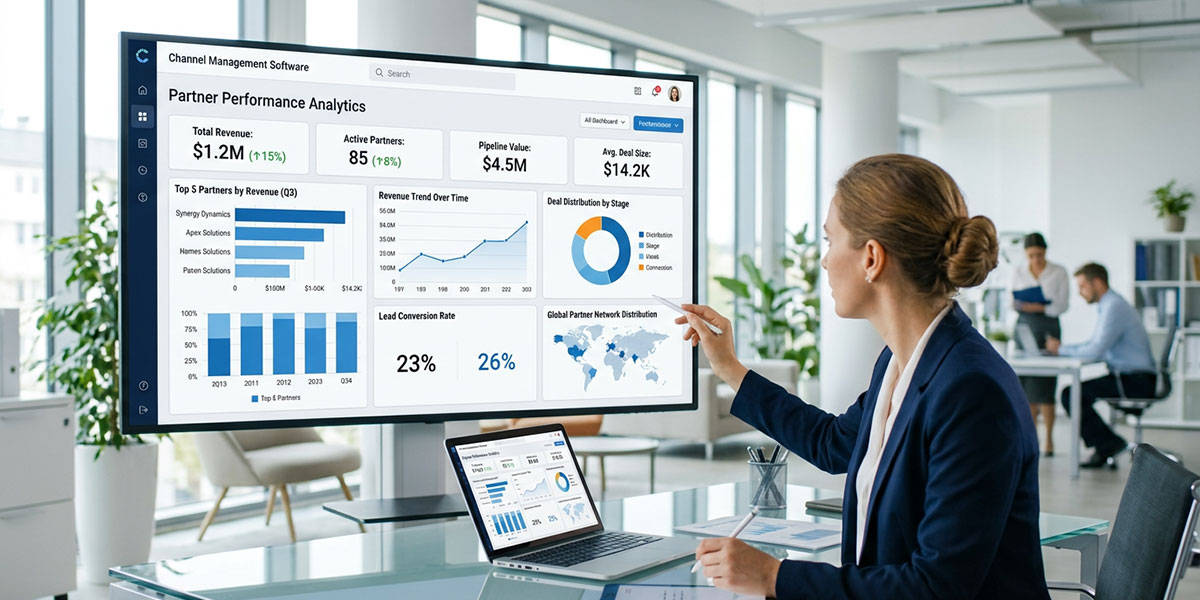
Furthermore, hybrid ecosystems thrive on collaboration between different partners. Your software should facilitate this co-selling and co-marketing activity seamlessly.
Features like a partner community create a space for partners to connect and share knowledge. This fosters a stronger, more collaborative ecosystem.
The core function of this software is to provide a single source of truth for your entire channel. Every interaction, from onboarding to deal registration, is tracked and managed.
This unified view is essential for making informed strategic decisions. It allows you to identify what is working and where improvements are needed.
Good Channel Management Software gives you real-time visibility into your channel pipeline. You can see how leads are progressing and where bottlenecks exist.
This visibility is critical for accurate forecasting and resource allocation. It empowers your channel managers to be proactive rather than reactive.
Another crucial aspect is the ability to manage partner programs with flexibility. Hybrid ecosystems require tiered and specialized programs for different partner types.
Your platform must support this with configurable program management tools. This lets you create unique journeys for each partner segment.
For example, a technology partner has different needs than a referral partner. Your software should allow you to tailor enablement content, incentives, and communications accordingly.
This level of personalization significantly improves partner engagement. It shows partners that you understand and value their specific contribution to the ecosystem.
Ultimately, investing in the right platform is about future-proofing your channel strategy. The market will only become more complex and interconnected.
A scalable and adaptable Channel Management Software ensures you can grow your ecosystem sustainably. It provides the foundation for long-term channel success.
What features define the best Channel Management Software in 2026?
Looking ahead to 2026, the best Channel Management Software will be defined by its intelligence and automation. It must do more than just manage and track partner activities.
The platform must be a proactive engine for channel growth. Artificial intelligence (AI) and machine learning (ML) will be at the forefront of this evolution.
AI-powered features will automate complex workflows and provide actionable insights. This frees up human channel managers to focus on high-value relationship building.
For example, AI can help with partner profiling and recruitment. It can analyze data to identify the ideal characteristics of a successful partner for your business.
A comprehensive partner portal remains the centerpiece of the partner experience. It must be intuitive, mobile-friendly, and highly customizable.
This portal is where partners access everything they need to be successful. Think of it as their digital office for conducting business with you.
One of the most critical components of the portal is a centralized content management system. This ensures partners always have access to the latest marketing and sales assets.
The system should support various content types, from datasheets and presentations to videos. It should also provide analytics on which assets are most effective.
Workflow automation is another non-negotiable feature for modern software. The platform must automate routine processes like partner onboarding, training, and lead management.
Tools like ZINFI’s Workflow Management allow you to build custom, automated processes without coding. This dramatically improves efficiency and consistency across your channel.
Integration capability is paramount for any top-tier solution. Your Channel Management Software must seamlessly connect with your existing tech stack.
This includes deep integration with CRM systems like Salesforce, ERPs, and marketing automation platforms. This creates a unified data flow across the entire organization.
Robust business intelligence and analytics are also a hallmark of a leading platform. Dashboards should provide a clear, real-time view of channel performance.
You need the ability to track key performance indicators (KPIs) for individual partners, regions, and programs. This data is vital for measuring the ROI of your channel investments.

Beyond basic reporting, look for platforms offering predictive analytics. This capability uses historical data to forecast future trends and outcomes.
For instance, it could predict which partners are most likely to succeed. It could also identify at-risk partners before they become disengaged.
Partner incentives management is another key area. The system must be able to manage complex incentive programs like MDF, co-op funds, and rebates.
Automating the management of market development funds ensures fairness and transparency. It also makes it easier for partners to request and claim funds.
Finally, the user experience for both administrators and partners is crucial. A clunky, difficult-to-use platform will lead to low adoption rates.
The best Channel Management Software offers intuitive interfaces. It makes it easy for partners to engage and for your team to manage the ecosystem.
How does Channel Management Software support partner enablement in a hybrid model?
Partner enablement is the process of providing your partners with the knowledge, skills, and tools to succeed. In a hybrid ecosystem, enablement must be continuous and personalized.
A powerful Channel Management Software serves as the engine for your entire enablement strategy. It allows you to deliver the right resources to the right partners at the right time.
One of the core components of partner enablement is training and certification. A built-in Learning Management System (LMS) is therefore an essential feature.
ZINFI's Partner Learning Management Plus is a great example of this capability. It allows you to create structured learning paths for different partner roles.
You can develop courses on your products, sales methodologies, and marketing best practices. The system tracks partner progress and manages certifications automatically.
This ensures that all partners have a baseline level of knowledge. It promotes a consistent and high-quality representation of your brand in the market.
Effective content syndication is another pillar of modern partner enablement. You need to make it easy for partners to leverage your marketing content.
A good platform will provide a library of co-brandable assets. Partners can quickly add their logo and contact information to materials like brochures and email templates.
This streamlines their marketing efforts and ensures brand consistency. The ability to manage co-branded assets is a key feature to look for.
Furthermore, the software should facilitate the distribution of this content. It can integrate with tools for social media syndication and email marketing.
This empowers partners to run their own campaigns using your approved messaging. It amplifies your marketing reach at scale without sacrificing control over your brand.
Beyond marketing collateral, sales enablement is equally important. Your partner portal should be a one-stop-shop for sales tools and information.
This includes access to price books, quoting tools, and competitive intelligence. Providing a Configure, Price, Quote (CPQ) solution within the portal can dramatically speed up the sales cycle.
It allows partners to generate accurate quotes quickly and independently. This reduces their reliance on your internal sales team and improves their efficiency.
Communication is also a key aspect of enablement. The right Channel Management Software acts as a central communication hub.
You can use it to send out newsletters, product updates, and program announcements. Features like alerts and notifications ensure partners never miss important information.
In a hybrid model with diverse partners, this centralized communication is vital. It prevents information silos and keeps the entire ecosystem aligned on your strategic goals.
Ultimately, a strong enablement program driven by technology leads to more self-sufficient partners. Self-sufficient partners are more engaged, more productive, and more profitable.
How can you measure ROI with your Channel Management Software?
Measuring the return on investment (ROI) of your channel program is critical for demonstrating its value. A robust Channel Management Software provides the data and tools to do this effectively.
Without a centralized system, collecting and analyzing channel data is a manual, error-prone process. A dedicated platform automates data collection, providing a clear and accurate picture of performance.
The first step in measuring ROI is tracking revenue generated through the channel. The software should provide detailed reporting on sales from each partner and program.
Features like deal registration are essential for attributing revenue correctly. This prevents channel conflict and provides clear data on partner-sourced deals.
However, ROI is about more than just top-line revenue. You also need to track the costs associated with your channel program.
This includes incentive payouts like rebates and MDF, as well as the costs of training and support. The software should consolidate all this financial data in one place.
By comparing total channel revenue against total channel costs, you get a clear ROI calculation. This can be analyzed at the program, region, or even individual partner level.
Advanced platforms like ZINFI offer sophisticated business intelligence and reporting tools. These tools go beyond simple dashboards to offer deep insights.

You can build custom reports and visualize data to identify trends. For example, you can correlate partner training completion with their sales performance.
This helps you understand which enablement activities have the biggest impact on revenue. You can then optimize your investments to focus on what works best.
Leading Channel Management Software increasingly incorporates performance analytics. This allows for historical analysis of partner behavior and sales cycles.
Furthermore, the inclusion of predictive analytics helps forecast future performance. It can identify which leads are most likely to close or which partners are poised for growth.
This forward-looking view is crucial for strategic decision-making. As Gartner research indicates, data-driven decisions are key to B2B marketing success.
Another important metric to track is partner engagement. The software can monitor how often partners log in to the portal and which resources they use.
Low engagement can be an early warning sign of a dissatisfied or struggling partner. This allows your channel managers to intervene proactively to provide support.
By tracking these metrics, you can demonstrate the tangible value of your channel program. It transforms the channel from a cost center to a documented revenue driver.
This makes it easier to secure budget and resources for your channel initiatives. A data-backed approach is essential for gaining executive buy-in and support.
Traditional vs. AI-Powered Channel Management Software
| Feature | Traditional Software | AI-Powered Software (2026+) |
|---|---|---|
| Partner Onboarding | Manual, form-based processes that require administrative oversight. | Automated, personalized onboarding paths based on partner profile and type. |
| Lead Management | Rule-based lead distribution, often based on geography. | Predictive lead scoring and intelligent distribution to the best-fit partner. |
| Content & Enablement | Static content library with one-size-fits-all resources. | Dynamic content recommendations tailored to partner's needs and sales stage. |
| Analytics & Reporting | Historical reporting and basic dashboards showing past performance. | Predictive analytics forecasting trends and performance analytics identifying growth opportunities. |
| Partner Support | Reactive support through tickets and manual follow-up. | AI-powered chatbots for instant support and proactive outreach to at-risk partners. |
| Program Management | Rigid program structures that are difficult to customize. | Flexible, dynamic program tiers that adapt to partner performance automatically. |
| User Experience | Functional but often complex interfaces requiring extensive training. | Intuitive, personalized user journeys that drive engagement and adoption. |
Why ZINFI Excels as a Channel Management Software Provider
ZINFI offers a comprehensive Unified Partner Management (UPM) solution that excels in managing hybrid tech ecosystems. It provides a single platform to handle all aspects of your partner lifecycle.
Our solution is uniquely designed to address the challenges of modern channel environments. We combine three core applications into one powerful platform: Partner Relationship Management (PRM), Partner Marketing Management (PMM), and Partner Sales Management (PSM).
- Complete Lifecycle Management: ZINFI covers every stage of the partner journey, from recruitment and onboarding to sales and incentives. This holistic approach ensures a seamless experience for your partners and your team.
- Deep Automation Capabilities: Our platform features powerful workflow automation to streamline your channel operations. This reduces manual tasks and allows your team to focus on building strategic relationships with partners.
- Modular and Scalable Architecture: ZINFI’s solution is modular, allowing you to start with the capabilities you need and add more as you grow. This flexibility makes it ideal for businesses of all sizes, from startups to large enterprises.
- Robust Analytics and Reporting: We provide advanced business intelligence tools that offer deep insights into your channel performance. Our dashboards for performance analytics help you make data-driven decisions to optimize your channel strategy.
- Global and Multi-language Support: ZINFI is a global company with the infrastructure to support large, international channel programs. Our platform is available in multiple languages with local support to serve your partners worldwide.
- Award-Winning and Analyst-Recognized: ZINFI has been consistently recognized by leading industry analysts as a leader in the Channel Management Software space. This validates our commitment to innovation and customer success in the evolving channel landscape.
Frequently Asked Questions
What is Channel Management Software?
Channel Management Software is a tool that helps companies manage their relationships with indirect sales partners. It automates processes like partner onboarding, lead distribution, and performance tracking.
Why do I need more than just a CRM?
While a CRM manages customer relationships, it's not built to manage partner relationships. A dedicated platform offers specific features like deal registration, MDF management, and a partner portal.
What is a hybrid tech ecosystem?
A hybrid tech ecosystem is a complex network of diverse partner types. It includes traditional resellers as well as technology partners, consultants, and influencers who collaborate to deliver value.
How does a partner portal help my business?
A partner portal serves as a self-service hub for your partners. It provides them with 24/7 access to resources, training, and tools, which improves their engagement and self-sufficiency.
How long does it take to implement this software?
Implementation time varies depending on the complexity of your needs. Modern, cloud-based solutions can often be implemented in a matter of weeks, not months.
Can this software integrate with my existing systems?
Yes, leading Channel Management Software solutions are designed for integration. They offer pre-built connectors and APIs to connect with CRMs, ERPs, and other business applications.
How does the software support Partner Relationship Management?
It provides a centralized database for all partner information and interactions. It also offers tools for communication, business planning, and performance reviews to strengthen relationships.
What kind of ROI can I expect?
ROI comes from increased channel sales, improved operational efficiency, and better partner retention. The software provides the analytics to track these metrics and prove the value of your channel program.
Is this software suitable for small businesses?
Many vendors offer modular solutions that are affordable and scalable for small businesses. These platforms allow you to start with basic features and add more capabilities as your channel program grows.
What is the difference between PRM and Channel Management Software?
Partner Relationship Management (PRM) is a core component of a complete Channel Management Software solution. The broader term also encompasses partner marketing (PMM) and sales management (PSM) functionalities.
About the author
Sugata Sanyal
Sugata Sanyal is the Founder & CEO of ZINFI Technologies, a leader in Unified Partner Management. He has been a passionate advocate for the channel and channel partners for decades. His vision for ZINFI is to provide partner ecosystems with the tools they need to succeed.