

Beyond the Channel: Navigating the Nuance and Complexity of Today’s Partner Ecosystem
TL;DR
To scale a modern partner ecosystem, organizations must evolve beyond traditional linear management. This guide explores the transition from simple channel programs to multi-dimensional ecosystems, emphasizing data-driven segmentation, automated incentives, and integrated technology stacks. Success in 2026 requires moving past manual complexity toward an orchestrated framework that prioritizes partner experience (PX) and measurable co-sell revenue growth.
Key Takeaways
- Customer Centricity is the non-negotiable foundation for every strategy in the Partner Ecosystem, ensuring engagements solve high-value customer problems.
-
Leaders must foster an Operate as One Team mentality, proactively dismantling silos to amplify collective impact across Sales, Marketing, and Product functions.
-
Embrace Proactive Orchestration by acting as a forward-looking General Manager, using data and AI/automation to manage complex motions and drive future revenue.
🎥 Watch the Full Video Podcast
For decades, the framework for indirect sales was encapsulated by the term "the channel"—a concept that suggested a well-defined, predictable, and often singular route to market. In that era, industry titans like Cisco and VMware built empires by mastering a relatively simple swim lane model, routing an overwhelming majority of their business, often as much as 80-90%, through a structured network of resellers. This hardware-centric model proved to be effective and scalable.
However, the technological and go-to-market shifts of the last twenty years—chiefly the explosion of B2B SaaS, the rise of frictionless Product-Led Growth (PLG) strategies, and the transformative wave of artificial intelligence—have rendered this paradigm obsolete. The simple channel has been irrevocably replaced by a dynamic, intricate, and deeply complex Partner Ecosystem.
The new reality, as highlighted by partnership expert Nelson Wang, is that the modern customer journey is no longer a linear path. It is a multi-touch, multi-faceted experience that often involves numerous interactions across a company's direct sales teams, customer success managers, marketing content, and a diverse array of partner types before a purchasing decision is ever made. This complexity is compounded by the fact that many of today’s fastest-growing companies have a significant direct-to-customer focus, making it strategically unviable to adopt a "full swim lanes" approach with a resale strategy.
The core challenge for a modern partner leader has therefore shifted dramatically. It is no longer about managing volume through a single, well-trodden path but about orchestrating a sophisticated multitude of partner motions tailored to specific customer needs. This requires a profound evolution in strategy, systems, and the very skill sets that define a thriving Partner Ecosystem.
The Death of the Single Swim Lane and Rise of Nuanced Segmentation
The simplistic, one-size-fits-all swim lane that characterized the channel of the past is now completely obsolete within the modern Partner Ecosystem. The complexity of today's market demands a far more granular and strategic approach to segmentation, forcing leaders to carve out multiple, well-defined swim lanes that are meticulously designed around specific business needs. This nuanced segmentation typically occurs across four key axes: region, customer segment, technical capability, and industry vertical.
This is a direct strategic response to the undeniable fact that go-to-market motions and customer requirements are not uniform across a global business. Each axis requires a deliberate and data-informed decision, moving beyond broad-stroke rules to a more tailored strategy.
Region: A company’s reliance on its Partner Ecosystem can vary dramatically across different geographical territories. For instance, a business might find that its go-to-market motion is significantly more partner-led in the APAC region compared to the Americas, where a direct sales force might be more established and effective.
Segment: Market size provides another critical layer for segmentation. A common and highly effective strategy is for a vendor to focus its internal, high-touch sales and services teams on the large, upmarket enterprise customers, while strategically carving out the mid-market and commercial segments to be exclusively served by services partners who are better equipped to handle that volume and specific customer profile.
Capability: A capability-based swim lane is deployed when a vendor recognizes gaps in its own product or service offerings that a partner can expertly fill. This could involve anything from integrating a specialized payment processor to providing advanced AI deployment services that the vendor does not offer natively. This ensures that the customer receives a comprehensive solution, thereby strengthening the value of the overall Partner Ecosystem.
Vertical: Finally, vertical-specific swim lanes acknowledge that partners often possess superior domain expertise in particular industries. A partner with deep roots in financial services or healthcare will understand the compliance, workflow, and terminology of that industry far better than a generalist, making them the ideal leader for both resell and service motions in that vertical. This intricate level of segmentation necessitates a deep understanding of the Ideal Customer Profile (ICP) and the entire customer journey, ensuring every partner is mapped to solving a precise, high-impact problem within the Partner Ecosystem.
Evolving Partner Skill Sets for the AI and B2B SaaS World
While the foundational first principle of any partnership—to make the customer massively successful and tie that success to tangible business outcomes—has remained constant, the specific skill sets required from partners have evolved at a breathtaking pace. The capabilities that defined a valuable partner two decades ago are vastly different from what is demanded in today’s complex B2B SaaS and AI-driven landscape.
In the hardware-centric era, a partner's primary service value revolved around physical implementation, managed services, and logistical excellence. The core competencies focused on activities such as virtualizing data centers, installation, maintenance, and the mechanics of a resale transaction.
Today, the center of gravity for partner value has shifted dramatically from the physical to the strategic. The modern partner, particularly a Services Integrator (SI), is no longer just an installer but a crucial strategic advisor. Their skill set must be centered on high-level advisory, complex solution deployment, and strategic guidance.
For instance, in the world of artificial intelligence, a top-tier partner must be able to provide customers with a comprehensive framework for successfully deploying AI within their organizations. This is not a simple technical task; it is a consultative engagement that involves guiding the customer through identifying feasible AI use cases, prioritizing those use cases based on a matrix of resource availability, technical complexity, and ultimate business impact.
This evolution requires a continuous commitment to learning and adaptation across the entire Partner Ecosystem. Partner organizations must constantly upskill their teams to serve customers effectively and achieve the desired business outcomes in a world of rapidly advancing technology. For the leader of the Partner Ecosystem, this means that partner recruitment and enablement must prioritize these advanced, consultative skills to ensure the Partner Ecosystem remains relevant and capable of delivering transformative value.

Hardware Distribution's Financial Struggle and the Marketplace Shift
The profound evolution of the Partner Ecosystem has not only changed partner skill sets but also transformed the way partners operate. Still, it has also fundamentally impacted the economic viability of traditional business models, particularly that of hardware distribution. Twenty years ago, distributors were indispensable hubs in the channel, providing critical value far beyond mere pick, pack, and ship logistics.
They offered essential financing to resellers, managed warehousing, provided training and certification programs, and administered complex Marketing Development Funds (MDF). However, the tectonic shifts in technology and purchasing behaviors have created significant financial challenges for this model. The core reason for this financial compression is the migration of value from hardware to software and services.
The high-volume, margin-rich hardware resale motion that was once the lifeblood of the distribution channel has been steadily eroded by the dominance of B2B SaaS and cloud computing. Software revenue, which is often recurring and subscription-based, does not flow through the same physical supply chain. Instead, a significant volume of this revenue is now transacting through digital marketplaces or direct PLG motions where customers can procure and deploy software with little to no human intervention.
This shift in purchasing behavior has rerouted a massive volume of revenue away from the traditional distribution channel, directly impacting the financial health of businesses built on that model. While distribution indeed remains relevant and provides value in specific niche areas—such as managing the complex bidding processes in the public sector and government, or in highly specialized cybersecurity deployments—the overall trend is undeniable.
The evolution of the Partner Ecosystem towards software-first, service-led, and direct-to-customer motions has permanently altered the economic landscape, placing immense pressure on legacy business models that have not adapted to this new reality.

Conclusion
The modern Partner Ecosystem is a complex and vibrant mosaic of ever-evolving skill sets, diverse go-to-market strategies, and intricate customer journeys. The very notion of managing a single, monolithic "channel" has become an anachronism. Today's successful partner leader must be an orchestrator, skillfully conducting a nuanced ecosystem that includes everything from traditional resellers navigating niche markets to highly specialized Services Integrators with deep expertise in AI deployment. The defining characteristic of this new paradigm is its inherent complexity; leaders must therefore embrace it rather than attempt to oversimplify it.
Success in this environment is no longer achieved by applying a generic playbook. Instead, it is won through a flexible, principles-driven strategy that begins with a deep, empathetic understanding of the customer's pain points. This understanding is the key to carving out specific, strategic swim lanes—whether by region, segment, or capability—that ensure every single partner engagement is purposeful and generates high value.
For companies and their leaders to thrive, they must abandon rigid, outdated models and continually invest in a Partner Ecosystem that values adaptation, strategic advisory, and continuous upskilling. By embracing the nuance and strategically navigating the complexity, leaders can unlock immense growth and transform their Partner Ecosystem into a true competitive advantage.
Frequently Asked Question
What is the primary difference between a channel program and a partner ecosystem?
A channel program is typically a linear, transactional relationship focused on resellers moving product from vendor to customer. In contrast, a partner ecosystem is a multi-directional network of diverse partners—including influencers, tech integrations, and service providers—who collaborate to create holistic value for the customer throughout their entire lifecycle.
How do I know if my organization is ready for an ecosystem-led growth strategy?
Organizations are ready for ecosystem-led growth when they have a validated product-market fit and a direct sales process that can be replicated. You must also have internal capacity to support third-party teams, including technical documentation, dedicated channel managers, and a budget for partner enablement tools and automated incentive programs.
Why is partner segmentation crucial for managing ecosystem complexity?
Segmentation enables you to deliver relevant experiences to diverse partner types with different motivations and needs. By categorizing partners by business model, tier, and role, you can provide the specific training, incentives, and marketing assets they need, preventing information overload and increasing overall program engagement.
What role does technology play in scaling a partner ecosystem?
Technology acts as the foundational infrastructure that enables automation, transparency, and data-driven decision-making at scale. Without a robust Partner Relationship Management (PRM) system and integration with your CRM, manual tasks like deal registration and MDF tracking become bottlenecks that frustrate partners and hinder your ability to measure ecosystem ROI.
How can I improve the "Partner Experience" (PX) within my ecosystem?
Improving PX starts with reducing friction in every interaction, from initial onboarding to the final commission payout. You should provide a centralized, mobile-friendly portal that offers self-service resources, clear communication channels, and automated workflows, enabling partners to spend less time on administration and more time selling.
What are the best metrics to measure the success of a partner ecosystem?
Success should be measured using a mix of leading and lagging indicators, including partner-sourced revenue, deal velocity, and ecosystem-qualified leads. Additionally, track engagement metrics such as training certification completion rates, portal login frequency, and the ROI of Market Development Funds (MDF) to ensure your partners are truly enabled.
How do I prevent channel conflict between my direct sales team and partners?
Preventing conflict requires clear "Rules of Engagement" and a compensation structure that rewards direct sellers for collaborating with partners. Implementing a transparent deal registration process and utilizing account-mapping tools ensures that everyone knows who is leading an opportunity, fostering a culture of co-selling rather than internal competition.
Best Practices Guides
 First Principles Drive Modern Partner Ecosystem Success Best Practices
Download for FREE
 The Future of Managed Service Providers: Navigating the Age of AI and Automation
Download for FREE
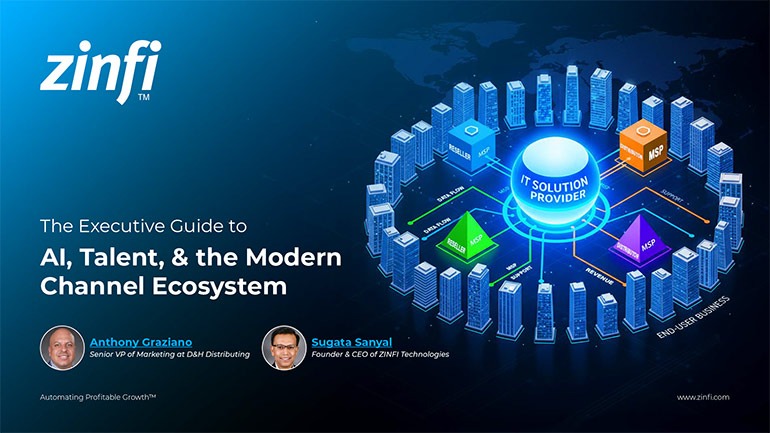 Modernizing Channel Marketing: AI and Ecosystem Enablement Best Practices
Download for FREE
 The Channel’s Shift to Partner-Led With AI Best Practices
Download for FREE
 Hyperscalers, ISVs, and AI: Shaping the Future of B2B Software Distribution
Download for FREE
 Definitive Guide to a Partner Ecosystem-First Sales Strategy
Download for FREE
 The Partner-Led Digital and AI Transformation Best Practices
Download for FREE
 Startup Talent Recruitment: Hiring Missionaries, Not Mercenaries
Download for FREE
 The Future of Partner Relationship Management with AI in Partnerships
Download for FREE
 Cybersecurity for the 99%: Strategies from the Frontline
Download for FREE
 Mastering Partner Relationships: A Strategic Approach to Business Growth
Download for FREE
 Mastering Partner Relationship Management: Keys to SaaS Channel Success
Download for FREE