
The Future of Co-Selling: AI-Powered Workflows & Strategies for 2026
The future of co-selling involves leveraging artificial intelligence and automated workflows. This evolution transforms how partners collaborate to drive revenue and enhance customer value. Companies must adopt new strategies and tools to stay competitive in this changing landscape.
Key Takeaways
TL;DR
- AI and machine learning will automate partner matching and identify prime co-selling opportunities.
- Integrated digital platforms are replacing siloed spreadsheets for seamless collaborative selling.
- Future strategies focus on customer outcomes rather than just product sales.
- Data sharing and real-time analytics are crucial for effective co-selling performance management.
- Automated workflows will streamline everything from lead sharing to commission payments.
- Hyper-personalization at scale becomes possible through advanced data analysis.
- Successful co-selling requires building a strong, digitally connected partner ecosystem.
How is AI shaping the future of co-selling?
Artificial intelligence is fundamentally reshaping the core processes of collaborative selling. It moves partnerships from intuition-based decisions to data-driven strategies for success. This technology automates complex tasks and provides deep insights previously unavailable to channel managers.
AI algorithms can analyze vast datasets to identify ideal partner alignments. They evaluate factors like customer base overlap, market focus, and past performance. This ensures that every co-selling engagement has a high potential for success from the start.
Furthermore, AI tools can predict which leads are most likely to convert. They analyze customer behavior and engagement data from both partners’ systems. This allows sales teams to focus their joint efforts on the most promising opportunities, improving efficiency.
The technology also automates the initial stages of partner business planning. It can generate data-backed recommendations for joint business goals and target markets. ZINFI's partner business planning module helps formalize these AI-driven insights into actionable plans.
Predictive analytics plays a vital role in forecasting sales outcomes and resource needs. This capability enables partners to allocate their sales and marketing resources more effectively. It minimizes waste and maximizes the return on their collaborative investment.
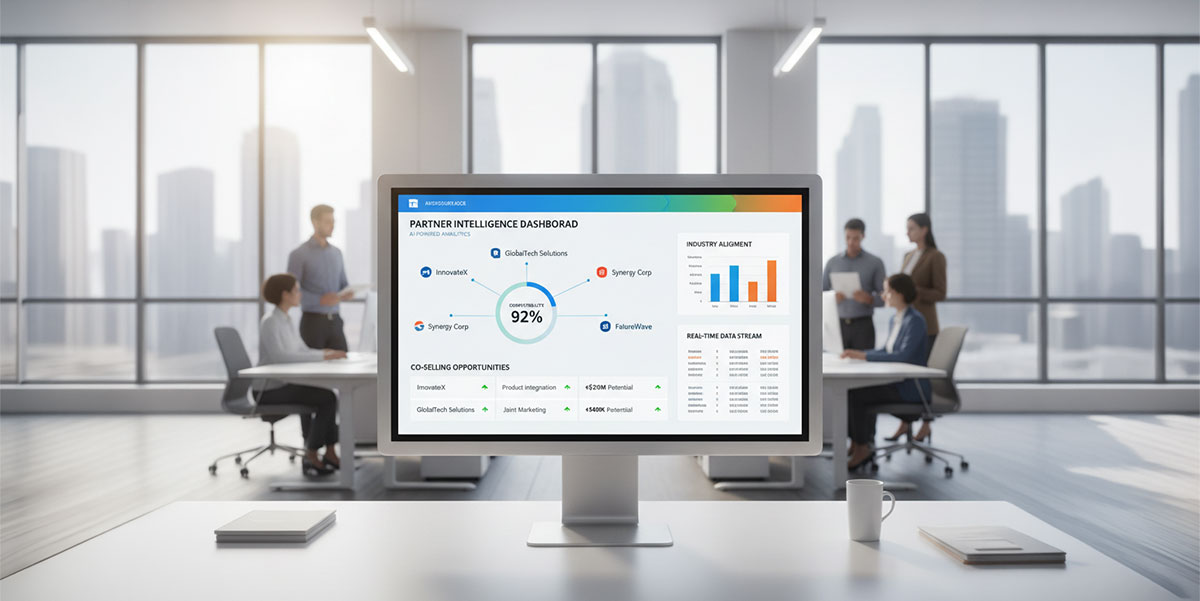
Real-time performance monitoring is another significant AI contribution to the co-selling model. Dashboards can visualize shared pipeline health and individual salesperson contributions instantly. This transparency builds trust and accountability between collaborating partner organizations.
AI can even help personalize the customer journey in a joint sales process. It suggests the right content and messaging for each stage of the sales cycle. This ensures a consistent and relevant experience for the prospective customer.
Ultimately, AI makes the entire co-selling motion smarter, faster, and more profitable. It reduces manual effort and allows teams to focus on building relationships. This shift is critical for scaling partner ecosystems in a competitive global market.
By embracing these technologies, companies can unlock new levels of growth. They build a more dynamic and responsive partner network ready for future challenges. The integration of AI is no longer optional for effective collaborative selling.
What advanced strategies will define successful co-selling programs?
Successful co-selling programs will move beyond simple lead referrals in the future. They will embrace more sophisticated, ecosystem-driven strategies focused on delivering customer value. This requires a shift in mindset from transactional sales to long-term partnerships.
One key strategy is value-based, or outcome-based, selling. Here, partners collaborate to solve a customer's core business problem with a combined solution. The focus is on the measurable business outcome for the client, not just product features.
This approach deepens the customer relationship and increases the deal's strategic value. As noted by Harvard Business Review, the modern B2B customer journey demands this solution-oriented approach. It requires tight integration between the partners’ products and their sales methodologies.
Another advanced strategy is building and leveraging a broader partner ecosystem. This goes beyond one-to-one partnerships to create a network of complementary solution providers. This network can collaboratively pursue and win complex, large-scale deals.
A strong ecosystem allows a company to offer a more complete solution. It can address a wider range of customer needs without developing everything in-house. Managing this network requires powerful partner management tools to maintain alignment.
Hyper-personalization will also become a defining co-selling strategy. Using shared data and AI, partners can tailor their outreach and solutions to specific accounts. This account-based marketing (ABM) approach on a partnership level yields higher conversion rates.
This level of personalization demonstrates a deep understanding of the customer’s business. It sets the collaborative team apart from competitors offering generic, one-size-fits-all products. Such a targeted approach is a hallmark of mature collaborative selling.
Finally, data monetization within the partnership becomes a viable strategy. Partners can share anonymized market intelligence and customer insights. This shared intelligence can inform product development, marketing campaigns, and future co-selling efforts.
These advanced strategies require a strong foundation of trust and technology. They depend on seamless data sharing and integrated digital platforms. Companies investing in these areas will lead the next generation of collaborative selling.
Which sales collaboration tools are essential for modern co-selling?
Modern co-selling cannot function effectively with outdated tools like email and spreadsheets. It requires a suite of integrated sales collaboration tools to manage complexity. These tools form the digital backbone of any successful partner program.
A unified partner portal is the most critical tool in the arsenal. It provides a single point of access for partners to find resources and collaborate. This includes content, training materials, marketing assets, and deal registration forms.
Within this portal, a shared CRM or deal registration system is vital. A platform for deal registration management eliminates channel conflict by providing a single source of truth. It tracks ownership of opportunities from identification through to close, ensuring fairness.
Effective co-selling also relies on robust communication and project management tools. These platforms allow distributed sales teams to coordinate activities and share updates. They keep everyone aligned on strategy, next steps, and key customer interactions.
ZINFI’s platform facilitates this through dedicated modules for partner co-selling management. It offers a structured environment for partners to plan and execute joint sales activities. This ensures that nothing falls through the cracks during a complex sales cycle.

Analytics and reporting dashboards are also essential for successful collaboration. These tools provide real-time visibility into the performance of joint initiatives. Partners need these insights to measure ROI and optimize their strategies.
Performance analytics helps identify what is working and what is not. Detailed business intelligence reports track key metrics like pipeline growth and win rates. This data is crucial for making informed decisions and demonstrating the value of the co-selling program.
Content management systems are another pillar of effective collaborative selling. They ensure that partners always have access to the latest, brand-compliant marketing and sales assets. This consistency is key to presenting a unified front to the customer.
Finally, learning management systems (LMS) play a key role in partner enablement. An LMS helps train partner sales reps on the combined value proposition. Proper training ensures they can articulate the benefits of the joint solution effectively.
The right set of sales collaboration tools makes the entire co-selling process more efficient. It removes friction, builds trust, and allows sales teams to focus on selling. Investing in a unified platform is a direct investment in revenue growth.
How will workflows evolve in collaborative selling environments?
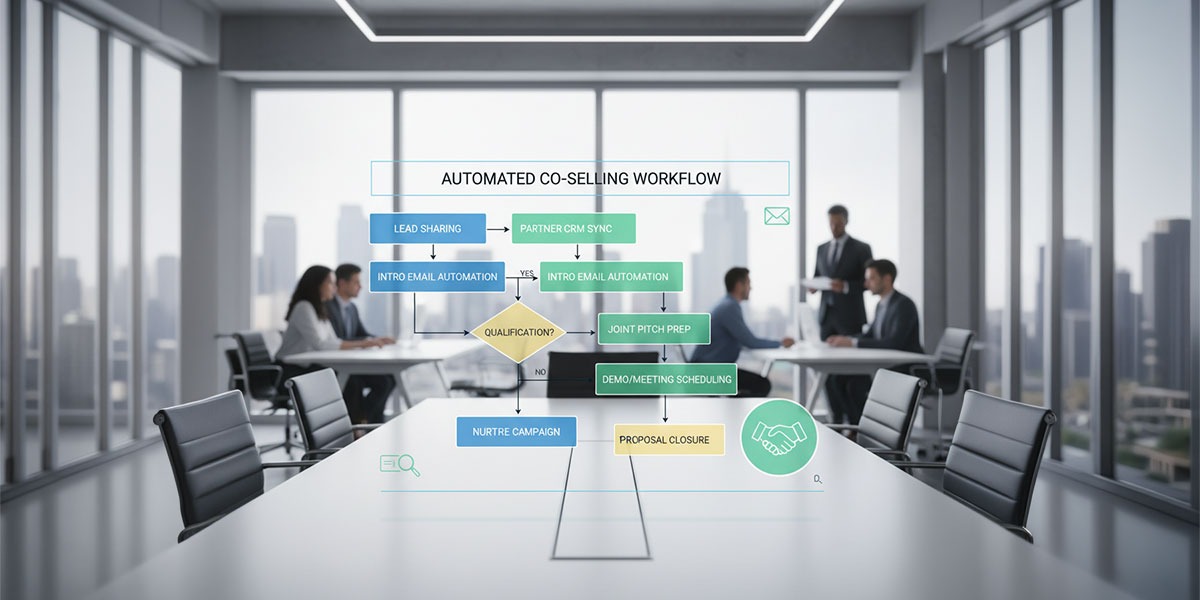
Workflows in collaborative selling are evolving from manual, disjointed steps to automated processes. This transition is critical for scaling co-selling programs and increasing their speed. Automation removes bottlenecks and administrative burdens from sales teams.
In the past, sharing a lead with a partner involved emails and spreadsheet entries. Future workflows automate this process based on predefined rules. A lead can be routed instantly to the right partner based on territory or expertise.
This automation extends to the entire deal lifecycle. For example, updating a deal stage in one partner's CRM can trigger an automatic update. This ensures both parties always have a real-time view of the sales pipeline.
Workflow automation tools, like ZINFI's FlexiFlow, are central to this evolution. They allow channel managers to design and implement complex business rules without code. This flexibility is essential for adapting to changing market conditions and partner needs.
Approval processes for things like market development funds (MDF) will also be automated. Instead of manual review cycles, requests can be automatically approved or flagged. This speeds up the execution of joint marketing campaigns, a key part of co-selling.
Another area of workflow evolution is in performance tracking and commission calculations. Automated systems can track deal closure and attribute revenue accurately. This leads to faster and more transparent commission payments, strengthening partner loyalty.
Onboarding new partners will also become a streamlined, automated workflow. Once a partner signs an agreement, the system can automatically grant portal access. It can also assign initial training modules and welcome them into the community.
This automated onboarding reduces the time it takes for a new partner to become productive. It ensures a consistent and professional experience for every partner joining the ecosystem. This makes the program more attractive to high-quality channel partners.
The evolution of co-selling workflows is about creating a frictionless partner experience. By automating routine tasks, companies free up their teams to focus on strategy. They can spend more time building relationships with partners and customers.
These intelligent workflows are the engine of modern channel programs. They connect different tools and processes into a cohesive, efficient system. This integration is what makes scalable and effective collaborative selling a reality.
Traditional vs. AI-Powered Co-Selling
| Feature | Traditional Co-Selling | AI-Powered Co-Selling |
|---|---|---|
| Partner Matching | Based on relationships and intuition | Data-driven matching based on ideal partner profiles |
| Lead Sharing | Manual process via email and spreadsheets | Automated routing based on predefined rules |
| Performance Tracking | Periodic, manual reports with data lag | Real-time dashboards with performance analytics |
| Sales Forecasting | Based on sales rep estimates | Utilizes predictive analytics for higher accuracy |
| Customer Insights | Limited to individual partner knowledge | Aggregated and shared data for a 360-degree view |
| Workflow Management | Siloed, manual tasks with high administrative load | Integrated and automated workflows across platforms |
| Program Scalability | Difficult to scale beyond a few key partners | Highly scalable to manage a large, diverse ecosystem |
Elevate Your Co-Selling Strategy with ZINFI
ZINFI’s Unified Partner Management (UPM) platform provides a comprehensive solution. It helps organizations master the future of co-selling with advanced tools. Our platform unifies partner relationship, enablement, marketing, and sales management.
By leveraging ZINFI, you can power your entire channel with a single, intuitive platform. This approach breaks down silos and fosters true sales collaboration. Prepare your partner program for the next wave of collaborative growth with these key features:
- Automated Workflows: Streamline every aspect of your co-selling process, from lead sharing to MDF approvals and payments, creating a frictionless partner journey.
- Integrated Co-Selling Management: Provide a dedicated environment for partners to plan, execute, and track joint sales activities, ensuring alignment and accountability.
- Advanced Analytics: Utilize powerful performance analytics and business intelligence to gain real-time visibility into your partnership's ROI and make data-driven decisions.
- Seamless Partner Onboarding: Automate the onboarding process to get new partners trained, enabled, and selling faster, ensuring a consistent and professional experience.
- Centralized Asset Management: Ensure brand consistency and empower partners with easy access to the latest marketing and sales content through a robust content library.
- Partner Community Tools: Foster a strong sense of community and collaboration with integrated tools that allow partners to connect, share best practices, and support each other.
ZINFI empowers you to build a more agile, data-driven, and profitable co-selling program. It provides the technological foundation needed to implement advanced collaborative strategies. Unlock the full potential of your partner ecosystem with our unified solution.
Frequently Asked Questions about Co-Selling
What is co-selling in simple terms?
Co-selling is a collaborative sales strategy where two or more companies work together. They actively sell a joint solution to a single end customer. It involves shared resources, expertise, and customer relationships.
How is co-selling different from channel sales?
Channel sales typically involve a vendor selling 'through' a partner who resells the product. Co-selling involves selling 'with' a partner where both sales teams are actively engaged. This collaborative selling approach is more of a partnership.
What are the main benefits of a co-selling strategy?
The primary benefits include access to new markets and customer segments. It also offers increased deal size, shorter sales cycles, and higher win rates. This happens by combining the strengths of both partner organizations.
What is an example of a successful co-selling partnership?
A classic example is Microsoft and its vast network of software and service partners. They collaborate closely to sell integrated solutions built on the Azure cloud platform. This enhances value for the end customer.
What are the biggest challenges in implementing co-selling?
Key challenges include ensuring fair compensation and avoiding channel conflict. Other hurdles are aligning sales methodologies and maintaining trust and transparency. Technology platforms are essential to overcoming these issues.
How does AI improve co-selling effectiveness?
AI improves co-selling by automating partner matching and lead scoring. It uses predictive analytics for better forecasting and personalizes customer engagement. AI makes the process more efficient and data-driven.
What is a unified partner management platform?
A unified partner management (UPM) platform is a single software solution. It integrates all the tools needed to manage a partner program. This includes partner relationship management, marketing automation, and sales collaboration.
Why is deal registration important for co-selling?
Deal registration is crucial for tracking opportunities and preventing channel conflict. It provides a clear record of which partner is leading an engagement. This ensures fair compensation and builds trust within the ecosystem.
How do you measure the success of a co-selling program?
Success can be measured by metrics like partner-sourced revenue and joint pipeline growth. Also important are deal win rates, average deal size, and partner engagement levels. A good platform tracks this via performance analytics.
What is the first step to building a co-selling strategy?
The first step is to define your ideal partner profile and value proposition. You must understand what you offer partners and what you need from them. This clarity forms the foundation of your co-selling program.
About the author
Sugata Sanyal
Sugata Sanyal is the Founder & CEO of ZINFI Technologies, a leading provider of Unified Partner Management solutions. He has extensive experience in building and managing global channel programs. Sugata is a thought leader in partner ecosystem management, channel marketing, and sales.