
Unlocking Growth: A Strategic Guide on How to Ask for Market Development Funds
You can ask for Market Development Funds by creating a detailed, data-driven marketing proposal. This proposal must align perfectly with your vendor's strategic goals and prove potential ROI.
Successfully securing this type of funding can significantly accelerate your business growth. It enables partners to expand their marketing reach beyond their own budgets.
Vendors offer these funds to help partners drive demand for their products and services. A strong request demonstrates that you are a proactive and valuable business partner.
The process requires careful planning, strategic thinking, and clear communication. Understanding the vendor's perspective is absolutely key to getting your proposal approved.
This guide will walk you through the entire process step by step. We will cover everything from initial planning to final reporting on your activities.
By following these best practices, you can increase your chances of securing valuable support. This funding can be a game-changer for your marketing and sales efforts.
Key Takeaways
TL;DR
- Thoroughly research and understand your vendor's goals before drafting your request.
- Develop a detailed marketing plan with specific tactics, timelines, and a clear budget.
- Clearly define your key performance indicators (KPIs) and projected return on investment.
- Always submit your proposal through the vendor's official partner portal or designated channel.
- Follow up professionally and persistently after submitting your request for funds.
- Ensure strict compliance with all program rules for fund usage and claims processing.
- Leverage a partner management platform to track funds, activities, and overall performance.
Why is a Detailed Proposal Crucial for Securing Market Development Funds?
A detailed proposal is your most important tool when requesting financial support. It shows vendors you are serious, organized, and have a clear plan for success.
Vendors receive countless requests and must choose where to invest their resources. A comprehensive plan helps your request stand out from the competition.
Your proposal acts as a business case for the investment you are asking for. It must be persuasive, logical, and backed by data whenever possible.
Without a clear plan, vendors may see the request as a gamble. They need assurance that their investment will generate tangible results and positive returns.
Think of the document as a contract that outlines your promises and commitments. It sets clear expectations for both you and the vendor from the very beginning.
The quality of your proposal reflects the quality of your organization. A sloppy, vague request suggests you might manage the funds with the same lack of care.
Conversely, a professional and thorough document builds immense trust. It positions you as a strategic partner rather than just a reseller asking for money.
The details in your plan allow the vendor to assess the viability of your strategy. They can evaluate if your proposed activities align with their brand and market focus.
For example, you should clearly outline the specific marketing tactics you plan to use. These could include digital advertising, email campaigns, webinars, or local events.
A detailed budget breakdown is another critical component of the proposal. It demonstrates financial responsibility and shows exactly how the Market Development Funds will be spent.
This level of detail reduces uncertainty for the vendor's marketing and channel teams. It gives them the confidence they need to approve your request for funding.
Ultimately, a detailed proposal is about mitigating risk for the vendor. You are proving that their investment is safe and likely to be profitable.
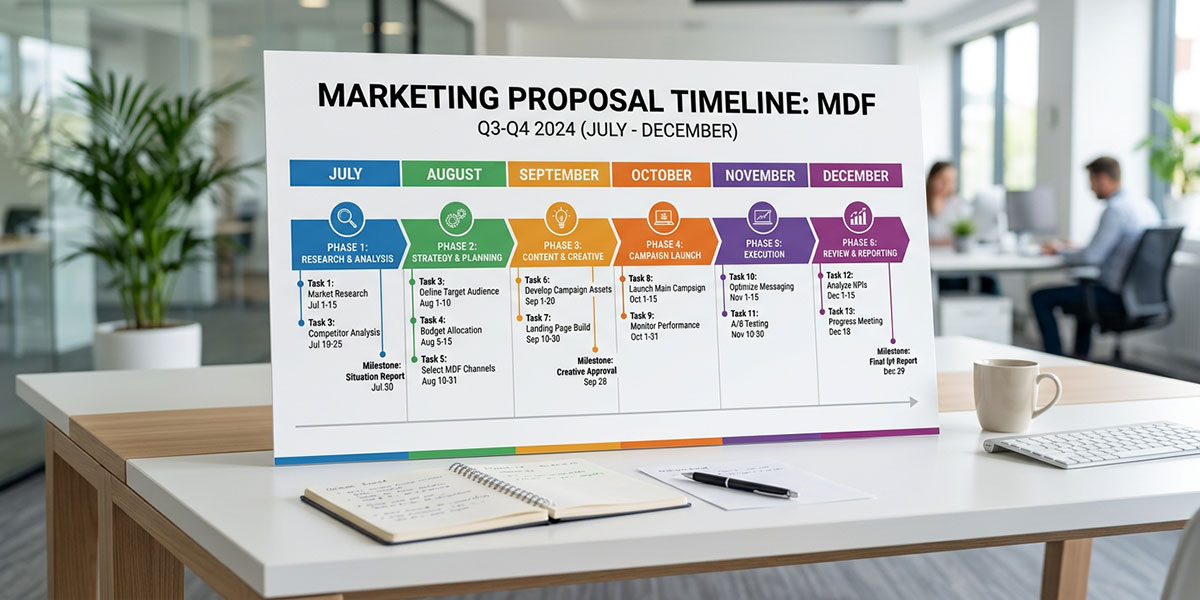
A well-structured proposal also simplifies the management of the campaign later on. It becomes your roadmap for execution and measurement throughout the funding period.
This pre-planning helps you stay on track and on budget. It ensures the activities you run are the same ones the vendor approved.
It also makes the process of claiming funds and reporting on results much easier. You will have all the necessary information and metrics already defined in your plan.
Some partners fail to secure Market Development Funds due to weak proposals. They miss the opportunity to show how they can help the vendor grow.
Do not make this mistake; invest the time and effort upfront. Crafting a strong proposal is the single most important step in the entire process.
By providing a clear, detailed, and strategic plan, you dramatically improve your approval odds. You show that you are ready to be an accountable and effective partner.
What Are the Key Elements to Include in a Request for Market Development Funds?
A successful request for Market Development Funds contains several essential elements. Each section builds upon the last to create a compelling business case.
Start with a concise executive summary that grabs the reader’s attention immediately. This should summarize the opportunity, your plan, and the expected outcome.
Next, provide a brief market analysis of your target territory or segment. Show that you understand the local landscape, customer needs, and competitive pressures.
This demonstrates your expertise and helps the vendor see why your plan is relevant. It contextualizes the marketing activities you are proposing to undertake.
The core of your proposal is the marketing and sales strategy section. Here, you must detail the specific tactics you will use to generate leads and sales.
Describe your target audience with precision, including their demographics and pain points. Explain why your chosen tactics are the best way to reach this specific audience.
List all planned activities, such as running a webinar series or launching a paid search campaign. Provide a clear timeline for when each activity will be executed.
A comprehensive partner business plan should support these marketing initiatives. It connects your MDF request to your broader growth strategy with the vendor.
Following the strategy, you must include a detailed budget breakdown. Itemize every expected expense and assign a cost to each line item.
This transparency is crucial for building trust with the vendor. They need to see that you have thought through the financial aspects of your campaign.
The next critical section is your key performance indicators (KPIs) and ROI projection. This is where you define how you will measure the success of the campaign.
Common KPIs include the number of leads generated, website traffic, or event attendees. You could also track metrics like conversion rates or the number of sales meetings booked.
Your ROI projection should estimate the financial return the vendor can expect. For example, you might project that every dollar of MDF will generate five dollars in sales.
Be realistic but optimistic with your projections, and be prepared to explain your calculations. Your ability to measure results is a key factor in getting Market Development Funds approved.
Include information about your team and their capabilities. Briefly highlight the experience of the people who will be executing the plan.
This gives the vendor confidence that you have the internal skills to succeed. It shows that their investment is in capable and experienced hands.
Finally, conclude your proposal with a clear call to action. Restate the amount of funding you are requesting and express your enthusiasm for the partnership.
Organizing your request with these elements creates a professional and persuasive document. It answers all the potential questions a vendor might have about your plan.
Using a standardized template can help ensure you do not miss any key components. Many vendors provide these templates within their partner portals for this reason.
A well-crafted request for Market Development Funds is a powerful sales tool. It sells the vendor on the value of investing in your marketing efforts.
How Can You Align Your Proposal with Vendor Goals to Get Approved for Market Development Funds?
Aligning your proposal with vendor goals is perhaps the most critical factor for approval. Vendors invest in partners who help them achieve their own strategic objectives.
Your request for Market Development Funds should not be about what you want. It should be about how you can help the vendor achieve what they want.
Begin by thoroughly researching the vendor's current business priorities. Look for information on their corporate website, in their annual reports, or in recent press releases.
Pay close attention to the language they use about their target markets. Do they want to expand into a new industry or geographic region? A recent Forrester report on channel stacks notes this alignment is key.
Are they trying to increase market share for a specific product line? Maybe they are focused on acquiring new customers versus upselling to existing ones.
This information provides the context you need to frame your proposal effectively. You can tailor your plan to directly support one of their stated goals.
For example, if a vendor wants to grow in the healthcare sector, propose a campaign targeting hospitals. This immediately shows that your interests are aligned with theirs.
Use the vendor’s own language and terminology within your proposal. This demonstrates that you are paying attention and speaking the same strategic language.
Clearly state how your proposed activities will contribute to their specific objectives. Connect the dots for them so they do not have to guess your intentions.

A sentence like, “This campaign directly supports your Q3 goal of acquiring 20 new enterprise logos,” is very powerful. It makes the decision to approve your request much easier for the channel manager.
Engage in a conversation with your channel account manager before submitting the proposal. Use this meeting to validate your understanding of their priorities.
Ask them directly what success looks like for them in the coming year. Inquire about which products or solutions are a top focus for their marketing teams.
This collaborative approach turns the request process into a joint planning session. It makes your channel manager an advocate for your proposal internally.
They can provide invaluable feedback and help you refine your plan before official submission. This dramatically increases your chances of securing the Market Development Funds you need.
Show that you are a true partner invested in mutual success. A request for Market Development Funds should feel like a shared business plan.
If the vendor provides co-brandable marketing assets, incorporate them into your plan. This shows you are leveraging the resources they already provide and respecting their brand.
You can manage these assets easily with a co-branded assets management tool. This further demonstrates your commitment to alignment with the vendor brand.
Never submit a generic proposal that could apply to any vendor in your portfolio. Customization and personalization are absolutely essential for a successful outcome.
Your alignment with vendor goals proves you are a strategic thinker. It elevates you above partners who are simply looking for a handout.
This approach builds a stronger, more collaborative relationship for the long term. It lays the foundation for future joint marketing efforts and continued investment.
Vendors are eager to invest their Market Development Funds with partners who understand this. They want partners who will act as an extension of their own marketing team.
Traditional vs. AI-Powered MDF Management
| Feature | Traditional Approach | AI-Powered Platform (like ZINFI) |
| Proposal Submission | Manual submission via email or basic forms. | Guided, template-driven submission within a partner portal. |
| Performance Tracking | Manual tracking in spreadsheets; often inconsistent. | Automated, real-time tracking of KPIs and campaign metrics. |
| ROI Analysis | Difficult and time-consuming manual calculations. | Instant ROI reports generated from integrated sales data. |
| Compliance Checks | Manual review of claims against program rules. | Automated checks for compliance, reducing errors and fraud. |
| Fund Allocation | Based on historical data or relationships. | Data-driven recommendations using predictive analytics. |
| Reporting | Static PDF or spreadsheet reports created manually. | Dynamic, on-demand dashboards with performance analytics. |
| Partner Communication | Fragmented communication via email and phone calls. | Centralized communication and alerts within the platform. |
What Are Common Mistakes to Avoid When Requesting Market Development Funds?
Partners often make avoidable mistakes when they request funding. These errors can lead to immediate rejection, damaging the partner-vendor relationship.
One of the most common mistakes is submitting a vague or incomplete proposal. A plan that lacks specific details about tactics, budget, or metrics is a major red flag.
Another frequent error is a clear misalignment with the vendor's goals. Proposing a campaign that does not support the vendor’s strategy will likely be denied.
Many partners make unrealistic promises regarding the return on investment. Overstating potential results can damage your credibility if you fail to deliver on them.
It is far better to be conservative and exceed expectations. This builds a reputation for reliability and makes future requests for Market Development Funds easier.
Ignoring the official program guidelines and deadlines is another critical error. Vendors have specific rules and processes that you must follow exactly.
Submitting your request late or through the wrong channel shows a lack of attention. It signals to the vendor that you may be difficult to work with.
A failure to report on the results of previously awarded funds is a deal-breaker. Vendors will not invest more money if you cannot show what you did with the last batch.
Always close the loop on past campaigns with detailed performance reports. This accountability is non-negotiable for securing future Market Development Funds.
Some partners forget to include a clear budget breakdown in their proposals. A request for a lump sum without itemized costs will almost certainly be rejected.
Vendors need to see exactly where their money is going, so be transparent. Your budget must be logical, detailed, and justifiable for the activities you propose.
Failing to proofread your proposal is a simple but costly mistake. Typos and grammatical errors make your organization look unprofessional and careless.
Take the time to review your document carefully before you hit submit. A polished, error-free proposal makes a much better impression on the reader.

Another pitfall is focusing the proposal entirely on your own company’s needs. The request should be framed around mutual benefit and partnership, not just your own growth.
Remember that Market Development Funds are a joint investment in shared success. Your proposal should reflect this collaborative spirit in its tone and content.
Do not wait until the last minute to prepare and submit your request. Rushing the process often leads to mistakes and a lower-quality proposal.
Give yourself ample time to research, plan, write, and review. This careful preparation will be evident in the final document you create.
Some partners also treat all vendors the same by using a generic template. This is a huge mistake that shows a lack of genuine partnership interest.
You must customize every single proposal for the specific vendor you are approaching. This personalization demonstrates your commitment and strategic alignment with them.
Avoiding these common mistakes can significantly increase your chances of success. It shows vendors you are a professional, reliable, and strategic business partner.
By being diligent and thoughtful, you can build a strong case for investment. This will help you secure the Market Development Funds you need to grow.
Simplify Your MDF Process with ZINFI
Managing the entire lifecycle of Market Development Funds can be complex and time-consuming. ZINFI’s Unified Partner Management platform simplifies every step of the process.
Our solutions provide a centralized hub for you and your vendors to collaborate effectively. It automates workflows and provides unparalleled visibility into campaign performance and ROI.
With ZINFI’s MDF management solution, partners can easily submit data-driven proposals. Vendors can review, approve, and allocate funds with just a few clicks.
This streamlined process reduces administrative overhead for everyone involved. It allows both partners and vendors to focus on strategy and execution.
ZINFI helps you showcase your value and secure the funding you need. It provides the tools to prove your marketing impact and build stronger vendor relationships.
Key features of ZINFI’s platform include:
- Automated Workflows: Streamline the proposal submission, approval, and claims processes with configurable workflows.
- Integrated Business Planning: Link MDF requests directly to your annual business plans for full strategic alignment.
- Performance Dashboards: Track campaign KPIs in real time with our powerful performance analytics.
- ROI Reporting: Automatically calculate the return on investment for all your MDF-funded activities.
- Simplified Claims Process: Easily submit proof of performance and expense documentation for faster reimbursement.
- Compliance and Financial Controls: Ensure all activities and expenses adhere to program rules with built-in financial controls.
By leveraging ZINFI, you can transform the way you manage Market Development Funds. You can move from manual, spreadsheet-based processes to a fully automated system.
This not only saves time but also provides the data needed for better decision-making. You can optimize your marketing spend and deliver better results for your vendor partners.
Frequently Asked Questions
What are Market Development Funds?
Market Development Funds (MDF) are resources provided by a vendor to its channel partners. These funds are used to support marketing and sales activities that drive demand.
Who is eligible for MDF?
Eligibility for these funds is determined by the vendor's partner program rules. Often, it is tied to partner tier, revenue performance, or certifications.
What is the difference between MDF and co-op funds?
MDF is typically proposal-based and discretionary, awarded before an activity. Co-op funds are usually accrued as a percentage of past sales and claimed later.
How long does MDF approval take?
Approval times can vary greatly depending on the vendor and their internal processes. It can range from a few days to several weeks or even a month.
Can I use MDF for non-marketing activities?
Generally, no. Market Development Funds are strictly designated for marketing and demand generation activities as defined in the program guidelines.
How do I prove ROI for my MDF activities?
You can prove ROI by tracking the KPIs defined in your proposal. This includes leads, opportunities, and closed deals that resulted from the funded campaign.
What happens if I don't use all the funds?
Most programs stipulate that unused Market Development Funds must be returned. Some may allow a rollover, but this is less common for partners.
Is there a typical amount for MDF requests?
The amount varies widely based on the partner's size, the vendor's program, and the scope of the proposed activities. Requests can range from hundreds to thousands of dollars.
Can I combine Market Development Funds from multiple vendors?
This is generally not allowed unless the vendors have a formal alliance. Most programs require their funds to be used exclusively for promoting their own products.
How can software help manage Market Development Funds?
Software automates proposals, approvals, claims, and reporting for MDF. It provides a centralized platform that increases efficiency and visibility for both partners and vendors.
About the author
Sugata Sanyal
Sugata Sanyal is the Founder & CEO of ZINFI Technologies, a leader in Unified Partner Management. He has been a passionate advocate for the channel and channel partners for decades. His vision for ZINFI is to provide partner ecosystems with the tools they need to succeed.