
Best Practices Articles
The Ultimate Guide to PRM Software for Manufacturing Success
TL;DR
Modern manufacturers must bridge the gap between advanced back-end supply chains and legacy front-end partner management. This guide explores how PRM software centralizes fragmented distribution networks, automates high-volume SKU training, and leverages AI-driven analytics to drive revenue. By implementing structured partner operations (PartnerOps), manufacturers can eliminate administrative friction, accelerate speed-to-market, and achieve a sustainable competitive advantage across global dealer and reseller networks.
What is PRM software in the context of manufacturing?
PRM software is a specialized digital infrastructure designed to automate the recruitment, onboarding, and management of indirect sales channels, such as distributors and dealers. It replaces manual spreadsheets with a unified portal that tracks deal registration, certifications, and real-time inventory data across the entire partner ecosystem.
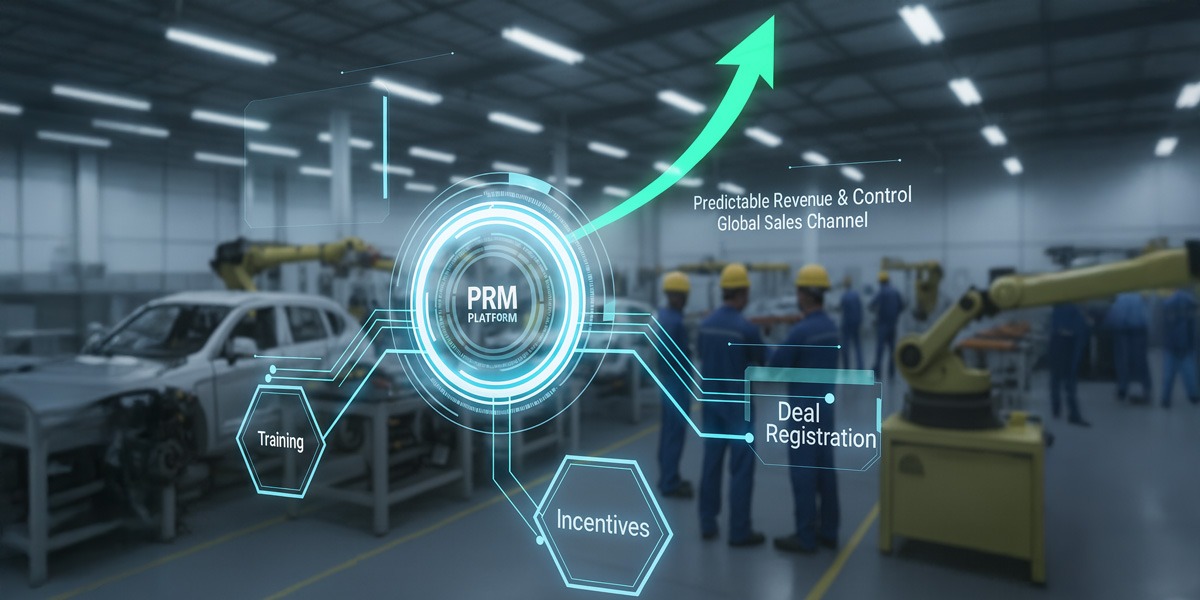
For manufacturers, the complexity of managing thousands of Stock Keeping Units (SKUs) across diverse geographies makes manual oversight impossible. A robust PRM software solution, such as ZINFI’s Unified Partner Management (UPM) platform, provides a single source of truth. It integrates directly with Enterprise Resource Planning (ERP) and Customer Relationship Management (CRM) systems, ensuring that a dealer in Southeast Asia has the same technical specifications and pricing data as a distributor in North America. By digitizing the "front-end" of the business—marketing and sales—manufacturers can match the efficiency of their "back-end" robotic assembly lines.
The Rise of PartnerOps in Industry 4.0
The manufacturing sector has historically focused on "Lean" principles within the factory walls. However, the "Last Mile" of the sales process—the partner—has remained remarkably lean-deficient. PRM software introduces the concept of PartnerOps, a framework that treats the partner journey as a repeatable, scalable, and measurable production line. By applying these data-driven principles to the channel, manufacturers can reduce the "Cycle Time" of a sale by up to 25%, as partners no longer have to wait for manual approvals or updated pricing sheets.
How does PRM software solve the Automation Paradox?
The "Automation Paradox" suggests that as systems become more automated, the human role becomes more critical, not less. PRM software resolves this by automating repetitive administrative tasks—such as contract signatures and lead routing—so channel managers can focus on high-value consultative strategy.
In a manual environment, 70% of a channel manager’s time is spent on "firefighting": correcting incentive errors, resending lost PDFs, or verifying dealer certifications. When PRM software takes over these workflows, the manager shifts from an administrator to a strategic advisor. They use the platform's data to identify which partners are underperforming and why. This transition from "pushing paper" to "driving strategy" is the cornerstone of a high-growth manufacturing ecosystem.
Case Study: Industrial Valve Manufacturer
Consider a mid-sized valve manufacturer with 400 global distributors. Before implementing PRM software, their channel managers spent 15 hours per week manually validating Market Development Fund (MDF) claims. After deploying an automated PRM software module for incentive management, claim processing time dropped by 90%. The channel managers used the reclaimed time to conduct quarterly business reviews (QBRs), resulting in a 12% increase in year-over-year channel revenue. This is the Automation Paradox in action: the software handled the logic, while the humans handled the relationships.
Why is a consultative strategy essential for manufacturing partners?
A consultative strategy moves away from transactional relationships toward a collaborative partnership in which the manufacturer helps the dealer grow their own business. PRM software facilitates this by providing the data-driven insights necessary to build joint business plans and localized marketing campaigns.
In the manufacturing sector, products are often highly technical or commoditized (e.g., industrial piping, filtration systems). Partners don't just need a product; they need a solution. Through a PRM software portal, manufacturers can provide "Guided Help" and personalized learning pathways. By utilizing tools like ZINFI’s Partner Business Planning module, both parties can set milestones for market expansion, ensuring the partnership is rooted in long-term mutual profitability rather than one-off transactions.
Comparison: Legacy vs. PRM-Driven Manufacturing Management
| Feature | Legacy Manual Management | Modern PRM Software |
| Data Integrity | Siloed Excel sheets; 30%+ error rate | Unified database; real-time CRM/ERP sync |
| Onboarding | 4-6 weeks (manual emails/calls) | 5-7 days (automated workflows) |
| Asset Distribution | Physical catalogs or email attachments | Digital, co-branded Content Library |
| Lead Management | Blind lead passing; no status tracking | Bi-directional sync; closed-loop reporting |
| Incentives | Manual claims; frequent disputes | Automated MDF and rebate calculation |
| Technical Support | Phone tag with engineers | Self-service Knowledge Base & AI Chat |
What are the core modules of a manufacturing-ready PRM system?
A manufacturing-ready system must include modules for onboarding, learning management (LMS), and deal registration to handle high-volume product cycles. These modules ensure that as new products are launched, the entire global network is trained and ready to sell within hours.
- Automated Onboarding & Compliance Manufacturing often involves strict regulatory requirements (ISO standards, export controls). PRM software ensures that no partner is "activated" until all legal documents, NDAs, and compliance certifications are signed and filed digitally.
- Learning Management System (LMS) Manufacturing products is complex. A partner selling hydraulic pumps needs different training than one selling HVAC sensors. PRM software supports "Persona-Based Learning," in which training content is automatically assigned based on the partner's profile.
- Deal Registration & Conflict Resolution Channel conflict is the leading cause of partner churn. When two dealers bid on the same industrial project, the PRM software provides a timestamped "Deal Reg" system. This protects the partner who did the initial legwork, ensuring trust in the manufacturer-partner relationship.
- Channel Data Management (CDM) In manufacturing, visibility usually stops at the distributor's warehouse. CDM modules within PRM software capture Point-of-Sale (POS) data, giving manufacturers insight into who the end-user is and which geographic regions are seeing increased demand for specific SKUs.
How does PRM software enable long-term future outlooks?
The future of manufacturing partnerships lies in "Autonomous PRM," where AI-driven engines predict partner churn and recommend specific marketing interventions before revenue drops. PRM software is evolving from a system of record to a system of intelligence that can simulate various market scenarios.
As we look toward 2030, the integration of Generative AI into PRM software will enable manufacturers to deliver hyper-personalized partner experiences at scale. For instance, an AI agent could analyze a distributor's sales history and automatically generate a co-branded email campaign for a new product line that fits that distributor’s specific customer profile. This level of "Self-Contained Value" ensures that every node in the manufacturing network is operating at peak efficiency without requiring constant manual intervention from the home office.
The Predictive Frontier
Future-ready PRM software will utilize "Propensity Modeling." By analyzing historical data—such as how often a partner logs in, how quickly they complete certifications, and their historical win rate—the software can assign a "Health Score" to each partner. If a top-tier distributor’s score drops below a certain threshold, the system can automatically trigger a "Recovery Workflow" for the channel manager, preventing revenue loss before it appears on the quarterly balance sheet.
Can small manufacturers benefit from enterprise-grade PRM?
Yes, small manufacturers can leverage PRM software to "punch above their weight class" by providing a professional, automated experience that rivals much larger competitors. Cloud-based SaaS models enable "Iterative Growth," allowing a company to start with basic modules and scale as its network expands.
For a mid-sized manufacturer of specialized measuring equipment, a PRM software platform acts as a force multiplier. Instead of hiring five additional channel coordinators, the company can deploy an automated portal to manage 200 global dealers. This leads to a lower "cost to serve" and a higher ROI on marketing spend. By adopting the "PartnerOps Framework," even small teams can maintain a disciplined, data-driven approach to ecosystem management.
B2B Example: Scaling Specialized Tooling
Imagine a startup manufacturer of carbon-fiber assembly tools. Initially, they managed 10 partners via email. As they grew to 50 partners, the CEO realized they were losing deals because partners didn't have the latest CAD files. By implementing a lightweight PRM software solution, they centralized their asset library. Partners could now download technical specs 24/7, leading to a 40% increase in "First-Time-Right" quotes and allowing the small internal team to focus on R&D rather than document retrieval.
The Role of Co-Marketing in Manufacturing PRM
PRM software isn't just about sales; it’s about "Through-Channel Marketing Automation" (TCMA). Most manufacturing partners are excellent at engineering and logistics but lack sophisticated marketing departments. A PRM software platform provides them with "Marketing-in-a-Box."
By using TCMA modules, a manufacturer can upload a campaign for a new line of industrial compressors. The partners can then log in, add their own logo, and blast the campaign to their local databases with three clicks. This ensures brand consistency for the manufacturer while empowering the partner with professional-grade demand generation tools. According to industry benchmarks, partners who engage with TCMA tools in their PRM software see a 2x increase in lead volume compared to those who do not.
Strategic Summary and Implementation Checklist
To succeed in the "Next Normal" of industrial distribution, adopting PRM software is no longer optional—it is a foundational requirement for digital transformation.
Implementation Checklist:- Audit Existing Silos: Identify where CRM and ERP data is failing to reach partners.
- Define Partner Personas: Group partners (Dealers vs. Wholesalers) to provide tailored content.
- Automate the "Big Three": Prioritize Onboarding, Training, and Deal Registration.
- Monitor the "Partner Engagement Score" Using analytics to identify at-risk relationships early.
- Integrate AI Capabilities: Leverage Generative AI for content creation and performance insights.
- Continuous Feedback Loop: Use the PRM software survey tools to ask partners what they need to sell more effectively.
Frequently Asked Questions
How does PRM software integrate with my existing ERP system?
PRM software utilizes bi-directional APIs to synchronize critical data between your ERP and the partner portal. This direct connection ensures that inventory levels, wholesale pricing, and shipping statuses are updated in real-time for every distributor. By eliminating data silos, you prevent overpromising on lead times and ensure financial accuracy across your entire global supply chain.
Can PRM software handle complex multi-tier distribution models?
Yes, advanced PRM software is specifically designed to manage multi-tier structures involving master distributors, local dealers, and sub-agents. The platform provides granular visibility into every layer of the channel, allowing manufacturers to track performance at the regional level while maintaining centralized control. This ensures that incentives and training materials reach the correct individuals within each tier.
Will implementing PRM software disrupt our current partner relationships?
Implementing a PRM software solution actually strengthens partner relationships by removing administrative friction and providing 24/7 access to resources. Most partners prefer a self-service model that lets them register deals and access co-branded marketing materials without waiting for an email response. The automation allows your channel managers to spend more time on strategic growth rather than paperwork.
How does PRM software improve the accuracy of lead distribution?
PRM software automates lead routing based on pre-defined criteria such as partner geography, product expertise, and historical conversion rates. This ensures that the most qualified partner receives the lead instantly, significantly increasing "speed-to-lead" and overall win rates. Detailed tracking also allows manufacturers to hold partners accountable for follow-up and final deal outcomes.
What is the typical ROI timeline for manufacturing PRM software?
Most manufacturers observe a significant return on investment within 6 to 12 months of deploying PRM software. This ROI is primarily driven by a 20% reduction in administrative overhead and a marked increase in partner productivity through automated onboarding. By scaling your channel operations without increasing headcount, the software pays for itself through improved market reach and higher sales volume.
Best Practices Guides
 First Principles Drive Modern Partner Ecosystem Success Best Practices
Download for FREE
 The Future of Managed Service Providers: Navigating the Age of AI and Automation
Download for FREE
 Modernizing Channel Marketing: AI and Ecosystem Enablement Best Practices
Download for FREE
 The Channel’s Shift to Partner-Led With AI Best Practices
Download for FREE
 Hyperscalers, ISVs, and AI: Shaping the Future of B2B Software Distribution
Download for FREE
 Definitive Guide to a Partner Ecosystem-First Sales Strategy
Download for FREE
 The Partner-Led Digital and AI Transformation Best Practices
Download for FREE
 Startup Talent Recruitment: Hiring Missionaries, Not Mercenaries
Download for FREE
 The Future of Partner Relationship Management with AI in Partnerships
Download for FREE
 Cybersecurity for the 99%: Strategies from the Frontline
Download for FREE
 Mastering Partner Relationships: A Strategic Approach to Business Growth
Download for FREE
 Mastering Partner Relationship Management: Keys to SaaS Channel Success
Download for FREE