

Best PRM Software 2026: The Definitive Buyer’s Guide for Channel Success
Choosing the best PRM software requires a forward-looking approach to channel management. It involves selecting a unified platform that automates processes and empowers partners effectively.
The landscape of indirect sales is constantly evolving with new technologies and strategies. Your choice of a partner relationship management platform will define your ecosystem’s success.
This guide provides a comprehensive overview for selecting the right solution. It will help you navigate the market and make an informed decision for your organization.
We will explore essential features, integration capabilities, and future trends shaping the industry. This ensures your investment is both strategic and sustainable for long-term growth.
Key Takeaways
TL;DR
Why is selecting the right PRM software crucial for future growth?
The business world is shifting away from direct sales models toward ecosystem-led growth. Companies now rely heavily on partners, resellers, and distributors to expand their reach.
This strategic pivot makes managing these complex relationships more important than ever. A powerful partner management platform becomes the central nervous system for your entire channel strategy.
Without the right tools, managing a growing network of partners is nearly impossible. Manual processes lead to inefficiencies, partner dissatisfaction, and missed revenue opportunities.
An effective PRM software automates routine tasks, freeing up your channel team. They can then focus on high-value activities like recruitment and strategic planning.
Furthermore, the competition for top-performing partners is incredibly fierce. Offering a superior partner experience is a significant competitive differentiator in the market.
A modern PRM solution provides partners with a user-friendly portal and self-service tools. This makes it easier for them to do business with you over your competitors.
Looking ahead to 2026, market dynamics will demand even greater agility and intelligence. Your channel strategy must be able to adapt quickly to new opportunities and threats.
A flexible PRM software allows you to modify programs, workflows, and content quickly. This ensures your channel remains aligned with your overarching business objectives.
Data-driven decision-making is another critical component of modern channel management. You need clear visibility into what is working and what is not inside your ecosystem.
A comprehensive partner relationship management platform provides detailed analytics and reports. These insights help you optimize partner performance and maximize channel revenue consistently.
Ultimately, investing in a robust solution is not just an operational upgrade. It is a strategic investment in the future sustainability and profitability of your company.
The right platform empowers your partners to sell more effectively. This directly translates to increased market share and accelerated business growth for your organization.
What core features define top-tier PRM software in 2026?
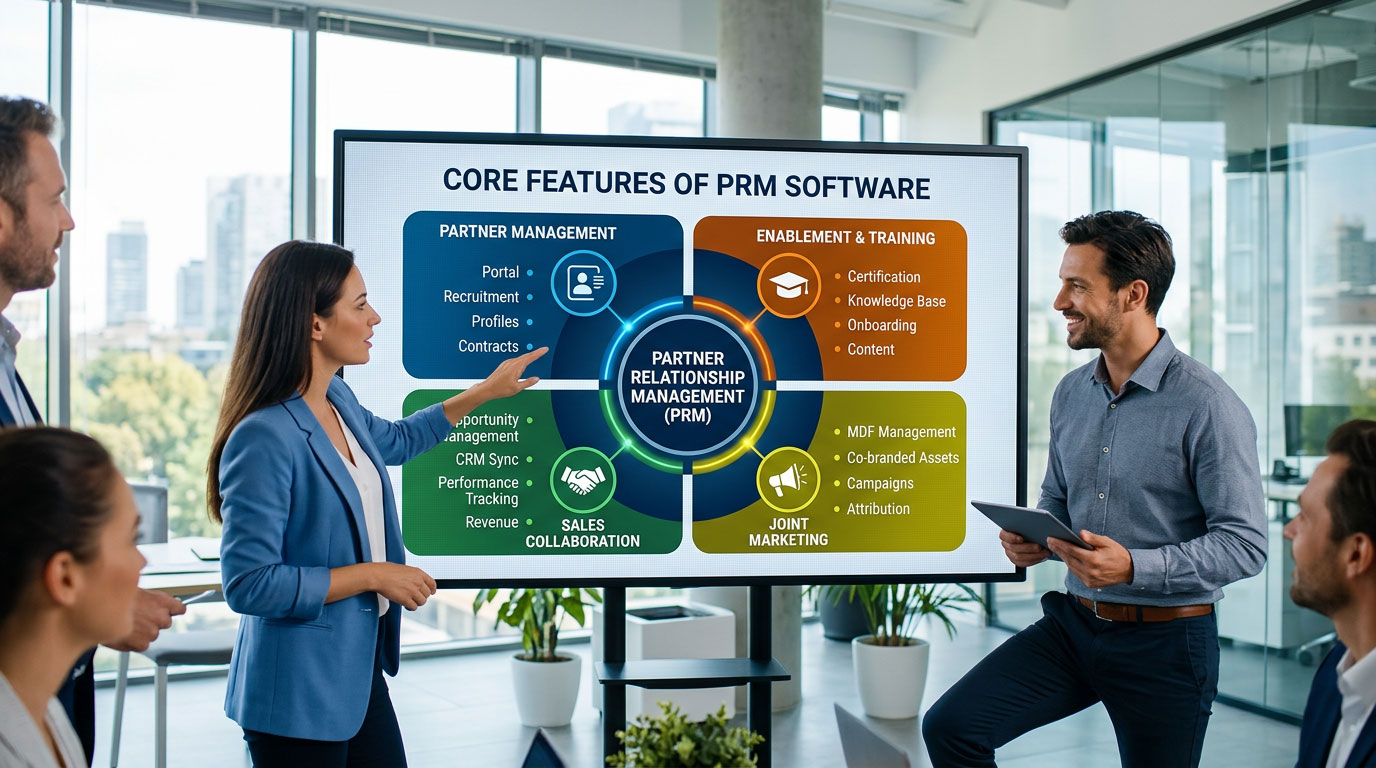
When evaluating different solutions, a focus on core features is absolutely essential. The best PRM software offers a unified suite of tools to manage the entire partner journey.
These capabilities should be integrated seamlessly within a single platform. This avoids the complexity and data silos associated with using multiple point solutions.
Partner Lifecycle Management
Effective partner lifecycle management begins with streamlined onboarding and contracting. The platform must make it easy to recruit, vet, and onboard new partners quickly.
ZINFI’s Partner Management module automates these processes. It helps you build and scale your partner network with structured efficiency.
Once onboard, partners need clear business plans and performance goals. The software should facilitate collaborative Partner Business Planning to align objectives.
This ensures that both you and your partners are working towards the same goals. It creates a foundation for a mutually beneficial and profitable long-term relationship.
Partner Enablement and Training
An enabled partner is a productive partner. Your chosen platform must provide robust training and certification tools to ensure partners are knowledgeable.
A Partner Learning Management System is critical for delivering engaging content. It should support various formats like courses, videos, and assessments for learning.
Partners also need easy access to sales and marketing collateral. A centralized Content Library ensures they always have the latest and most relevant materials.
This includes datasheets, case studies, presentations, and email templates. Instant access to these assets empowers partners to market and sell more effectively.
Partner Marketing Automation
Empowering partners to generate their own demand is a key function of modern PRM. Your platform should provide sophisticated through-channel marketing automation (TCMA) tools.
This includes capabilities for Email Marketing Management. It allows partners to launch co-branded campaigns to their local customer base easily.
Social media is another powerful channel for partners to leverage. A Social Syndication Management module lets partners push approved content to their networks.
This amplifies your brand message at a local level. It helps partners build their own pipeline while maintaining brand consistency and control.
Partner Sales Collaboration
Effective sales management is the cornerstone of any successful channel program. The PRM software must provide tools to manage the sales pipeline collaboratively.
A robust Deal Registration Management system is vital. It prevents channel conflict and rewards partners for sourcing new opportunities for you.
Referral management is equally important for capturing leads from non-transacting partners. The platform should have a simple Referral Management workflow for this purpose.
This encourages a wider range of partners to contribute to your sales funnel. It expands your reach without complicating your primary reseller engagement model.
Partner Incentives and Finance
Incentives are a powerful motivator for driving desired partner behaviors. The right partner relationship management platform automates the entire incentives lifecycle from end to end.
This includes managing Market Development Funds (MDF). The system should handle proposals, approvals, and claims with transparent workflows.
Other incentive types, like rebates and commissions, must also be managed efficiently. A solution for Partner Rebates Management ensures accurate and timely payouts.
Automating these financial processes reduces administrative overhead significantly. It also builds trust with your partners by ensuring they are compensated correctly and on time.
Analytics and Reporting
You cannot manage what you cannot measure effectively. A superior PRM solution offers comprehensive analytics and business intelligence capabilities for your team.
Access to real-time dashboards and Business Intelligence Reports is crucial. It provides a 360-degree view of your entire channel program’s performance.
These reports should cover partner engagement, pipeline health, and marketing campaign effectiveness. This data is essential for making informed strategic decisions about the business.
Effective PRM software translates raw data into actionable insights for optimization. This allows you to continuously improve your channel performance and overall ROI.
How does PRM software integrate with your existing technology stack?
A partner relationship management platform does not operate in a vacuum. It must seamlessly connect with your other critical business systems to be effective.
This integration creates a cohesive technology ecosystem. It eliminates data silos and ensures a single source of truth across your entire organization.
The most important integration is with your Customer Relationship Management (CRM) system. This could be Salesforce, Microsoft Dynamics, HubSpot, or another major platform.
Connecting your PRM software to your CRM provides a unified view of all customer and partner data. This bi-directional sync is essential for managing leads and opportunities effectively.
For example, a lead generated by a partner through the PRM portal can be passed instantly to the CRM. Your direct sales team can then see this information in real time without delays.
Conversely, leads can be passed from the CRM to specific partners for follow-up. A robust Workflow Management engine automates these distribution rules.
Integration with Enterprise Resource Planning (ERP) systems is also critical. This is especially true for managing complex financial transactions like orders and payments.
When a partner closes a deal, the order information needs to flow into the ERP. This ensures accurate invoicing, revenue recognition, and commission calculations for all parties.
Marketing automation platforms like Marketo or Eloqua are another key integration point. Syncing data allows for more sophisticated and coordinated marketing campaigns.
You can share campaign assets and track engagement across both direct and indirect channels. This provides a holistic view of your marketing performance and overall impact.
The best PRM software will offer pre-built connectors for these common systems. It should also provide a robust API for custom integrations with other applications.
ZINFI’s Centralized Interconnect technology provides this flexibility. It ensures your channel management platform can grow and adapt with your tech stack.
Another area of integration involves content and learning management systems. This allows you to syndicate training materials and assets directly into the partner portal.
Partners get a single destination for all their needs. They do not have to log in to multiple systems to find information or complete training.
Ultimately, a well-integrated PRM solution acts as a hub for your entire channel ecosystem. It connects disparate systems and creates a seamless experience for both internal users and partners.
When evaluating a new vendor, be sure to ask detailed questions about their integration capabilities. This will be a critical factor in the long-term success of your implementation.
How can you measure the ROI of your PRM software investment?
Justifying the investment in a new channel management solution requires a clear understanding of its return. Measuring the ROI of your PRM software involves tracking both quantitative and qualitative metrics.
A structured approach helps you demonstrate the value it brings to the business. It also provides insights for continuous optimization of your channel strategy.
One of the most direct metrics is the increase in channel-driven revenue. You should be able to track the growth in sales originating from your partner network.
The platform should provide clear attribution, linking specific deals back to partner activities. This showcases the direct financial impact of your channel program on the bottom line.
Deal registration volume and velocity are also critical KPIs to monitor. An increase in the number and speed of registered deals indicates higher partner engagement.
This shows that partners are actively prospecting and finding new opportunities. It’s a leading indicator of future revenue growth and channel health for your business.
Another key area is operational efficiency and cost savings. Automating manual tasks like onboarding, MDF claims, and reporting reduces administrative overhead.

Calculate the hours your channel team saves and translate that into cost savings. This demonstrates the platform’s ability to make your operations more lean and effective.
Partner engagement is a crucial, though sometimes harder to quantify, metric. You can track portal logins, content downloads, training completions, and marketing campaign launches.
Higher engagement correlates directly with higher partner productivity and satisfaction. This is where detailed performance analytics becomes incredibly valuable for your team.
Time to first sale for new partners is another powerful ROI indicator. A good PRM software should shorten the ramp-up period for new partners.
By providing effective onboarding and enablement, you help partners become productive faster. This accelerates the return on your partner recruitment and management efforts.
According to a report by Gartner, B2B buying behaviors are changing rapidly. A responsive and enabled partner channel is critical to meet these new demands.
Your platform’s ability to support this agility is a key part of its value. It ensures your business remains competitive in a dynamic market environment.
Finally, consider partner satisfaction scores, often measured through surveys. A happy and loyal partner base is less likely to churn and more likely to invest in your brand.
By tracking these various metrics, you can build a comprehensive business case. It will clearly demonstrate the significant ROI of your PRM software investment.
What role will AI play in PRM software by 2026?
Artificial intelligence is no longer a futuristic concept in business technology. It is actively reshaping how companies manage their partner ecosystems today.
By 2026, AI will be a standard and indispensable component of any top-tier PRM software. Its impact will be felt across every aspect of channel management and operations.
One of the most significant applications will be in predictive analytics. AI algorithms can analyze historical data to forecast future partner performance accurately.
This allows channel managers to identify which partners are likely to be top performers. They can then focus resources on nurturing those high-potential relationships for growth.
AI can also predict which partners are at risk of churning. This proactive insight enables you to intervene with targeted support and incentives to retain them.
Personalization is another area where AI will have a profound impact. It can tailor the partner experience for each individual user of the platform.
The system can recommend relevant training content, marketing assets, or sales plays. This is based on the partner’s role, performance, and past behavior within the system.
This level of hyper-personalization makes partners more effective. It also makes your program more engaging and valuable compared to competitors’ programs.

AI-powered automation will also streamline complex administrative workflows. For example, it can automate the approval process for MDF requests based on predefined rules.
Intelligent chatbots will provide instant, 24/7 support to partners. They can answer common questions, guide users through the portal, and escalate complex issues.
In sales, AI can recommend the best partner to assign a new lead to. The algorithm would consider factors like location, industry expertise, and current capacity.
This intelligent lead routing ensures higher conversion rates. It puts every opportunity in the hands of the partner most likely to close it.
The role of the channel manager will also evolve with these new tools. They will shift from administrative tasks to more strategic data analysis and relationship building.
The PRM software becomes an intelligent assistant. It provides the insights needed to make smarter, faster decisions about the channel ecosystem.
When selecting a new solution, it is essential to evaluate its AI roadmap. A forward-thinking vendor will have a clear vision for incorporating these advanced capabilities.
Choosing a platform with a strong AI foundation will future-proof your investment. It ensures your channel program remains competitive and effective for years to come.
Comparing Traditional vs. AI-Powered PRM Software
| Feature | Traditional PRM Approach | AI-Powered PRM Approach |
|---|---|---|
| Lead Distribution | Manual or rule-based assignment. | Predictive lead scoring and intelligent routing. |
| Partner Onboarding | One-size-fits-all training path. | Personalized learning journeys based on role. |
| Content Recommendation | Static content libraries for partners. | AI recommends relevant assets based on context. |
| Performance Analysis | Historical reporting and manual analysis. | Predictive analytics and churn risk detection. |
| Partner Support | Relies on human support teams. | AI-powered chatbots provide 24/7 assistance. |
| Program Optimization | Based on gut feelings and past results. | Data-driven recommendations for program changes. |
| User Experience | Generic portal for all partners. | Hyper-personalized experience for each user. |
Why Choose ZINFI’s Unified Partner Management?
ZINFI offers a complete, enterprise-grade solution for Unified Partner Management. Our platform provides all the tools you need to build and grow a world-class channel program.
We believe in a unified approach to channel management. Our PRM software is built from the ground up to be a single, seamless platform for your business.
- Complete, Unified Platform: Manage the entire partner lifecycle with our fully integrated modules for PRM, PMM, and PSM, eliminating the need for separate point solutions.
- Enterprise-Grade Flexibility: Our platform is highly configurable, allowing you to tailor workflows, programs, and portals to your specific business requirements without custom coding.
- Global Capabilities: With multi-language and multi-currency support, ZINFI empowers you to manage a diverse, global partner ecosystem from a single centralized solution.
- Advanced Analytics: Leverage powerful performance analytics and business intelligence to gain a 360-degree view of your channel and make data-driven decisions.
- AI-Driven Innovation: Our commitment to innovation means our platform incorporates cutting-edge AI and automation to deliver predictive analytics and hyper-personalized partner experiences.
- Dedicated Support: We act as a strategic partner, offering expert guidance and dedicated support to ensure your long-term success and maximize your platform ROI.
Frequently Asked Questions
What is PRM software?
PRM software is a tool that helps companies manage their relationships with indirect sales partners. It automates processes like onboarding, training, marketing, and sales collaboration.
Why is a unified PRM platform important?
A unified platform integrates all channel management functions into a single solution. This eliminates data silos and provides a seamless experience for both partners and internal teams.
How does PRM software increase channel revenue?
It increases revenue by empowering partners with better training, marketing tools, and sales support. This improved enablement helps them sell more effectively and close deals faster.
What is the difference between CRM and PRM?
CRM (Customer Relationship Management) focuses on managing relationships with direct customers. A PRM solution is specifically designed to manage relationships with indirect channel partners.
How long does it take to implement PRM software?
Implementation time can vary depending on the complexity of your programs and integrations. A modern, cloud-based platform can often be deployed in a matter of weeks, not months.
Can a PRM solution integrate with Salesforce?
Yes, top-tier PRM software solutions offer robust, pre-built integrations with major CRMs like Salesforce. This allows for seamless, bi-directional data synchronization between the two systems.
What is through-channel marketing automation (TCMA)?
TCMA is a feature within a partner management platform that enables partners to execute marketing campaigns. It allows vendors to provide co-brandable assets and track performance centrally.
How do I get partners to adopt the new platform?
Successful adoption depends on providing a user-friendly portal with valuable tools. Communicating the benefits and offering training will encourage partners to use the new system.
What kind of analytics should a PRM platform provide?
A good platform should provide detailed reports on partner engagement, pipeline metrics, and marketing effectiveness. This includes dashboards for tracking performance analytics and overall program ROI.
How does a PRM solution help with partner onboarding?
It automates the entire onboarding workflow, from application and contracting to training. This ensures new partners are enabled quickly and consistently, shortening their time to revenue.
About the author
Sugata Sanyal
Sugata Sanyal is the Founder & CEO of ZINFI Technologies, a leader in Unified Partner Management. He has been a passionate advocate for the channel and channel partners for decades. His vision for ZINFI is to provide partner ecosystems with the tools they need to succeed.