
The Core Capabilities of a Best-In-Class PRM Software Platform – Part 2
A best-in-class PRM platform provides advanced tools for analytics, marketing, and sales. These capabilities move beyond basic management to actively drive channel revenue and growth.
Understanding these advanced features is crucial for vendors wanting to build a competitive edge. This evolution transforms a partner portal into a dynamic engine for success.
Part one of this series covered the foundational elements of partner relationship management. Now we will explore the sophisticated tools that separate leading platforms from the rest.
These features include powerful automation, deep analytics, and robust sales enablement functionalities. They empower both vendors and partners to achieve their shared business objectives more effectively.
By leveraging these tools, companies can optimize every aspect of their channel operations. This ensures maximum return on their channel program investment and long-term partner loyalty.
This discussion will detail how a modern system drives unprecedented efficiency and insight. We will show how to elevate your partner ecosystem to new levels of performance.
Key Takeaways
TL;DR
- A superior PRM platform automates complex partner marketing campaigns from a central location.
- Advanced sales enablement tools like CPQ and deal registration accelerate the sales cycle.
- Predictive analytics and performance analytics offer deep insights into channel effectiveness and future trends.
- Integrated incentive management automates MDF, rebates, and commissions for partners.
- A unified platform streamlines workflows, content, and communications for the entire partner ecosystem.
- Choosing the right PRM solution allows businesses to scale their channel operations effectively.
- Mobile accessibility ensures partners can engage and manage their business activities from anywhere.
How does a PRM enhance partner marketing automation?
A sophisticated PRM platform becomes the central nervous system for partner marketing efforts. It provides partners with powerful, easy-to-use tools to generate demand and build pipeline.
This automation removes the typical friction associated with co-marketing activities and events. It ensures brand consistency while empowering partners to market effectively in their local regions.
One of the core components is a robust content management system for marketing assets. Vendors can upload pre-approved marketing materials like brochures, datasheets, and presentations.
Partners can then access this library through the portal to use in their campaigns. This ensures all partner-led marketing aligns with the vendor’s current branding and messaging.
Effective systems also offer co-branded asset management capabilities for your channel partners. This allows partners to easily add their own logo and contact information to vendor-supplied assets.
This simple customization makes the marketing materials much more effective for the partner. It helps them build their own brand while promoting the vendor’s products or services.
Email marketing is another critical function enhanced by a leading partner relationship management platform. The system should provide customizable email templates that partners can deploy to their contact lists.
This simplifies campaign execution, as partners do not need to build campaigns from scratch. ZINFI’s email marketing management tool provides comprehensive features for partners.
Advanced platforms will also integrate social media syndication to expand reach significantly. Vendors can create social media posts for various platforms like LinkedIn, Twitter, and Facebook.
Partners can then schedule and push these posts through their own social media accounts. This amplifies the vendor’s message across the entire partner ecosystem’s collective network.
Microsite and landing page management is also a key feature for lead generation. A good PRM offers tools to create campaign-specific landing pages for partners at scale.
These pages can be co-branded and tied directly to specific marketing initiatives. All leads captured are automatically routed to the correct partner for immediate follow-up.
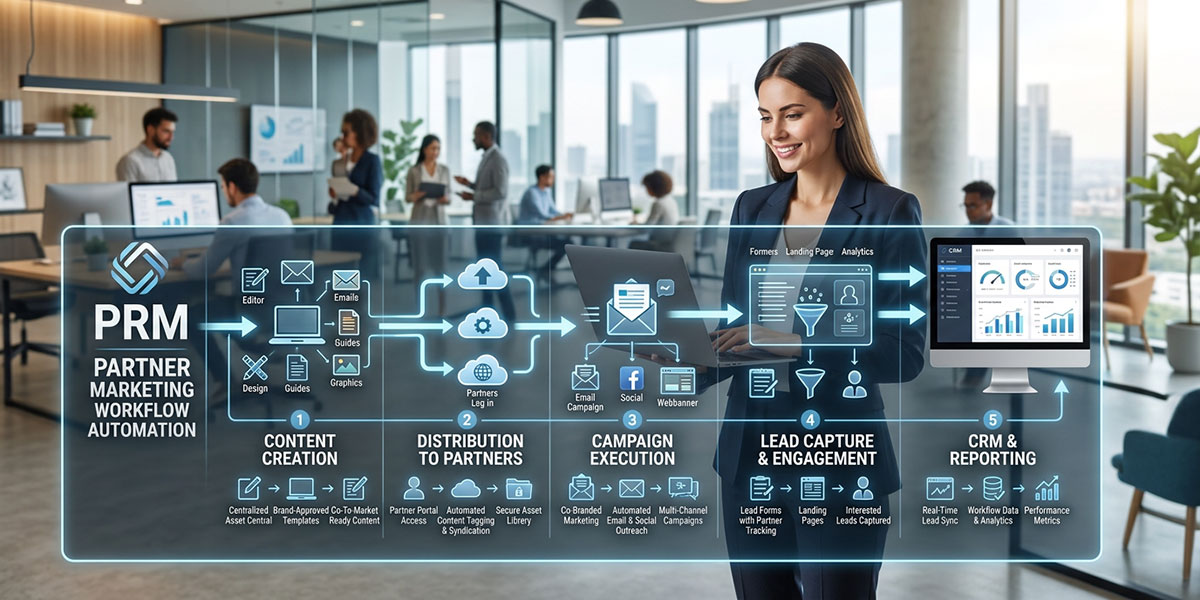
Furthermore, event marketing management is streamlined through a modern PRM solution. The platform helps manage everything from event registration to post-event follow-up communications.
This helps partners execute successful webinars, seminars, and trade show appearances. It consolidates all event-related activities and data into one accessible location for easier management.
The system should track the performance of all these marketing activities in detail. This provides both the vendor and the partner with clear visibility into campaign ROI.
Metrics like open rates, click-through rates, and lead conversions are readily available. This data is essential for optimizing future marketing strategies and budget allocation.
Workflow automation plays a vital role in tying all these marketing functions together. For example, a new lead from a landing page could trigger an automated email nurture sequence.
This type of automation ensures no opportunity is missed and every lead is handled promptly. It improves the partner’s efficiency and their ability to convert leads into sales.
Ultimately, a PRM platform with strong marketing automation empowers partners to act as extensions. They can become extensions of the vendor’s own marketing department, but with local expertise.
This creates a scalable model for demand generation that drives revenue. It strengthens the partnership by providing tangible value and tools for mutual success.
What role does a PRM play in advanced sales enablement?
A top-tier PRM platform provides critical sales enablement tools directly to partners. These tools are designed to shorten the sales cycle and increase partner win rates.
They streamline complex sales processes and provide vital information when partners need it most. This transforms the partner portal from a simple resource library into an active sales hub.
One of the most important sales enablement features is deal registration management. This allows partners to register the sales opportunities they are actively pursuing with a vendor.
This process protects the partner’s investment of time and resources in developing a lead. It also gives the vendor clear visibility into the sales pipeline across the entire channel.
An effective deal registration workflow prevents channel conflict between different partners. It provides a formal system for assigning and tracking opportunities which builds trust.
The system automates the approval process based on predefined rules. This ensures that registrations are handled quickly and fairly for all partners involved.
Referral management is another key capability related to opportunity management. It provides a simple way for partners to pass leads to the vendor’s direct sales team.
This is common in partnerships where a partner may identify an opportunity they cannot fulfill. The PRM tracks the referral and ensures the partner receives credit or compensation.
Lead distribution and management are also central to sales enablement via the system. The platform can intelligently route leads to the most appropriate partner based on rules.
These rules can be based on geography, partner tier, product specialization, or certification level. This ensures that every lead has the highest possible chance of converting into a sale.
Configure, Price, Quote (CPQ) functionality is a powerful tool for complex sales. A CPQ tool automates the creation of accurate and professional sales quotes.
It guides partners through configuring complex product or service bundles for customers. This eliminates pricing errors and ensures that all quotes are consistent and profitable.
A strong PRM will also support partner co-selling management for strategic deals. This allows a partner and the vendor’s direct sales team to collaborate on an opportunity.
The platform provides a shared space to manage contacts, track activities, and share documents. This collaborative approach can be crucial for closing large, complex enterprise sales.
Access to a comprehensive sales content library is another crucial aspect of enablement. This is different from the marketing content library and is focused on the sales process.
It contains assets like sales playbooks, battle cards, and competitive analysis documents. This equips partners with the knowledge they need to position the product effectively.
Training and certification are also deeply integrated into sales enablement. A partner learning management system can deliver sales training modules and assessments.
This ensures that partner sales teams have up-to-date knowledge about the vendor’s offerings. The PRM can track certifications and link them to benefits or lead distribution rules.
By providing these advanced sales tools, a PRM platform actively helps partners sell. It moves beyond passive support to become an indispensable part of their daily sales workflow.
This level of support fosters greater partner engagement and drives significant revenue growth. It demonstrates a vendor’s commitment to making their partners successful in the field.
Why are analytics crucial for a modern PRM solution?
Analytics are the foundation of strategic channel management in any modern PRM platform. They transform raw channel data into actionable insights for driving performance and growth.
Without robust analytics, vendors are essentially managing their channel programs in the dark. Data-driven decisions are essential for optimizing investments and identifying new opportunities.
A leading partner relationship management system integrates business intelligence and reporting at its core. It collects data from every module, from partner onboarding to sales and marketing activities.
This creates a single source of truth for all channel-related information. Leaders can use this data to get a holistic view of partner ecosystem health.
Performance analytics are a critical component of any effective channel software suite. This set of tools provides detailed reports and dashboards on key performance indicators (KPIs).
Vendors can track metrics like partner-sourced revenue, pipeline growth, and training completion rates. This helps in evaluating the effectiveness of individual partners and the program overall.
These insights allow channel managers to identify top-performing partners for recognition and support. They can also pinpoint underperforming partners who may need additional training or enablement.
Partners themselves also benefit from access to their own performance data. They can track their progress toward sales targets, incentive goals, and certification requirements.
More advanced platforms go beyond historical reporting with predictive analytics. These capabilities use machine learning algorithms to forecast future channel trends and outcomes.
For example, predictive analytics could identify which partners are most likely to succeed. It could also suggest which partners are at risk of disengaging from the program.
According to a report by Gartner, predictive analytics helps organizations anticipate future trends. This foresight allows channel managers to be proactive rather than reactive in their strategies.
They can intervene with at-risk partners before they become inactive. They can also double down on investments with partners showing high growth potential.
A comprehensive business intelligence module provides customizable dashboards. This allows different stakeholders to view the data that is most relevant to them.
An executive might want a high-level overview of channel ROI. A channel account manager might need a detailed report on their specific partners’ activities.
These analytics extend to marketing campaign performance within the PRM platform. Vendors can see which marketing assets are most popular and which campaigns generate the most leads.
This data is invaluable for refining marketing strategies and content development. It ensures that marketing resources are allocated to the most effective activities and materials.

Sales data analytics provide granular visibility into the channel pipeline. The PRM can track deal velocity, win-loss ratios, and average deal size by partner.
This information helps sales leadership forecast revenue more accurately. It also highlights bottlenecks in the sales process that may need to be addressed.
Ultimately, the analytics within a PRM solution enable a continuous improvement cycle. The cycle involves measuring performance, gaining insights, taking action, and then measuring again.
This data-driven approach is what separates high-growth channel programs from stagnant ones. It ensures that every decision is backed by evidence and aimed at measurable improvement.
A sophisticated PRM makes this powerful data accessible and easy to understand. It democratizes data, empowering everyone from executives to partners to make better decisions.
Investing in a platform with deep analytical capabilities is not just a feature choice. It is a strategic decision to manage the partner ecosystem with intelligence and precision.
Traditional vs. AI-Powered PRM Capabilities
| Capability | Traditional PRM Approach | AI-Powered PRM Approach |
|---|---|---|
| Lead Routing | Manual or based on simple, static rules (e.g., zip code). | Dynamic, intelligent routing based on partner performance, capacity, and specialty. |
| Partner Onboarding | A standard, one-size-fits-all onboarding checklist and workflow. | Personalized onboarding paths based on partner type, goals, and experience level. |
| Content Recommendation | Partners search a static library for relevant marketing or sales assets. | AI proactively recommends the most effective content for a specific deal or campaign. |
| Performance Analysis | Historical reporting on past results (e.g., last quarter's sales). | Predictive analytics forecasting future partner performance and identifying at-risk partners. |
| Partner Support | Partners submit tickets and wait for a manual response from channel managers. | AI-powered chatbots provide instant answers to common questions 24/7. |
| Business Planning | Generic business plan templates that partners fill out annually. | Dynamic, data-driven planning tools that suggest goals based on performance. |
How does a PRM manage complex partner incentive programs?
A best-in-class PRM automates and simplifies the management of partner incentive programs. These programs are vital for motivating partners and rewarding desired behaviors and outcomes.
Manually managing incentives is often complex, error-prone, and time-consuming for vendors. A dedicated platform brings efficiency, transparency, and fairness to the entire process.
One of the most common types of incentives is Market Development Funds (MDF) or co-op funds. These are funds that vendors provide to partners to subsidize their marketing activities.
A PRM platform streamlines the MDF lifecycle from fund request to claim and reimbursement. It provides a formal workflow for partners to request funds for specific marketing plans.
Channel managers can then review these requests directly within the system. They can approve, deny, or ask for more information based on predefined program rules and budgets.
Once a marketing activity is completed, the partner submits a claim for reimbursement. The PRM allows them to upload proof of performance, such as invoices or event photos.
Similarly, partner rebates programs can be managed effectively through the platform. Rebates are typically paid to partners for achieving certain sales volume or growth targets.
The PRM automatically tracks partner sales against these targets, eliminating manual calculation errors. This ensures rebates are calculated accurately and paid out on time, building trust with partners.
Sales Performance Incentive Funds (SPIFs) are another key motivational tool handled by the system. SPIFs are short-term incentives offered to partner sales reps for selling specific products.
The platform can be used to announce SPIFs and track individual sales performance. This simplifies the administration of these popular, fast-moving incentive programs for vendors.
Partner commissions are also managed with greater precision using a PRM. The system can handle complex commission structures based on different products, deal sizes, or partner tiers.
Automating commission calculations with a tool like partner commissions management reduces disputes. It provides partners with a clear, transparent view of their earnings at any time.
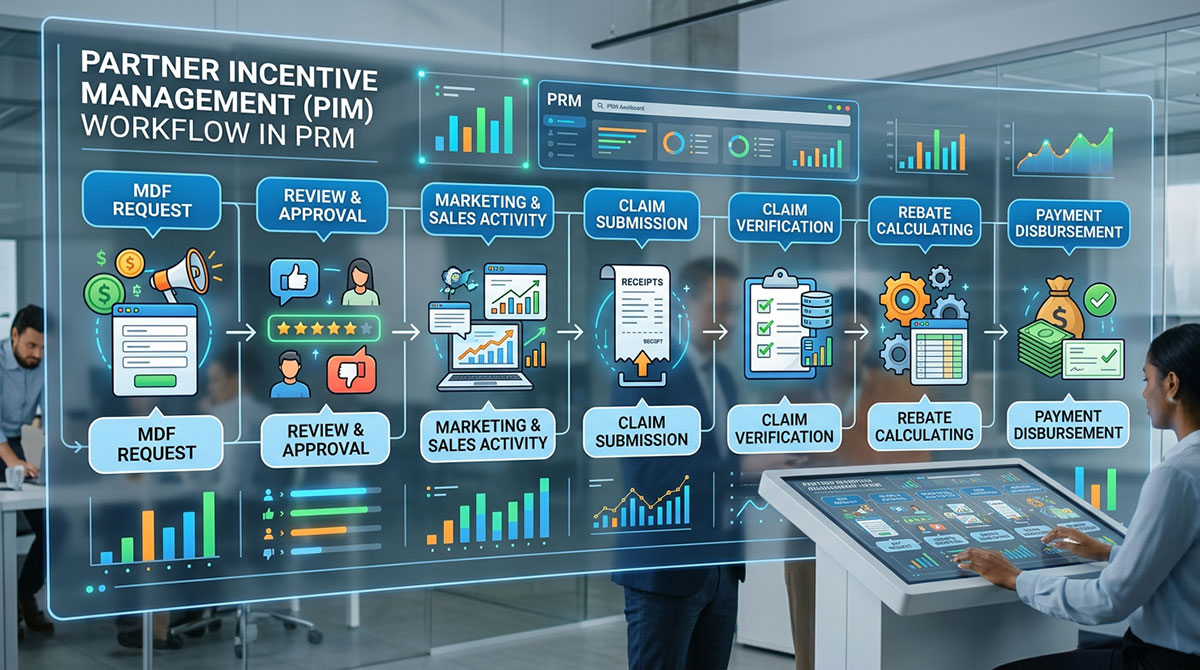
The integration of payment management is a crucial feature of a top-tier solution. This allows vendors to process and send incentive payments directly through the platform.
This integration with payment gateways or financial systems creates a seamless end-to-end process. It significantly reduces the administrative burden on the vendor's finance department.
Transparency is a major benefit of managing incentives through a centralized PRM platform. Partners can log in to the portal and see their current earnings and progress toward goals.
This visibility keeps them motivated and engaged with the incentive programs. It also reduces the number of inquiries that channel managers receive about payment status.
The analytics capabilities of the partner relationship management system are also applied to incentives. Vendors can analyze the ROI of their different incentive programs with ease.
They can determine which programs are driving the most revenue or desired behaviors. This data is essential for optimizing the overall channel incentive budget for maximum impact.
By automating incentive management, a PRM turns a complex administrative task into a strategic tool. It allows vendors to design and execute sophisticated programs that truly motivate partners.
This ensures that the significant investment in incentives translates into measurable channel growth. It strengthens the financial aspect of the vendor-partner relationship through efficiency and trust.
Why ZINFI’s Unified Partner Management Stands Out
ZINFI offers a complete suite of modular applications to manage the entire partner journey. You can start with what you need and add more capabilities as your program grows.
- End-to-End Automation: ZINFI automates every step, from partner recruitment and onboarding to sales, marketing, and incentives management, all within one platform.
- Advanced Analytics: Our platform includes powerful predictive analytics and performance analytics, providing deep, actionable insights to optimize your channel strategy effectively.
- Flexible & Scalable: ZINFI’s solutions are built to scale, supporting everything from emerging channel programs to large, complex, global partner ecosystems with thousands of partners.
- Integrated Marketing Tools: We provide a full suite of through-channel marketing automation tools, empowering partners to generate demand and grow their business with your brand.
- Streamlined Incentive Management: Manage complex MDF, co-op, rebate, and SPIF programs with automated workflows, ensuring transparency and timely payments that motivate partners.
- Concierge Services: ZINFI offers optional human concierge services to help you and your partners get the most out of the platform, providing unmatched support.
Frequently Asked Questions
What is through-channel marketing automation (TCMA)?
TCMA refers to tools within a PRM that enable vendors to execute marketing campaigns through partners. This includes co-branded assets, email campaigns, social media syndication, and event management.
How does a PRM prevent channel conflict?
A PRM platform prevents conflict primarily through a structured deal registration process. It provides a transparent, rules-based system for assigning and protecting partner-sourced sales opportunities.
Can a PRM integrate with our existing CRM?
Yes, leading PRM solutions are designed to integrate with major CRM systems like Salesforce. This allows for seamless data synchronization of leads, opportunities, and accounts between platforms.
What is the difference between performance and predictive analytics?
Performance analytics looks at historical data to report on what has already happened. Predictive analytics uses data and algorithms to forecast what is likely to happen in the future.
How does a PRM help with partner business planning?
A modern platform provides collaborative tools for creating and tracking joint business plans. It allows vendors and partners to set mutual goals and monitor progress against those objectives.
Why is partner training important in a PRM?
Integrated training through a Learning Management System (LMS) ensures partners are knowledgeable. It keeps partners updated on products, sales methodologies, and brand messaging to improve performance.
How does a PRM improve the partner experience?
It improves the experience by providing a single, easy-to-use portal for everything partners need. This includes content, training, sales tools, marketing resources, and incentive information in one place.
Can a PRM solution be accessed on mobile devices?
Modern PRM platforms, like ZINFI's, offer dedicated mobile apps or responsive design. This enables partners to manage their business and access resources from anywhere, at any time.
What kind of support should a vendor expect from a PRM provider?
A good provider offers comprehensive support, including technical assistance, strategic guidance, and onboarding help. Some, like ZINFI, offer concierge services to assist both vendors and their partners.
How is ROI measured for a PRM investment?
ROI is measured by tracking improvements in key metrics after implementation. These include increased partner-sourced revenue, higher partner engagement, reduced administrative costs, and faster sales cycles.
About the author
Sugata Sanyal
Sugata Sanyal is the Founder & CEO of ZINFI Technologies, a leader in Unified Partner Management. He has been a passionate advocate for the channel and channel partners for decades. His vision for ZINFI is to provide partner ecosystems with the tools they need to succeed.