AI in education is transforming how students learn and how institutions prepare future professionals. By personalizing learning experiences, closing workforce skills gaps, and expanding access to knowledge, artificial intelligence is helping educators build a more adaptable and inclusive global workforce.
Artificial intelligence is reshaping industries across the global economy. As organizations adopt automation and data-driven technologies, education systems must evolve to prepare students for these new realities. AI in education plays a crucial role in ensuring that learners develop the digital literacy and analytical skills required for modern careers.
Educational institutions are increasingly integrating intelligent learning technologies into classrooms and training programs. These tools help personalize instruction, improve assessment methods, and provide students with real-world exposure to emerging technologies.
Understanding the role of AI in education is therefore essential for educators, policymakers, employers, and students alike. When implemented thoughtfully, artificial intelligence can strengthen workforce readiness while improving learning outcomes for diverse student populations.
Key Takeaways
- AI in education enables personalized learning paths tailored to individual student needs.
- Early exposure to artificial intelligence concepts prepares students for technology-driven careers.
- Universities increasingly integrate AI across disciplines such as healthcare, finance, and environmental science.
- AI-powered learning platforms support lifelong learning and professional reskilling.
- Responsible AI education emphasizes ethics, transparency, and fairness in technological development.
How AI Is Transforming Learning Experiences
One of the most significant benefits of AI in education is its ability to personalize learning. Intelligent tutoring systems analyze student performance and adjust lessons to match individual strengths and weaknesses.
Platforms such as adaptive learning systems allow students to progress at their own pace. Instead of following a rigid curriculum, learners receive targeted support when they struggle and more advanced material when they demonstrate mastery.
Artificial intelligence also helps educators automate administrative tasks such as grading quizzes and tracking progress. By reducing repetitive work, teachers can dedicate more time to mentorship, discussion, and creative instruction.
Accessibility is another major advantage. AI-powered speech recognition, translation, and text-to-speech technologies allow students with disabilities or language barriers to access learning materials more easily.
These innovations are gradually reshaping traditional classrooms into flexible learning environments where technology supports both teachers and students.
Why Early Exposure to AI Matters
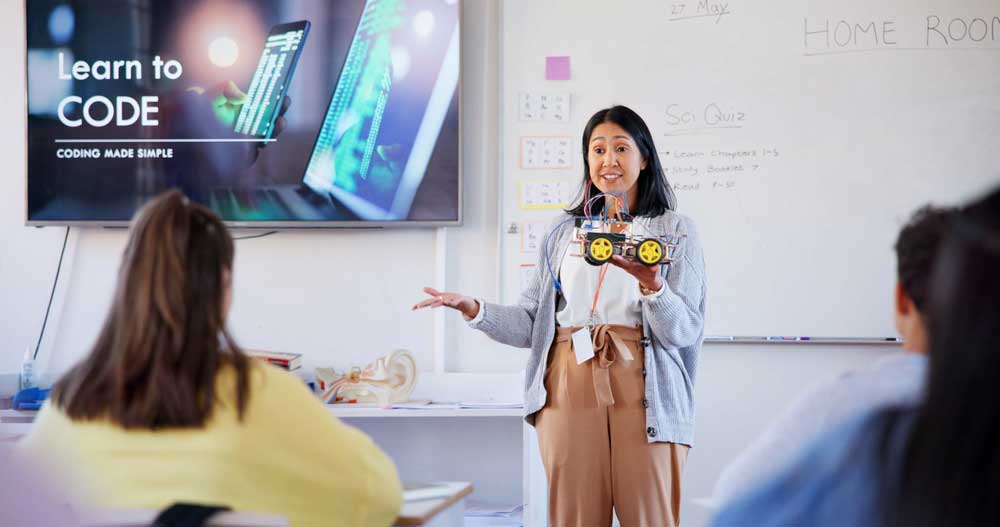
Introducing AI concepts during primary and secondary education helps students develop computational thinking and problem-solving abilities. Early exposure encourages curiosity about technology and builds confidence in digital tools.
Programs such as AI4ALL aim to introduce students from diverse backgrounds to artificial intelligence, machine learning, and data science. These initiatives demonstrate how early engagement with AI can inspire future innovators.
Students who encounter AI technologies early in their education often develop stronger analytical and logical reasoning skills. These abilities are valuable not only in STEM fields but also in business, healthcare, and public policy.
Educational institutions that incorporate AI literacy into K-12 curricula help ensure that future professionals are comfortable working alongside intelligent systems.
Interdisciplinary AI Education in Universities
AI in education is no longer limited to computer science departments. Universities increasingly integrate artificial intelligence into disciplines such as medicine, finance, engineering, and environmental science.
Medical students learn how AI assists with diagnostic imaging and predictive analytics. Business students use machine learning tools to analyze market trends and consumer behavior.
This interdisciplinary approach prepares graduates to apply intelligent technologies in real-world situations. Instead of viewing AI as a specialized field, students learn to treat it as a tool that enhances decision-making and innovation.
Universities that adopt this model often collaborate with technology companies and research organizations to ensure their programs reflect current industry practices.
Using AI to Close the Skills Gap
A persistent challenge in modern economies is the gap between academic training and workplace requirements. AI in education can help address this problem by aligning learning experiences with real industry demands.
Online learning platforms powered by artificial intelligence recommend personalized courses based on career goals and skill gaps. These systems help professionals identify the most relevant training opportunities.
For example, platforms like Coursera use data-driven recommendations to guide learners toward certifications and programs aligned with emerging job market trends.
Employers increasingly encourage workers to participate in these AI-powered learning programs. Continuous skill development helps professionals remain competitive in rapidly evolving industries.
Ethics and Responsible AI Education
As artificial intelligence becomes more influential in society, ethical considerations are becoming an essential part of education. Students must understand how algorithmic bias, data privacy, and transparency affect real-world applications.
Responsible AI education teaches future professionals to design technologies that are fair, accountable, and socially responsible. Many universities now include AI ethics courses in technology and engineering programs.
Combining technical knowledge with ethical awareness ensures that graduates can build systems that benefit society rather than reinforce existing inequalities.
Preparing students to think critically about the social impact of technology is a key objective of modern educational institutions.
Expanding Access and Educational Equity
AI-driven learning platforms have the potential to expand access to education globally. Students in remote regions can access high-quality courses, digital tutoring, and virtual classrooms.
These technologies help reduce geographic and economic barriers that historically limited educational opportunities. Learners from diverse backgrounds can participate in programs that were previously unavailable to them.
Inclusive education strategies supported by artificial intelligence can significantly broaden the global talent pool. As more individuals gain access to advanced learning resources, industries benefit from a more diverse and skilled workforce.
By democratizing knowledge, AI in education contributes to long-term economic and social development.
| Dimension |
Traditional Education Model |
AI-Enhanced Education Model |
| Learning style |
Standardized instruction |
Adaptive personalized learning paths |
| Assessment |
Manual grading and delayed feedback |
Automated feedback and real-time performance insights |
| Skill development |
Static curriculum |
Dynamic programs aligned with industry needs |
| Accessibility |
Limited access for remote learners |
Global digital learning platforms |
| Career preparation |
Theoretical knowledge |
Hands-on experience with AI tools |
How ZINFI Supports AI-Driven Workforce Development
ZINFI offers a comprehensive partner relationship management platform designed to help organizations leverage intelligent automation and advanced analytics.
The platform demonstrates how AI technologies can support collaboration, automate operational tasks, and provide strategic insights that help teams work more efficiently.
- Intelligent automation that streamlines partner management processes.
- Data-driven insights that improve decision-making across partner ecosystems.
- Predictive analytics that help organizations anticipate market changes.
- Scalable collaboration tools supporting global partner networks.
- Workflow optimization allowing teams to focus on high-value strategic activities.
 ZINFI Technologies, Inc.