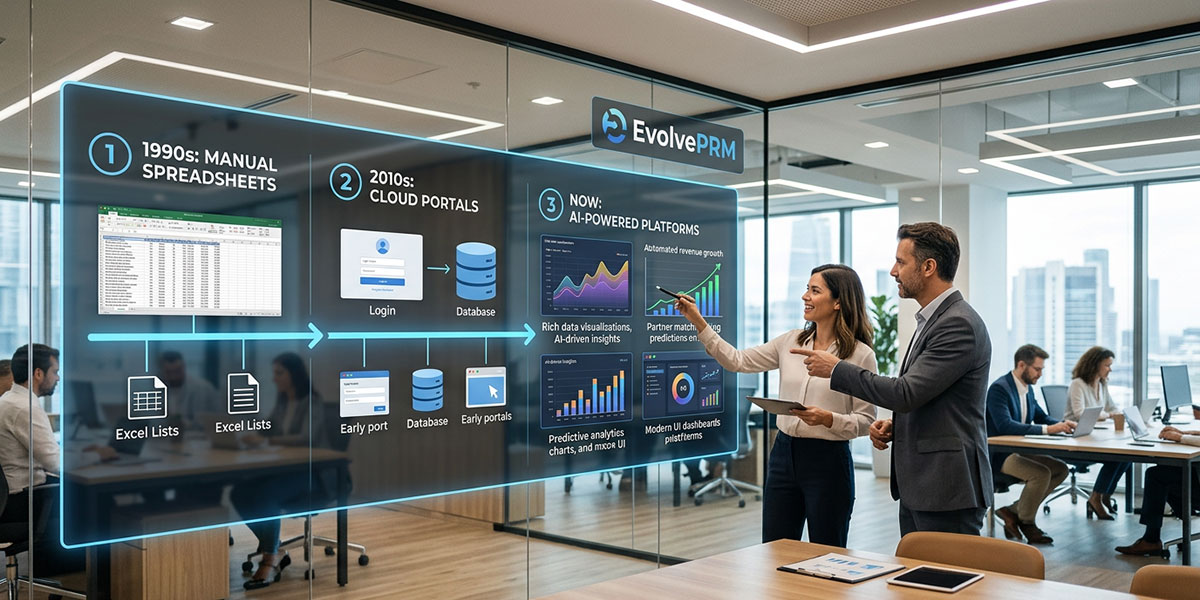
Partner Relationship Management (PRM) has evolved from manual processes into sophisticated, AI-driven platforms. This progression reflects the growing need for efficiency and intelligence in managing channel partnerships.
In the past, organizations managed partners using spreadsheets, emails, and phone calls. This manual approach was time-consuming and prone to many costly human errors.
Today, leading companies leverage unified PRM solutions that automate tasks and provide deep insights. These modern systems are crucial for scaling a successful partner ecosystem in a competitive market.
The core purpose of this evolution has always been to build stronger, more productive partnerships. Technology now enables companies to support their partners more effectively than ever before.
Understanding this journey helps businesses appreciate the incredible value that a modern PRM provides. It also highlights the strategic importance of investing in the right channel technology stack.
Key Takeaways
TL;DR
- Early channel management relied on manual tools like spreadsheets, which were highly inefficient.
- The first generation of PRM software introduced basic automation for core tasks.
- Unified PRM platforms emerged to break down data silos and create a single source of truth.
- Modern PRM solutions integrate partner management, enablement, marketing, and sales functions.
- AI and machine learning are now driving the next wave of PRM innovation.
- The future of PRM lies in predictive analytics, hyper-personalization, and enhanced partner experiences.
- Choosing the right PRM is a critical strategic decision for scaling channel revenue.
How Did Early PRM Systems Function?
In the beginning, Partner Relationship Management was not a formal software category. It was a collection of manual processes and disconnected tools managed by channel teams.
Companies used spreadsheets to track partner information, sales, and commissions. Communication happened primarily through email chains and countless back-and-forth phone calls.
This approach created significant challenges for both vendors and their partners. Data was often outdated, inconsistent, and stored in multiple locations across the organization.
Finding a specific contract or the latest marketing asset was a difficult task. This lack of a central repository wasted valuable time for channel managers and partners alike.
Partner onboarding was a disjointed and slow process that lacked any real consistency. New partners received stacks of paper or a flood of emails with little guidance.
This created a poor initial experience and delayed the new partner’s time to revenue. Many potentially good partners were lost due to this frustrating onboarding experience.
Calculating commissions and incentive payments was another major pain point for everyone involved. Manual calculations on complex spreadsheets frequently resulted in errors and disputes.
These payment inaccuracies could severely damage trust and harm the partner relationship. Resolving these disputes required significant administrative effort from the vendor’s finance team.
Lead distribution was also a simplistic and often unfair process to manage. Leads were typically assigned based on geography or a "first-come, first-served" basis.
This method did not account for a partner’s specific expertise or their performance. It often led to channel conflict and valuable leads not being properly pursued.
Marketing support consisted of sending generic marketing materials for partners to use. There were no capabilities for co-branding or customizing assets for local markets.
This one-size-fits-all approach limited the effectiveness of partner marketing campaigns. It failed to resonate with the specific audiences that partners were trying to reach.
Reporting and performance analysis were nearly impossible with these fragmented systems. Channel managers spent weeks trying to consolidate data from various spreadsheets.
The resulting reports were often obsolete by the time they were completed. This made strategic planning and performance evaluation an exercise in guesswork and intuition.
The overall partner experience was poor, characterized by friction, delays, and frustration. Partners had to work very hard just to do business with the vendor.
This high level of effort discouraged engagement and loyalty from the partner community. A primitive PRM structure hindered growth instead of enabling it for the business.
These early methods simply could not scale as a company's channel program grew. Each new partner added a disproportionate amount of administrative overhead to the team.
The limitations of manual management became a major bottleneck for revenue growth. It became clear that a more structured and automated approach was desperately needed.
Companies realized they needed a dedicated system to manage their partner ecosystem effectively. This realization paved the way for the first generation of true PRM software.
The transition marked a crucial turning point in the history of channel management. It was the first step toward the sophisticated platforms we see today in the market.
What Sparked the Shift to Automated PRM Platforms?
The shift to automated PRM platforms was driven by the inherent limitations of manual methods. Businesses that were scaling their channels quickly hit a wall of inefficiency.
The sheer volume of partners, data, and transactions became impossible to manage with spreadsheets. The risk of errors and the administrative burden grew exponentially with scale.
Companies recognized the need for a centralized system to bring order to the chaos. A single source of truth for all partner-related activities became a strategic necessity.
This need gave rise to the first generation of PRM software applications. These tools focused on automating the most painful and repetitive administrative tasks.

Early PRM systems introduced dedicated partner portals as a central hub for interaction. Partners could log in to access resources and communicate with the vendor.
This was a significant improvement over endless email chains and scattered information. It provided a structured environment for partners to engage with the brand.
A key feature was automated partner onboarding and training modules. Companies could create standardized onboarding workflows to ensure a consistent experience for all.
ZINFI's
Partner Learning Management Plus automates this process. It helps partners get up to speed much faster and more efficiently.
Content management was another core component of these early platforms. Vendors could upload marketing materials, sales playbooks, and technical documents to one place.
This ensured that partners always had access to the most current and approved assets. It eliminated the problem of partners using outdated or incorrect information.
These first-generation PRM platforms also automated lead management and deal registration. This brought much-needed structure and fairness to the sales process.
A tool like
Deal Registration Management provides clear rules of engagement. It helps to protect partner margins and prevent potential channel conflict.
The automation of these core functions freed up channel managers' time significantly. They could finally shift their focus from administrative tasks to strategic partner development.
This allowed them to spend more quality time recruiting, enabling, and co-selling with key partners. This strategic focus is what truly drives channel revenue growth and success.
However, these early systems were often siloed solutions that didn't talk to each other. A company might have one tool for training and another for marketing funds.
This created new data silos and a fragmented experience for partners. Partners had to learn and log into multiple different, disconnected systems.
The lack of integration also limited visibility for the vendor’s channel team. They still couldn't get a complete 360-degree view of partner performance.
According to research from
Gartner, a complicated buying journey hurts sales. A fragmented partner experience creates similar friction and can impact overall results.
The challenges of these point solutions led to the next stage in the evolution. The market demanded a more integrated and holistic approach to channel management.
This demand was the catalyst for the development of unified PRM platforms. These newer systems aimed to combine all channel functions into a single, cohesive solution.
The goal was to provide a seamless experience for partners and complete visibility for vendors. This vision set the stage for the modern era of Partner Relationship Management.
The progression from manual chaos to automated point solutions was a huge leap forward. But it was only one step on the longer journey toward true partnership efficiency.
Traditional vs. Modern PRM Approaches
| Feature |
Traditional PRM Approach (Spreadsheets/Siloed Tools) |
Modern Unified PRM Approach (AI-Powered) |
| Data Management |
Fragmented, manual data entry, inconsistent records. |
Centralized, automated data sync, single source of truth. |
| Partner Onboarding |
Slow, manual process with inconsistent experiences. |
Automated workflows with personalized learning paths. |
| Marketing Support |
Generic, one-size-fits-all asset distribution. |
Co-brandable assets, automated campaigns, social syndication. |
| Sales Management |
Manual lead sharing, high potential for channel conflict. |
Automated deal registration and rule-based lead routing. |
| Incentive Management |
Manual calculations, prone to errors and payment delays. |
Automated MDF, rebate, and commission tracking. |
| Analytics & Reporting |
Historical data, manual report creation, limited insights. |
Real-time dashboards, predictive analytics, performance analytics. |
| Partner Experience |
High-friction, multiple logins, difficult to navigate. |
Seamless, single-sign-on, intuitive and personalized portal. |
Why is Unified PRM the Modern Standard?
Unified PRM represents the current gold standard for effective channel management. It addresses the fragmentation and data silos created by earlier point solutions.
The core concept is to integrate all aspects of the partner lifecycle into one platform. This includes partner relationship, enablement, marketing, and sales management.
By bringing everything together, a unified PRM creates a single source of truth. It provides a complete, 360-degree view of every partner relationship.
This holistic view is invaluable for making strategic decisions about the channel program. Channel leaders can see what’s working and what is not with clarity.
For partners, the experience is transformed from fragmented to seamless. They get a single portal with one login to access everything they need.
This greatly simplifies their day-to-day interactions with the vendor. A system like
User Management enhances security and ease of access.

A unified platform allows for the powerful integration of different channel functions. For example, partner training progress can directly influence marketing campaign access.
This interconnectedness allows vendors to build smarter, more logical partner programs. Incentives can be directly tied to certification levels and sales performance.
Consider the partner marketing experience within a unified PRM system. Partners can access a library of co-brandable assets and launch campaigns easily.
ZINFI's
Email Marketing Management allows partners to execute sophisticated campaigns. It provides them with powerful tools that they can use with just a few clicks.
These campaigns can be directly linked to the lead management module. Leads generated from a partner's campaign are automatically captured and assigned.
This closed-loop system provides clear ROI on marketing activities. Both the vendor and the partner can see the direct results of their efforts.
The same integration applies to partner incentives and sales activities. A partner registers a deal, and the system can automatically calculate potential commissions.
Tools for
Market Development Funds (MDF) Management become much more effective. Program compliance and ROI tracking are automated, reducing administrative overhead.
This level of integration fosters a more dynamic and responsive partnership. It removes the manual checks and balances that slow down business operations.
The vendor can create and manage complex partner programs with greater ease. Tiering, specializations, and regional variations can be managed through configurable workflows.
A powerful
Workflow Management engine is essential for this flexibility. It allows channel programs to adapt quickly to changing market conditions.
Data from all activities flows into a centralized business intelligence module. This enables deep dives into every aspect of the channel’s performance.
Channel managers can analyze trends, compare partner performance, and identify growth opportunities. These insights are based on real-time, comprehensive data, not guesswork.
The unified PRM model has become the benchmark for a reason. It delivers superior efficiency, better visibility, and an enhanced experience for partners.
Companies that still rely on disparate systems are at a significant competitive disadvantage. They are slower, less agile, and create more friction for their partners.
Investing in a true unified PRM is no longer a luxury. It is a fundamental requirement for building and scaling a modern, high-performing channel.
The evolution to this model was a direct response to market needs. It solves the critical business challenges that previous generations of tools could not.
How is AI Reshaping the Future of PRM?
The next frontier in the evolution of PRM is artificial intelligence (AI). AI and machine learning are poised to make channel management even more efficient and intelligent.
Unified platforms created the data foundation necessary for AI to thrive. With all partner data in one place, advanced algorithms can now uncover powerful insights.
One of the most exciting applications is in the area of
predictive analytics. AI can analyze historical data to predict future partner performance and behavior.
For example, an AI model could identify which new partners are most likely to succeed. This allows channel managers to focus their onboarding resources more effectively.
Predictive analytics can also forecast sales trends within the channel ecosystem. It might predict which products will sell best through which partners in specific regions.
This foresight enables more accurate inventory planning and targeted sales incentives. It helps align the vendor’s strategy with real-world market dynamics.
AI is also revolutionizing partner enablement and training. It can personalize learning paths for each individual based on their role and performance gaps.
The system might recommend specific training modules to a partner who is struggling. This targeted approach accelerates skill development and improves partner competency.
In partner marketing, AI can help optimize campaign performance. It can suggest the best content and messaging to use for a specific target audience.
An AI-powered PRM could even automate the creation of co-branded social media posts. This saves partners time and ensures brand consistency across all touchpoints.

Hyper-personalization is another key benefit that AI brings to the PRM evolution. The entire partner portal experience can be tailored to each user’s needs.
The content, alerts, and recommendations a partner sees are dynamically adjusted. This makes the portal more relevant and engaging for every single partner.
AI-driven chatbots and virtual assistants are becoming common within PRM platforms. They can provide instant support to partners 24/7 without human intervention.
Partners can ask questions about products, program rules, or incentive status. The AI assistant provides immediate and accurate answers, improving partner satisfaction.
This automation of routine support queries frees up channel support staff. They can concentrate on resolving more complex and high-value partner issues.
ZINFI is at the forefront of this evolution with its focus on intelligent automation. This includes using AI to enhance
performance analytics and reporting capabilities.
AI algorithms can sift through vast amounts of performance data automatically. They can identify anomalies, trends, and correlations that a human analyst might miss.
The system can then generate proactive alerts for channel managers. For instance, an alert might flag a high-performing partner whose engagement is dropping.
This allows the manager to intervene early and address potential issues. This proactive approach to partner management helps prevent partner churn and revenue loss.
AI will also enhance the management of incentives like MDF and rebates. It can help optimize fund allocation based on predicted ROI for different activities.
The future PRM will be an intelligent partner in channel management. It will not just report on what happened; it will advise on what to do next.
This evolution from a system of record to a system of intelligence is profound. It equips channel leaders with the tools to be truly strategic and data-driven.
As AI technology continues to mature, its impact on PRM will only grow. The journey that started with spreadsheets is now leading to self-optimizing partner ecosystems.
Embracing this next wave of innovation is essential for staying competitive. The future of channel partnerships will be powered by data, automation, and intelligence.
Drive Efficiency and Growth with ZINFI's Unified PRM
ZINFI’s Unified Partner Management platform embodies the principles of modern PRM. It is designed from the ground up to drive efficiency and growth for your channel.
Our comprehensive solution provides a single, integrated platform for all your partner needs. From onboarding to co-selling, ZINFI has you covered at every step.
- Complete Partner Lifecycle Management: Manage recruitment, onboarding, business planning, and contracts with our integrated Partner Management solutions.
- Powerful Partner Enablement: Equip your partners for success with a full suite of tools, including learning management and Co-branded Assets Management.
- Automated Partner Marketing: Empower partners with enterprise-grade marketing tools like social media syndication and Microsite Management.
- Streamlined Partner Sales: Accelerate channel sales with automated lead management, deal registration, and our advanced Configure-Price-Quote (CPQ) module.
- Intelligent Incentive Programs: Easily manage complex incentive programs, including MDF, rebates, and commissions, with our dedicated Partner Commissions Management tools.
- Actionable Analytics: Gain deep, real-time insights into your channel’s performance with robust reporting, dashboards, and advanced Business Intelligence Reports.
By unifying these critical functions, ZINFI eliminates data silos and reduces friction. This creates a seamless experience that encourages deeper partner engagement and loyalty.
Our platform’s modular structure allows you to start with what you need now. You can then easily scale your capabilities as your channel program evolves and grows.
Frequently Asked Questions
What is PRM?
PRM stands for Partner Relationship Management. It refers to the strategies and technologies used to manage a company's channel partners.
Why did PRM software become necessary?
PRM software became necessary because manual methods like spreadsheets were too inefficient. They could not scale to manage growing and complex partner ecosystems effectively.
What is a unified PRM platform?
A unified PRM platform integrates all channel management functions into a single solution. This includes partner marketing, sales, enablement, and relationship management.
How does a PRM benefit channel partners?
A good PRM provides partners with a single, easy-to-use portal for all their needs. It gives them quick access to resources, support, and tools to grow their business.
What are the key components of a modern PRM?
Key components include a partner portal, content management, and learning management. They also feature deal registration, marketing automation, and incentive management.
How does a PRM system improve channel sales?
A PRM system improves sales by automating lead distribution and deal registration. It also provides partners with the sales tools and training they need to close deals faster.
What is the role of AI in the future of PRM?
AI is making PRM platforms more intelligent through predictive analytics and automation. It helps personalize the partner experience and provides proactive insights to channel managers.
Can a PRM integrate with a CRM system?
Yes, most modern PRM platforms are designed to integrate seamlessly with CRM systems. This creates a bidirectional flow of data between direct and indirect sales channels.
How do you measure the ROI of a PRM investment?
You can measure ROI by tracking increases in channel revenue and partner engagement. You should also look at reductions in administrative costs and partner support tickets.
Why is ZINFI considered a leader in the PRM space?
ZINFI is a leader because it offers a true unified PRM platform. It provides a comprehensive, flexible, and scalable solution for managing the entire partner lifecycle.
About the author
Sugata Sanyal is the Founder & CEO of ZINFI Technologies, a leader in Unified Partner Management. He has been a passionate advocate for the channel and channel partners for decades. His vision for ZINFI is to provide partner ecosystems with the tools they need to succeed.