The Future of SaaS: How Intelligent Agents Are Reshaping the Software Landscape
The future of SaaS is being actively rewritten by intelligent, autonomous agents. These AI-powered entities are shifting the paradigm from interactive tools to proactive digital partners. This transformation will fundamentally change how users and businesses engage with software applications.
Key Takeaways
TL;DR
- Intelligent AI agents are becoming the central component in the evolution of software platforms.
- The future of SaaS points towards a decline in traditional graphical user interfaces.
- Automation of complex business workflows is a primary benefit of this technological shift.
- Hyper-personalization will reach unprecedented levels through adaptive, learning AI agents.
- Data analysis is evolving with predictive analytics to guide business strategies proactively.
- The industry is moving away from reactive software tools toward proactive digital partners.
- Robust integration capabilities are essential for creating a cohesive, agent-driven software ecosystem.
How Will AI Agents Redefine the Future of SaaS?
The future of SaaS involves a significant move away from traditional graphical user interfaces. Users will interact less with menus, buttons, and forms. Instead, they will engage with intelligent agents through natural language commands.
These AI agents act as sophisticated intermediaries between the user and the software. They understand user intent, access data, and execute complex tasks across various applications. This creates a more fluid, conversational, and efficient user experience for everyone.
This evolution represents a fundamental change in our relationship with technology. Software is transforming from a passive tool into an active collaborator. The future of SaaS is one where technology anticipates needs and automates solutions proactively.
Consider a marketing manager preparing for a product launch. Instead of manually using five different tools, they instruct an agent. "Launch the Q3 campaign for our new product," they might say. The agent then coordinates everything from email blasts to social media posts.
This capability is powered by advancements in natural language processing and machine learning. These technologies allow agents to comprehend context, learn from interactions, and improve over time. The result is a system that becomes more valuable with continued use and feedback.
This agent-driven model simplifies complex processes for all end-users. It abstracts away the technical complexity of underlying applications and systems. The user focuses on the goal, while the agent handles the intricate execution steps. The software's future holds immense promise for productivity.
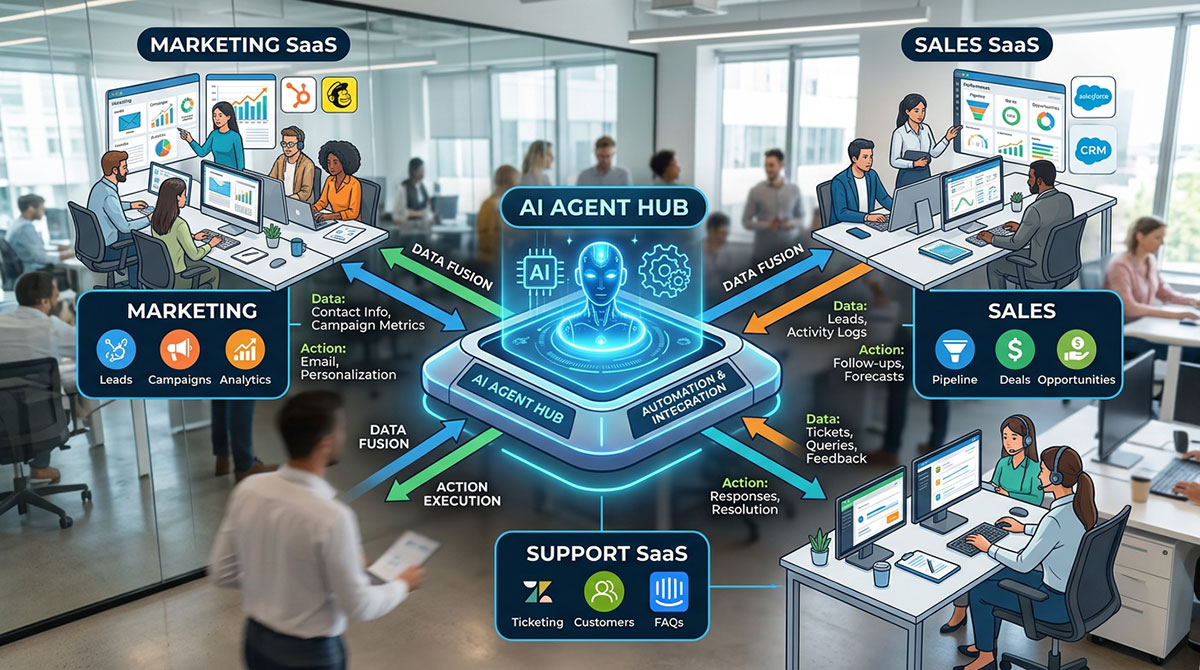
Integration is a cornerstone of this emerging software landscape. Agents must have seamless access to different platforms to perform their functions. A well-connected ecosystem allows a single agent to manage sales, marketing, and support tasks. This unified approach is central to the future of SaaS.
This shift also democratizes access to powerful software capabilities for all users. Employees without specialized training can leverage advanced tools through simple commands. This empowerment enhances productivity and innovation across an entire organization.
Ultimately, the move towards AI agents is about increasing efficiency and intelligence. The future of SaaS is less about the software itself. It is more about the outcomes that intelligent systems can deliver for businesses.
What Role Does Automation Play in the Future of SaaS?
Automation is the engine driving the agent-powered future of SaaS. Intelligent agents are designed to execute repetitive and complex workflows automatically. This frees human employees to concentrate on strategy, creativity, and high-value customer interactions.
Imagine an agent that monitors sales pipelines and triggers actions based on specific criteria. When a deal stagnates, the agent could schedule a follow-up call. It could also send relevant case studies to the prospective client to nurture the lead.
This level of hyper-automation extends across all business functions. In finance, agents can manage invoicing, track expenses, and generate financial reports. In human resources, they might handle onboarding processes for new hires. The possibilities are nearly limitless.
ZINFI's platform exemplifies this principle with tools like Workflow Management. These systems automate the complex processes inherent in channel management. They ensure partners follow consistent procedures for tasks like deal registration and marketing campaigns.
The future of SaaS relies on predictive analytics to make automation even smarter. Agents will not just follow pre-programmed rules. They will analyze data to predict future trends and take preventative action. This is a move from reactive to proactive automation of company workflows.
For example, an agent could analyze market data to identify a potential sales decline. It might then automatically adjust marketing spend to counter the trend. This proactive stance provides a significant competitive advantage to any business.
Moreover, performance analytics becomes crucial for optimizing these automated systems. By constantly monitoring outcomes, businesses can refine agent behaviors and improve efficiency. This continuous improvement loop is vital for maximizing the return on investment from automation.
This new era of automation also fosters greater consistency and compliance. Automated workflows ensure that processes are executed correctly every single time. This reduces human error and ensures adherence to internal policies and external regulations.
The future of SaaS will be defined by the depth of its automation. Companies that effectively leverage intelligent automation will lead their industries. They will operate more efficiently, make smarter decisions, and deliver better customer experiences.
How Does Personalization Shape the Future of SaaS?
Personalization is reaching an entirely new level in the agent-driven future of SaaS. AI agents are designed to learn individual user preferences, behaviors, and work styles. This enables them to deliver a truly bespoke software experience for every user.
Unlike traditional software with a one-size-fits-all interface, agents adapt to you. They can customize dashboards, prioritize information, and suggest shortcuts based on your habits. The software molds itself to the user, not the other way around.
This deep personalization enhances user adoption and satisfaction significantly. When software understands and anticipates a user's needs, it becomes an indispensable partner. This is a core component of the software's future direction and user focus.
Gartner highlights that by 2026, over 80% of enterprises will have used generative AI. This reflects a major shift towards creating more dynamic and personalized interactions. Businesses are investing heavily in AI to tailor experiences for customers and employees. You can read more in their article on what's next in generative AI.

For instance, an agent for a sales representative would behave differently than for a CEO. The salesperson's agent would prioritize leads, meeting schedules, and deal updates. The CEO's agent would focus on high-level KPIs, market trends, and strategic reports.
This level of customization is possible through continuous data analysis. The agent processes every interaction to refine its understanding of the user. This creates a powerful feedback loop that constantly improves the user experience over time.
Platforms offering tools for tailored strategies are already leading the way. Solutions like ZINFI's partner business planning module allow for customized plans. This helps align partner activities with broader company goals in a personalized way. This is an early glimpse into the future of SaaS.
This personalization also extends to learning and development within an organization. An agent can identify skill gaps based on an employee's performance. It can then recommend specific training modules or resources to help them improve.
The future of SaaS is a personalized one. It promises a world where software is not just a tool. It is a dedicated assistant that understands each user's unique context and goals.
What Challenges and Opportunities Define the Future of SaaS?
The transition to an agent-powered future of SaaS presents both challenges and opportunities. On the challenge side, data security and privacy are paramount concerns. Agents require access to vast amounts of sensitive company and user data.
Organizations must implement robust security protocols to protect this information from breaches. Ensuring ethical AI usage and avoiding data bias are also critical hurdles. Building trust in these autonomous systems will be essential for their widespread adoption.
Another challenge is the initial cost and complexity of implementation. Integrating AI agents across a disparate collection of existing software can be difficult. This requires significant investment in technology and skilled personnel for proper execution.
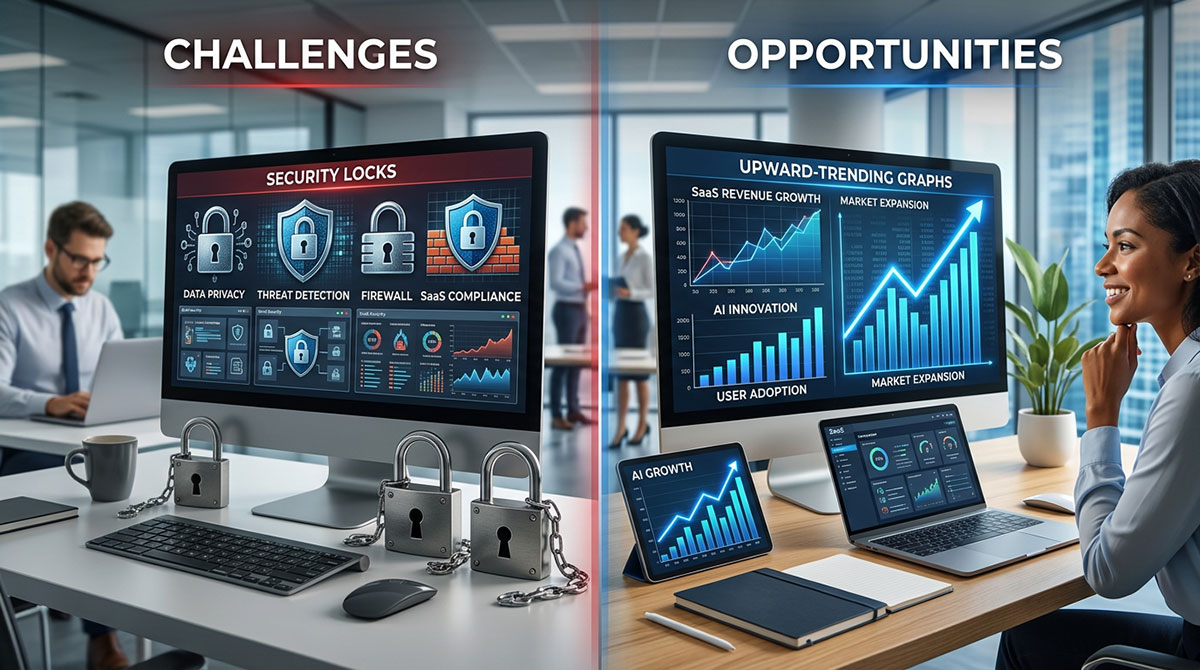
However, the opportunities presented by the future of SaaS are immense. The potential for productivity gains is one of the most significant benefits. By automating tasks, agents empower employees to focus on more strategic initiatives.
Enhanced decision-making is another major opportunity for savvy businesses. Agents can analyze complex datasets in real time, providing actionable insights. This use of performance analytics helps leaders make faster, more informed strategic choices.
This intelligent ecosystem also opens doors for entirely new business models. Companies can offer services based on outcomes delivered by AI agents. This shifts the value proposition from providing software to delivering guaranteed results.
To navigate this transition successfully, businesses need powerful integration capabilities. A platform that can connect various systems is crucial. ZINFI provides this through modules like Centralized Interconnect, which serves as a hub for data exchange.
Preparing the workforce for this shift is another key aspect. New roles will emerge, such as AI trainers, ethicists, and automation strategists. Investing in upskilling and reskilling programs is vital for a smooth transition. The future of SaaS requires a prepared workforce.
Ultimately, the companies that successfully navigate these challenges will thrive. They will unlock new levels of efficiency, innovation, and competitive advantage. The future of SaaS is not just about technology; it's about business transformation.
Traditional SaaS vs. Agent-Powered SaaS: A Comparison
| Feature | Traditional SaaS | Agent-Powered SaaS |
|---|---|---|
| User Interface | Graphical (menus, buttons, forms) | Conversational (natural language) |
| Task Execution | Manual, step-by-step user input | Automated, intent-driven execution |
| Personalization | Limited, role-based settings | Hyper-personalized, adaptive to individual |
| Data Analysis | Reactive, historical dashboards | Proactive, predictive analytics |
| User Role | Operator of the software | Director of the an intelligent agent |
| Learning Capability | Static, updated by vendor | Dynamic, learns from user interaction |
| Workflow Automation | Rule-based and often rigid | Intelligent and context-aware |
Embrace the Future of SaaS with ZINFI's Unified Partner Management
ZINFI is already building towards the intelligent future of SaaS. Our Unified Partner Management (UPM) platform integrates automation and intelligence. It empowers organizations to manage their partner ecosystems with greater efficiency and insight.
With ZINFI, you can prepare for the next generation of software. Our solutions are designed to deliver tangible results in a rapidly evolving digital landscape. We help you stay ahead of the curve.
- Harness data-driven insights with advanced performance analytics and reporting dashboards.
- Streamline channel marketing with automated tools for email marketing management.
- Create a seamlessly connected partner ecosystem with our centralized interconnect module.
- Deliver personalized enablement through our advanced partner learning management system.
- Optimize your sales pipeline with intelligent deal registration management.
- Make smarter strategic decisions using comprehensive business intelligence reports.
Frequently Asked Questions
Will AI agents completely replace software interfaces?
AI agents will likely become the primary interaction model for many tasks. However, graphical interfaces will still exist for complex configuration and visualization. The future of SaaS is about a hybrid approach.
What is an AI agent in the context of SaaS?
An AI agent is an autonomous software program that understands user goals. It uses artificial intelligence to perform tasks across one or more applications. It acts as a proactive, intelligent personal assistant.
How does the future of SaaS impact small businesses?
This evolution can level the playing field for small businesses. It provides them access to sophisticated automation and analytics capabilities. This was previously only available to large enterprises.
Are there security concerns with AI agents in SaaS?
Yes, security and data privacy are significant concerns. Companies must ensure agents have robust security protocols. They must also use data ethically to build and maintain user trust.
What skills are needed for an AI-driven SaaS environment?
Skills in data analysis, automation strategy, and AI ethics will be in high demand. Employees will need to be comfortable collaborating with intelligent systems. This is a key part of the future of SaaS workforce.
How does this trend affect SaaS pricing models?
Pricing may shift from per-user licenses to outcome-based models. Companies might pay for the results an agent delivers. This could include metrics like leads generated or issues resolved.
What is the role of predictive analytics in agent-powered SaaS?
Predictive analytics allows agents to anticipate future events and take proactive action. This transforms them from simple task-doers into strategic advisors. It is a crucial component for intelligent operations.
Can these AI agents work across different software platforms?
Yes, the most effective agents are designed to work across multiple applications. Strong integration is essential for them to manage complex, multi-step workflows. This interoperability defines the future of SaaS.
How does ZINFI leverage AI in its platform?
ZINFI uses AI and automation to streamline channel management processes. This includes partner onboarding, lead management, and marketing automation. Our platform uses data to provide actionable insights.
When can we expect AI agents to become mainstream in SaaS?
Elements of agent-driven technology are already present in many platforms. We can expect more comprehensive, autonomous agents to become mainstream. This will likely happen over the next three to five years.
About the author
Sugata Sanyal
Sugata Sanyal is the Founder & CEO of ZINFI Technologies, a leader in Unified Partner Management. He has been a passionate advocate for the channel and channel partners for decades. His vision for ZINFI is to provide partner ecosystems with the tools they need to succeed.