Beyond the Buzz: The Definitive Guide to Future Marketing Automation Trends
The most significant marketing automation trends involve artificial intelligence, hyper-personalization, and omnichannel integration to create smarter, more effective customer experiences. These advancements are moving beyond simple task automation to predictive and conversational engagement.
Understanding these future shifts is crucial for any business seeking a competitive edge. The evolution of digital marketing demands a forward-thinking approach to technology adoption.
Companies that embrace these changes will improve their lead generation and customer retention efforts. Staying informed about marketing automation trends is no longer optional; it is essential for survival.
This guide will explore the key developments shaping the industry's future. We will provide actionable insights to help you prepare your strategy for the coming years.
Key Takeaways
TL;DR
- Artificial intelligence and machine learning will become central to all marketing automation strategies.
- Hyper-personalization at scale is moving from a trend to a standard expectation for consumers.
- Conversational marketing through AI chatbots will handle more complex lead generation and support tasks.
- Omnichannel integration will be necessary to provide a unified and seamless customer journey.
- Data privacy and consent management will become even more critical with increased data collection.
- Predictive analytics will drive proactive marketing efforts instead of reactive campaign adjustments.
- The focus will shift towards creating authentic customer experiences rather than just automating tasks.
How Will AI Reshape Future Marketing Automation Trends?
Artificial intelligence is the single most powerful force shaping future marketing automation trends. It transforms platforms from simple schedulers into intelligent decision-making engines for digital marketing.
AI algorithms analyze vast datasets to identify patterns and predict customer behavior. This allows for more precise targeting and campaign optimization than ever before.
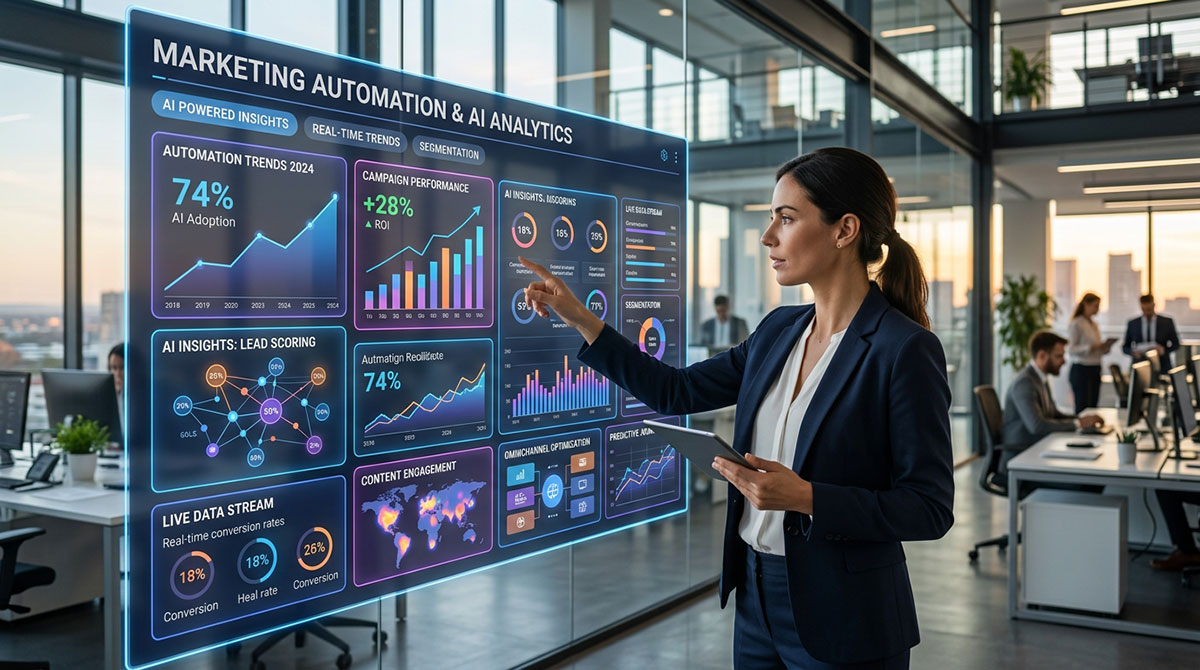
One major area of impact is in the realm of predictive analytics. AI can forecast which leads are most likely to convert, enabling sales teams to prioritize their efforts effectively.
This predictive capability helps businesses allocate resources more efficiently for better ROI. It marks a significant shift from historical analysis to forward-looking strategy in ai marketing.
Machine learning, a subset of AI, continuously improves marketing performance without manual intervention. The system learns from every interaction and automatically refines its approach over time.
This self-optimization is a cornerstone of next-generation marketing automation platforms. It ensures campaigns become smarter and more effective with each cycle, boosting lead generation.
Another AI-driven advancement is dynamic content optimization. AI can test different headlines, images, and calls-to-action in real-time to serve the best-performing version to each user.
This level of personalization was previously impossible to achieve at scale. ZINFI’s Co-Branded Assets Management can help partners leverage optimized content for their local campaigns.
The evolution of AI will also redefine lead scoring and nurturing processes. Traditional scoring models are often static and based on limited demographic and behavioral data.
AI introduces dynamic lead scoring that adapts based on real-time engagement. It provides a more accurate picture of a lead's sales readiness and intent.
Furthermore, AI-powered systems can suggest the next best action for each lead. This could be sending a targeted email, displaying a specific ad, or alerting a sales representative.
These intelligent recommendations are a key part of emerging marketing automation trends. They guide marketers toward the most effective engagement tactics for each individual.
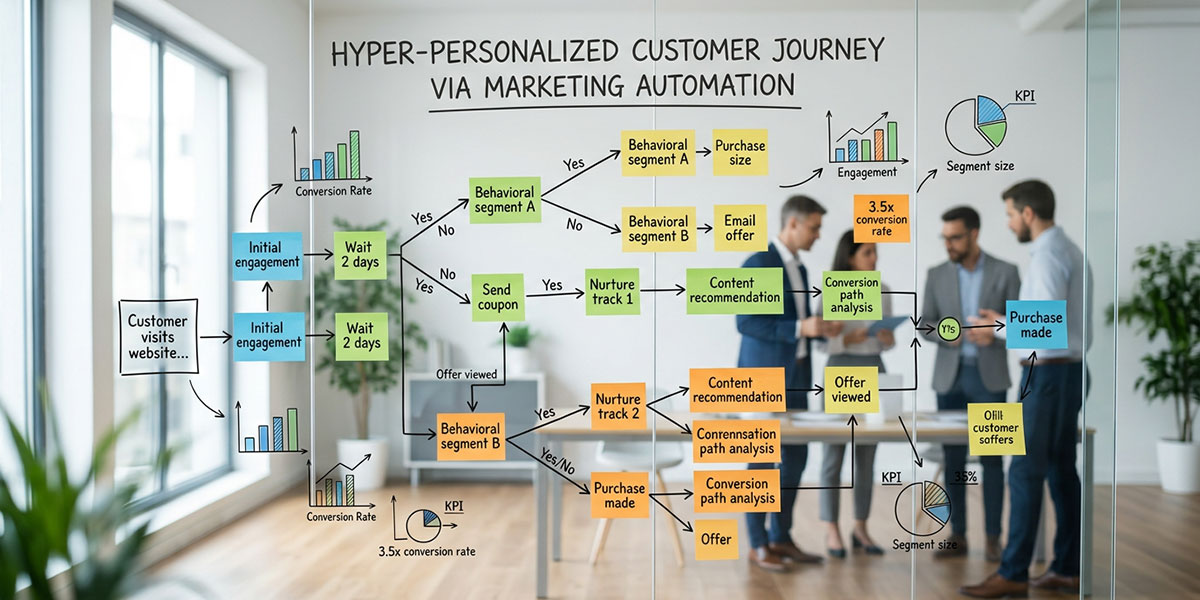
Generative AI will also play a huge role in content creation for marketing campaigns. It can draft email copy, social media posts, and even blog articles with minimal human input.
This capability frees up marketing teams to focus on strategy and creativity. They spend less time on repetitive writing tasks and more time on high-level planning.
Embracing these AI-powered features is essential for staying competitive. The future of digital marketing is intelligent, predictive, and highly automated.
Companies must invest in platforms that incorporate these advanced AI capabilities. This is fundamental for building a successful strategy for marketing automation 2026 and beyond.
What Role Will Hyper-Personalization Play in Marketing Automation Trends?
Hyper-personalization is a major marketing automation trend that uses data and AI to deliver tailored experiences. It goes beyond using a customer's first name in an email.
It involves creating unique interactions for each individual based on their behavior, preferences, and history. This level of customization builds stronger customer relationships and drives loyalty.
The foundation of hyper-personalization is robust data collection and integration. Marketers need a unified view of the customer across all touchpoints, from website visits to purchase history.
Effective User Management is crucial for tracking and segmenting customer data accurately. It allows for the creation of detailed customer profiles that fuel personalization engines.
Future marketing automation platforms will leverage this data to customize every aspect of the customer journey. This includes website content, product recommendations, and marketing messages.
Imagine a website that dynamically changes its layout and offers based on who is visiting. This is the future that hyper-personalization promises and what marketing automation trends are building toward.
Email marketing will also become significantly more personalized. Instead of mass emails, customers will receive messages with content and timing tailored specifically to them.
ZINFI's Email Marketing Management solution helps organizations execute these sophisticated, data-driven campaigns. This is key for effective lead generation.
Hyper-personalization extends beyond digital channels into the real world. For example, a retail app could send a push notification with a special offer as a customer walks past a physical store.
This bridges the gap between online and offline experiences. It creates a cohesive and relevant journey that enhances the customer relationship.
Achieving this requires powerful analytics to make sense of the data. Performance analytics tools are essential for measuring the impact of personalized campaigns and identifying areas for improvement.
Without solid reporting, it is impossible to know what is working. Tools like ZINFI's Business Intelligence & Reports provide the necessary insights.
However, hyper-personalization must be balanced with data privacy concerns. Customers are willing to share data in exchange for value, but they expect it to be handled responsibly.
Future marketing automation trends will see a greater emphasis on transparent data practices and consent management. Trust is the currency of the modern digital marketing landscape.
Ultimately, hyper-personalization makes marketing feel less like marketing and more like a helpful service. It anticipates customer needs and provides relevant solutions at the right moment.
This customer-centric approach is the ultimate goal of these emerging marketing automation trends. It is what separates successful brands from the rest of the pack.
How are Chatbots and Conversational AI Evolving with Marketing Automation Trends?
Chatbots and conversational AI are becoming integral components of modern marketing automation strategies. They are evolving from simple, scripted bots to sophisticated virtual assistants.
These AI-powered tools are a key part of future marketing automation trends. They enable businesses to engage with customers 24/7 in a personalized and interactive way.
The primary role of advanced chatbots is lead generation and qualification. They can interact with website visitors, ask qualifying questions, and gather contact information.
This automates the top of the sales funnel, freeing up human agents to focus on high-value leads. ZINFI offers solutions like Referral Management to handle these qualified leads efficiently.
Modern conversational AI uses natural language processing (NLP) to understand and respond to complex queries. This makes interactions feel more human and less robotic.
Customers can ask questions in their own words and receive accurate, relevant answers instantly. This dramatically improves the user experience and customer satisfaction.
Integration with marketing automation platforms is key to their effectiveness. When a chatbot captures a lead, it can automatically add it to the CRM and trigger a nurturing sequence.
This seamless workflow ensures no lead falls through the cracks. It is a powerful example of how marketing automation trends are creating more efficient systems.
Beyond lead generation, chatbots are also transforming customer support. They can handle a large volume of common inquiries, reducing the workload on support teams.
Integrating support with marketing provides a holistic view of the customer. A platform offering Partner Support Management creates a unified ecosystem for all partner interactions.

The evolution of ai marketing includes proactive engagement through chatbots. A bot can initiate a conversation with a visitor who is lingering on a pricing page, for example.
This proactive assistance can help overcome sales objections and guide users toward conversion. It turns a passive browsing experience into an active sales opportunity.
As we look toward marketing automation 2026, we can expect chatbots to become even more sophisticated. They will handle tasks like scheduling appointments, processing orders, and providing personalized product recommendations.
Gartner predicts that by 2027, chatbots will become a primary customer service channel for roughly 25% of organizations. This highlights the rapid adoption and importance of this technology in digital marketing.
Voice-enabled assistants, powered by the same conversational AI, are also a rising trend. Users will be able to interact with brands through smart speakers and voice commands on their devices.
This creates another channel for engagement that marketing automation platforms must incorporate. The integration of voice is a critical part of future strategies.
In summary, conversational AI is no longer a novelty. It is a fundamental tool for scaling personalized customer interactions and a core aspect of marketing automation trends.
Businesses that fail to adopt these technologies will struggle to meet customer expectations for instant, on-demand engagement. It is a vital investment for future growth.
What Does Omnichannel Mean for Emerging Marketing Automation Trends?
Omnichannel marketing is the practice of providing a seamless and integrated customer experience across all channels. It is a foundational concept in the discussion of future marketing automation trends.
It differs from multichannel marketing, which may use many channels but doesn't connect them. Omnichannel ensures the customer's journey is cohesive, regardless of how they interact with the brand.
A customer might start their research on a laptop, browse products on a mobile app, and complete a purchase in-store. An omnichannel strategy ensures that experience is consistent and recognizes the user at each step.
This requires a centralized platform that can track and manage interactions across all touchpoints. ZINFI’s Centralized Interconnect provides the backbone for such a unified approach.
Future marketing automation platforms must excel at data integration. They need to pull data from email, social media, mobile apps, websites, and even physical locations into a single customer profile.
This unified view is what enables true personalization and context-aware messaging. It is essential for executing a successful omnichannel digital marketing strategy.
For example, if a customer abandons a shopping cart on a website, the system could trigger a follow-up email. It might also show them a targeted ad for that product on their social media feed.
This coordinated effort increases the chances of conversion. It shows the customer that the brand is attentive to their journey and needs.
Social media plays a huge role in the omnichannel experience. Platforms like ZINFI's Social Syndication Management help maintain a consistent brand message across various social networks.
This ensures that partners can easily participate in the broader omnichannel strategy. It aligns their local efforts with the corporate brand's messaging.
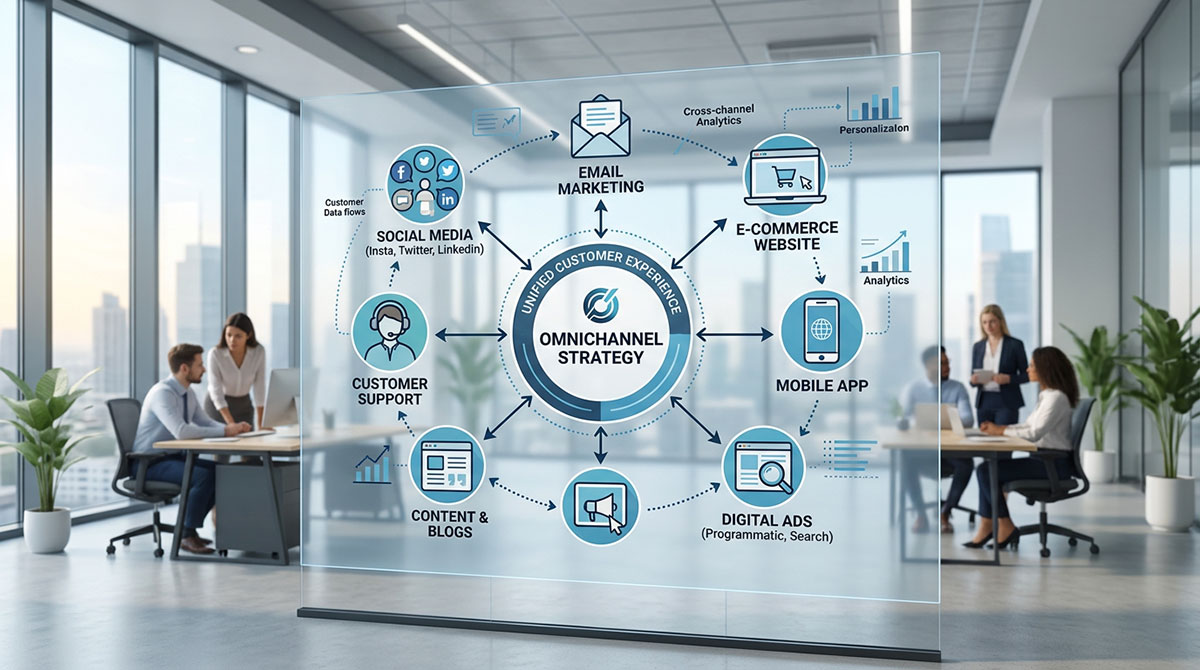
Accurate attribution is another challenge that omnichannel marketing automation aims to solve. It helps marketers understand which channels and touchpoints are contributing most to conversions.
Advanced performance analytics are necessary to track the complex, non-linear customer journey. This data allows for better budget allocation and strategy refinement.
The rise of omnichannel strategies is one of the most important marketing automation trends for B2B and B2C companies alike. It reflects the reality of how modern consumers interact with brands.
As we approach marketing automation 2026, the lines between channels will continue to blur. Customers will expect to switch between them effortlessly without losing context.
The ultimate goal is to create a single, continuous conversation with the customer. This builds a stronger relationship and fosters long-term loyalty and advocacy.
Investing in an automation platform with strong omnichannel capabilities is no longer a luxury. It is a requirement for delivering the experience modern customers demand.
How Can Businesses Prepare for Marketing Automation Trends by 2026?
Preparing for future marketing automation trends requires a proactive and strategic approach. Businesses cannot afford to wait for these changes to become mainstream before they act.
The first step is to foster a culture of continuous learning and adaptation within the marketing team. Technology is evolving rapidly, and skills must keep pace with the changes.
Investing in training and development is crucial. Programs like ZINFI’s Partner Learning Management Plus can be adapted to train internal teams on new technologies and strategies.
This ensures that your staff is equipped to leverage the advanced capabilities of modern marketing automation tools. It is an investment in your company's future success.
Next, businesses must audit their current technology stack. Identify gaps and redundancies, and determine if your current platform can support future needs like AI and omnichannel integration.
It may be necessary to migrate to a more robust, unified platform. This decision should be guided by a clear long-term strategy, not just short-term costs.
Data management is another critical area to address. To power AI and hyper-personalization, you need clean, accurate, and accessible data.
Start developing a comprehensive data strategy now. This includes data collection, storage, integration, and governance policies to ensure compliance and quality.
Businesses should also start experimenting with advanced technologies on a small scale. Pilot projects with AI-powered content generation or predictive lead scoring can provide valuable insights.
These experiments help build internal expertise and demonstrate the ROI of new technologies. This makes it easier to secure buy-in for larger-scale implementation later on.
Developing a clear roadmap for marketing automation 2026 is essential. This plan should outline your goals, the technologies you will adopt, and a timeline for implementation.
The roadmap should be flexible enough to adapt to new marketing automation trends as they emerge. The digital marketing landscape is dynamic, and your strategy must be as well.
Finally, always keep the customer at the center of your strategy. Technology is a tool to enhance the customer experience, not an end in itself.
Focus on using these advancements to deliver more value, relevance, and convenience to your audience. This customer-centric mindset will guide you toward the right technology investments.
Traditional vs. AI-Powered Marketing Automation: A Comparison
| Feature | Traditional Marketing Automation | AI-Powered Marketing Automation |
| Lead Scoring | Rule-based, static scores based on demographics and simple actions. | Dynamic, predictive scores that adapt based on real-time behavior. |
| Personalization | Basic segmentation (e.g., by industry or job title). Uses merge tags. | Hyper-personalization with dynamic content tailored to each individual. |
| Campaigns | Pre-defined, linear workflows and drip email sequences. | Adaptive customer journeys that change based on user interactions. |
| Content | Manually created content for all channels. A/B testing is manual. | AI-generated content suggestions and automatic multivariate testing. |
| Analytics | Historical reporting on past performance (what happened). | Predictive analytics to forecast future outcomes (what will happen). |
| Optimization | Requires manual analysis and adjustment by marketers. | Continuous, automatic self-optimization based on machine learning. |
Why ZINFI is Your Partner for Future-Ready Marketing Automation
ZINFI’s Unified Partner Management (UPM) platform is built to help your business navigate current and future marketing automation trends. We provide a comprehensive suite of tools designed for the modern partner ecosystem.
Our solution integrates partner relationship management, partner marketing management, and partner sales management into a single, powerful platform. This unified approach is essential for executing the strategies discussed in this article.
- Comprehensive Analytics: Leverage our Business Intelligence & Reports module for deep insights into your channel performance. Make data-driven decisions using powerful performance analytics to stay ahead.
- Automated Workflows: Streamline complex processes with our Workflow Management. Automate everything from partner onboarding to MDF claims, freeing up your team to focus on strategic initiatives.
- Seamless Integration: Our Centralized Interconnect ensures all your systems work together harmoniously. This provides the unified data view needed for omnichannel marketing and hyper-personalization.
- Advanced Marketing Tools: Equip your partners with cutting-edge digital marketing tools. From Email Marketing to Social Syndication, we empower them to execute effective lead generation campaigns.
- Scalable Personalization: Manage and deliver personalized content at scale. Our Content Library Management and co-branding tools help maintain brand consistency while allowing for local customization.
- Enablement and Training: Prepare your partners for the future with our Partner Learning Management Plus. Ensure they have the skills to leverage new marketing technologies and strategies effectively.
Frequently Asked Questions
What is the biggest trend in marketing automation?
The single biggest trend is the integration of artificial intelligence and machine learning. This is transforming platforms into predictive, self-optimizing engines for digital marketing.
How will AI affect marketing automation?
AI will automate more complex tasks, provide predictive insights, and enable hyper-personalization at scale. It will make marketing efforts more efficient, effective, and proactive.
What is marketing automation 2026 likely to look like?
By 2026, marketing automation will be heavily reliant on AI, with conversational interfaces and omnichannel experiences as standard. The focus will be on creating seamless, predictive customer journeys.
Why is hyper-personalization important in marketing automation?
Hyper-personalization is important because modern consumers expect relevant, tailored experiences. It significantly boosts engagement, conversion rates, and customer loyalty.
Will marketing automation replace marketers?
No, marketing automation will not replace marketers, but it will change their role. It will free them from repetitive tasks, allowing them to focus more on strategy, creativity, and customer insights.
What is omnichannel marketing automation?
Omnichannel marketing automation is about creating a single, unified customer experience across all channels. It ensures a seamless journey whether the customer is on a website, social media, or in a physical store.
How does predictive analytics work in marketing?
Predictive analytics uses historical data and AI algorithms to forecast future outcomes. It can identify which leads are most likely to convert or which customers are at risk of churning.
What is the role of chatbots in future lead generation?
Chatbots will play a major role in lead generation by engaging website visitors 24/7. They will qualify leads, book meetings, and seamlessly hand off prospects to sales teams.
How can I prepare my business for these marketing automation trends?
You can prepare by auditing your tech stack, investing in team training, developing a robust data strategy, and starting small pilot projects. Create a flexible roadmap for technology adoption.
Is data privacy a concern with new marketing automation trends?
Yes, data privacy is a major concern. As data collection increases for personalization, businesses must prioritize transparent data handling and consent management to build and maintain customer trust.
About the author
Sugata Sanyal
Sugata Sanyal is the Founder & CEO of ZINFI Technologies, a leader in Unified Partner Management. He has been a passionate advocate for the channel and channel partners for decades. His vision for ZINFI is to provide partner ecosystems with the tools they need to succeed.