The P&L Showdown: AI vs. Human-Managed Channels with Channel Management Software
Measuring the P&L impact of an AI-managed channel versus a human-managed one is crucial. It requires a detailed analysis of revenue gains and operational cost reductions.
Organizations must track key performance indicators (KPIs) driven by automation and data insights. AI-powered channel management software provides the framework for this essential comparison.
The true difference emerges when you evaluate efficiency, scalability, and partner performance data. These elements directly contribute to your profit and loss statement over time.
By leveraging advanced analytics, companies can accurately quantify the value AI brings to their ecosystem. This data empowers leaders to make informed decisions about technology investments.
Ultimately, the goal is to create a more profitable and efficient partner program. Understanding the financial impact is the first step toward optimizing your entire channel strategy.
Key Takeaways
TL;DR
- AI-managed channels significantly reduce administrative costs through automation of routine tasks. This directly improves the bottom line by lowering operational expenditures.
- AI-powered channel management software boosts revenue by optimizing lead distribution and marketing. It helps partners close deals faster and more effectively.
- Data-driven insights from AI allow for precise measurement of partner performance. This replaces subjective assessments with objective, actionable metrics for better decision-making.
- Scalability is a major financial advantage of AI-managed channels over human-led ones. Onboarding and supporting new partners becomes faster and less resource-intensive.
- The profit and loss (P&L) impact is measured by tracking KPIs. These include cost per partner, revenue per partner, and channel ROI.
- Human channel managers can shift their focus to high-value strategic relationship-building. AI handles the administrative burden, empowering them to be more effective.
- Adopting a unified partner management platform is essential for a holistic view. It integrates all channel activities for comprehensive P&L analysis and reporting.
How Does AI Inside Channel Management Software Boost Revenue?
Artificial intelligence transforms how channel partners generate revenue within an ecosystem. It introduces efficiency and precision that manual efforts simply cannot match.
One primary way AI boosts sales is through intelligent lead scoring and distribution. The system analyzes historical data to identify leads most likely to convert.
These high-quality leads are then automatically routed to the best-suited partner. This process considers factors like partner expertise, geographic location, and current workload.
As a result, partners receive opportunities they have a higher probability of closing. This increases their sales velocity and overall contribution to your company's revenue.
Human-managed systems often rely on less precise methods for lead distribution. This can lead to missed opportunities and frustrated partners receiving mismatched leads.
Furthermore, AI-powered channel management software facilitates smarter partner co-selling. The platform can suggest collaboration opportunities based on customer needs and partner capabilities.
AI also enables highly personalized marketing campaigns at scale for your partners. A platform can deliver dynamic content through various marketing automation tools.
Partners can access co-branded assets and launch campaigns with minimal effort. The AI ensures brand consistency while tailoring messages to specific local markets.
This level of automated marketing support was previously available only to large enterprises. Now, every partner can execute sophisticated campaigns, amplifying your brand’s reach.
Consider the impact on revenue when hundreds of partners are running targeted campaigns. The cumulative effect on lead generation and sales is substantial and measurable.
Another revenue-enhancing feature is AI-driven sales recommendations and cross-sell suggestions. This happens within a configure, price, quote (CPQ) module or CRM integration.
As a partner builds a quote, the AI can suggest complementary products or services. This increases the average deal size and delivers more value to the end customer.
Effective channel management software makes this process seamless for the partner. It provides valuable insights right when they are needed most during the sales cycle.
The revenue impact is tracked through detailed dashboards and business intelligence reports. These tools offer a clear view of partner-sourced revenue, deal sizes, and win rates.

By comparing these metrics before and after implementing AI, the P&L impact becomes obvious. You can directly attribute revenue growth to the intelligence within your platform.
For example, a robust deal registration management tool prevents channel conflict. It provides a clear, automated system for partners to claim and work on leads.
This automation builds trust and encourages partners to bring more deals to the table. They are confident their efforts will be protected and rewarded appropriately.
Human-led deal registration can be slow, prone to errors, and contentious. AI removes the friction, creating a more collaborative and profitable partner environment.
The system's predictive analytics can also forecast future sales based on current pipeline data. This helps your organization with more accurate financial planning and resource allocation.
These forecasts are far more reliable than those based on manual data collection. They provide a strategic advantage for managing inventory and setting realistic sales targets.
Ultimately, AI drives revenue by making every partner more effective in their role. It empowers them with tools and insights to sell more, faster, and smarter.
The cumulative effect is a significant lift in top-line revenue. This is a core component when calculating the total P&L impact of your technology choice.
What Cost Reductions Are Found in AI Channel Management Software?
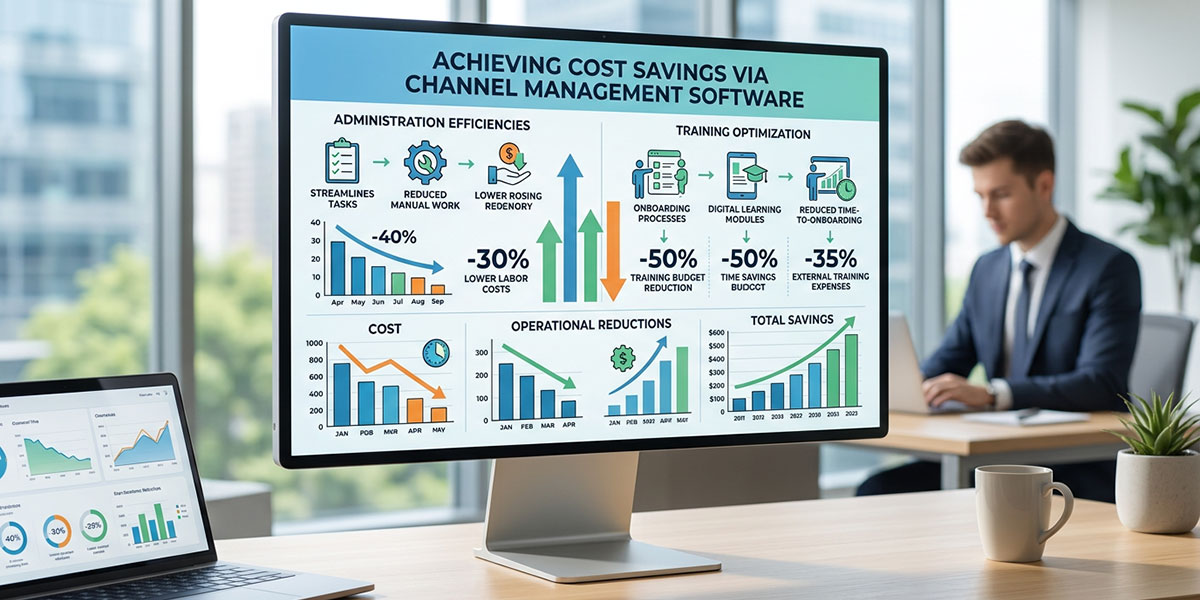
The most immediate P&L impact of AI-powered systems is significant cost reduction. These savings come from automating numerous administrative and operational tasks.
Traditionally, managing a partner channel requires a large team of channel account managers (CAMs). Their time is often consumed by routine, low-value activities.
Tasks like partner onboarding, training certification, and claims processing are labor-intensive. An AI-driven channel management software automates these workflows entirely.
A new partner can self-register through an online portal and begin automated onboarding. This process includes guided training paths and knowledge assessments without human intervention.
This automated approach drastically reduces the cost per partner acquisition and onboarding. It allows you to scale your partner program without proportionally increasing your headcount.
Think of the salary and overhead costs associated with a large channel management team. Automation allows you to run a larger, more effective program with fewer people.
This frees up your human CAMs to focus on strategic, high-value initiatives. They can build deeper relationships with top-tier partners instead of chasing paperwork.
Another major area of cost savings is in managing partner incentives like marketing development funds (MDF). Manual MDF management is notoriously complex, slow, and prone to errors.
An automated MDF management module streamlines the entire lifecycle, from request to approval and payment. Partners submit proposals and claims through the portal with predefined rules.
AI can review claims against program rules, ensuring compliance and preventing fraud. This reduces the administrative burden and accelerates reimbursement for partners.
Faster payments make partners happier and more willing to invest in co-marketing activities. The efficiency also reduces the internal costs of managing these complex financial programs.
Content management and distribution also become far more cost-effective with automation. Maintaining a library of up-to-date sales and marketing assets is a challenge.
A centralized content library management system ensures all partners have access to the latest materials. AI can help by tagging content and recommending relevant assets to partners.
This eliminates the cost of manually sending files or dealing with outdated collateral. It ensures brand consistency and reduces the risk of partners using incorrect information.
The cost of partner support can also be significantly lowered with AI. An integrated partner support system with an AI-powered chatbot can handle common queries 24/7.
This provides immediate assistance to partners globally, regardless of time zones. It also deflects a large volume of tickets from your human support team.
Your support staff can then focus on resolving more complex and strategic partner issues. This improves the partner experience while optimizing your support team's resources.
The use of performance analytics also contributes to cost savings by identifying underperforming partners. The system can flag partners who are not engaged or meeting program requirements.
Automated workflows can then trigger re-engagement campaigns or training recommendations. This proactive approach helps improve partner performance or identifies partners for offboarding.
Managing resources allocated to unproductive partners is a hidden cost. AI makes this process efficient and data-driven, optimizing your investment across the channel.
When you aggregate all these cost reductions, the impact on the P&L statement is substantial. You are lowering operational expenses while simultaneously increasing channel capacity.
This dual benefit is a powerful argument for adopting a modern channel management software solution. The return on investment is often realized much faster than anticipated.
Leaders in the industry, like those cited by Gartner, recognize AI's potential to redefine sales operations. The same principles apply directly to optimizing channel sales and management.
Measuring this involves calculating the reduction in payroll, administrative overhead, and program management costs. This data provides a clear picture of the bottom-line benefits of AI adoption.
How Do You Measure Partner Performance with AI-Driven Channel Management Software?
Measuring partner performance accurately is fundamental to understanding channel profitability. AI-driven platforms provide a level of granularity impossible with manual methods.
Traditionally, performance was often judged by lagging indicators like quarterly sales figures. This provided an incomplete picture and was not always actionable in real-time.
A modern channel management software collects data on a wide array of leading indicators. It tracks partner engagement with the portal, training modules, and marketing assets.
This engagement data is a powerful predictor of future sales success. A highly engaged partner is more likely to be a high-performing partner.
The system can create a comprehensive partner scorecard with customizable metrics. This includes data on lead acceptance rates, sales cycle duration, and deal registration volume.
AI algorithms analyze these data points to create a holistic performance rating. This moves beyond simple revenue numbers to understand a partner's true contribution.
For instance, a partner might excel at generating new leads but struggle with closing. Another might be a smaller player who is extremely effective in a niche market.
AI helps you identify these nuances and tailor your support accordingly. You can provide targeted sales training to one partner and more marketing funds to another.
This data-driven approach is far more effective than generic, one-size-fits-all partner management. It ensures your resources are invested where they will generate the greatest return.
The platform’s business intelligence and reports module is central to this process. It provides intuitive dashboards that visualize performance trends over time.
Channel managers can quickly identify top performers, rising stars, and partners who need support. This real-time visibility enables proactive management rather than reactive problem-solving.
When comparing this to a human-managed system, the difference is stark. Human managers often rely on spreadsheets and anecdotal information to gauge performance.
This manual process is time-consuming, prone to errors, and highly subjective. It can lead to inconsistent evaluations and misallocation of company resources.

AI-powered channel management software provides a single source of truth for all partner data. It creates an objective and consistent framework for performance evaluation across the entire channel.
You can also measure the effectiveness of your enablement efforts directly. The system can correlate completed training courses with subsequent increases in sales performance.
This allows you to calculate the ROI of your partner learning management programs. You can then refine your training content to focus on what truly drives results.
The platform's performance analytics can also identify behaviors common among your top partners. These insights can then be used to build best-practice guides for the rest of your channel.
This essentially clones the success of your best partners and scales it. The AI identifies what works and helps you replicate it systemically.
Measuring financial performance becomes more precise as well. You can track revenue per partner, margin per partner, and the total cost of supporting each partner.
This allows you to calculate a true P&L for individual partners or partner tiers. You can clearly see which relationships are most profitable for your business.
This level of financial clarity is crucial for strategic channel planning. It helps you decide where to invest, what partner types to recruit, and which relationships to nurture.
In a human-managed channel, calculating a per-partner P&L is an immense accounting challenge. With an AI-driven platform, it becomes a standard, readily available report.
What Are Key Metrics for Comparing AI vs. Human Channel Management?
To conduct a fair P&L comparison, you need to track a consistent set of metrics. These KPIs should cover both cost and revenue drivers for your channel.
On the revenue side, the most important metric is Partner-Sourced Revenue growth. You must measure how this figure changes after implementing an AI-powered system.
Another key metric is Average Deal Size from the partner channel. AI-driven recommendations for cross-selling and up-selling should lead to a noticeable increase.
The Sales Cycle Length for partner-driven deals is also a critical indicator. Automation and better lead quality should shorten the time from lead to close.
Win Rate Percentage on partner-registered leads is another vital revenue metric. Better lead-to-partner matching and enablement tools should improve this conversion rate.
Finally, track the Lead-to-Opportunity Conversion Rate for your partners. This measures the quality of leads and the effectiveness of your partners' initial qualification.
On the cost side of the P&L, start by measuring Channel Administration Costs. This includes the salaries and overhead for your channel management team.
A good channel management software should allow you to manage a larger channel with less staff. This results in a lower administrative cost per partner in your ecosystem.
You should also track the Cost of Partner Onboarding and Enablement. Automation should significantly reduce the time and resources needed to get a new partner productive.
Measure the cost associated with managing incentive programs like MDF and rebates. The efficiency gains from automation should lead to a dramatic reduction in these costs.
Another important cost metric is Partner Support Costs per partner. AI-powered self-service options and chatbots should lower the cost of providing ongoing support.
Putting these together, you can calculate the overall Channel Program ROI. This is the ultimate metric for comparing the financial performance of the two management approaches.
The formula combines the increase in channel revenue with the reduction in channel costs. This is then divided by the investment in your new partner management platform.
You should also consider qualitative metrics that have an indirect P&L impact. Partner Satisfaction Scores (PSAT) are a key indicator of channel health.
Happier, more engaged partners are more loyal and productive in the long run. An effective channel management software should improve the overall partner experience.
Partner engagement metrics are also crucial for a complete performance picture. Track portal logins, content downloads, training completions, and marketing campaign launches.
Higher engagement is a leading indicator of future revenue growth. It shows that partners are actively invested in the relationship and leveraging the tools you provide.
By tracking this balanced scorecard of metrics, you can create a comprehensive comparison. The data will clearly illustrate the P&L impact of an AI-managed channel.
This evaluation goes beyond a simple cost-benefit analysis of the software itself. It measures the total financial transformation of your entire channel ecosystem.
P&L Impact: Traditional vs. AI-Powered Management
| Aspect | Traditional Human-Managed Channel | AI-Powered Channel Management |
|---|---|---|
| Partner Onboarding | Manual, high-touch, and slow, leading to high cost per partner and delayed time-to-revenue. | Automated, self-service, and fast, significantly lowering costs and accelerating partner productivity. |
| Lead Management | Often based on simple rules or manual assignment, resulting in slow distribution and poor matching. | Uses AI for intelligent scoring and routing, improving lead quality, conversion rates, and revenue. |
| Performance Tracking | Relies on lagging indicators, spreadsheets, and subjective feedback, which is often inaccurate. | Utilizes real-time dashboards and performance analytics for objective, data-driven insights. |
| Marketing Support | Limited scalability for co-marketing, with generic assets and slow campaign execution. | Enables personalized, scalable marketing automation with co-branded assets and instant deployment. |
| Incentive Management | Complex, error-prone manual process for MDF and rebates, leading to high administrative costs. | Streamlined, automated workflows for claims and payments, reducing costs and improving partner satisfaction. |
| Reporting & Analytics | Manual data collection for historical reporting, providing limited predictive capabilities. | Automated business intelligence with predictive analytics for accurate forecasting and strategy. |
| Scalability | Limited by headcount; adding more partners requires hiring more channel managers, a linear cost increase. | Highly scalable; supports exponential partner growth with minimal increases in administrative overhead. |
Why Choose ZINFI’s Channel Management Software?
ZINFI offers a state-of-the-art Unified Partner Management solution for your business. It is designed to maximize the P&L impact of your channel ecosystem.
Our platform seamlessly integrates three core competencies to drive unparalleled results. These include partner relationship management, partner marketing management, and partner sales management.
By unifying these functions, ZINFI provides a single source of truth. This holistic view is essential for accurately measuring and optimizing channel performance.
Choosing ZINFI’s leading channel management software allows you to leverage powerful automation. It empowers your partners and provides deep analytical insights into your business.
- Comprehensive Automation: ZINFI automates the entire partner lifecycle from onboarding to incentives. Modules for workflow management and partner programs management reduce administrative costs and improve efficiency, directly impacting your P&L.
- Advanced Analytics: Our platform includes robust performance analytics and business intelligence tools. These provide the data-driven insights needed to measure ROI and make strategic decisions about your channel investments.
- Integrated Marketing Tools: Empower your partners with sophisticated marketing automation. Our suite includes tools for email marketing, social media syndication, and microsite management, driving scalable revenue growth.
- Seamless Sales Enablement: Equip your partners to sell more effectively. Features like deal registration, co-selling management, and a configure-price-quote (CPQ) solution accelerate the sales cycle and increase deal sizes.
- Flexible Incentive Management: Manage complex incentive programs like MDF, rebates, and commissions with ease. Our automated systems ensure compliance, reduce fraud, and provide faster payments to keep partners motivated and engaged.
- Total Partner Enablement: Give your partners everything they need to succeed in one place. ZINFI provides a world-class partner portal with content libraries, video libraries, and a full-featured learning management system (LMS+).
Frequently Asked Questions
How does AI in a partner portal improve the partner experience?
AI personalizes the portal experience for each partner, showing relevant content and tasks. This makes it easier for them to find what they need and engage effectively.
Is it difficult to transition from a human-managed channel to an AI-powered one?
The transition requires careful planning, but a good channel management software provider will offer implementation support. The long-term benefits in efficiency and scalability greatly outweigh the initial effort.
Will AI replace human channel account managers?
No, AI will augment human roles rather than replacing them completely. It automates administrative tasks, freeing managers to focus on strategic relationship-building and partner coaching.
What is the first step in measuring the P&L impact?
The first step is to benchmark your current channel performance with clear metrics. You need to establish a baseline for costs and revenue before implementing new technology.
How does AI help with partner recruitment?
AI can analyze market data to identify potential partners that fit your ideal profile. It can also automate outreach and initial qualification, building a recruitment pipeline efficiently.
Can a small business benefit from AI-powered channel management software?
Yes, cloud-based platforms make this technology accessible to businesses of all sizes. The efficiency gains can be particularly impactful for smaller teams with limited resources.
How is data security handled in an AI management platform?
Reputable providers use robust security measures, including encryption and access controls. This ensures that your company and partner data remains protected and confidential.
What kind of training is required for partners to use a new system?
Modern platforms are designed to be intuitive and user-friendly for all users. An effective system will include guided onboarding and a partner support management module to help partners.
How long does it take to see a return on investment (ROI)?
The timeline for ROI varies, but many companies see positive results within months. Cost savings from automation appear quickly, while revenue gains build over time.
Can this software integrate with our existing CRM?
Leading channel management software solutions are designed to integrate with major CRMs. This creates a seamless flow of data between your direct and indirect sales channels.
About the author
Sugata Sanyal
Sugata Sanyal is the Founder & CEO of ZINFI Technologies, a leader in Unified Partner Management. He has been a passionate advocate for the channel and channel partners for decades. His vision for ZINFI is to provide partner ecosystems with the tools they need to succeed.