Future-Proof Your Platform: How to Optimize Your B2B Portal for Agentic AI
Optimizing your B2B portal for agentic buying is crucial for future success. This ensures your platform can interact with automated AI purchasing systems effectively.
The world of commerce is on the verge of a significant transformation. Artificial intelligence is no longer just a tool for analysis or content creation.
We are entering the era of agentic AI, where autonomous agents will handle complex tasks. This includes making purchasing decisions on behalf of businesses, a concept known as agentic buying.
For companies relying on partner ecosystems, this shift has profound implications. Your partner platform must be ready to communicate with these non-human buyers.
This guide explores how to optimize your B2B portal for this new reality. It will ensure your business remains competitive in an increasingly automated landscape.
Preparing now means you will not get left behind by competitors. It involves a strategic focus on data, integration, and seamless automation.
The goal is to create a digital environment where AI agents can easily find information. They need to evaluate products and execute transactions without any human friction.
This requires moving beyond traditional, human-centric portal design. You must embrace a more structured, API-driven, and data-rich approach to your channel operations.
Let's dive into the core strategies for adapting your partner platform. We will cover the essential changes needed for the age of agentic AI.
Key Takeaways
TL;DR
- Agentic AI will soon automate B2B purchasing decisions for businesses. Your B2B portal must be prepared to interact with these AI agents.
- An API-first design is fundamental for enabling AI agents to access your portal's data. It allows for seamless, machine-to-machine communication.
- Clean, structured, and well-documented data is essential for AI agents to parse. They need this data to understand and evaluate your products or services.
- Personalization must extend to AI agents, providing tailored information based on their queries. This ensures they find relevant solutions quickly and efficiently.
- Robust security protocols are necessary to authenticate and authorize AI agents. This builds trust and protects against unauthorized access to sensitive data.
- Investing in a unified platform helps streamline the transition to an AI-ready ecosystem. It centralizes data, automation, and management for better control.
- Embracing predictive analytics can help you anticipate the needs of agentic buyers. It provides insights into trends and purchasing patterns driven by AI.
What Is Agentic Buying and Why Does it Matter for Your B2B Portal?
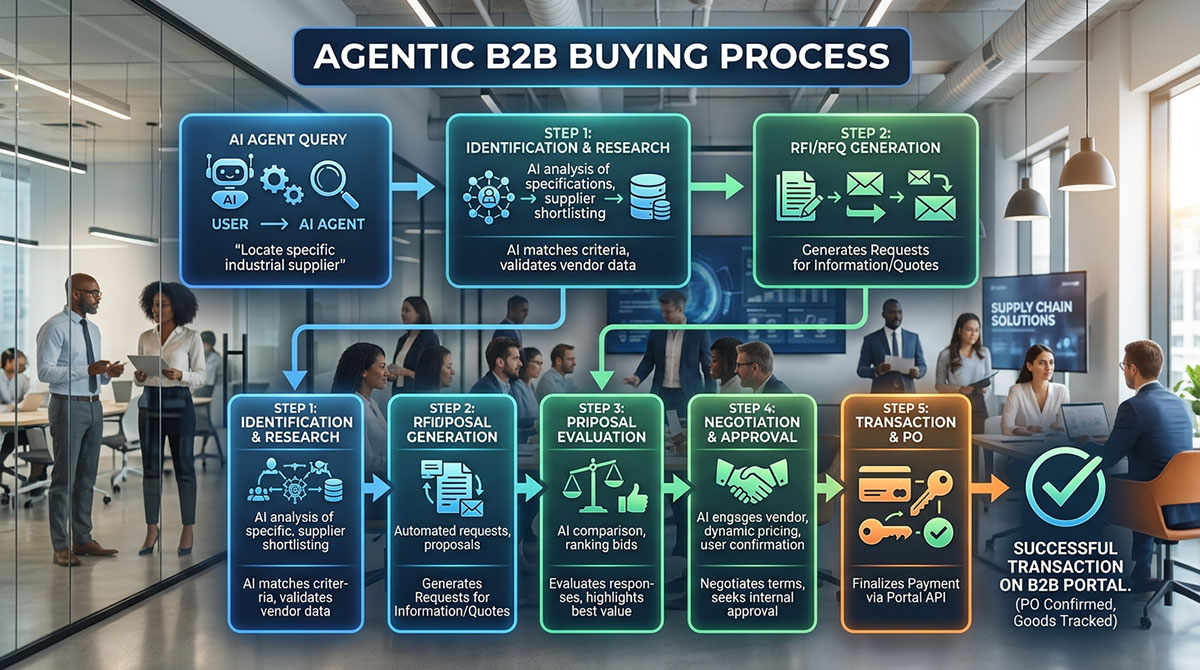
Agentic buying describes a process where autonomous AI agents make purchasing decisions. These agents act on behalf of a person or a company to find the best solutions.
They are programmed with specific criteria, budgets, and business requirements. The AI then scours the digital marketplace, compares options, and executes purchases independently.
Think of it as an evolution of e-commerce and procurement automation. Instead of a human procurement officer browsing websites, an AI does the work instantly.
This concept is no longer science fiction, as major tech leaders are actively developing these systems. The impact on B2B sales and marketing will be immense and far-reaching.
Your B2B portal is the primary digital gateway for your channel partners. It is the first place they, and soon their AI agents, will go for information.
If your portal is not designed for machine interaction, it will be invisible to them. AI agents cannot navigate complex user interfaces or interpret unstructured marketing copy.
They require raw, structured data that can be programmatically accessed and analyzed. Without this, your products and services simply will not be part of the consideration set.
This makes optimizing your business portal a critical, strategic imperative. It's about future-proofing your channel sales model against technological obsolescence.
The transition to an agentic-ready B2B portal involves several key considerations. It shifts the focus from visual presentation to data accessibility and integrity.
You must consider how an AI would query your product catalog. Or how it would verify compliance with a service-level agreement or contract terms.
Preparing for agentic AI also presents a significant competitive advantage. Businesses that adapt first will capture the attention of these highly efficient AI buyers.
They will become the preferred suppliers in an automated procurement landscape. A well-prepared B2B portal will function as a powerful, 24/7 sales engine.
Failure to adapt means risking a gradual decline in channel revenue. As more companies adopt agentic buying, portals designed only for humans will see less traffic.
Therefore, understanding and preparing for this shift is not just an IT project. It is a core business strategy for survival and growth in the coming decade.
The entire partner experience must be re-evaluated through the lens of ai automation. This includes everything from onboarding and training to marketing and sales support.
For example, training materials might need to be provided in machine-readable formats. This allows an AI agent to "learn" about your products and how to position them.
Marketing assets available through the portal also need a similar transformation. A co-branded PDF brochure is useless to an AI agent looking for specifications.
Instead, it needs access to structured data detailing product features and pricing. ZINFI's Co-Branded Assets Management can support this transition by organizing assets logically.
Ultimately, the goal is to reduce friction to zero for automated systems. Your B2B portal should be as easy for an AI to use as it is for a human.
This dual-purpose functionality will define the next generation of partner platforms. They must serve both human intuition and machine logic simultaneously and effectively.
How Can You Prepare Your B2B Portal with API-First Design?
An API-first design is the foundational element of an agentic-ready platform. It means that your portal's core functionalities are exposed through well-documented APIs.
APIs, or Application Programming Interfaces, are the communication layer for software. They allow different systems to talk to each other and exchange data in a structured way.
In the context of agentic buying, APIs are the front door for AI agents. They will not log in through a graphical user interface with a username and password.
Instead, they will connect directly to your APIs to request information. They might ask for product lists, pricing details, inventory levels, or delivery times.
Adopting an API-first approach means you design these APIs before you design the user interface. The human-facing portal becomes just one consumer of your own APIs.
This ensures that all data and functionality are available programmatically. Nothing is hidden behind a button or buried within a web page's complex code.
A robust API layer is essential for your B2B portal. It ensures that an AI agent has the same access to information as a human partner.
This parity is crucial for fairness and efficiency in the channel. It prevents situations where automated systems are at a disadvantage due to information gaps.
To implement this, you should focus on creating RESTful or GraphQL APIs. These are modern standards that are widely understood and easy for developers to use.
Comprehensive documentation is equally important. Your API documentation is the instruction manual for the AI agent's developers to understand your system.
It should clearly explain every endpoint, the required parameters, and the data formats. This documentation must be kept up-to-date as your B2B portal evolves.
A platform with robust integration capabilities, like ZINFI's Centralized Interconnect, is vital. It provides the framework for building and managing these necessary connections.
Security is another paramount concern when exposing data through APIs. You need strong authentication and authorization mechanisms like OAuth 2.0.
This ensures that only legitimate, verified AI agents can access your portal's data. It protects your business and your partners from malicious actors or data breaches.
You must also implement rate limiting to prevent abuse of your APIs. This stops a single agent from overwhelming your system with too many requests at once.
By prioritizing an API-first strategy, you build a flexible and scalable foundation. Your B2B portal becomes a platform that can easily integrate with any future technology.
This approach not only prepares you for agentic AI. It also improves your ability to integrate with other third-party systems, like CRMs or ERPs.
This creates a more connected and efficient partner ecosystem overall. It breaks down data silos and promotes a more unified view of your channel operations.

The journey towards an API-first B2B portal might require significant architectural changes. It is a long-term investment rather than a quick fix for your company.
Starting now will give you the time to plan and execute this transition properly. It allows for phased rollouts and minimizes disruption to your existing partners.
Ultimately, a business portal with a strong API foundation is more resilient. It is better equipped to adapt to the fast-paced evolution of digital commerce technologies.
This strategic shift positions your channel at the forefront of innovation. It signals to your partners that you are a forward-thinking and technologically advanced vendor.
Why Is Structured Data Crucial for an AI-Ready B2B Portal?
Structured data is the lifeblood of any artificial intelligence system. AI agents cannot interpret ambiguous language or content designed for human emotion.
They need data that is organized, consistent, and machine-readable. This is where structured data becomes absolutely critical for your modern partner platform.
Structured data is information that has been formatted into a well-defined model. Think of data in a spreadsheet or a database table, with clear rows and columns.
Unstructured data, in contrast, includes things like blog posts, videos, or PDF brochures. While valuable for humans, it is very difficult for machines to parse accurately.
For your B2B portal to be ready for agentic AI, its content must be structured. This applies to your entire product catalog, pricing information, and partnership terms.
Every product should have a consistent set of attributes. This includes a unique ID, detailed specifications, compatibility information, and clear pricing tiers.
This information should be available in standard formats like JSON or XML. These formats are self-describing and easy for AI agents to ingest and process.
Imagine an AI agent trying to compare two of your products. If the data is unstructured, it might not be able to perform an accurate, apples-to-apples comparison.
The agent could miss a key feature or misinterpret a price. This would likely result in it choosing a competitor's product that offers clearer data.
A comprehensive Content Library Management system can help enforce this structure. It ensures that all content uploaded to the portal adheres to predefined standards.
This discipline is essential for maintaining data quality and consistency over time. It is a core part of the governance needed for a successful B2B portal.
Beyond product data, other aspects of your partner program must also be structured. This includes information about market development funds, rebates, and commissions.
An AI agent evaluating a partnership opportunity needs to calculate potential ROI. It can only do this if incentive program rules are defined in a logical, machine-readable way.
Similarly, legal agreements and contracts should have structured components. Key terms, conditions, and obligations should be tagged and easily extractable via an API.
This allows an AI agent to verify compliance automatically. It can check if a potential purchase aligns with the contractual framework established with the vendor.
The transition to structured data is a significant undertaking. It often requires a thorough data audit and cleansing process for your entire B2B portal.
You may need to consolidate information from multiple sources. Creating a single source of truth is crucial for ensuring accuracy and reliability.
Investing in performance analytics can help you monitor the quality of your data. It can identify inconsistencies or gaps that need to be addressed by your team.
According to research from Gartner, poor data quality is a primary reason for analytics failures. This same principle applies directly to the performance of agentic AI systems.
Ultimately, a B2B portal built on a foundation of clean, structured data is more powerful. It serves both human users and AI agents with greater precision and efficiency.
This data-centric approach unlocks new possibilities for personalization and automation. It is the key to creating a truly intelligent and responsive channel ecosystem.
How Does AI Automation Enhance the Agentic Experience in a B2B Portal?
AI automation within your B2B portal enhances the experience for agentic AI. It creates a dynamic environment that responds intelligently to automated queries.
This goes beyond simply providing static, structured data through an API. It involves using your own AI to facilitate the tasks of external AI agents.
One key area is intelligent search and product recommendation. When an AI agent queries your catalog, your portal's AI can help it find the best fit.
It can analyze the agent's requirements and recommend a short list of suitable products. This saves the visiting agent time and processing power, making your portal more efficient to use.
Another powerful application of ai automation is in workflow management. You can automate complex business processes that AI agents might need to trigger.
For instance, an agent might need to request a quote for a custom configuration. An automated workflow, managed by a tool like FlexiFlow, can handle this instantly.
The workflow can validate the request and generate a quote. It then returns it to the agent in a structured format, all without human intervention.
This level of automation dramatically accelerates the sales cycle. It removes bottlenecks and delays that are common in traditional B2B purchasing processes.
Personalization is also enhanced through ai automation. Your B2B portal can analyze an agent's historical interactions and current requests.
Based on this analysis, it can proactively offer relevant content. This might include technical documentation, case studies, or security compliance reports.
This proactive assistance makes your portal a valuable partner to the AI agent. It anticipates needs and provides solutions, building a form of machine-to-machine trust.
Real-time support is another area where internal AI can help. You can deploy a support chatbot that is accessible via an API to other agents.
An external AI agent could ask this chatbot questions about your platform. For example, it could inquire about API rate limits or data schema definitions.
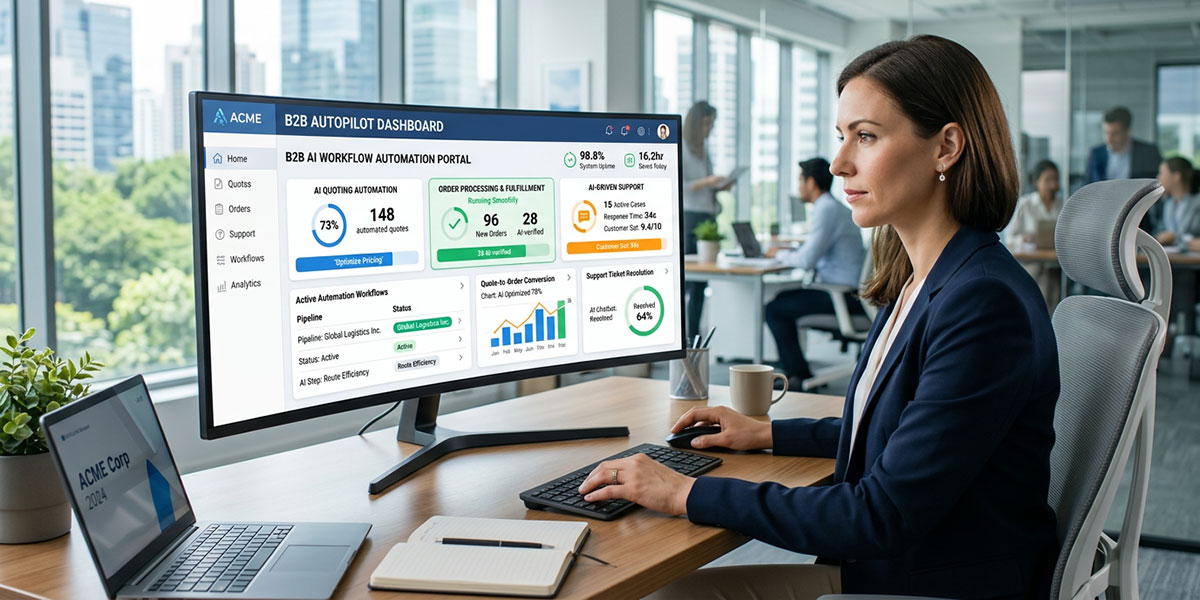
This automated support system provides instant answers 24/7. It ensures that the developers programming the agentic buyers have the resources they need.
Furthermore, using predictive analytics can help you improve the agentic experience over time. By analyzing agent behavior, you can identify patterns and anticipate future needs.
These insights allow you to optimize your offerings and processes. You might discover that agents frequently search for a specific type of data that is hard to find.
You can then work to make that data more accessible. This continuous improvement loop is crucial for maintaining a state-of-the-art B2B portal.
Dashboards and reporting are also important. While the AI agents themselves do not view dashboards, their human supervisors do.
Providing clear reports on agent activity helps build trust and transparency. ZINFI’s Business Intelligence and Reports module can generate these insights.
In summary, ai automation is the engine that powers an agentic-ready platform. It transforms your B2B portal from a passive data repository to an active participant.
This active role ensures a faster, smarter, and more efficient experience. It makes your company an easy and preferred partner for the businesses employing agentic AI.
Traditional vs. Agentic-Ready B2B Portal Comparison
| Feature | Traditional B2B Portal | Agentic-Ready B2B Portal |
|---|---|---|
| Primary Interface | Graphical User Interface (GUI) for humans | API-first for machines, with a GUI as a secondary interface |
| Data Format | Unstructured or semi-structured (PDFs, web pages) | Highly structured and machine-readable (JSON, XML) |
| Core Architecture | Monolithic, web-centric design | Service-oriented or microservices with a strong API gateway |
| Key Processes | Manual, human-driven workflows (forms, email approvals) | Automated, machine-driven workflows via API calls |
| Content Focus | Designed for human readability and marketing appeal | Designed for data accuracy, consistency, and completeness |
| Authentication | Username and password for human users | API keys and OAuth tokens for machine agents |
| Success Metric | Human user engagement and satisfaction | API uptime, data accuracy, and transaction speed |
Elevate Your Channel with ZINFI's Unified Partner Management
Preparing your B2B portal for the future of agentic buying is a complex task. It requires a platform built on flexibility, automation, and robust data management.
ZINFI's Unified Partner Management (UPM) solution provides the comprehensive toolkit you need. It helps you build a resilient and future-proof channel ecosystem.
Our platform is designed with a modern architecture that supports deep integration and automation. It empowers you to create a seamless experience for both human and AI users.
With ZINFI, you can effectively manage the transition to an agentic-ready environment. You can centralize your partner-facing operations on a single, powerful platform.
Here are some of the key features that make ZINFI the ideal choice:
- Modular and Integrated Architecture: ZINFI's platform consists of three core suites for Partner Relationship Management (PRM), Partner Marketing Management (PMM), and Partner Sales Management (PSM). This modular approach allows for incredible flexibility and scalability.
- Robust Portal Management: Our platform includes powerful tools for User Management and Access Management, which can be adapted to handle authentication and authorization for AI agents, ensuring secure interactions.
- Advanced Workflow Automation: With our Workflow Management (FlexiFlow) module, you can automate complex business processes, from deal registration to MDF claims, making them accessible to AI agents.
- Structured Content and Asset Management: ZINFI enables you to create and manage structured content libraries. This ensures that product data, marketing assets, and training materials are organized and machine-readable for automated systems.
- Deep Analytics and Reporting: Leverage powerful performance analytics and predictive analytics to gain insights into channel activities. Monitor both human and AI agent interactions to continuously optimize your strategy and data offerings.
- Seamless Integration Capabilities: Our Centralized Interconnect module provides a robust framework for building and managing APIs, which is the cornerstone of any agentic-ready B2B portal.
Choosing ZINFI means investing in a platform that grows with your business. It prepares you not just for today's channel challenges, but for tomorrow's technological shifts.
Let us help you build a smarter, more automated, and more profitable partner ecosystem. A superior B2B portal is the key to unlocking the full potential of your channel.
Frequently Asked Questions
What is an agentic AI?
An agentic AI is an autonomous artificial intelligence system. It is designed to perform tasks and make decisions on behalf of a user or organization.
How will agentic buying change B2B sales?
Agentic buying will accelerate sales cycles and shift the focus to data quality. Sales and marketing efforts will need to appeal to machine logic, not just human emotion.
Is my current B2B portal obsolete?
Not necessarily, but it likely needs significant upgrades to become agentic-ready. The key is to add an API layer and begin structuring its underlying data.
What is the first step to optimize my B2B portal?
The first step is a thorough audit of your existing data and systems. Understand what data you have, where it lives, and how it is structured today.
Does this mean human partners will become less important?
No, human relationships will remain crucial for strategy and complex problem-solving. Agentic AI will handle transactional and repetitive tasks, freeing up humans for higher-value activities.
What technical skills are needed to build an agentic-ready B2B portal?
You will need expertise in API development, database management, and cloud architecture. You will also need data scientists to help with AI and automation features.
How do I ensure security with AI agents accessing my B2B portal?
Implement modern security protocols like OAuth 2.0 for authentication. Use role-based access control to limit what data each agent can see or modify.
Can a small business prepare its B2B portal for agentic AI?
Yes, by using a platform like ZINFI that has these capabilities built-in. This avoids the need for a large in-house development team to build from scratch.
How does AI automation within a business portal help agentic buyers?
It provides intelligent assistance, such as automated quoting and product recommendations. This makes your B2B portal faster and more efficient for AI agents to use.
What is the role of predictive analytics in this new model?
Predictive analytics helps you analyze the behavior of AI agents. It allows you to anticipate their needs and proactively optimize your data and offerings.
About the author
Sugata Sanyal
Sugata Sanyal is the Founder & CEO of ZINFI Technologies, a leader in Unified Partner Management. He has been a passionate advocate for the channel and channel partners for decades. His vision for ZINFI is to provide partner ecosystems with the tools they need to succeed.