How AI Is Redefining the Future of Venture Building
Artificial intelligence is fundamentally reshaping the process of venture building by automating and optimizing key stages. It accelerates everything from market analysis to product development and scaling operations. This integration allows venture studios and corporations to create successful startups faster and more efficiently.
Key Takeaways
TL;DR
- AI significantly speeds up the identification of viable business opportunities. It analyzes vast market datasets to uncover unmet needs and market gaps.
- The use of AI in venture building enhances idea validation. It uses data to predict a concept's potential for success with greater accuracy.
- AI tools automate repetitive tasks in product development. This frees up human talent to focus on innovation and strategy.
- Generative AI creates marketing content and prototypes rapidly. This accelerates go-to-market strategies for new businesses.
- AI-driven platforms provide powerful performance analytics. This enables data-backed decisions for resource allocation and strategic pivots.
- The future of venture building involves a deep collaboration between human expertise and AI capabilities. This creates a powerful synergy for creating new companies.
- Platforms like ZINFI's UPM help manage the complex ecosystems that emerge from successful venture building efforts.
How is AI changing the ideation stage of venture building?
What role does AI play in accelerating product development?
Once an idea is validated, AI significantly accelerates the product development lifecycle. It streamlines processes from initial design to coding and testing. This speed is a major competitive advantage in today's fast-paced market.
Generative AI tools can create initial design mockups and user interface prototypes in minutes. This allows teams to visualize and iterate on concepts much faster than before. Quick visualization helps stakeholders align on the product’s direction early on.
In software development, AI-powered coding assistants help developers write code faster. They also improve code quality by suggesting optimizations and identifying potential bugs. This automation reduces tedious work and boosts developer productivity.

AI is also revolutionizing quality assurance and testing. AI-driven testing tools can autonomously create and run test cases. They can simulate thousands of user interactions to find defects more efficiently than manual testing.
This acceleration is central to the lean methodology often used in venture building. It enables the rapid creation of a minimum viable product (MVP). Getting an MVP to market quickly is crucial for gathering real-world user feedback.
This feedback loop, powered by AI analysis, informs subsequent development cycles. The result is a product that evolves quickly based on actual customer needs. This iterative process is a core principle of successful venture building.
Managing the various assets and content for the new product is also simplified. A robust content library management system is essential. It ensures all teams have access to the latest product specifications and marketing materials.
How does AI optimize go-to-market strategies for new ventures?
Bringing a new product to market is a complex challenge for any startup. AI provides sophisticated tools to optimize go-to-market strategies for new ventures. This ensures a more effective and efficient product launch.
AI excels at identifying the ideal customer profile for a new product. It analyzes demographic, psychographic, and behavioral data to pinpoint target audiences. This allows for highly focused and personalized marketing campaigns.
Generative AI plays a significant role in creating marketing content at scale. It can draft email campaigns, social media posts, and blog articles. This frees up marketing teams to focus on high-level strategy and creative direction.
These capabilities are explored in depth by sources like Harvard Business Review, which notes how AI can augment human creativity in business settings. This partnership between human and machine yields powerful results. It makes the entire creative process more efficient.
AI also optimizes advertising spend by continuously analyzing campaign performance. It can automatically adjust bidding strategies and ad placements in real time. This maximizes return on investment and reduces wasted marketing dollars.
For new ventures created through venture building, establishing early partnerships is key. AI can identify potential channel partners or resellers by analyzing market data. This helps the new company scale its distribution network quickly and effectively.
Managing these new partnerships requires a structured approach. A clear partner business planning process helps align goals. It ensures both the new venture and its partners are working towards mutual success.
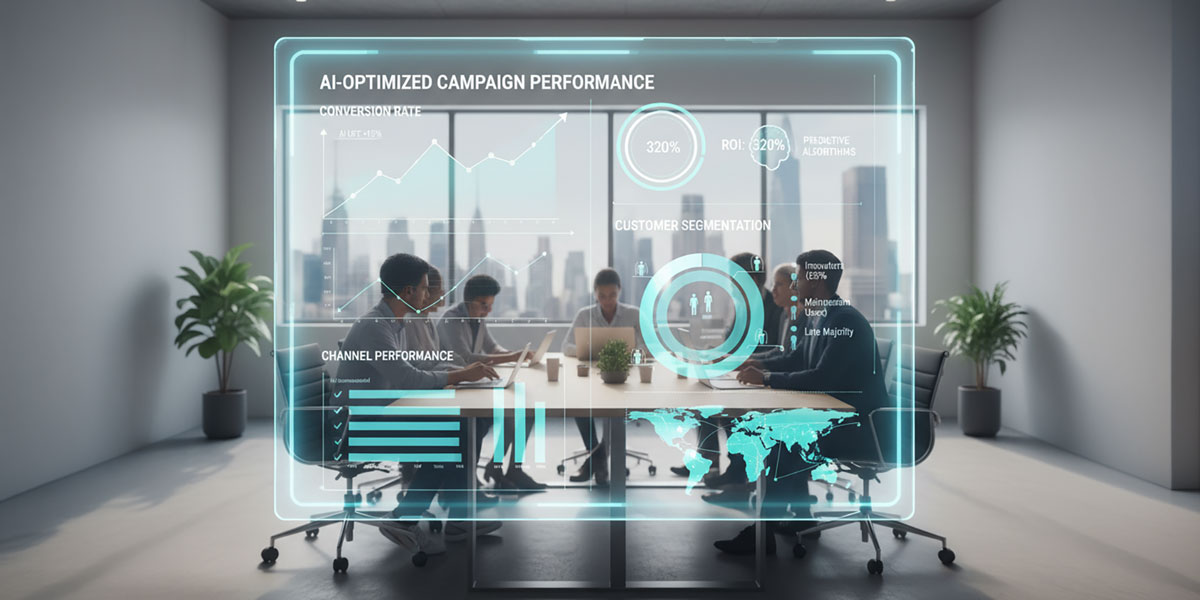
The entire marketing and sales process becomes more intelligent. AI provides the performance analytics needed to make informed decisions. This data-driven approach is fundamental to scaling a new venture successfully.
This modern approach to venture building creates companies that are agile. They can adapt their strategies based on real-time market feedback. This adaptability is often the difference between success and failure.
A systematic way to track early sales is also crucial. Implementing a deal registration management tool ensures visibility. It protects partners and gives the venture builder clear insight into the sales pipeline.
How does AI support the scaling and operational management of a new company?
The role of AI in venture building extends far beyond the launch. It is instrumental in scaling the new company and managing its ongoing operations. AI-driven automation and analytics create a foundation for sustainable growth.
As a new venture grows, so does its operational complexity. AI helps automate routine business processes like customer support, invoicing, and inventory management. This automation improves efficiency and reduces the risk of human error.
For example, AI-powered chatbots can handle a large volume of customer inquiries. They provide instant support 24/7, improving customer satisfaction. This frees up human agents to focus on more complex and high-value issues.
AI provides deep insights into business performance through advanced analytics. Dashboards with real-time data help leaders monitor key performance indicators (KPIs). These insights inform strategic decisions about resource allocation and expansion.
This reliance on data is a hallmark of modern venture building. It ensures that as the company scales, it remains agile and responsive. Leaders can use predictive analytics to forecast future trends and prepare accordingly.
Managing a growing team and potential partner ecosystem is another challenge. A unified platform for partner management becomes essential. It provides a single source of truth for all relationships, ensuring consistency.
Furthermore, AI can assist in talent acquisition and human resources. It can screen resumes and identify candidates with the right skills for the growing team. This streamlines the hiring process, which is critical for rapid scaling.
The infrastructure provided by a seasoned venture building studio is critical here. It offers the new company access to shared services and expertise. This includes access to sophisticated AI tools and platforms from day one.

Ultimately, AI enables new ventures to operate with a level of sophistication. This was previously only available to large, established corporations. This democratization of advanced technology is reshaping the competitive landscape.
A structured system for automating tasks can be built using a workflow management solution. This helps formalize processes as the company grows. It ensures scalability and operational discipline in the long term.
The synergy between human leadership and AI-powered operations defines successful scaling. This combination is a core component of the modern venture building playbook. It creates companies built for resilience and long-term growth.
Traditional vs. AI-Powered Venture Building
| Dimension | Traditional Venture Building | AI-Powered Venture Building |
|---|---|---|
| Market Research | Manual analysis, surveys, focus groups; often slow and limited. | Automated analysis of vast datasets in real time; identifies hidden trends. |
| Idea Generation | Relies on team brainstorming, intuition, and personal experience. | Data-driven ideation based on market gaps identified by AI algorithms. |
| Idea Validation | Based on anecdotal evidence, small-scale tests, and expert opinion. | Uses predictive analytics to forecast potential success based on data models. |
| Product Development | Linear, often lengthy cycles with manual coding and testing. | Rapid prototyping, AI-assisted coding, and automated testing for fast iteration. |
| Marketing & Sales | Broad campaigns based on generalized customer personas; slow optimization. | Highly targeted, personalized campaigns with real-time AI-driven optimization. |
| Decision Making | Often based on historical reports and managerial intuition (gut feel). | Driven by real-time performance analytics and predictive insights. |
| Scaling Operations | Manual process scaling, hiring-dependent, linear growth in complexity. | Automated workflows, AI-driven resource allocation, and scalable operational models. |
How ZINFI's Platform Supports Modern Venture Ecosystems
Frequently Asked Questions
What is venture building?
Venture building is the process of systematically creating new, independent companies from scratch. Unlike venture capital, which invests in existing startups, venture builders are actively involved in the creation and operation of the businesses they launch.
How is a venture builder different from an incubator?
A venture builder creates companies based on its own ideas and resources. An incubator or accelerator supports existing startups founded by external entrepreneurs. Venture builders have more control and are more operationally involved.
What are the core benefits of using AI in venture building?
The main benefits include increased speed, reduced risk, and enhanced efficiency. AI accelerates market research, idea validation, product development, and go-to-market execution. It enables data-driven decision-making at every stage.
Can AI predict if a startup will be successful?
AI cannot predict success with 100% certainty, as many external factors are involved. However, it can significantly improve forecasting accuracy. It uses predictive analytics to assess an idea's viability based on vast amounts of data.
What kind of AI tools are used in venture building?
Tools include machine learning algorithms for market analysis and natural language processing for sentiment analysis. Generative AI is used for content and code creation, while AI-powered analytics platforms track performance.
Does AI replace human intuition in venture building?
No, AI augments human expertise rather than replacing it. The best results in venture building come from combining AI's data-processing power with human creativity, strategic thinking, and leadership. It is a powerful partnership.
How does AI help in creating a Minimum Viable Product (MVP)?
AI can generate code, create design mockups, and automate testing. This dramatically reduces the time and cost required to build an MVP. It allows new ventures to get to market and start learning from users faster.
Is AI-powered venture building only for tech companies?
While most common in the tech sector, the principles can be applied to any industry. AI can analyze markets and optimize operations for new ventures in retail, healthcare, finance, and more. The methods of venture building are broadly applicable.
What is the biggest challenge of implementing AI in venture building?
The biggest challenges include ensuring data quality, having the right talent to manage the AI tools, and avoiding over-reliance on algorithms. Integrating AI requires a cultural shift towards data-driven practices and continuous learning.
How can a company start with AI-powered venture building?
A company can start small by using AI tools for specific tasks like market research or content creation. Partnering with an experienced venture building studio that already has AI infrastructure and expertise is also an effective approach.
About the author
Sugata Sanyal
Sugata Sanyal is the founder and CEO of ZINFI Technologies. He is a technology visionary with extensive experience in the channel marketing automation space. Sugata has been a key driver in ZINFI's mission to provide best-in-class, enterprise-grade channel management solutions to organizations globally.