Autonomous Partner Onboarding: Your Guide to Faster Channel Revenue
Autonomous partner onboarding allows companies to rapidly activate and enable new channel partners. This process uses automation to streamline every step from recruitment to first sale. By removing manual tasks, businesses can scale their partner ecosystems much more efficiently.
Key Takeaways
TL;DR
- Autonomous partner onboarding uses technology to automate the entire partner activation process. It significantly reduces the time and resources needed to bring new partners into your program.
- A streamlined onboarding experience is critical for partner engagement and long-term success. It sets the foundation for a productive and profitable channel relationship from day one.
- Key features of an automated system include self-service registration, automated workflows, and integrated training. These elements create a seamless journey for new partners.
- Implementing this strategy requires a robust Partner Relationship Management (PRM) platform. This software centralizes all tools and resources for your partners.
- Benefits include faster time-to-revenue and improved partner satisfaction. It also provides greater consistency across your entire channel.
- Measuring success involves tracking key metrics like time to first sale and partner engagement levels. Data helps you refine your partner onboarding process over time.
Why Is an Efficient Partner Onboarding Process Crucial?
An efficient partner onboarding process is a critical competitive advantage. It directly impacts how quickly your partners can start generating revenue. A slow, complicated process creates frustration and delays partner productivity.
First impressions matter greatly in business relationships. A smooth and professional partner onboarding experience shows that you value their time. This positive start encourages greater commitment and loyalty from your channel partners.
Manual onboarding methods are often inconsistent and prone to errors. They rely on spreadsheets, emails, and disconnected systems to manage the process. This approach creates administrative burdens for your channel team.
With a manual system, important steps can be missed. Forgetting to provide access to a key resource can halt a partner’s progress. A structured, automated approach ensures every partner receives the same high-quality experience.
Scalability is another major challenge with manual onboarding. As your partner network grows, your administrative workload increases exponentially. An automated partner onboarding solution allows you to scale without adding headcount.
Top-performing partners want to work with vendors who are easy to do business with. A difficult onboarding journey can cause promising partners to lose interest. They may choose to focus their efforts on your competitors instead.
A great partner experience is a significant differentiator. According to Harvard Business Review, simplifying processes is a key element of B2B customer value. This directly applies to how you manage and enable your partners.
A unified Partner Relationship Management (PRM) platform is the key. It centralizes all aspects of the partner journey. This includes everything from the initial application to ongoing sales and marketing support.
Ultimately, a streamlined partner onboarding process accelerates your channel's time-to-revenue. It equips partners with the knowledge and tools they need to succeed quickly. This translates directly to a healthier bottom line for your organization.
How Does Automation Transform Partner Onboarding?
Automation transforms partner onboarding by replacing manual tasks with efficient workflows. It creates a self-guided journey for new partners within a dedicated partner portal. This frees your channel managers to focus on strategic relationship-building.
The process begins with a self-service registration form on your website. Prospective partners can apply easily, and the system can automatically vet them. It checks against your ideal partner profile criteria.
Once a partner is approved, automated workflows take over. The system can instantly send a welcome email with login credentials. It also triggers the next steps in the onboarding sequence without manual intervention.

Contract management becomes significantly simpler with automation. A PRM platform can automatically generate and send the appropriate partner contracts. Partners can then review and e-sign documents directly within the portal.
Training and certification are essential parts of partner onboarding. An automated system can assign learning paths based on the partner type or tier. A robust Partner Learning Management System tracks their progress automatically.
Granting access to necessary tools is also handled seamlessly. The system can provide immediate access to your content library and marketing assets. This ensures partners have what they need to start promoting your products right away.
Automation enables a more personalized partner onboarding experience. You can create different onboarding tracks for different types of partners. For example, a reseller might have a different journey than a referral partner.
Using a tool for workflow management is central to this transformation. It allows you to design, execute, and monitor every step of the process. This ensures consistency and eliminates bottlenecks.
Predictive analytics can even help identify which partners are most likely to succeed. This allows you to allocate more resources to high-potential relationships. This data-driven approach optimizes your entire channel strategy.
In summary, automation makes the entire partner onboarding process faster and more reliable. It creates a professional, modern experience that partners appreciate. This sets the stage for a successful and profitable long-term relationship.
Comparison: Traditional vs. Autonomous Partner Onboarding
| Feature | Traditional Onboarding | Autonomous Partner Onboarding |
|---|---|---|
| Process Speed | Slow (weeks or months) | Fast (hours or days) |
| Core Method | Manual emails, spreadsheets | Automated workflows in a PRM |
| Partner Experience | Inconsistent and often frustrating | Consistent and self-guided |
| Scalability | Limited; resource-intensive | Highly scalable with minimal effort |
| Data & Visibility | Siloed and hard to track | Centralized with real-time analytics |
| Resource Access | Delayed, requires manual provisioning | Instant and role-based |
| Channel Manager Focus | Administrative tasks | Strategic growth and relationships |
What Are the Key Features of an Autonomous Partner Onboarding System?
An effective autonomous partner onboarding system is built on specific features. These components work together to create a seamless, self-driven experience. A quality PRM platform provides this integrated functionality.
A customizable partner portal is the foundation of the system. This portal serves as the central hub for all partner activities. It should be brandable to provide a consistent look and feel.
Automated workflow capabilities are essential. This allows you to design the entire onboarding journey step-by-step. The system then guides the partner through each stage without manual intervention.
Integrated e-signature for contracts is a must-have feature. This eliminates the need for printing, signing, and scanning documents. It dramatically accelerates the legal and administrative parts of the process.
A built-in learning management system (LMS) is another crucial element. It allows you to deliver structured training, courses, and certifications. You can track completion rates and ensure partners are fully enabled.
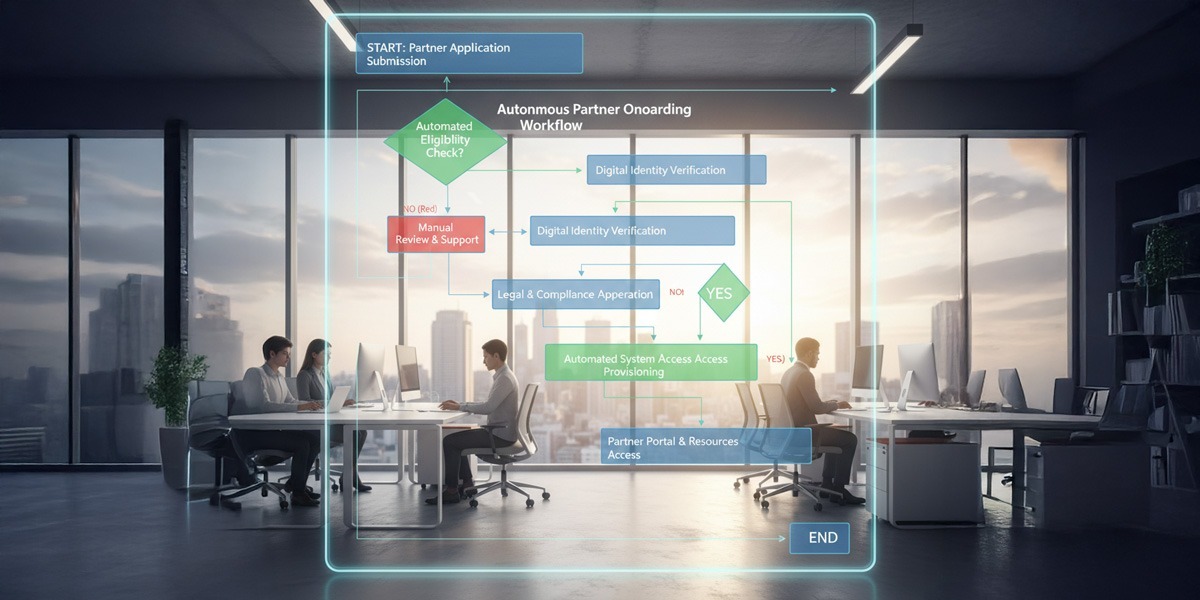
Role-based access control is also very important. This ensures partners only see the information and tools relevant to them. Proper access management simplifies the user experience and protects sensitive data.
The system should include a centralized content library. This provides partners with on-demand access to marketing collateral and sales playbooks. Easy access to resources helps partners start selling faster.
Automated communication tools are another key feature. The system should be able to send triggered emails and in-portal notifications. This keeps partners informed and engaged throughout the partner onboarding process.
Comprehensive reporting and analytics provide critical insights. You need to measure the effectiveness of your onboarding program. Dashboards showing performance analytics help you identify and address any bottlenecks.
Finally, the system needs to be mobile-friendly. Partners are often on the go and need to access the portal from any device. A responsive design or dedicated mobile app is no longer a luxury.
How Can Businesses Implement a Successful Partner Onboarding Strategy?
Implementing a successful partner onboarding strategy requires careful planning. You must begin by clearly defining your goals. What do you want to achieve with your onboarding process?
First, map out your ideal partner onboarding journey. Break it down into distinct stages, from application to first sale. Document the specific steps, tasks, and content required for each stage.
Next, you should define your ideal partner profile. This helps you focus your recruitment efforts and automate the vetting process. A clear profile ensures you attract the right kind of partners.
Selecting the right technology is the most critical step. A unified PRM platform that supports automation is essential for success. Evaluate vendors based on their workflow, training, and partner management capabilities.
Once you have a platform, build out your onboarding workflows. Configure the system to automatically guide partners through the defined stages. Personalize the journey for different partner types or tiers where possible.

Develop high-quality onboarding content. This includes welcome kits, training videos, product one-pagers, and sales scripts. Make sure all content is easily accessible within your partner portal’s content library.
Establish clear key performance indicators (KPIs) to measure success. Track metrics like partner activation time, training completion rates, and time-to-first-deal. Use this data to continually refine your process.
Launch your new partner onboarding process with a pilot group. This allows you to gather feedback and make adjustments before a full rollout. A small-scale test helps identify any unforeseen issues.
Communicate clearly with your internal channel team. Ensure they understand the new automated process and their role in it. They will shift from administrative work to more strategic partner coaching.
Finally, never treat your onboarding program as a one-time project. Continuously gather feedback from new partners and analyze your KPIs. A successful partner onboarding strategy evolves and improves over time.
How ZINFI’s Unified Partner Management Can Streamline Your Partner Onboarding
ZINFI’s Unified Partner Management (UPM) platform offers a comprehensive solution for autonomous partner onboarding. It combines state-of-the-art technology with deep channel expertise. This enables companies to build and scale world-class partner programs.
Our platform automates the entire partner lifecycle, from recruitment to revenue. ZINFI provides a robust partner portal that serves as a single source of truth. This simplifies the partner experience and drives engagement.
- Automated Workflows: Use our FlexiFlow module to design and deploy custom onboarding journeys. Automate tasks like contract signing, training assignments, and system access.
- Integrated Learning Management: Deliver powerful training and certification programs with our Partner Learning Management (LMS+) module. Track progress and ensure partners have the knowledge to succeed.
- Centralized Asset Management: Provide partners with instant access to sales and marketing materials. Our Content Library Management ensures they always have the latest resources.
- Seamless User & Access Management: Automatically provision user accounts and set permissions with our User Management module. Ensure secure, role-based access for every partner.
- Business Planning & Reporting: Collaborate with partners on business plans and track progress toward goals. Gain deep insights with powerful Business Intelligence & Reports.
- Full-Lifecycle Management: ZINFI goes beyond partner onboarding. We provide tools for co-branded marketing, deal registration, MDF management, and more, all in one unified platform.
Frequently Asked Questions
What is autonomous partner onboarding?
Autonomous partner onboarding is the use of automated systems to manage the process. It lets new partners self-navigate through recruitment, contracting, and training. This minimizes manual effort for the vendor.
Why is a good onboarding experience important for partners?
A good onboarding experience sets the tone for the entire partnership. It accelerates their ability to sell, which leads to faster revenue. It also increases partner satisfaction and loyalty.
What is a partner portal?
A partner portal is a secure website that provides partners with necessary tools and resources. It serves as a central hub for training, marketing assets, and communication. It is a key component of any PRM system.
How long should partner onboarding take?
With an autonomous system, partner onboarding can take just a few days. The goal is to get a partner from application to their first sale as quickly as possible. Manual processes often take several weeks or months.
What is Partner Relationship Management (PRM)?
PRM is a strategy and software that helps companies manage their channel partners. A PRM platform provides tools for onboarding, training, marketing, and sales collaboration. It helps automate and scale a partner program.
How does automation reduce costs?
Automation reduces the administrative overhead required to manage a partner program. It allows channel managers to focus on high-value activities instead of manual tasks. This lets you grow your channel without increasing headcount.
What metrics should I track for partner onboarding success?
Key metrics include time-to-first-revenue, training completion rates, and partner engagement levels. You should also track portal logins and content downloads. These KPIs help measure the effectiveness of your process.
Can I customize the onboarding process for different partners?
Yes, a modern PRM platform allows you to create different onboarding paths. You can tailor the journey based on partner type, tier, or region. This personalization makes the process more relevant and effective.
What is the first step in automating partner onboarding?
The first step is to map out your current process and identify bottlenecks. Then, you can design your ideal automated workflow. Selecting the right PRM technology is also a critical early step.
How does a PRM system handle partner contracts?
A PRM system automates contract management. It can generate the correct agreement, send it to the partner, and collect e-signatures. This streamlines a traditionally slow and paper-based process.
About the author
Sugata Sanyal, Founder & CEO of ZINFI
Sugata Sanyal is a seasoned channel marketing and management veteran. He has consistently delivered industry-leading programs and platforms. His vision for ZINFI is to provide companies with a complete, unified partner management solution that drives channel success.