Beyond the Channel: Navigating the Nuance and Complexity of Today’s Partner Ecosystem
The traditional sales channel has evolved into a complex and interconnected partner ecosystem. Successfully navigating this new landscape requires a strategic shift in mindset and technology.
Companies once relied on a linear chain of distributors and resellers to move products. Today's business environment is a dynamic web of influencers, consultants, and technology partners.
This shift demands a more sophisticated approach to managing relationships and driving shared growth. Orchestrating this intricate network is the key to unlocking its immense potential.
Key Takeaways
TL;DR
- The modern partner ecosystem extends far beyond traditional, linear sales channels.
- Diverse partner types require a flexible and unified management approach for success.
- Data analytics are essential for understanding performance and optimizing ecosystem orchestration.
- Technology platforms are crucial for automating processes and scaling your network.
- A successful strategy involves orchestrating collaboration rather than just managing transactions.
- Aligning goals and providing clear rules of engagement prevents channel conflict.
- The customer journey is now influenced by multiple partners within the ecosystem.
What defines the modern partner ecosystem and its complexity?
The modern business landscape has moved decisively beyond simple, transactional channel partnerships. We now operate within a sophisticated and multifaceted partner ecosystem of contributors.
This new model is characterized by a diverse array of non-linear relationships. These relationships create a web of influence that shapes customer decisions and market perception.
Unlike traditional channels, this structure includes a wide variety of partner types. These can range from technology allies and integration specialists to industry influencers and consultants.
Each participant plays a unique role in the value chain. Their collective impact is often greater than the sum of their individual contributions.
The complexity arises from the number of players and their intricate interdependencies. A single customer journey might involve touchpoints with multiple partners before a sale occurs.
For example, a customer may first read a blog post from an industry influencer. Then they might engage a consultant who recommends your solution integrated with another vendor.
This non-linear path to purchase makes attribution and management incredibly challenging. Old models of tracking the last touchpoint are no longer sufficient or accurate.
Understanding and mapping these complex interactions is the first step toward effective management. Without this clarity, companies risk misallocating resources and missing key growth opportunities.
The modern partner ecosystem is also defined by its dynamic and fluid nature. New partners can emerge quickly, and existing relationships can evolve based on market demands.
This requires an agile approach that can adapt to changing partner roles and market conditions. Rigid, one-size-fits-all programs will fail in this environment of constant fluctuation.
Furthermore, value exchange in this model is not always purely financial or transactional. It can involve shared intellectual property, joint marketing efforts, or providing access to new markets.
This collaborative web thrives on mutual benefit and shared goals. The focus shifts from simple resale margins to creating comprehensive solutions for end customers.

Successful orchestration of this alliance structure means fostering communication and collaboration between partners. It's about building a community, not just managing a list of contacts.
This includes partners who may not transact directly but significantly influence the sales cycle. These "influence partners" are often overlooked in traditional channel management programs.
A key aspect of this complexity is the flow of information. It moves in multiple directions between the vendor, various partners, and the end customer.
Centralizing this communication is vital for maintaining consistency and ensuring everyone is aligned. A disjointed information flow leads to confusion and a poor customer experience.
The modern partner ecosystem forces companies to think holistically about their go-to-market strategy. It cannot be siloed within a single channel sales department.
Instead, it must be integrated across marketing, sales, product development, and customer support. This cross-functional alignment is essential for supporting a diverse partner network effectively.
Another layer of complexity comes from managing potential channel conflict. With so many players involved, delineating roles and responsibilities becomes critically important.
Clear rules of engagement and a transparent deal registration process are necessary. These tools help to prevent disputes and encourage collaborative rather than competitive behavior.
Ultimately, the richness of this business environment offers unprecedented opportunities for innovation and growth. Companies that master its complexity can build formidable competitive advantages.
They can co-create value, enter new markets more efficiently, and deliver more complete solutions. The challenge lies in developing the strategies and deploying the tools to manage it.
How can businesses effectively manage a diverse partner ecosystem?
Managing a diverse partner ecosystem requires a significant upgrade from traditional channel management tools. A unified platform is the cornerstone of an effective strategy for orchestration.
This platform must be flexible enough to accommodate various partner types and business models. It should support referral partners, resale partners, service partners, and technology partners equally well.
The goal is to move from simple management to strategic partner orchestration. This means actively facilitating collaboration and aligning partner activities with your business objectives.
Effective management begins with a streamlined and automated onboarding process. Partners need to get up-to-speed quickly with minimal friction to become productive contributors.
ZINFI's Partner Management solution provides a centralized console for this. It allows you to tailor onboarding workflows for different types of partners.
Consistent and targeted enablement is another critical component of successful management. Partners must have easy access to the right training, content, and sales tools.
A robust learning management system helps deliver personalized training paths. This ensures partners are well-equipped to represent your brand and solutions accurately.
Managing a complex business environment also demands clear and consistent communication. A central portal for announcements, updates, and collaboration is absolutely essential for success.
This builds a sense of community and keeps partners engaged with your company. ZINFI's Partner Community Management helps foster this vital engagement.
To prevent chaos, you must establish clear rules of engagement. This includes defining partner tiers, responsibilities, and how conflicts will be resolved.
A well-defined Deal Registration Management process is crucial for preventing channel conflict. It provides transparency and protects partners’ investments in developing leads.
Furthermore, managing a diverse network involves understanding the unique motivations of each partner. Not all partners are driven solely by financial incentives like commissions or rebates.
Some may value access to technology, co-marketing opportunities, or leads. Your partner program must be flexible enough to offer a variety of benefits.
This is where Partner Programs Management becomes invaluable for success. It allows you to design and manage multiple programs tailored to different partner segments.
A strategic approach also involves co-business planning with key partners. This aligns your goals and ensures you are working together toward mutual success.
Tools for Partner Business Planning facilitate this collaborative process. They help track progress against shared objectives and key performance indicators.
The sheer scale of a modern partner ecosystem makes manual management impossible. Automation is required for tasks like lead distribution, performance tracking, and incentive payouts.
Automated workflows ensure that processes are executed consistently and efficiently. This frees up your channel team to focus on more strategic, relationship-building activities.
Technology is the enabler of effective management in this complex environment. It provides the visibility and control needed to orchestrate your entire partner network.
Ultimately, successfully managing a diverse collaborative web is about creating a frictionless experience. It should be easy for partners to do business with you.
Why is data crucial for optimizing your partner ecosystem?
Data is the lifeblood of a modern, high-performing partner ecosystem. Without accurate and timely data, you are essentially managing your network blind.
It provides the insights needed to understand what is working and what is not. This allows you to make informed decisions rather than relying on gut feelings.
One of the primary uses of data is to measure partner performance comprehensively. This goes beyond simple lagging indicators like closed-won revenue or sales volume.
Instead, you should track leading indicators of success. These include training completion rates, marketing engagement, and pipeline generation activities.
This holistic view of performance helps identify both top performers and partners who need support. It allows for proactive intervention before performance issues escalate into major problems.
Data analytics can also uncover hidden patterns of collaboration within your alliance structure. You might discover that certain partners are frequently involved in the same deals.
According to research from Gartner, B2B buying journeys are increasingly complex. Data helps map the partner touchpoints along these convoluted paths to a final deal.
This insight allows you to encourage and formalize these valuable collaborations. You can create joint marketing programs or specific incentives to foster these relationships.

Predictive analytics takes this a step further, using historical data to forecast future outcomes. For instance, it can predict which partners are most likely to succeed.
This allows you to focus your recruitment and enablement resources more effectively. You can target new partners with a higher probability of becoming productive members.
Similarly, data is crucial for optimizing your marketing and sales enablement efforts. You can see which assets are being used most frequently and which drive the most engagement.
ZINFI's Business Intelligence & Reports module provides this deep visibility. It transforms raw data into actionable insights for your team.
Another key area is the optimization of incentive programs like MDF and rebates. Data analysis can reveal the true return on investment of these programs.
You can determine if a specific fund is driving the desired behavior and results. This allows for continuous improvement and reallocation of your incentive budgets.
In a complex partner ecosystem, attribution becomes a significant challenge. Advanced analytics help you move toward a more sophisticated, multi-touch attribution model.
This gives credit to all partners who contributed to a sale. It provides a more accurate picture of value creation across your entire network.
Data also plays a vital role in personalizing the partner experience at scale. By understanding a partner's business model and performance, you can deliver relevant content.
This tailored approach improves engagement and strengthens the partner relationship. It shows that you understand and value their unique contribution to the partnership.
The ability to segment your partners based on data is a powerful tool. You can create targeted communications, programs, and enablement tracks for different partner groups.
This level of personalization is impossible to achieve without a solid data foundation. It is a key differentiator in a competitive landscape with many choices.
Finally, data provides a single source of truth for you and your partners. Sharing performance dashboards builds trust and facilitates more productive, data-driven conversations.
This transparency helps align goals and fosters a true sense of partnership. The entire partner ecosystem thrives on shared, accessible, and accurate information.
What role does technology play in orchestrating a partner ecosystem?
Technology is the essential framework for orchestrating a modern partner ecosystem. It provides the automation, integration, and visibility necessary for success at scale.
Partner Relationship Management (PRM) platforms have evolved significantly to meet these new demands. They are now sophisticated hubs for managing all aspects of the partner journey.
One of the most critical roles of technology is process automation. Manual processes are slow, error-prone, and simply cannot scale to manage hundreds of partners.
ZINFI's Workflow Management automates key processes. This includes partner onboarding, lead management, and MDF claims processing for incentives.
This automation frees up channel managers from tedious administrative tasks. They can then focus their time on strategic planning and relationship development with partners.
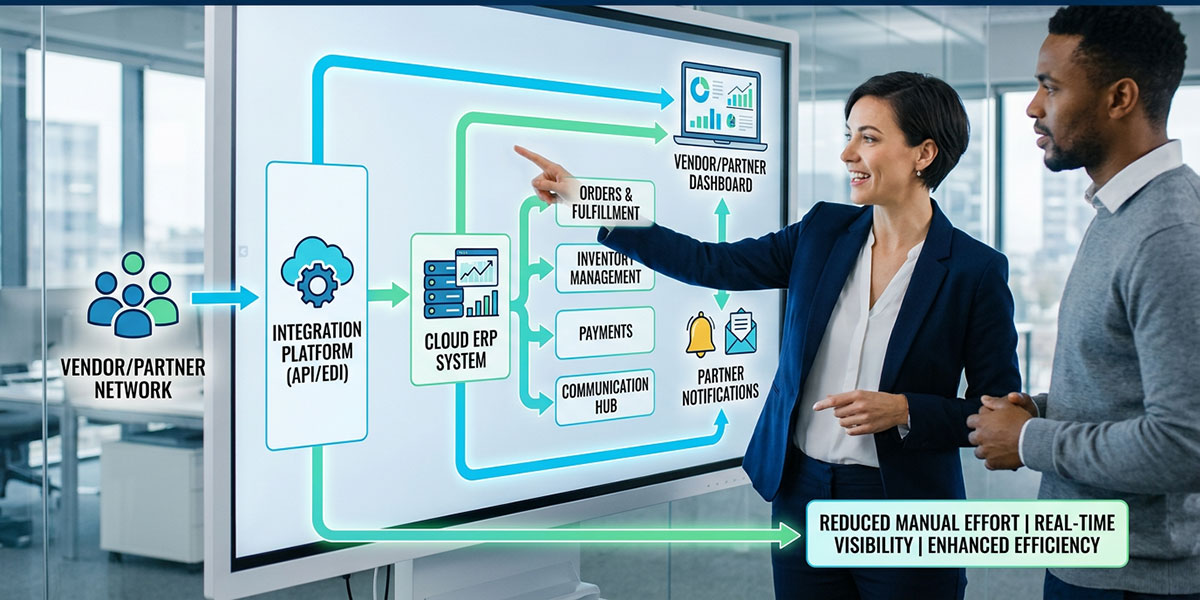
Integration is another pillar of a technology-driven approach to ecosystem management. Your PRM platform must connect seamlessly with your other core business systems.
This includes integration with CRM, ERP, and marketing automation platforms. A tool like Centralized Interconnect makes these connections possible and reliable.
This connectivity creates a unified data flow across the organization. It ensures that everyone, from sales to finance, has a consistent view of partner activity.
Technology also provides a centralized location for all partner-facing resources. A robust Content Library Management system is a prime example of this capability.
Partners can access the latest marketing collateral, sales playbooks, and training materials. This ensures brand consistency and equips partners with the tools they need to succeed.
Furthermore, technology facilitates sophisticated through-channel marketing automation (TCMA). This allows partners to easily execute professional, co-branded marketing campaigns.
Modules for Email Marketing and Social Syndication empower partners. They extend your marketing reach at scale through your entire network.
A comprehensive platform provides deep analytics and reporting capabilities. This is where performance analytics becomes a game-changer for your entire network.
Dashboards provide real-time visibility into key performance indicators across the entire business environment. This data-driven approach is fundamental to optimizing your strategy for growth.
The right technology enables you to manage complex incentive programs with ease. This includes managing rebates, commissions, and market development funds efficiently and accurately.
Automated systems for MDF Management ensure funds are allocated and tracked. The result is improved ROI and better accountability for all parties involved.
Finally, technology supports global scalability for your growing partner ecosystem. A cloud-based platform can support partners in any region with localized content and workflows.
It provides a consistent experience for all partners, regardless of their location. This is crucial for building and managing a successful international partner network.
Traditional Channels vs. The Modern Partner Ecosystem
| Feature | Traditional Channel Approach | Modern Ecosystem Approach |
|---|---|---|
| Structure | Linear and hierarchical (Vendor > Distributor > Reseller) | Non-linear, interconnected web of diverse partner types |
| Communication | Top-down, one-to-many from vendor to partners | Multi-directional: vendor-to-partner, partner-to-partner |
| Data Usage | Focuses on lagging indicators like sales revenue | Uses leading indicators and predictive analytics |
| Partner Role | Primarily transactional and focused on resale | Focuses on influence, value-add, and co-creation |
| Customer Journey | Assumes a simple, linear path to purchase | Acknowledges a complex, multi-touchpoint buying journey |
| Primary Goal | Pushing product through a defined sales channel | Orchestrating collaboration to solve customer problems |
| Technology | Basic portals for orders and simple asset downloads | Unified platforms for automation, analytics, and enablement |
Unify and Grow Your Partner Ecosystem with ZINFI
Navigating the complexity of the modern partner ecosystem demands a powerful, unified solution. ZINFI provides a comprehensive suite of tools built for partner orchestration.
Our Unified Partner Management platform helps you manage the entire partner lifecycle. It empowers companies to drive growth through their diverse networks effectively and efficiently.
- A Unified Platform: Manage all partner types—resellers, MSPs, consultants, and agents—from a single, integrated portal using our powerful Partner Management capabilities.
- Automated Onboarding & Enablement: Streamline recruitment and accelerate time-to-revenue with automated workflows and our advanced Partner Learning Management Plus.
- Advanced Marketing & Sales Tools: Empower partners with robust TCMA capabilities, including Microsite Management and co-sell automation.
- Flexible Incentive Management: Design and automate complex incentive programs like MDF, rebates, and commissions with tools for Partner Rebates Management.
- Deep Analytics and Reporting: Gain unparalleled visibility into your ecosystem’s performance with robust performance analytics and customizable Business Intelligence Reports.
- Centralized Content & Assets: Ensure brand consistency and equip partners for success with intuitive tools like Co-branded Assets Management.
By leveraging ZINFI's platform, you can transform your approach. You move from simply managing channels to strategically orchestrating a thriving business ecosystem.
This allows you to unlock new revenue streams and build a sustainable competitive advantage. It empowers you to tackle the intricate challenges of your partnerships with confidence.
Frequently Asked Questions
What is the main difference between a channel and a partner ecosystem?
A channel is typically a linear, transactional path for selling products. A partner ecosystem is a complex web of diverse, interdependent relationships that create value.
What types of partners exist in a modern ecosystem?
It includes traditional resellers, plus influencers, consultants, service providers, and technology partners. It also includes independent software vendors (ISVs) and referral agents among others.
Why is partner orchestration important?
Orchestration goes beyond management to actively align and facilitate collaboration between partners. It helps to maximize the collective value of the entire interconnected network.
How do I prevent channel conflict in a complex partner ecosystem?
Clear rules of engagement and a transparent deal registration system are essential. A unified PRM platform helps enforce these rules consistently across all channels.
What are key metrics for measuring ecosystem health?
Look beyond revenue to leading indicators like partner engagement, training completion, and pipeline growth. Also track partner-to-partner collaboration and customer satisfaction ratings for projects.
What is the first step to building a partner ecosystem strategy?
Start by identifying all current and potential partners who influence your customer's journey. Then, map their interactions and define the value each one provides.
How does a PRM platform help manage an ecosystem?
A PRM platform automates processes, provides a central hub for communication and content. It also delivers the analytics needed to understand performance and make data-driven decisions.
Can a small business build a successful partner ecosystem?
Yes, any size business can build a successful network of partners. Technology makes it scalable, allowing small companies to manage diverse relationships effectively.
What role do non-transacting partners play?
Non-transacting partners, like influencers and consultants, build awareness and generate demand. They are a critical source of influence in the modern buying journey.
How will the partner ecosystem evolve in the future?
Ecosystems will become even more integrated, with AI and predictive analytics playing a larger role. Automation and data-driven co-selling will become standard practice for high-growth companies.
About the author
Sugata Sanyal
Sugata Sanyal is the Founder & CEO of ZINFI Technologies, a leader in Unified Partner Management. He has been a passionate advocate for the channel and channel partners for decades. His vision for ZINFI is to provide partner ecosystems with the tools they need to succeed.