Beyond the Catalog: How to Build a B2B Portal for the Age of Agentic Buying
A modern B2B portal must evolve beyond a simple product catalog to succeed. It needs to become an intelligent, personalized hub that empowers the new generation of agentic buyers.
The landscape of business-to-business commerce is undergoing a significant transformation. Buyers today are more informed, independent, and expect consumer-grade digital experiences.
This shift demands a new approach to your company’s primary digital interface. Your platform must anticipate needs and guide users toward success seamlessly.
We are entering the era of the agentic buyer, who prefers self-service and research. An outdated, static portal will only create friction and drive partners away.
Building a future-proof system means focusing on personalization, AI, and integrated workflows. This creates a B2B portal that serves as a true growth engine for your channel ecosystem.
Key Takeaways
TL;DR
- A modern B2B portal must cater to agentic buyers who prefer self-service and personalization.
- Static product catalogs are obsolete; dynamic, user-centric experiences are now the standard.
- AI-driven personalization delivers relevant content and product recommendations to each user.
- Integrating workflows like deal registration and training directly into the portal increases efficiency.
- Analytics and business intelligence are crucial for understanding user behavior and optimizing performance.
- The goal is to create a seamless, intuitive digital ecosystem, not just a transactional website.
- Adopting a unified platform approach helps manage all aspects of the partner journey effectively.
What Defines a Modern B2B Portal for Agentic Buyers?
A contemporary B2B portal is fundamentally different from its predecessors. It is an experiential platform designed around the user's specific journey and needs.
This contrasts sharply with older systems that were little more than digital order forms. The focus has shifted from transaction to interaction and enablement.
Agentic buyers are proactive and conduct extensive research before ever engaging with a sales representative. They expect to find all necessary information and tools within a single, intuitive interface.
Your portal must provide this self-service capability to meet their expectations. Failure to do so results in a poor user experience and lost business opportunities.
The core of a modern platform is a deep understanding of the user. It leverages data to provide a tailored environment for every partner and every user role.
This means a sales manager sees different information than a marketing coordinator or a technician. Content, tools, and navigation are all adapted to the user's context.
This level of customization makes the B2B portal an indispensable tool for your partners. It becomes their go-to resource for everything related to your business partnership.
Such a system helps you build stronger, more engaged relationships within your channel ecosystem. It demonstrates a commitment to your partners' success through tangible digital support.
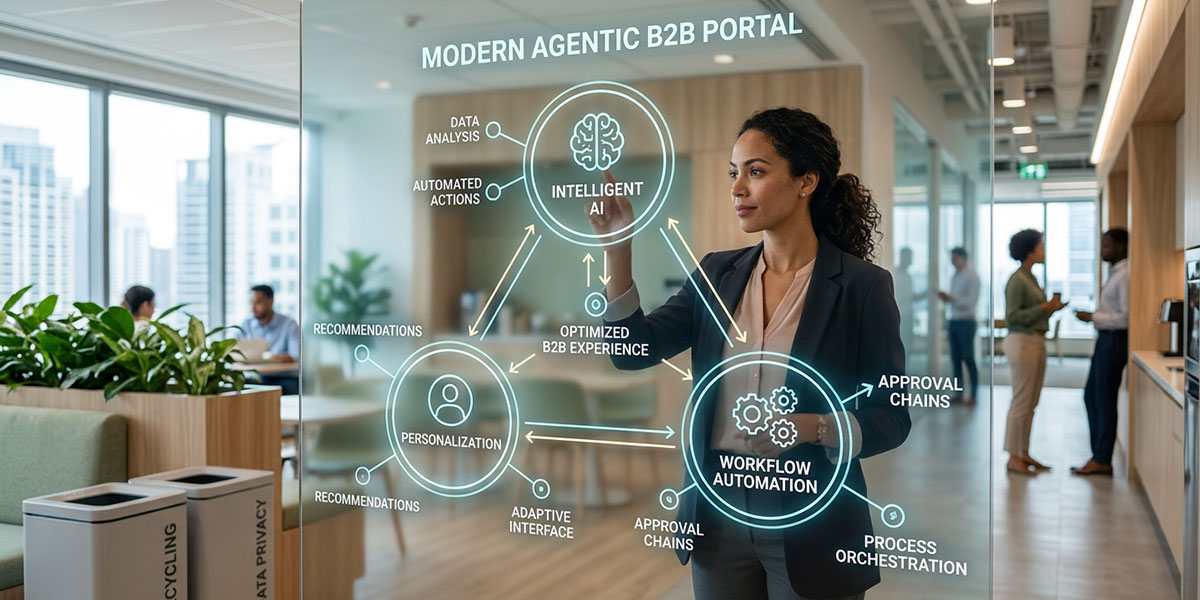
Furthermore, an advanced B2B portal seamlessly integrates various business functions. It breaks down the silos between marketing, sales, training, and support.
Partners can access marketing campaign assets, register a new deal, and complete a certification course. This all happens without ever leaving the portal environment.
This unified approach is essential for reducing friction and complexity for your partners. A streamlined experience encourages greater engagement and higher levels of participation in your programs.
Consider the architecture of such a system, which must be both flexible and scalable. A platform built on a modular framework can adapt as your business and channel evolve.
You can add new functionalities like co-branded asset management or advanced reporting. This allows your technology investment to grow with your strategic needs.
Ultimately, the modern B2B portal acts as a central nervous system for your partner ecosystem. It facilitates communication, collaboration, and commerce in a single, powerful hub.
Investing in this type of platform is no longer a luxury. It is a competitive necessity for any organization that relies on an indirect sales channel.
How Does Personalization Transform the B2B Portal Experience?
Personalization is the key that unlocks the full potential of a B2B portal. It converts a generic tool into a highly relevant and valuable personal workspace.
Generic experiences lead to low engagement and user frustration. Partners are forced to sift through irrelevant information to find what they need.
The first layer of personalization involves role-based access and content delivery. A robust user management system is the foundation for this capability.
You can define specific roles and permissions for different types of users. This ensures individuals only see the tools and data relevant to their job function.
For example, a marketing user might have access to email marketing tools. A sales user would instead see their deal registration pipeline.
This is managed efficiently through sophisticated access management controls. It creates a cleaner, more focused user interface for everyone.
Dynamic content is another powerful personalization tactic that enhances the user experience. The portal's content changes automatically based on the user's profile, history, and behavior.
This could include displaying industry-specific case studies or promoting relevant training courses. A powerful content management system enables these dynamic displays.
Imagine a partner logs in and immediately sees a dashboard with their key metrics. They also find new leads assigned to them and suggested marketing assets.
This feels less like using a generic website and more like consulting a personal assistant. It makes the partner feel understood and supported by your organization.
Personalization extends to product catalogs and pricing structures as well. Different partners might have access to different products or receive special pricing based on their tier.
Your B2B portal should automate this complexity, presenting the correct information seamlessly. This eliminates confusion and streamlines the quoting and ordering process.

E-commerce giants in the B2C space have trained buyers to expect smart recommendations. This expectation is now firmly established in the B2B world.
An intelligent platform can suggest complementary products or up-sell opportunities. It uses historical data and AI algorithms to make these recommendations.
This not only enhances the user experience but also directly contributes to revenue growth. It helps partners identify and close larger, more profitable deals.
Personalized communication is another critical element for a successful partner experience. The portal can deliver targeted alerts and notifications based on user activity or program updates.
This ensures that important information reaches the right people at the right time. It avoids the information overload that comes with mass, untargeted communication.
Ultimately, a deeply personalized B2B portal fosters a sense of partnership. It shows that you value your partners' time and are invested in their individual success.
This strategic approach to personalization is a powerful differentiator in a crowded marketplace. It helps you attract, retain, and grow the most valuable partners.
What Role Does AI and Analytics Play in an Advanced B2B Portal?
Artificial intelligence and data analytics are the engines that power a modern B2B portal. They transform it from a passive content repository into a proactive, intelligent system.
Without data-driven insights, you are essentially managing your channel in the dark. You cannot effectively measure performance or identify opportunities for improvement.
AI's primary role is to enable the deep personalization discussed earlier. It analyzes user behavior to understand preferences, needs, and intent.
Machine learning algorithms can then predict what content, products, or tools a user will find most useful. This allows the system to surface relevant information automatically.
This use of predictive analytics is a game-changer for partner enablement. It allows you to anticipate partner needs rather than simply reacting to them.
For instance, the system might identify a partner who is struggling with a certain product. It could then proactively suggest relevant training materials or support resources.
Beyond personalization, robust analytics provide invaluable insights into channel performance. A comprehensive business intelligence and reports module is essential.
This allows you to track key performance indicators (KPIs) across your entire partner ecosystem. You can monitor everything from lead conversion rates to training completion metrics.
This detailed performance analytics helps you understand which partners are most engaged. It also shows which programs and initiatives are delivering the best results.
As noted by Gartner, organizations that leverage buyer-intent data in their sales process can shorten their sales cycles. AI-powered portals are crucial for capturing and acting on this intent data. An insightful Gartner article explores this strategy.
You can identify trends, pinpoint bottlenecks, and make data-backed decisions to optimize channel strategy. This data-driven approach is far more effective than relying on assumptions or anecdotal evidence.
For example, analytics might reveal that partners in a certain region are underperforming. You could then investigate the cause and provide targeted support or resources.
An advanced B2B portal also uses AI to improve search functionality. Natural language processing (NLP) enables a more intuitive, conversational search experience.
Users can ask questions in plain language and receive accurate, relevant results. This makes it much faster and easier for them to find the information they need.
AI-powered chatbots can also be integrated to provide instant, 24/7 support. They can answer common questions, guide users through processes, and escalate complex issues.
This frees up your channel account managers to focus on more strategic, high-value activities. It also improves partner satisfaction by providing immediate assistance.
The continuous feedback loop created by AI and analytics is vital for ongoing improvement. The system learns from every interaction, becoming smarter and more effective over time.
By harnessing these technologies, your B2B portal becomes a strategic asset. It not only serves your partners but also provides the intelligence needed to grow your business.
Traditional vs. AI-Powered B2B Portal
| Feature | Traditional Portal | AI-Powered Portal |
|---|---|---|
| User Experience | Static, one-size-fits-all interface | Dynamic, personalized dashboards and content |
| Content Delivery | Manual content browsing and searching | Proactive, AI-driven content recommendations |
| Partner Support | Reactive support via email or phone | 24/7 AI chatbots and predictive issue alerts |
| Sales Enablement | Simple product catalog and price list | Guided selling, up-sell/cross-sell suggestions |
| Analytics | Basic usage reports and dashboards | Predictive analytics and performance analytics |
| Search Functionality | Keyword-based, often inaccurate | Natural language search, contextual results |
| Overall Purpose | A transactional digital storefront | A strategic partner enablement ecosystem |
How Can You Integrate Crucial Workflows into Your B2B Portal?
Integrating core business workflows directly into your B2B portal is a critical step. It transforms the platform from an information source into a central workspace.
When partners have to switch between multiple systems, it creates inefficiency and frustration. A unified environment where they can manage their entire business is far superior.
One of the most important workflows to integrate is lead and deal registration management. Partners need a simple, clear process for registering and tracking their sales opportunities.
This protects their deals and provides you with valuable pipeline visibility. Automating this process within the portal eliminates manual data entry and disputes.
An efficient workflow management engine can automate approvals and notifications. This ensures that deals move quickly through the sales cycle without unnecessary delays.
When a partner registers a deal, the system can automatically check for duplicates. It can also route the registration to the appropriate channel manager for approval.
Partner training and certification is another key workflow that belongs in your B2B portal. A comprehensive partner learning management system (LMS) is essential for enablement.
Partners can browse course catalogs, enroll in training, and track their progress. They can achieve certifications without ever leaving the platform.
This integration also allows you to link training achievements to partner program tiers. For example, completing a certain certification might unlock new benefits or higher margins.
This creates a powerful incentive for partners to invest in their skills. It also ensures your channel is well-equipped to represent your brand and products.
Incentive programs, such as market development funds (MDF), should also be managed through the portal. This provides a transparent and streamlined process for partners to request and claim funds.
Partners can submit proposals, upload proof-of-performance documents, and track the status of their claims. This automation reduces the administrative burden for both you and your partners.
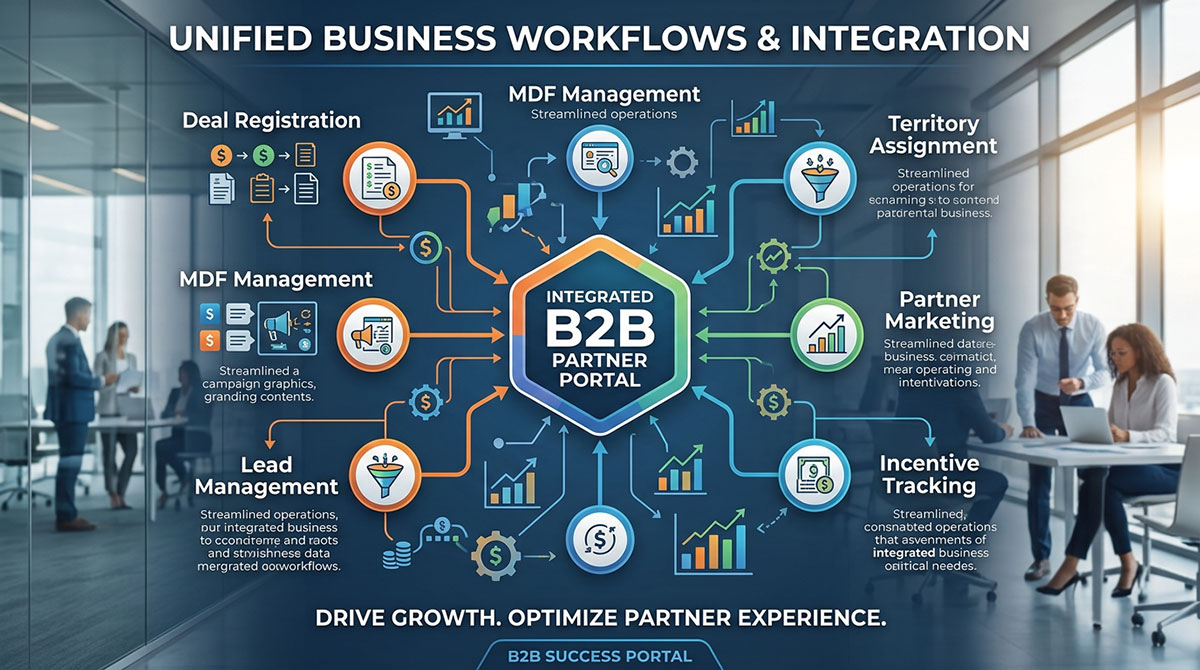
By digitizing these financial workflows, you gain much greater control and visibility. You can ensure that incentive funds are being used effectively to drive marketing activities.
Marketing collaboration is another critical area for workflow integration. Your portal should empower partners to execute co-branded marketing campaigns easily.
This includes providing access to a co-branded assets library. Partners can customize marketing materials with their own logos and contact information.
Integrating tools for email marketing, social media syndication, and event management is also key. This gives partners a full suite of marketing tools within their portal environment.
The final piece of the puzzle is business planning and performance reviews. An integrated partner business planning module allows for collaborative goal setting.
You and your partners can jointly develop business plans, set KPIs, and track progress. This fosters a more strategic and aligned partnership for mutual growth.
Ultimately, a B2B portal with deeply integrated workflows becomes an indispensable business tool. It's the digital foundation of a successful, scalable, and efficient channel program.
This unified approach is the hallmark of a true Unified Partner Management strategy. It brings together all aspects of the partner lifecycle in one cohesive platform.
Why Choose ZINFI's Unified Partner Management for Your B2B Portal?
ZINFI offers a comprehensive solution for building a next-generation B2B portal. Our Unified Partner Management (UPM) platform is designed for the age of the agentic buyer.
We provide a modular, flexible, and scalable solution to meet your specific needs. You can start with the core functionalities you need and expand over time.
ZINFI's platform empowers you to create a world-class partner experience with these powerful features:
- Complete Partner Lifecycle Management: From recruitment to onboarding, enablement, and management, our platform covers every stage of the partner journey in a single, unified B2B portal.
- Deep Personalization Capabilities: Leverage our robust tools for user management, access control, and dynamic content to deliver a uniquely relevant experience to every single partner user.
- Integrated Enablement and Marketing: Combine a state-of-the-art LMS and video library with a full suite of partner marketing automation tools, all within one seamless interface.
- Automated Sales and Incentive Workflows: Streamline complex processes like deal registration, co-selling, MDF, and rebate management to increase efficiency and pipeline velocity for your channel organization.
- Powerful Analytics and Reporting: Gain deep, actionable insights into every aspect of your channel performance with our advanced business intelligence and performance analytics tools.
- Seamless Integration and Scalability: Our platform is built on a centralized interconnect architecture, ensuring it can easily connect with your existing CRM, ERP, and other business systems as you grow.
Frequently Asked Questions
What is a B2B portal?
A B2B portal is a secure, private website for a business to interact with its partners. It facilitates communication, commerce, and collaboration between the company and its channel network.
Why is a B2B portal important for channel sales?
It acts as a centralized hub for partners to access resources, register deals, and get support. This streamlines operations, improves partner engagement, and increases overall channel productivity.
What is an 'agentic buyer'?
An agentic buyer is a modern B2B customer who prefers to self-research and self-serve. They expect to find all the information and tools they need online before engaging a salesperson.
How does personalization help in a B2B portal?
Personalization tailors the portal experience to each user based on their role and behavior. This makes the platform more relevant, efficient, and valuable for every partner.
Can a good B2B portal improve partner loyalty?
Yes, a user-friendly and supportive portal enhances the partner experience significantly. This demonstrates your commitment to their success, which builds stronger relationships and loyalty.
What are the key features of a modern B2B portal?
Key features include personalized dashboards, AI-driven recommendations, and integrated workflows. It should also have robust analytics, a learning management system, and marketing automation tools.
How does AI enhance a partner portal?
AI powers personalization, predictive analytics, intelligent search, and support chatbots. It makes the portal more proactive, insightful, and responsive to user needs.
Is it necessary to integrate a CRM with the B2B portal?
Yes, integrating your CRM provides a single source of truth for all customer and partner data. This ensures seamless data flow between sales, marketing, and partner management activities.
How does a portal help with partner enablement?
A B2B portal can host a learning management system (LMS) with training courses. It also provides a content library for sales and marketing assets that partners need.
Can a small business benefit from a B2B portal?
Absolutely, a scalable B2B portal can help a small business manage its partners efficiently. It automates many tasks, allowing the company to grow its channel program effectively.
About the author
Sugata Sanyal
Sugata Sanyal is the Founder & CEO of ZINFI Technologies, a leader in Unified Partner Management. He has been a passionate advocate for the channel and channel partners for decades. His vision for ZINFI is to provide partner ecosystems with the tools they need to succeed.