Enterprise PRM Software: Scalable Predictable Channel Growth
Enterprise PRM software is a centralized platform designed to help large organizations manage complex partner ecosystems efficiently. It provides the tools necessary to automate, scale, and optimize every aspect of the channel sales lifecycle.
Large enterprises face unique challenges when managing hundreds or thousands of channel partners across different regions. A robust partner relationship management (PRM) system helps streamline these complex operations seamlessly.
Without a dedicated PRM platform, companies often struggle with disconnected tools and inconsistent partner experiences. This leads to inefficiency, lost revenue opportunities, and a lack of visibility into channel performance.
Implementing a comprehensive PRM solution enables businesses to unify their channel activities from a single interface. This ensures consistency while empowering partners with the resources they need to succeed in their markets.
Ultimately, the goal of enterprise PRM software is to foster stronger relationships with partners. It achieves this by making it easier for them to do business with your organization effectively.
Key Takeaways
TL;DR
- Enterprise PRM software centralizes and automates partner lifecycle management for large organizations.
- A unified PRM platform drives scalability by streamlining onboarding, training, and marketing tasks.
- Core features include partner management, enablement, marketing automation, and sales execution tools.
- Advanced analytics provide deep insights into channel performance, enabling data-driven strategic decisions.
- Switching to a modern PRM system significantly boosts partner engagement and overall channel revenue.
- A scalable PRM solution is crucial for expanding into new markets and growing a partner network.
- ZINFI’s unified platform offers a comprehensive suite of tools for managing complex partner ecosystems globally.
What Challenges Does Enterprise PRM Software Solve?
Enterprises managing vast partner networks often grapple with significant operational hurdles that limit their growth potential. These challenges range from inconsistent partner experiences to a severe lack of data visibility across the channel.
A powerful PRM solution directly addresses these pain points by offering a structured and automated framework. It creates a single source of truth for all partner-related data and activities throughout the ecosystem.
One major issue is the fragmented approach to partner management using various disconnected tools and spreadsheets. This manual process is inefficient, prone to errors, and simply cannot scale with a growing business.
A proper PRM platform replaces this chaotic collection of tools with a unified, integrated system. It automates workflows, ensuring that every partner interaction is consistent, professional, and highly efficient.
Another common problem is the difficulty in effectively onboarding and training new partners at scale. Manual onboarding is time-consuming for channel managers and can lead to variably skilled partners.
Enterprise PRM software automates this entire process through dedicated learning management systems. New partners can access training materials and certifications on-demand, ensuring they are sales-ready much faster.
Lack of visibility into channel performance is a critical challenge for many large companies. Without real-time data, it is impossible to know which partners are performing well and which need support.
A PRM platform provides comprehensive business intelligence and reporting dashboards for this purpose. These tools offer deep insights into sales pipelines, marketing campaign effectiveness, and overall partner engagement.
Maintaining brand consistency across a diverse partner network can also be incredibly difficult for organizations. Partners may use outdated logos or messaging, diluting the brand's strength in the market.
With a PRM, companies can provide partners with a library of approved, co-brandable marketing assets. This ensures every piece of content that goes to market is brand-compliant and professionally created.
Distributing leads and managing deal registrations are often sources of friction and channel conflict. A manual process can result in disputes and create distrust among valuable channel partners.
A sophisticated deal registration module within a PRM automates this workflow. It provides clear rules of engagement that protect partners and foster a more collaborative sales environment.
Managing complex partner programs, contracts, and incentives manually is another significant administrative burden for them. Tracking rebates, commissions, and market development funds is a very complicated task without automation.
Enterprise PRM software automates these financial processes with modules for MDF management and rebates. This reduces administrative overhead and ensures partners are compensated accurately and on time every single time.
Ultimately, the lack of a centralized system hinders an enterprise's ability to scale its channel operations. Relying on manual processes means that growing the partner base exponentially increases the workload on channel teams.
A scalable PRM platform is the key to breaking this limitation completely. It empowers businesses to grow their partner ecosystem without a proportional increase in internal management resources.

How Does a PRM Platform Drive Enterprise Scalability?
Enterprise scalability is a core benefit of implementing a state-of-the-art PRM software solution. It provides the foundation for sustainable growth by automating critical channel management functions effectively.
This automation allows companies to expand their partner network without being constrained by manual processes. It frees up channel account managers to focus on strategic activities rather than administrative tasks.
A key area where a PRM drives scalability is in partner recruitment and onboarding. The platform can automate the application, vetting, and contracting processes for all potential new partners.
Once approved, partners are guided through a structured onboarding workflow using tools like partner learning management. This ensures every new partner receives consistent, high-quality training from the very beginning of their journey.
Marketing scalability is another significant advantage offered by a comprehensive PRM system. It allows a small central marketing team to support hundreds or thousands of partners simultaneously.
Through-channel marketing automation (TCMA) tools enable partners to easily execute sophisticated, multi-touch campaigns. They can access co-branded assets, email templates, and social media content from a centralized portal.
This self-service model empowers partners to generate their own demand with minimal hand-holding. The enterprise maintains brand control while enabling partners to market effectively in their local areas.
The ability to scale sales support through a PRM is equally important for overall growth. Partners gain access to essential sales tools and resources whenever they need them day or night.
Features like a centralized content library, configure-price-quote (CPQ) tools, and deal registration systems are crucial. They equip partners to close deals faster and more independently, which is a great benefit.
A robust PRM platform helps manage complex, tiered partner programs with ease and precision. The system can automate the tracking of partner progress through different program levels and statuses.
As partners meet specific revenue or certification targets, the PRM can automatically unlock new benefits. This gamified approach encourages continuous development and keeps the entire partner base highly engaged.
Financial management also becomes immensely scalable with the right PRM software in place. Automating incentive programs like MDF, co-op funds, and rebates is a game-changer for large enterprises.
The platform can manage claims, approvals, and payments based on predefined rules. This greatly reduces the administrative burden on finance and channel teams, ensuring prompt partner payments.
Furthermore, a modern PRM provides scalable communication and support mechanisms for the entire ecosystem. It offers tools like partner communities, support ticketing, and targeted alerts to keep everyone informed.
This ensures that even with thousands of partners, each one feels connected and supported. Channel managers can use the PRM to efficiently communicate important updates to specific partner groups.
According to research from Gartner, technology investments are a top priority for marketing leaders to drive growth. A PRM is a crucial part of this technology stack for companies that rely on indirect sales.
Investing in a scalable PRM platform is essential for any enterprise with ambitious channel growth goals. It is the technological backbone that allows a channel strategy to be executed effectively at scale.
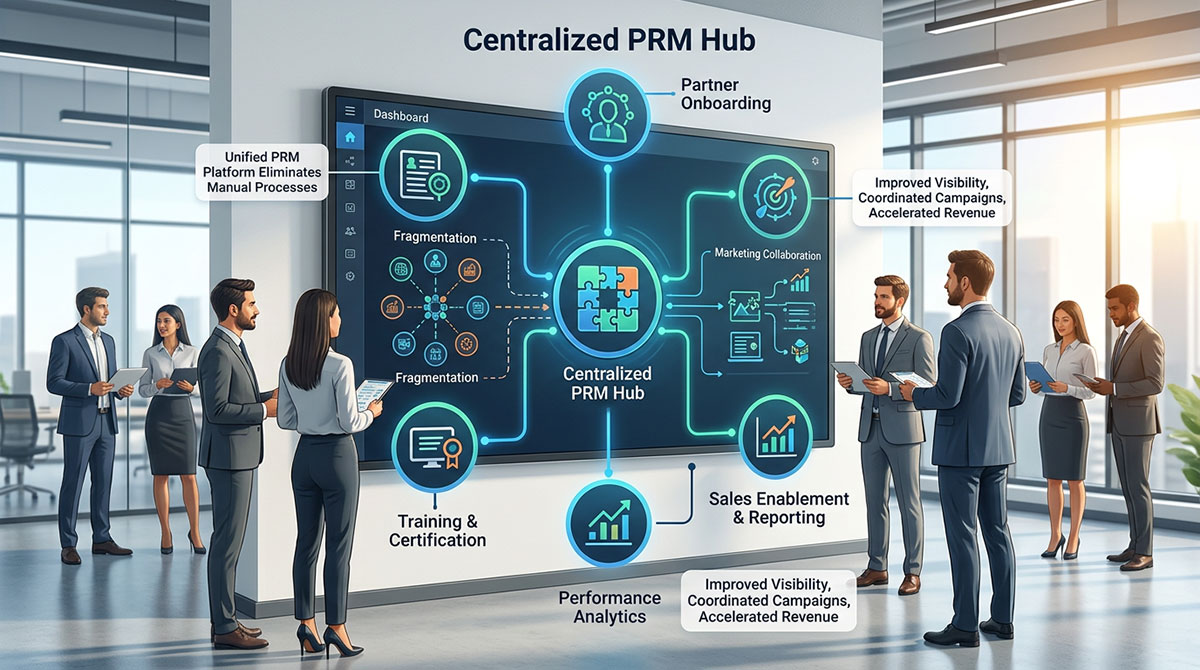
What Core Features Define a Top-Tier PRM Solution?
A top-tier enterprise PRM solution is defined by its comprehensive and integrated feature set. It must cover the entire partner lifecycle, from recruitment to ongoing management and optimization.
These features should be organized into logical modules that work together seamlessly on a unified platform. This integration is what provides a truly holistic view of the entire channel partner ecosystem.
The foundation of any great PRM system starts with robust partner management capabilities. This includes a central database of all partner profiles, contracts, and performance history data.
It should also offer powerful tools for partner segmentation, program management, and business planning. These features help channel managers effectively oversee and guide their assigned partners towards success.
Partner enablement is another critical component of modern PRM software. This module focuses on equipping partners with the knowledge and resources they need to sell effectively.
Key features include a learning management system (LMS) for training and certifications. It also must have a centralized content library for sales playbooks, datasheets, and presentations.
Partner marketing management is essential for driving demand through the channel by leveraging automation. A leading PRM platform will include a full suite of through-channel marketing automation (TCMA) tools.
This encompasses email marketing, social media syndication, microsite creation, and event management capabilities. These tools allow partners to easily execute pre-approved campaigns to generate high quality leads.
Effective partner sales management features help convert those marketing leads into closed revenue. This module is focused on streamlining the sales process for channel partners in a major way.
It must include lead distribution and management, deal registration, and co-selling collaboration tools. Advanced platforms may also offer integrated configure-price-quote (CPQ) functionalities to simplify quoting.
Partner incentives management is vital for motivating partners and rewarding their successful performance. This module automates the administration of complex financial programs for the entire partner network.
It should support market development funds (MDF), co-op funds, rebates, and SPIFFs. A strong PRM will manage the entire lifecycle from fund allocation to claims processing and payments.
Finally, powerful analytics and business intelligence are what tie everything together in the system. An enterprise PRM must provide deep insights into every aspect of channel performance over time.
This includes detailed dashboards and customizable reports on sales pipelines, marketing ROI, and partner engagement. These robust performance analytics capabilities enable data-driven decision-making for a more successful channel strategy.
A unified platform architecture is also a defining characteristic of a top-tier PRM solution. All these modules should be built on a single codebase, not acquired and stitched together.
This ensures a seamless user experience for both internal users and external partners. It also guarantees that data flows freely between modules, providing a true 360-degree channel view.
The presence of predictive analytics is becoming a key differentiator in the market. These AI-powered features can help identify at-risk partners or predict future sales performance.
By analyzing historical data, the system can provide proactive recommendations to channel managers. This allows them to intervene early and keep partners on the path to greater success.

Why is a Unified PRM Approach Superior for Enterprises?
A unified PRM approach provides enterprises with significant advantages over using disparate point solutions. It creates a cohesive, efficient, and user-friendly environment for managing the entire channel ecosystem.
This integrated strategy eliminates data silos and process fragmentation that plague many channel programs. It ensures that everyone is working from the same information and following consistent workflows.
One of the primary benefits is the creation of a single source of truth for all channel data. When all partner activities are tracked in one system, you get a complete view of performance.
This 360-degree view is impossible to achieve when using separate tools for training and marketing. A unified PRM correlates data across functions to reveal deeper strategic insights for the business.
The user experience for partners is vastly improved with a unified PRM platform installed. They can log in to a single portal to access everything they need to be successful.
This includes training courses, marketing campaigns, sales tools, and performance dashboards. This convenience increases partner satisfaction and engagement, making them more loyal and productive.
For internal channel teams, a unified system dramatically improves operational efficiency and productivity. They no longer need to switch between multiple applications to manage their partners' activities.
This streamlined workflow allows channel managers to focus on high-value, strategic tasks. They can spend more time building relationships and coaching partners instead of juggling different software tools.
Reporting and analytics are also far more powerful and accurate within a unified PRM environment. The system can easily track a lead from a marketing campaign all the way to a closed deal.
This end-to-end visibility allows for true ROI measurement on marketing programs and other investments. Leaders can make better decisions about where to allocate resources based on reliable performance data.
A unified platform, like ZINFI's Unified Partner Management, also simplifies administration and reduces total cost of ownership. Managing one vendor and one system is much simpler than managing multiple point solutions.
This reduces integration costs, IT overhead, and the training burden on users significantly. A single platform provides a more cohesive and cost-effective long-term channel technology strategy.
Furthermore, a unified PRM ensures greater consistency in branding and business processes. All partner-facing materials and workflows are managed from a central location in the company.
This guarantees that partners are always presenting a consistent and professional brand image to end customers. It also ensures that business rules for things like deal registration are enforced uniformly.
The ability to orchestrate complex, cross-functional workflows is another key advantage of this model. For example, completing a certification in the LMS could automatically unlock a new marketing campaign.
These automated, multi-step processes are only possible when all modules reside on a single platform. This level of orchestration creates a highly dynamic and responsive partner program that delivers results.
In conclusion, a unified PRM is not just a collection of features, but a strategic asset. It provides the integrated foundation enterprises need to build a world-class, scalable channel program.
It eliminates complexity, enhances visibility, and improves the experience for all stakeholders involved. Choosing a unified approach is the most effective way to drive predictable and profitable channel growth.
Traditional vs. AI-Powered Channel Management
| Feature | Traditional Approach | AI-Powered PRM Approach |
|---|---|---|
| Partner Recruitment | Manual review of applications; relies on gut feeling. | AI models analyze data to identify and score high-potential partner recruits. |
| Partner Onboarding | Standardized, one-size-fits-all training paths for everyone. | Personalized learning paths based on partner type, role, and initial performance. |
| Marketing Efforts | Generic marketing assets and campaigns are provided to all partners. | AI recommends specific marketing campaigns based on a partner’s industry and region. |
| Sales Insights | Channel managers manually analyze historical sales data. | Predictive analytics forecast deal closure probability and identify at-risk deals. |
| Performance Tracking | Reactive analysis of past performance using static dashboards. | Proactive alerts for underperforming partners; AI identifies root causes. |
| Incentive Management | Standard incentive programs offered to broad partner segments. | AI suggests personalized incentives to motivate specific partner behaviors. |
| Scalability | Limited by the manual effort required from channel managers. | Infinitely scalable with AI handling personalization and analysis at a large scale. |
Why ZINFI Excels as an Enterprise PRM Solution
ZINFI stands out as a leading enterprise PRM solution due to its truly unified platform architecture. It also provides an unmatched depth of functionality across the entire partner journey for all users.
Unlike competitors who have assembled their platforms through acquisitions, ZINFI developed its entire suite in-house. This ground-up approach ensures seamless integration, consistent user experience, and superior performance for all.
- Truly Unified Platform: ZINFI's platform is built on a single codebase, eliminating data silos and providing a complete 360-degree view of your channel partners and their activities.
- Comprehensive Feature Set: It offers robust modules for partner relationship management, partner marketing management, and partner sales management, covering every aspect of your channel business.
- Advanced Automation: The platform automates countless workflows from onboarding and training to marketing execution and incentive payouts, driving massive operational efficiency for the team.
- Powerful Analytics: ZINFI provides enterprise-grade business intelligence with detailed dashboards and reports, including performance analytics to track KPIs and measure ROI accurately.
- Extreme Modularity: Customers can start with the specific modules they need and easily add more functionality as their channel program grows and becomes more mature.
- Global and Secure: The platform is designed for global enterprises with multi-language and multi-currency support, all while maintaining the highest standards of data security and compliance.
This commitment to a unified architecture makes ZINFI's PRM exceptionally powerful and easy to use. It empowers enterprises to scale their channels efficiently while enhancing partner engagement and driving revenue.
Choosing ZINFI gives enterprises a flexible, scalable, and future-proof foundation for their channel success. It is the ideal solution for any organization looking to build a world-class partner ecosystem.
Frequently Asked Questions
What is PRM in simple terms?
Partner Relationship Management, or PRM, is software that helps companies manage their network of resellers. It provides tools to recruit, enable, and sell through channel partners more effectively.
How does PRM software differ from CRM software?
CRM software is used to manage relationships with direct customers throughout the sales funnel. PRM software is specifically designed to manage relationships with indirect sales partners or resellers.
What is the primary benefit of using enterprise PRM software?
The primary benefit is the ability to scale your channel sales operations efficiently and effectively. It automates manual tasks, allowing you to support thousands of partners with a small team.
How long does it typically take to implement a PRM system?
Implementation time varies based on complexity, but a modern, modular PRM can be launched in phases. A basic setup can be live in a few weeks, with more modules added over time.
Can a PRM platform integrate with our existing CRM?
Yes, leading PRM platforms like ZINFI offer robust integration capabilities with major CRM systems. This allows for seamless data flow between direct and indirect sales channels and processes.
How can a PRM system help with partner engagement?
A PRM improves engagement by providing a single, easy-to-use portal for all partner needs. It also uses automated communication and personalized content to keep partners connected and informed.
What is the ROI of implementing a PRM solution?
ROI comes from increased channel sales revenue, improved operational efficiency, and reduced administrative costs. Automation and better partner performance directly contribute to a very strong and positive return.
How does PRM help maintain brand consistency?
A PRM provides a central asset library with approved, co-brandable marketing materials. This ensures partners always use the latest, brand-compliant content in their marketing campaigns.
Is PRM software suitable for small businesses?
While often associated with enterprises, many PRM vendors offer scalable solutions for smaller businesses. Modular platforms allow SMBs to start with essential features and grow from there.
What is the role of AI in modern PRM platforms?
AI helps by providing predictive analytics for sales forecasting and identifying ideal partner profiles. It also personalizes partner journeys, content recommendations, and marketing campaigns at a very large scale.
About the author
Sugata Sanyal
Sugata Sanyal is the Founder & CEO of ZINFI Technologies, a leader in Unified Partner Management. He has been a passionate advocate for the channel and channel partners for decades. His vision for ZINFI is to provide partner ecosystems with the tools they need to succeed.