Why You Need PRM for PartnerOps: The Indispensable Engine Beyond CRM
A dedicated Partner Relationship Management (PRM) platform is the indispensable engine for modern PartnerOps. While CRMs manage customer data, a PRM is specifically built to handle the entire partner lifecycle.
Many businesses attempt to manage channel partners using their existing Customer Relationship Management system. This approach often leads to significant operational friction and missed growth opportunities.
A CRM is designed with a direct sales motion in mind, focusing on customer interactions. It fundamentally lacks the architecture to support the unique needs of an indirect sales ecosystem.
PartnerOps, the set of processes and technologies for managing a partner ecosystem, demands specialized tools. A robust PRM provides the necessary framework for automation, scalability, and deep partner engagement.
This system acts as a central hub for all partner-related activities and data. It ensures consistency and efficiency across your entire channel program from start to finish.
Relying on a modified CRM creates data silos and requires extensive, costly customization. A purpose-built platform offers a comprehensive solution out of the box for your business needs.
Ultimately, investing in the right technology is crucial for building a competitive channel advantage. A dedicated platform is no longer a luxury but a core requirement for success.
Key Takeaways
TL;DR
- A CRM is built for customers, while a PRM is specifically designed for partners.
- Effective PartnerOps requires the specialized automation and workflows native to a PRM system.
- Partner relationship management platforms manage the full partner lifecycle, from recruitment to incentives.
- These systems provide dedicated tools for partner enablement, marketing, and sales collaboration.
- Centralizing partner data in a dedicated platform provides superior analytics for strategic decisions.
- Scalability of a channel ecosystem is nearly impossible without a dedicated platform.
- A PRM prevents channel conflict and improves visibility into the indirect sales pipeline.
How Does a PRM Go Beyond Standard CRM Capabilities?
A standard CRM focuses on a linear sales process directly involving your company and customers. Its core function is to track leads, manage contacts, and oversee the customer journey.
A PRM, however, is engineered for the complex, multi-layered relationships within a partner ecosystem. It manages relationships between your company and your various channel partners efficiently.
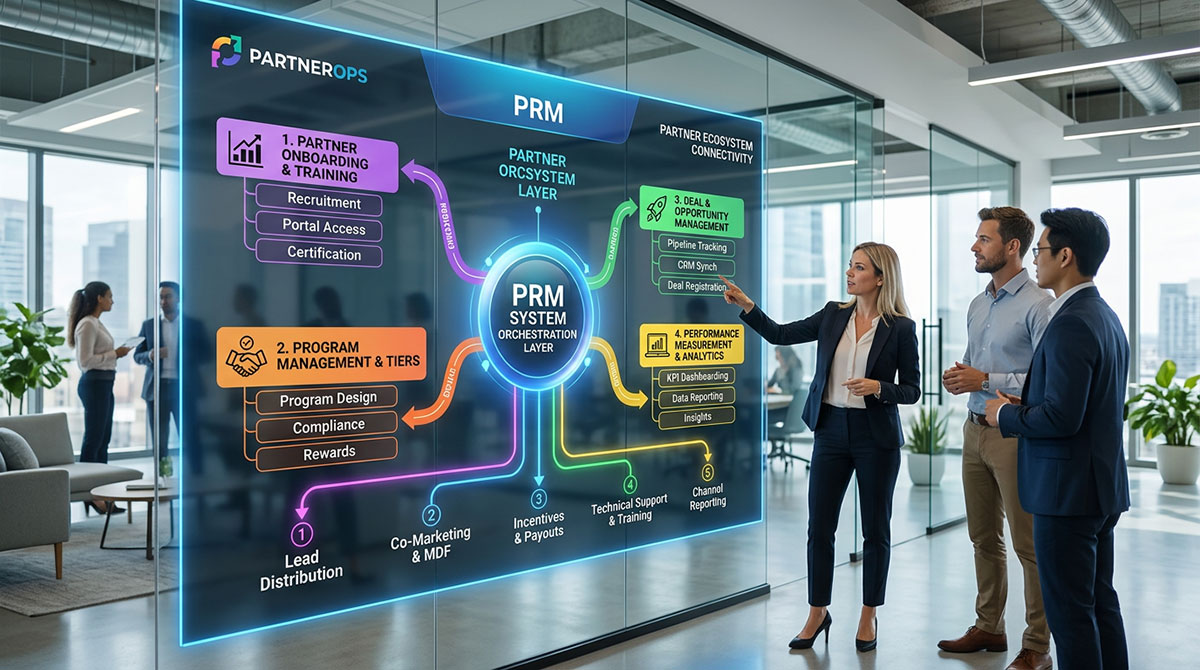
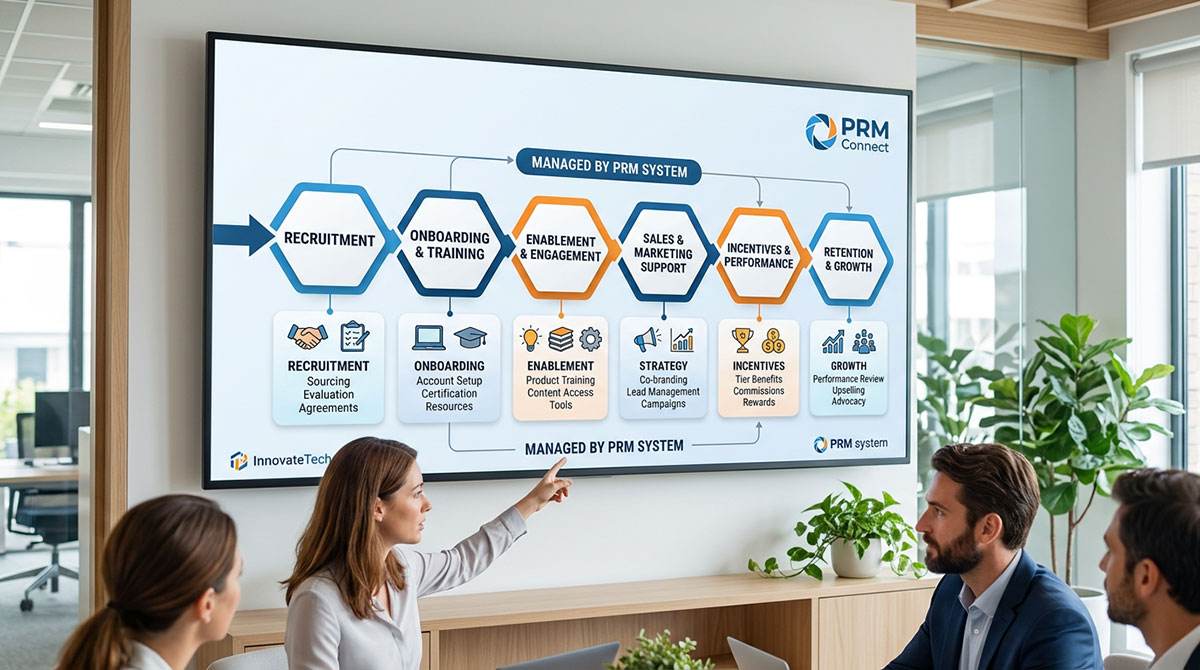
The partner lifecycle includes distinct stages that CRMs are simply not equipped to handle. These stages include partner recruitment, onboarding, training, certification, and ongoing program management.
A partner relationship management platform provides structured workflows for each of these critical phases. This ensures a consistent and positive experience for every partner joining your program.
For example, partner onboarding involves legal agreements, training modules, and portal access provisioning. A specialized platform automates these steps, reducing administrative burdens on your team.
CRMs lack native modules for managing crucial channel functions like partner tiering or contract compliance. These features are standard within a comprehensive partner management solution for your business.
Partner programs often involve different levels with unique benefits, requirements, and incentives. A dedicated solution allows you to easily configure and manage these complex structures with ease.
In contrast, trying to replicate this functionality in a CRM is cumbersome and often ineffective. It requires significant custom development that is expensive to build and difficult to maintain.
Another key differentiator is the management of financial incentives for your network of partners. This includes Market Development Funds (MDF), co-op funds, rebates, and sales commissions.
A PRM has dedicated modules to track fund requests, approvals, claims, and payments. This ensures transparency and accuracy in your channel incentive programs which drives growth.
A generic CRM offers no such capability, forcing channel managers to rely on spreadsheets. This manual process is highly prone to errors and creates payment delays for partners.
Furthermore, a partner platform provides a branded portal for partners to access resources. It gives them a single place to find everything they need to succeed with you.
This includes marketing assets, sales playbooks, training courses, and performance dashboards. A CRM cannot offer this centralized, partner-facing experience without extensive workarounds and help.
The entire data model of a CRM is built around the "account" or "contact" object. A partner is a much more complex entity than a simple customer or account.
A partner has its own employees, its own customers, and its own sales pipeline. A dedicated system is designed to capture and manage this hierarchical, one-to-many relationship structure.
This fundamental architectural difference is why a CRM will always fall short for partner management. It simply cannot model the complexity of an indirect channel ecosystem effectively enough.
Therefore, a purpose-built PRM is not just an add-on but a foundational system. It is specifically designed to handle the intricate operations of a thriving partner network.
Why Is a Specialized PRM Crucial for Effective PartnerOps?
PartnerOps represents the operational discipline of managing and optimizing a channel partner program. It focuses on creating efficiency, predictability, and scale in all channel operations.
A specialized PRM is the core engine that powers an effective PartnerOps strategy. It provides the automation and standardized processes necessary to manage partners at scale.
Without a centralized system, channel managers spend countless hours on manual administrative tasks. These tasks include sending emails, updating spreadsheets, and answering repetitive partner questions.
A partner management platform automates many of these routine activities with powerful tools. This frees up your channel team to focus on high-value strategic initiatives instead.
For instance, workflow automation can streamline deal registration approvals and MDF claims. It ensures processes are followed consistently and without any unnecessary delays.
Automated alerts can also notify partners of new leads, content, or program updates. This keeps them engaged and informed without any manual intervention required from your staff.
A key goal of PartnerOps is to create a single source of truth for all partner data. This is impossible when information is scattered across emails, spreadsheets, and different systems.
A PRM consolidates everything into one secure, accessible database for all teams. This provides a 360-degree view of each partner relationship and their performance.
This centralized data is critical for accurate reporting and strategic decision-making. You can easily track key performance indicators (KPIs) across your entire channel program.
Metrics such as partner engagement, pipeline contribution, and training completion become readily available. This data helps you identify top-performing partners and areas needing improvement quickly.
A dedicated platform also enhances communication and collaboration with your partners. It provides secure messaging tools, forums, and support ticketing systems for partners.
This creates a self-service environment where partners can find answers and resolve issues quickly. It improves the overall partner experience and reduces the support burden on your team.
Scalability is another critical aspect where a specialized platform is essential for success. As your partner ecosystem grows, manual processes quickly become overwhelmed and fail.
A PRM is designed to scale with your business, whether you have ten partners or ten thousand. The system can handle increasing volumes of data, users, and transactions gracefully.
This scalability ensures that your PartnerOps framework remains robust and efficient as you expand. You can onboard and support a growing number of partners without hiring more staff.
Ultimately, a dedicated partner relationship management system professionalizes your channel operations. It transforms reactive, ad-hoc activities into a proactive, data-driven, and scalable function.
This operational maturity is what separates high-performing channel programs from the rest. Investing in a specialized platform is investing in the long-term success of your ecosystem.
Trying to manage a modern channel with outdated tools is a recipe for failure. A dedicated system gives you the competitive edge needed to thrive in today's market.
Traditional CRM vs. AI-Powered PRM Approach
| Feature | Traditional CRM Approach | AI-Powered PRM Approach |
| Partner Onboarding | Manual emails and spreadsheets. Inconsistent process. | Automated workflows with digital contracts and training. |
| Content Distribution | Content sent via email. No tracking or personalization. | Centralized content library with version control. |
| MDF Management | Managed offline via spreadsheets. Prone to errors. | Automated request, approval, and claim workflows. |
| Deal Registration | Basic lead forms. High potential for channel conflict. | Automated rules engine to prevent duplicates and conflict. |
| Performance Tracking | Manual data collection. Limited, lagging indicators. | Real-time dashboards with performance analytics. |
| Scalability | Very limited. Manual processes break with growth. | Highly scalable architecture for thousands of partners. |
| Data Focus | Customer-centric data model. Poor fit for partners. | Partner-centric data model for ecosystem management. |
What Role Does a PRM Play in Partner Enablement and Marketing?
Partner enablement is the process of providing partners with the knowledge they need. It gives them the skills and assets required to market and sell your products effectively.
A PRM acts as the central nervous system for your entire partner enablement strategy. It provides a single portal where partners can access all necessary resources and tools.
A key component of this is a robust content library management system. This feature allows you to organize and share marketing collateral, sales guides, and technical documents.
You can ensure that partners always have access to the latest, brand-approved materials. Version control and access permissions prevent the use of outdated or incorrect information.
Another critical enablement tool is a Partner Learning Management System, or LMS. An LMS allows you to create and deliver structured training courses and certification programs.
ZINFI’s Partner Learning Management Plus helps you track partner progress and test their knowledge. This ensures your partners are well-versed in your product offerings and sales methodologies.
Beyond education, a partner relationship management platform also powers through-channel marketing automation (TCMA). TCMA empowers partners to execute sophisticated marketing campaigns with minimal effort and cost.
This is a significant advantage for smaller partners who may lack dedicated marketing resources. They can leverage your investment in marketing technology to generate their own leads.

Features like email marketing management allow partners to launch co-branded email campaigns. They can use pre-built templates and nurture sequences provided by your marketing team.
The system handles list segmentation, sending, and tracking of campaign performance. This gives both you and your partners valuable insights into campaign effectiveness.
Social media syndication is another powerful TCMA feature found in a modern PRM. You can create social media content that partners can automatically share on their own networks.
This amplifies your brand's reach and messaging through the trusted voice of your partners. It helps drive brand awareness and web traffic at a scale you cannot achieve alone.
Furthermore, partners can create their own co-branded assets and landing pages. Using a co-branded assets management tool, they can easily add their logo and contact info.
This level of personalization helps partners maintain their own brand identity. It also strengthens their local market presence while promoting your solutions to customers.
Event marketing modules help partners manage webinars, seminars, and trade shows. They can manage registrations, send invitations, and follow up with attendees post-event.
All these marketing activities generate valuable leads that flow into the system. The platform ensures these leads are properly attributed to the originating partner for a sale.
In essence, a partner relationship management solution transforms your partners into an extension of your marketing team. It provides them with the tools and content to effectively generate demand.
This collaborative approach to marketing significantly increases pipeline and revenue for everyone involved. It fosters a true partnership dynamic that a simple CRM cannot replicate.
How Can a PRM Improve Channel Sales and Performance Tracking?
A sophisticated PRM brings clarity and control to the complex world of channel sales. It provides specialized tools that address the unique challenges of selling through partners.
One of the most critical features is a robust deal registration management system. This allows partners to formally claim opportunities they are pursuing in the market.
This process is essential for preventing channel conflict between different partners. It also stops conflict between partners and your direct sales team over a particular customer.
An automated system enforces rules of engagement and provides a clear record of opportunity ownership. This builds trust and encourages partners to invest in developing new business for you.
Lead distribution and referral management are also key sales functions of a partner management platform. The system can intelligently route inbound leads to the most appropriate partner.
Routing can be based on geography, industry expertise, partner tier, or performance. This ensures that valuable leads are sent to the partners most likely to close them.
A partner relationship management platform provides unprecedented visibility into the channel sales pipeline. Channel managers can see all registered deals and their current status in one place.
This helps with more accurate sales forecasting from the indirect channel. It also allows managers to identify stalled deals and offer assistance where needed.
Managing financial incentives is another area where a specialized platform excels over other options. Partner incentive programs are powerful motivators, but they must be managed carefully.
Dedicated modules for Market Development Funds (MDF) streamline the entire process. Partners can submit proposals, get approvals, and claim funds through the online portal.

This automation reduces administrative overhead and ensures compliance with program rules. It also provides clear ROI data on how marketing funds are impacting sales.
The true power of a PRM lies in its comprehensive analytics and reporting capabilities. According to Gartner, these systems provide a framework for managing partner relationships.
This framework is built upon the data that the system collects from every interaction. A platform centralizes data from sales, marketing, and enablement activities into one repository.
This aggregated data fuels powerful business intelligence reports and dashboards. You can analyze channel performance from every conceivable angle with the data provided.
Using performance analytics, you can create scorecards for each partner. These scorecards might track metrics like revenue, pipeline, certified individuals, and marketing engagement.
This data-driven approach allows for objective conversations about performance with your partners. It helps you identify which partners to invest in and which may need more support.
Advanced platforms also incorporate predictive analytics to identify future trends and opportunities. The system can forecast future sales or identify partners at risk of churn.
This forward-looking intelligence enables you to be proactive rather than reactive in your channel management. You can address issues before they impact revenue and partner satisfaction.
Without a dedicated PRM, gathering this level of insight is a monumental task. A partner platform makes sophisticated channel performance tracking accessible and actionable.
Why ZINFI is the Right PRM for Your PartnerOps Team
ZINFI's Unified Partner Management (UPM) platform is an industry-leading solution for PartnerOps. It provides a complete suite of integrated modules to manage your entire channel.
Our platform combines three core competencies into one powerful solution. This includes partner relationship management, partner marketing management, and partner sales management.
With ZINFI, you can streamline your entire partner ecosystem with a single, unified platform. This eliminates data silos and provides a consistent experience for both partners and internal teams.
Our robust and flexible solution helps organizations achieve profitable growth and a clear competitive advantage. Consider how these core capabilities can revolutionize your PartnerOps and drive success:
- Partner Relationship Management: Easily manage all aspects of the partner lifecycle from recruitment and onboarding to contracts and business planning. Learn more here.
- Partner Marketing Management: Empower your partners with through-channel marketing automation tools for campaigns, social media, and event management. Explore marketing tools.
- Partner Enablement Management: Deliver world-class training and certification with our integrated LMS and provide access to a centralized content library. Discover our LMS+.
- Partner Sales Management: Increase channel sales velocity with automated deal registration, lead distribution, and co-selling tools to drive revenue. See sales modules.
- Partner Incentives Management: Motivate partners with automated management of MDF, rebates, commissions, and other incentive programs in one place. Manage incentives better.
- Business Intelligence and Reports: Gain deep insights into every aspect of your channel's performance with real-time dashboards and advanced analytics. View reporting features.
ZINFI's platform is designed for scalability, security, and global deployment from the ground up. It provides the essential foundation your PartnerOps team needs to build a world-class channel.
By unifying all channel activities, ZINFI drives efficiency, engagement, and extraordinary growth. See how our solution can transform your partner program into a significant revenue driver.
Frequently Asked Questions
Can't I just customize my CRM to manage partners?
You can try to customize a CRM, but it is often very costly and inefficient. CRMs are built for customers, not the complex, multi-tiered relationships of a partner ecosystem.
A purpose-built PRM provides the necessary partner-centric architecture and features out of the box. This saves significant time, money, and development resources in the long run.
What is the primary benefit of a PRM for PartnerOps?
The primary benefit is automation and the creation of a single source of truth. It automates manual tasks, allowing the PartnerOps team to focus on strategic initiatives.
A specialized platform also centralizes all partner data, which provides unparalleled visibility and analytics. This data drives better decision-making and channel performance for your business.
How does a PRM help with channel scalability?
A partner platform automates key processes like onboarding, training, and incentive management. This automation allows you to support a growing number of partners effectively.
Without these automated systems, your manual processes would quickly become overwhelmed. This would limit the growth potential of your entire channel program significantly.
What are some must-have features in a PRM?
Essential features include a partner portal, deal registration, and content management. A learning management system (LMS) is also crucial for partner training.
You should also look for through-channel marketing automation (TCMA) and incentive management modules. Robust analytics and reporting capabilities are also non-negotiable for success.
Is a PRM suitable for a small but growing partner program?
Yes, a PRM is highly beneficial for small and growing programs. It establishes best practices and scalable processes from the very beginning.
Starting with a dedicated platform prevents the accumulation of "operational debt." This makes it much easier to scale your channel operations efficiently over time.
How does a PRM improve the partner experience?
A platform provides partners with a single, easy-to-use portal for everything they need. They can access training, marketing assets, register deals, and view their performance.
This self-service environment empowers partners and makes it easier for them to do business. A positive partner experience leads to higher engagement and loyalty.
Can a PRM integrate with our existing CRM?
Yes, most modern partner management platforms offer robust integration capabilities. They are designed to sync data seamlessly with major CRM systems like Salesforce.
This integration ensures that customer and partner data can be shared between systems. It provides a complete view of the customer journey, from partner-sourced lead to closed deal.
What is through-channel marketing automation (TCMA)?
TCMA refers to the tools within a platform that enable partners to execute marketing campaigns. This includes co-branded emails, social media syndication, and landing page creation.
It allows vendors to scale their marketing efforts through their partner network. This helps partners generate their own leads and build a local pipeline.
How does a PRM prevent channel conflict?
A partner relationship management system's deal registration module is the primary tool for conflict prevention. It provides a timestamped, official record of which partner is working on an opportunity.
Automated rules prevent duplicate registrations and protect a partner's registered deal. This transparency builds trust and encourages active pipeline development from your partners.
How do analytics in a PRM differ from a CRM?
CRM analytics focus on direct sales pipeline, customer lifetime value, and sales rep performance. It is focused entirely on direct customer interactions with your internal staff.
A PRM provides channel-specific analytics, tracking partner engagement, and training progress. It also tracks pipeline contribution, marketing ROI, and overall program health across your ecosystem.
About the author
Sugata Sanyal
Sugata Sanyal is the Founder & CEO of ZINFI Technologies, a leader in Unified Partner Management. He has been a passionate advocate for the channel and channel partners for decades. His vision for ZINFI is to provide partner ecosystems with the tools they need to succeed.