Building a Scalable Partner Program with PRM Software
A scalable partner program requires a robust, centralized foundation to manage growth effectively. This foundation is Partner Relationship Management (PRM) software, which automates and streamlines every aspect of the partner lifecycle.
As your business expands, so does the complexity of your channel partner network. Managing dozens or hundreds of partners with spreadsheets and email is simply not sustainable.
This manual approach leads to inefficiencies, data silos, and a poor partner experience. A dedicated platform is essential for creating a program that can grow without breaking.
The core purpose of a Partner Relationship Management system is to provide a single pane of glass. It brings all partner-related activities, data, and communications into one accessible place.
This centralization is the first step toward building a scalable and predictable revenue engine. It ensures consistency and control as you add more partners to your ecosystem.
By automating repetitive tasks, a good system frees up your channel team. They can then focus on high-value activities like recruitment, strategy, and relationship building.
Ultimately, investing in the right technology is not just about efficiency. It is a strategic decision to build a competitive and future-proof channel program.
Key Takeaways
TL;DR
- Manual methods like spreadsheets are inadequate for scaling a partner program effectively.
- PRM software provides a centralized platform for all partner management activities.
- Automation of onboarding, training, and marketing is critical for efficient growth.
- Data-driven insights from a robust system help optimize channel performance and strategy.
- A scalable program relies on strong partner engagement fostered by enablement tools.
- The right platform helps build a sustainable partner ecosystem for long-term success.
- Choosing a unified Partner Relationship Management solution is crucial for a holistic channel view.
Why is a Dedicated PRM Solution Crucial for Scaling?
Attempting to scale a partner program with manual tools is an exercise in futility. Spreadsheets quickly become outdated, and vital information gets lost in email chains.
This disjointed approach creates data fragmentation and a lack of visibility. Your team cannot make informed decisions without a clear view of channel performance.
A dedicated PRM solution directly addresses these challenges by centralizing all partner data. It becomes the single source of truth for your entire partner ecosystem.
This consolidation ensures that everyone, from channel managers to partners, works with the same accurate information. It eliminates confusion and reduces administrative errors.
Moreover, scalability demands standardization and consistency in your processes. A Partner Relationship Management system allows you to define and automate workflows for key activities.
This includes onboarding new partners, managing contracts, distributing leads, and processing payments. It ensures every partner receives a consistent and professional experience.

Without a structured system, your partner experience will vary wildly as you grow. This inconsistency can damage your brand reputation and hinder partner recruitment efforts.
An effective platform formalizes your program with features like partner contracts management. This ensures all legal and compliance requirements are met consistently across the board.
The automation capabilities of a modern PRM are fundamental to scaling. Repetitive administrative tasks can consume a significant amount of your channel team’s time.
By automating these tasks, you free up valuable human resources. Your team can then focus on strategic initiatives that drive channel growth, like partner recruitment and enablement.
Effective communication is another pillar of a scalable program. A unified system provides tools for targeted communication, ensuring messages reach the right partners at the right time.
This might include automated alerts, newsletters, and a secure portal for ongoing dialogue. Using a partner community management module can further enhance collaboration.
Ultimately, a dedicated PRM is not just an operational tool. It is the strategic infrastructure that supports and enables sustainable channel growth.
It provides the control, visibility, and efficiency needed to expand your partner network confidently. You can scale without sacrificing quality or overwhelming your internal teams.
How Does PRM Automate and Streamline Partner Onboarding?
The partner onboarding process is often the first major bottleneck for a growing channel program. A slow, manual process can discourage new partners before they even start.
It can create a poor first impression and delay the partner's time-to-revenue. This hurts both your business and the partner's motivation to invest in the relationship.
A powerful PRM platform transforms onboarding from a manual chore into a streamlined, automated workflow. It starts with a customizable portal for partner applications and recruitment.
Prospective partners can easily apply, and the system can automate the initial vetting process. This is managed through integrated partner management functionalities.
Once a partner is approved, the system can automatically trigger the next steps. This includes sending out welcome emails and providing access to the partner portal.
The platform guides new partners through a structured onboarding journey. This journey can be customized for different partner types, tiers, or geographic regions.
A critical part of onboarding is training and certification. A PRM with an integrated learning management system (LMS) is incredibly valuable.
You can create learning paths with courses, videos, and quizzes. ZINFI's Partner Learning Management Plus is a perfect example of this capability.
This self-service approach empowers partners to get trained at their own pace. It also provides you with visibility into their progress and certification status.
Manual training coordination is impossible to scale effectively. An automated system ensures every partner receives the necessary knowledge to represent your brand correctly.
Immediate access to resources is another key benefit of an automated onboarding process. The moment partners log in, they should find everything they need to get started.
This includes marketing materials, sales playbooks, technical documentation, and brand guidelines. A robust content library management is essential here.
A well-organized onboarding process reduces the administrative burden on your channel account managers. They no longer need to manually send documents or schedule individual training sessions.
This efficiency allows each manager to support a larger number of partners effectively. This is the essence of building a program that can scale successfully.
The entire process becomes faster, more professional, and highly repeatable. A new partner can go from application to being fully enabled in a fraction of the time.
This speed directly impacts your return on investment. The faster a partner is enabled, the faster they can start generating revenue for your business.
What Role Does PRM Play in Driving Partner Engagement and Enablement?
Recruiting partners is only the beginning of the journey. Keeping them actively engaged and productive is the true measure of a successful program.
A passive partner network does not contribute to your bottom line. A scalable program requires tools and strategies to ensure partners remain motivated and effective.
A comprehensive PRM is the central hub for all partner engagement and enablement activities. It provides partners with a one-stop-shop for everything they need to succeed.
This constant access and support fosters a stronger, more connected relationship. It shows partners that you are invested in their success.
One key area is marketing enablement. A good system provides partners with tools to effectively market your products and services.
This includes access to a co-branded assets management module. Partners can easily customize marketing collateral with their own branding.
The platform can also offer automated marketing campaigns. Tools for email marketing management or social media syndication empower partners to generate leads.
This marketing automation simplifies execution for partners. It ensures consistent messaging while extending your brand's reach through the channel.

Sales enablement is equally critical for driving revenue. A PRM streamlines the entire sales process, from lead to close.
Features like lead distribution and deal registration management prevent channel conflict. They provide a fair and transparent process for managing sales opportunities.
According to research from Gartner, empowering partners is key to igniting a partner ecosystem. Providing access to clear processes and tools is a foundational element of this empowerment.
A Partner Relationship Management solution is the vehicle for delivering this empowerment at scale. It ensures all partners have access to the same high-quality sales support.
Continuous communication is vital for engagement. A platform facilitates this through targeted communications, newsletters, and alerts.
You can segment your partner base and send relevant information. This ensures partners are not overwhelmed with irrelevant messages and stay tuned in.
Finally, incentives play a huge role in motivating partners. An effective PRM automates the management of incentive programs.
This can include Market Development Funds (MDF), rebates, and commissions. ZINFI offers modules for MDF management and more to simplify these complex processes.
When partners can easily track their performance and potential earnings, they are more motivated. This clarity and transparency in incentives directly drives sales activity and engagement.
By integrating all these elements, the platform creates a virtuous cycle. Better enablement leads to more engagement, which drives better performance and greater partner loyalty.
How Can You Measure Scalability and Success with a PRM System?
Building a scalable partner program is impossible without robust measurement and analytics. You cannot optimize what you do not measure accurately.
Gut feelings and anecdotal evidence are not sufficient for making strategic decisions. Data-driven insights are required to understand what’s working and what isn’t.
A sophisticated PRM solution is much more than a system of record. It is a powerful analytics engine that transforms raw channel data into actionable business intelligence.
The platform consolidates data from every stage of the partner lifecycle. It then presents it through intuitive dashboards and configurable reports.
This allows channel leaders to track a wide range of Key Performance Indicators (KPIs). These metrics provide a holistic view of the program's health and scalability.
Important metrics include partner recruitment rates, onboarding times, and training completion rates. You can also measure partner engagement levels with marketing and sales content.
From a revenue perspective, you need to track metrics like lead conversion rates. You also need to watch deal registration volume and the average sales cycle length.
Perhaps most importantly, you can measure a partner's time-to-first-revenue. This KPI is a direct indicator of your onboarding and enablement effectiveness.
Modern PRM platforms go beyond simple historical reporting. They incorporate advanced analytics to help you look forward.
Features like predictive analytics can help you forecast future channel revenue. It can also identify partners with the highest growth potential based on their attributes and behaviors.
This allows you to focus your resources and support where they will have the greatest impact. It is a proactive approach to channel management that is only possible with advanced technology.
Similarly, performance analytics provides real-time insights into program performance. You can quickly spot trends, identify underperforming partners, and address issues before they escalate.
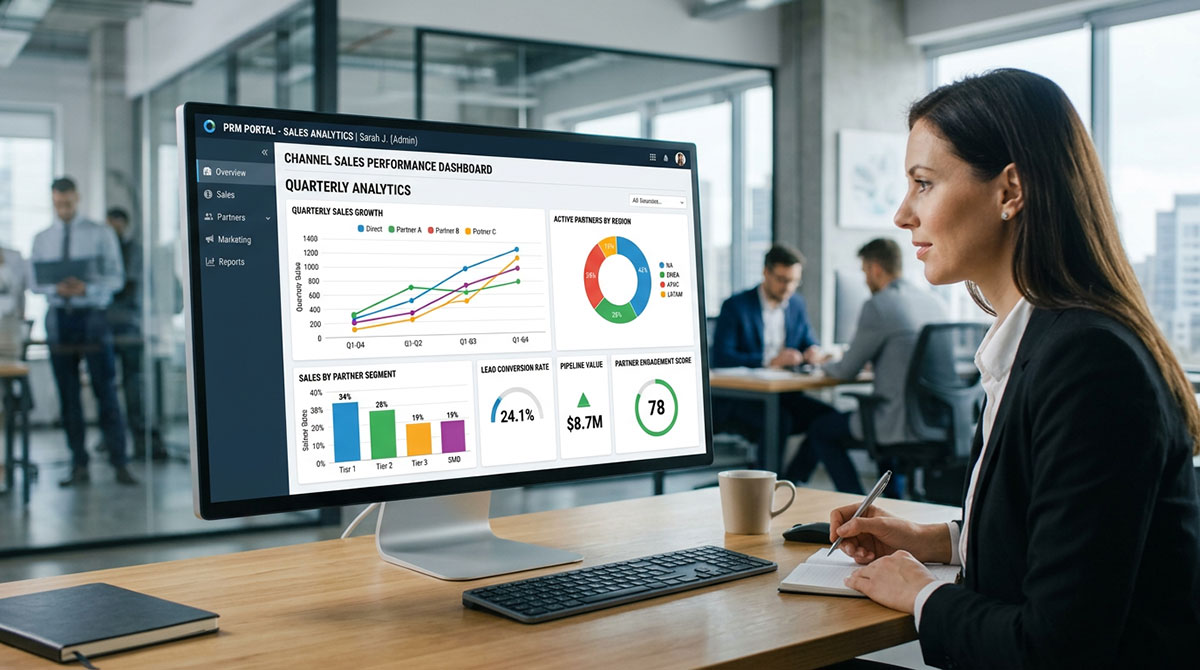
ZINFI's platform provides comprehensive business intelligence and reports. This gives you the visibility needed to manage a complex channel at scale.
This data-driven approach allows for continuous program optimization. You can test different incentive structures, marketing campaigns, or training modules and measure their impact.
You can also create leaderboards and scorecards to gamify performance and foster healthy competition. This is another way to use data to drive partner engagement and motivation.
Ultimately, a data-centric PRM lets you demonstrate the ROI of your channel program to executives. You can clearly show how the channel is contributing to the company's overall growth.
Comparing Channel Management Approaches
| Feature | Traditional Approach (Manual) | AI-Powered PRM Approach |
|---|---|---|
| Partner Onboarding | Slow, inconsistent, high-touch | Automated, standardized, self-service |
| Communication | Ad-hoc emails, fragmented | Centralized, targeted, scheduled |
| Asset Management | Disorganized folders, hard to find | Structured library, version control |
| Lead Management | Inefficient, prone to conflict | Streamlined distribution, deal registration |
| Performance Tracking | Manual reports, delayed data | Real-time dashboards, automated reporting |
| Scalability | Limited, requires more staff | Virtually unlimited, efficiency gains |
| Data Integrity | Prone to errors, multiple sources | Single source of truth, high accuracy |
How Does a PRM Foster a Healthy Partner Ecosystem for Long-Term Growth?
A truly scalable partner program is more than just a large number of partners. It is a vibrant, collaborative ecosystem built on trust and mutual success.
Long-term growth depends on fostering this healthy ecosystem. A transactional approach where partners are simply sales outlets is not sustainable.
A sophisticated PRM provides the tools to nurture this community. It moves the relationship beyond simple transactions to strategic alignment.
This is crucial for building a loyal partner base that is resilient to competitive pressures. Partners who feel like true partners will invest more in the relationship.
One way a platform fosters this is by enabling collaboration. Features that support partner co-selling management allow partners to work together on complex deals.
This creates a sense of community rather than internal competition. It leverages the diverse strengths within your partner network to win larger deals.
Strategic alignment is another key aspect. A PRM can include tools for joint business planning.
This helps you and your key partners set mutual goals and track progress. A partner business planning module ensures both parties are working towards the same objectives.
This alignment is critical for focusing efforts and resources. It ensures that partner activities directly contribute to your organization's strategic goals.
A healthy ecosystem also requires flexibility. Not all partners are the same, and a one-size-fits-all approach is ineffective.
A top-tier Partner Relationship Management platform allows you to create and manage varied partner programs. You can define different tiers, roles, and specializations with unique requirements and benefits.
This flexibility to run multiple partner programs lets you cater to a diverse range of partner types. You can have programs for resellers, referral partners, service partners, and technology partners.
Furthermore, a scalable system must support global operations. This includes multi-language and multi-currency capabilities.
It also means having the flexibility to handle regional differences in compliance and business practices. A robust PRM acts as a global framework that can be locally adapted.
This ability to support a diverse, global, and collaborative network is the hallmark of a healthy ecosystem. The platform becomes the digital backbone of this entire structure.
It is the central nervous system that connects you, your partners, and your end-customers. It fosters the communication, collaboration, and trust necessary for sustained growth.
Why Choose ZINFI for Your Scalable Partner Program?
ZINFI offers a leading Unified Partner Management solution to build and scale a world-class partner program. Our platform is built from the ground up to manage the entire partner lifecycle.
With ZINFI, you gain a powerful, flexible, and integrated PRM system. It provides all the tools you need to automate, manage, and grow your channel.
- Comprehensive Partner Lifecycle Management: From recruitment and onboarding to ongoing management, our platform provides dedicated tools for every stage of your partner relationships.
- Advanced Partner Enablement Tools: We provide integrated learning management, content libraries, and video libraries to ensure your partners are fully trained and equipped to sell.
- Integrated Partner Marketing Automation: Empower your partners with co-brandable assets, email marketing, social media syndication, and event management tools to drive demand.
- Flexible Partner Sales Management: Streamline your channel sales with modules for deal registration, referral management, co-selling, and configure-price-quote (CPQ).
- Powerful Partner Incentives Management: Motivate your partners and drive performance with automated management of MDF, rebates, commissions, and other incentive programs.
- Robust Analytics and Reporting: Gain deep, real-time insights into every aspect of your channel performance with our advanced performance analytics and business intelligence capabilities.
Frequently Asked Questions
What is PRM software?
Partner Relationship Management (PRM) software is a specialized platform for managing channel partners. It automates and centralizes tasks related to partner onboarding, enablement, marketing, and sales.
How is a PRM different from a CRM?
A CRM (Customer Relationship Management) is designed to manage direct customer relationships. A PRM is specifically built to manage indirect sales channels and the unique needs of partner ecosystems.
Who needs a PRM system?
Any company that sells through indirect channels should consider a PRM. It becomes essential when managing more than a handful of partners proves difficult with manual methods.
How does this software improve partner engagement?
It improves engagement by providing a central portal with easy access to training and resources. It also offers marketing tools, clear incentives, and streamlined communication channels.
What are the key features to look for in a PRM?
Look for features like partner onboarding automation, a learning management system, and marketing tools. Also consider deal registration, incentive management, and robust analytics.
How does a PRM help with scalability?
A PRM helps with scalability by automating manual tasks and standardizing processes. This allows you to add more partners without proportionally increasing your channel management headcount.
Can I measure the ROI of my partner program with a PRM?
Yes, a good system provides detailed analytics on partner performance, revenue, and program costs. This data allows you to calculate a clear return on investment for your channel efforts.
Does a PRM integrate with other business systems?
Leading platforms offer integrations with other core systems like CRMs (e.g., Salesforce) and ERPs. This ensures seamless data flow across your entire business technology stack.
Is mobile access important for a PRM?
Mobile access is increasingly important for modern channel partners who are often on the go. A mobile-friendly portal or dedicated app like ZINFI's Mobile App Management helps partners stay connected.
How does a PRM handle different partner tiers or types?
A flexible PRM allows you to create and manage multiple partner programs. You can define different tiers with unique access rights, content, and incentives for each group.
About the author
Sugata Sanyal
Sugata Sanyal is the Founder & CEO of ZINFI Technologies, a leader in Unified Partner Management. He has been a passionate advocate for the channel and channel partners for decades. His vision for ZINFI is to provide partner ecosystems with the tools they need to succeed.