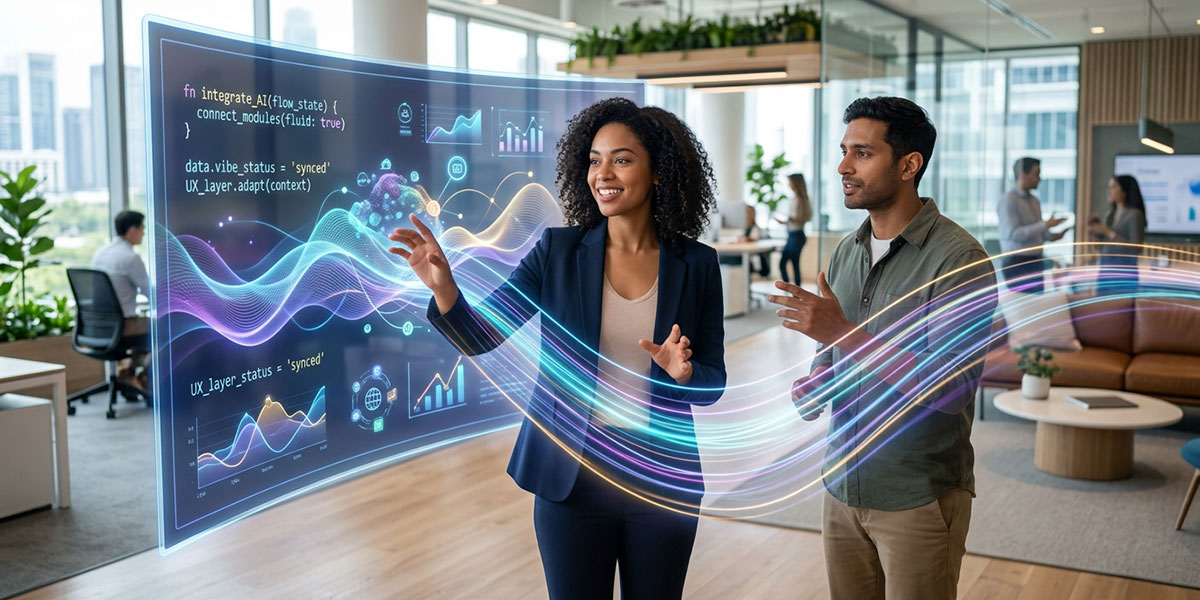
The Intuitive Force Driving the Future of SaaS: Vibe Coding
Vibe coding is reshaping the software-as-a-service industry by prioritizing user experience and intuition. It critical for the evolving future of SaaS. This approach moves beyond rigid feature lists to create more responsive and engaging platforms. It fundamentally alters how developers build and maintain software for the modern digital landscape.
Key Takeaways
- Vibe coding focuses on the overall user experience and intuitive feel of an application.
- It represents a cultural shift from feature-led to experience-led software development.
- This methodology greatly enhances user adoption and long-term customer satisfaction rates.
- Data and analytics are used to validate intuition rather than dictate every single decision.
- Agile and flexible workflows are essential for implementing a vibe coding approach successfully.
- The future of SaaS will likely see a blend of this intuitive style and data-driven methods.
- Adopting this mindset helps companies build more human-centered and successful products.
What Exactly is Vibe Coding in the Context of SaaS?
Vibe coding is an emerging software development philosophy. It prioritizes the holistic user experience over a simple checklist of features. This method focuses on the intangible 'feel' of a product or service.
Developers using this approach aim for intuitive navigation and seamless interactions. The goal is to create a product that users enjoy operating. This feeling of ease and efficiency is the core of the vibe.
This contrasts with traditional methods focused purely on technical specifications. The future of SaaS depends on more than just powerful functionality. It also requires an emotional connection and user satisfaction to succeed.
Essentially, vibe coding asks how the software feels, not just what it does. This question guides the entire development lifecycle, from concept to deployment. It ensures the end product is both powerful and pleasant to use.
This approach aligns with a more human-centric design philosophy. It recognizes that users are people with emotions and expectations. Meeting these non-technical needs is crucial for retention in a competitive market.
For example, a platform’s speed and responsiveness contribute to its vibe. So does the clarity of its layout and the simplicity of its workflows. These elements combine to define the user's overall impression.
Managing these complex processes requires robust tools. A platform for workflow management helps developers streamline these intuitive builds. This ensures consistency across the application’s user journey.
The future of SaaS is not just about adding more features. It is about crafting experiences that resonate deeply with users. This shift in focus is what vibe coding is all about.
Companies that adopt this mindset gain a significant competitive advantage. They build products that attract and retain loyal customers. This loyalty is the foundation of long-term sustainable growth.
How Does Vibe Coding Influence the Future of SaaS User Experience?
Vibe coding places the user experience at the center of all development. This focus directly impacts how SaaS platforms are designed and built. The user journey becomes the primary blueprint for the entire project.
It encourages developers to think like end-users. They must anticipate needs and remove potential friction points proactively. This empathy results in more intuitive and user-friendly software applications.
The future of SaaS will be defined by exceptional user journeys. Customers now expect software to be as easy to use as consumer apps. Vibe coding helps bridge that gap between complexity and usability.
This method leads to cleaner interfaces and more logical navigation paths. It eliminates unnecessary clutter that can confuse or frustrate users. The result is a product that feels effortless and natural to operate.
Effective content library management is one practical application of this idea. Organizing resources intuitively helps users find what they need quickly. This enhances their overall experience and satisfaction with the platform.

Furthermore, vibe coding influences onboarding processes. It promotes guided tours and interactive tutorials that feel helpful, not intrusive. This helps new users achieve value from the software much faster.
The overall aesthetic of the platform also plays a crucial role. Consistent branding and thoughtful design choices contribute to a positive vibe. These elements help build trust and reinforce brand identity.
Ultimately, a better user experience leads to higher engagement rates. Users who enjoy a platform are more likely to explore its full capabilities. This deep engagement is a key driver of the future of SaaS growth.
Improved usability also reduces the burden on customer support teams. When a product is intuitive, users can solve most problems on their own. This allows support staff to focus on more complex, high-value issues.
Organizations can leverage strong partner support management to handle specialized inquiries. This ensures every user gets the help they need efficiently. It completes the circle of a positive user journey.
The trend towards user-centricity is undeniable in software development. An authoritative report from Gartner highlights how the engineering experience is reshaping software delivery. This aligns perfectly with the principles behind vibe coding.
By focusing on the feel, companies are building stickier products. This user-centric approach is a cornerstone of the future of SaaS. It is transforming how businesses think about software value.
What Is the Role of Data in Shaping the Future of SaaS with Vibe Coding?
While vibe coding sounds intuitive, it does not ignore data. Instead, it uses data in a more nuanced and supportive way. Data helps validate the "vibe" and informs iterative improvements over time.
In this model, analytics are used to understand user behavior deeply. Metrics like session duration, click-through rates, and feature adoption provide valuable insights. These insights confirm whether the intended vibe is being achieved.
This approach transforms the role of analytics in the future of SaaS. Data is not just for identifying problems or justifying features. It is for understanding the emotional and psychological journey of the user.
For instance, developers might hypothesize that a certain workflow feels clunky. They can use screen recordings and heatmaps to confirm this intuition. The data provides objective evidence to support a subjective feeling.
This is where tools for performance analytics become incredibly important. They offer a window into how users are actually interacting with the software. This information is crucial for refining the product’s overall feel.

Moreover, developers can use predictive analytics to anticipate future user needs. By analyzing trends, they can make proactive changes. This ensures the platform evolves along with user expectations.
Powerful business intelligence reports consolidate this data into actionable summaries. This helps teams see the bigger picture without getting lost in raw numbers. It enables faster, more informed decisions about design and functionality.
The key difference is that data serves the vision, not the other way around. The creative direction and intuitive goals come first. Data is then used to test and refine that creative vision.
This balanced approach is essential for the future of SaaS. It prevents development from becoming a sterile, numbers-only exercise. It keeps the human element at the forefront of product strategy.
Vibe coding, therefore, represents a partnership between intuition and information. One provides the direction, and the other provides the validation. Together, they create a powerful cycle of continuous improvement.
This balanced methodology leads to more resilient and adaptable products. It allows companies to respond to market shifts with both creativity and precision. This adaptability is vital for long-term success in the dynamic SaaS market.
How Does Vibe Coding Integrate with Agile Development and Partner Ecosystems?
Vibe coding is a natural fit for agile development methodologies. Agile frameworks are built on principles of iteration, feedback, and collaboration. These are the exact same principles that drive vibe coding.
Agile sprints allow development teams to build, test, and refine small changes quickly. This iterative process is perfect for honing the vibe of a product. Teams can adjust course based on user feedback in each cycle.
The collaboration between developers, designers, and product managers is also key. In vibe coding, these teams must work together closely. They share a common goal of crafting a specific user experience.
This collaborative spirit extends beyond the internal team to the partner ecosystem. The future of SaaS is increasingly about connected platforms and integrations. Partners play a crucial role in the overall user experience.
For a seamless vibe, the experience must be consistent across all touchpoints. This includes integrations with third-party applications and services. A disjointed experience can ruin an otherwise well-crafted product feel.
Effective partner management is therefore essential for maintaining a consistent vibe. Companies must align with partners on design principles and user journey goals. This ensures the entire ecosystem feels cohesive to the end-user.
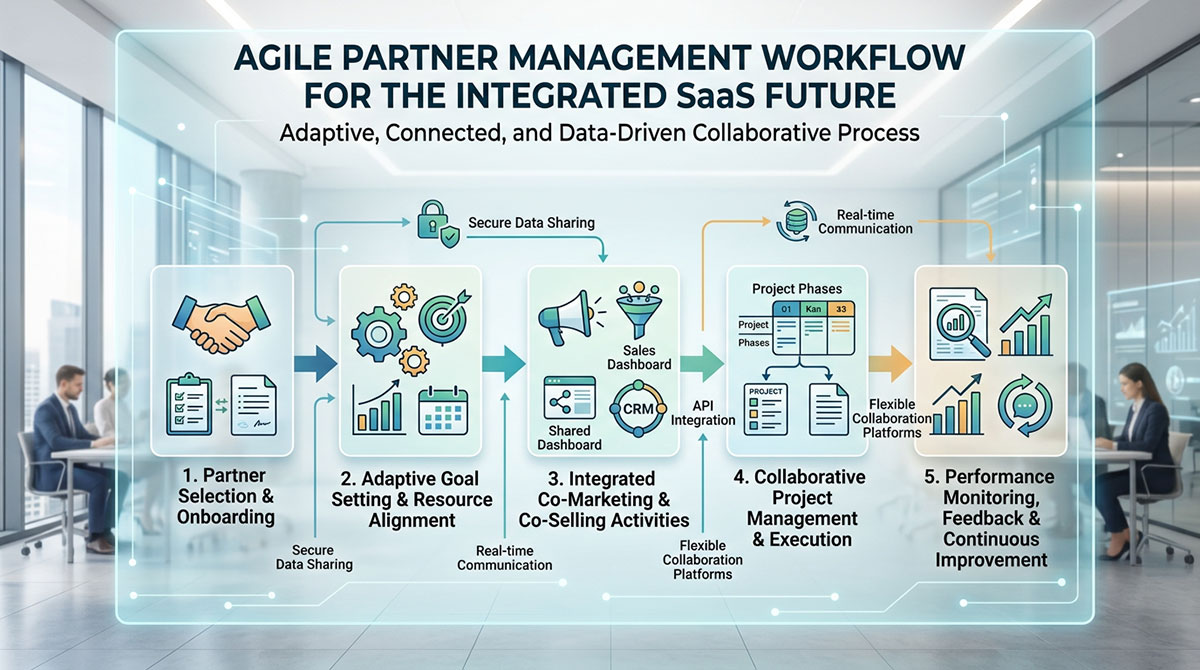
A unified partner portal can help facilitate this alignment. It provides a central hub for communication, collaboration, and resource sharing. This helps partners understand and contribute to the product’s intended vibe.
Tools for partner community management can further strengthen these relationships. They create a space for open dialogue and shared learning. This helps build a community dedicated to a shared user experience vision.
The future of SaaS relies on these interconnected ecosystems. No single company can provide everything a customer needs. A strong partner network extends a product's value and enhances its vibe.
By applying vibe coding principles to partner integrations, companies create a truly unified experience. Users can move seamlessly between different parts of the ecosystem. This frictionless movement reinforces the positive feel of the core product.
In summary, vibe coding and agile methods are highly compatible. They both prioritize flexibility, feedback, and human-centered outcomes. Extending this philosophy to partner ecosystems creates a powerful competitive moat.
Traditional vs. AI-Powered SaaS Operations
| Feature | Traditional SaaS Approach | Vibe Coding & AI-Powered Approach |
|---|---|---|
| Development Focus | Feature-driven and based on a rigid roadmap. | Experience-driven and focused on the 'feel' of the product. |
| User Feedback | Collected periodically through surveys and support tickets. | Continuously gathered through analytics and direct interaction. |
| Data Usage | Used for reporting and validating existing decisions. | Used to inform intuition and enable predictive analytics. |
| Design Process | UI is often designed after functionality is built. | UX and UI design leads the entire development process. |
| Pace of Change | Slow, with large updates released infrequently. | Fast and iterative, with continuous small improvements. |
| Partner Integration | Treated as a technical task with separate experiences. | Integrated seamlessly to create a unified user journey. |
| Success Metric | Number of features or technical performance. | User adoption, retention, and overall satisfaction. |
How ZINFI Empowers the Future of SaaS
ZINFI’s Unified Partner Management (UPM) platform is built for the future of SaaS. It provides the tools necessary to manage complex partner ecosystems effectively. Our solutions help maintain a consistent and positive vibe across your entire channel.
With a focus on automation and user experience, ZINFI helps you and your partners succeed. Our platform addresses the core needs of a modern, interconnected business world. We empower you to build and manage a thriving partner community.
- Streamlined Workflows: Our Workflow Management (FlexiFlow) module automates complex processes. This ensures operational efficiency and a consistent partner experience.
- Comprehensive Partner Management: ZINFI’s Partner Management solution centralizes all partner-related data. It provides a 360-degree view of your entire ecosystem.
- Actionable Analytics: Gain deep insights with our Business Intelligence & Reports. Use data to enhance both your own platform and your partner programs.
- Seamless Content Delivery: Our Content Library Management ensures partners have easy access to the latest resources. This maintains brand consistency and messaging.
- Engaging Partner Communities: Foster collaboration and communication with Partner Community Management. Build a strong network dedicated to shared success.
- Integrated Support Systems: Provide top-tier assistance with our Partner Support Management solution. A great support experience is a key part of an excellent overall vibe.
ZINFI's integrated suite ensures that every aspect of your partner ecosystem is optimized. This holistic approach is essential for delivering a cohesive user experience. It is a critical component for success in the future of SaaS.
Frequently Asked Questions
Is vibe coding just another term for user experience (UX) design?
Vibe coding is closely related to UX but is broader. It encompasses the entire development culture, not just the design phase. It's about how the whole team 'feels' the product as they build it.
Can vibe coding be applied to enterprise SaaS platforms?
Yes, absolutely. Enterprise software often suffers from poor usability. Applying vibe coding principles can dramatically improve adoption and user satisfaction. The future of SaaS includes user-friendly enterprise tools.
How do you measure the 'vibe' of a software product?
You measure it indirectly through user behavior and feedback. Metrics like user retention, session length, and Net Promoter Score (NPS) are good indicators. Qualitative feedback provides the necessary context behind the numbers.
Does this approach work for companies without a large design team?
Yes, the mindset is more important than team size. A small, cross-functional team that is hyper-focused on the user can effectively implement vibe coding. It is a cultural shift that any company can adopt.
What role do low-code platforms play in the future of SaaS?
Low-code and no-code platforms are catalysts for vibe coding. They allow for rapid prototyping and iteration. This speed helps teams test and refine the user experience more efficiently, shaping the future of SaaS development.
How does vibe coding affect partner training and enablement?
It makes training more intuitive and effective. When the platform itself is easy to use, partners can learn it faster. Enablement materials, like those in a Learning Management System, can focus on strategy instead of basic navigation.
Is this trend only relevant for B2C SaaS companies?
No, it is increasingly relevant for B2B SaaS as well. Business users have the same expectations for usability as consumers. The line between consumer and business software experiences is blurring, a key trend in the future of SaaS.
How can a company begin to implement vibe coding?
Start small by focusing on a single user journey. Assemble a cross-functional team to analyze and improve that specific flow. Use their success and learnings to expand the approach across the organization.
What is the connection between vibe coding and deal registration?
A smooth and intuitive deal registration process is a perfect example of vibe coding. If the process is simple for partners, they are more likely to use it. This improves channel sales and partner satisfaction.
Will AI and automation replace the need for vibe coding?
No, they will enhance it. AI can provide deeper insights into user behavior, fueling better intuitive decisions. The human element of crafting an 'experience' remains essential for the future of SaaS.
About the author
Sugata Sanyal
Sugata Sanyal is the Founder & CEO of ZINFI Technologies, a leader in Unified Partner Management. He has been a passionate advocate for the channel and channel partners for decades. His vision for ZINFI is to provide partner ecosystems with the tools they need to succeed.