The AI Impact on Jobs is reshaping the global workforce through automation, augmentation, and the creation of new roles. Professionals and organizations must adapt through continuous learning, responsible technology adoption, and strategic collaboration to remain competitive in the evolving future of work.
The AI Impact on Jobs is one of the most significant workforce transformations of the modern era. Artificial intelligence technologies are rapidly changing how organizations operate, how tasks are performed, and which skills are most valuable in the workplace.
From healthcare and finance to logistics and marketing, AI tools are helping professionals automate repetitive work, analyze complex data faster, and make better strategic decisions. At the same time, these technologies are creating new job categories that did not exist only a decade ago.
Understanding the AI Impact on Jobs is essential for both individuals and organizations. Workers who continuously develop new skills and learn to collaborate with intelligent systems are more likely to thrive in this changing environment.
Key Takeaways
- The AI Impact on Jobs includes automation of routine tasks and the creation of new technology-driven roles.
- Continuous learning and reskilling help professionals stay competitive in an AI-driven economy.
- Generative AI tools enhance productivity by supporting research, coding, design, and content creation.
- Hybrid skills that combine technical knowledge with communication and creativity are increasingly valuable.
- Organizations that adopt inclusive AI strategies can drive innovation and workforce growth.
How Is the AI Impact on Jobs Transforming Industries?
The AI Impact on Jobs varies across industries but generally follows three patterns: automation, augmentation, and job creation. Automation replaces repetitive tasks such as manual data entry, inventory tracking, and basic reporting.
In many cases, AI technologies augment human work rather than replacing it entirely. For example, software developers now use AI coding assistants to write and debug code more efficiently. Customer service teams rely on AI chatbots to handle common inquiries while focusing on complex issues that require human judgment.
At the same time, new job opportunities are emerging in fields such as data science, machine learning engineering, AI ethics, and automation strategy. These roles highlight how the AI Impact on Jobs is not just about job loss but also about workforce evolution.
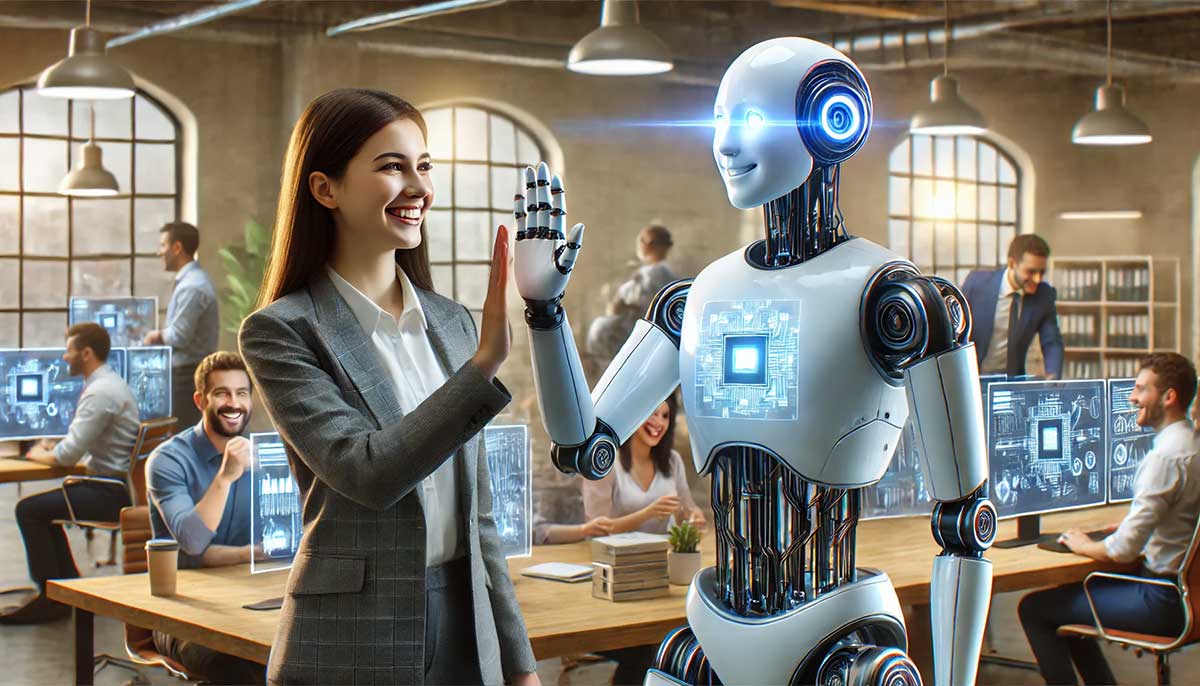
Tools such as generative AI platforms demonstrate how human creativity and machine intelligence can work together. Instead of replacing professionals, AI often allows them to focus on strategic thinking, innovation, and complex decision-making.
According to research from The World Economic Forum Future of Jobs Report, AI and automation are expected to create millions of new roles globally while transforming existing ones.
Why Continuous Learning Matters in an AI-Driven Economy
As the AI Impact on Jobs continues to evolve, lifelong learning has become essential for career stability. Professionals who regularly update their skills are better prepared to adapt to new technologies and industry changes.
Key areas of learning include data analysis, cybersecurity, cloud computing, and machine learning fundamentals. These skills allow professionals to understand how AI systems operate and how they can be applied in real-world business scenarios.
Online learning platforms such as Coursera, edX, and Udemy offer accessible courses that help individuals gain practical knowledge of AI and data technologies. Many organizations also provide internal training programs to help employees transition into new technology-focused roles.
Investing in education and skill development reduces the risks associated with automation while opening new career opportunities. Workers who embrace continuous learning are more likely to remain competitive in a rapidly evolving job market.
How Generative AI Tools Support Professional Productivity
Generative AI tools are increasingly used across industries to support research, content creation, coding, and design processes. These technologies help professionals complete tasks faster and explore ideas more efficiently.
For example, writers and marketers use AI tools to brainstorm ideas and analyze audience trends. Developers rely on AI assistants to accelerate coding and troubleshoot software problems.
When used responsibly, these tools demonstrate the positive side of the AI Impact on Jobs. Instead of replacing human expertise, they allow professionals to focus on higher-value tasks such as strategy, innovation, and relationship building.
However, professionals must balance AI usage with critical thinking and domain expertise. Human judgment remains essential for interpreting results, making decisions, and ensuring ethical technology use.
Hybrid Skills Define the Future Workforce
The future workforce will rely on a combination of technical and human-centered skills. While AI excels at processing data and automating workflows, humans remain uniquely capable of creativity, empathy, and complex problem-solving.
Professionals who combine technical understanding with strong communication and leadership abilities will be particularly valuable. For example, project managers who understand AI systems can better coordinate technology-driven teams and initiatives.
This combination of abilities highlights an important aspect of the AI Impact on Jobs: technology does not eliminate the need for human skills. Instead, it increases the value of professionals who can bridge the gap between technology and business strategy.
Developing emotional intelligence, creativity, and collaboration skills ensures professionals remain adaptable as new technologies continue to emerge.
Why Inclusive AI Adoption Matters
Inclusive AI adoption ensures that the benefits of technology are accessible to a diverse workforce. Studies suggest that access to AI tools and training opportunities is not evenly distributed across industries and demographic groups.
Organizations can address this challenge by providing equal access to training programs, mentorship opportunities, and digital resources. These initiatives help employees develop the skills needed to succeed in technology-driven roles.
Diverse teams also contribute to better AI systems. When people from different backgrounds participate in AI development and implementation, the resulting technologies are more ethical, balanced, and effective.
Encouraging inclusive participation strengthens both organizational performance and long-term workforce sustainability.
Policies That Support Workforce Adaptation
Government policies and corporate initiatives play an important role in managing the AI Impact on Jobs. Strategic investments in education, workforce development, and technology training help workers transition into new roles.
Public-private partnerships can align educational programs with real industry needs. Technology companies often collaborate with universities and training institutions to develop specialized programs that prepare workers for emerging careers.
Organizations also benefit from investing in reskilling programs for their current employees. Training existing staff members is often more efficient than recruiting entirely new talent with advanced technical expertise.
By combining individual learning efforts with institutional support, societies can create a resilient workforce that adapts effectively to technological change.
| Dimension |
Traditional Workforce Model |
AI-Driven Workforce Model |
| Skill development |
Occasional training and static credentials |
Continuous reskilling and digital learning |
| Work processes |
Manual and repetitive workflows |
Automation supported by AI tools |
| Career paths |
Linear progression within single roles |
Flexible careers with hybrid skill sets |
| Task distribution |
Humans perform all operational tasks |
AI handles routine work while humans focus on strategy |
| Innovation |
Human-driven ideation |
Human-AI collaboration driving innovation |
How ZINFI Supports AI-Driven Workforce Transformation
ZINFI offers a comprehensive partner relationship management platform that integrates intelligent automation and data analytics to support modern channel ecosystems.
By automating routine partner management tasks and providing data-driven insights, the platform enables teams to focus on strategic collaboration and relationship development.
- Automation of routine processes to improve operational efficiency.
- Data-driven insights that support better decision-making.
- Scalable partner collaboration across global ecosystems.
- Predictive analytics that help organizations anticipate market changes.
- Workflow optimization that enables teams to focus on high-value activities.
About the author
Sugata Sanyal is the Founder & CEO of ZINFI Technologies, a leader in Unified Partner Management. He has been a passionate advocate for the channel and channel partners for decades. His vision for ZINFI is to provide partner ecosystems with the tools they need to succeed.
 ZINFI Technologies, Inc.