Channel Sales: Adapting Skills for Modern Growth
Channel sales strategies must evolve from passive demand fulfillment to active demand creation as economic shifts, complex buying processes, and AI disruption reshape how organizations drive B2B revenue through partner ecosystems. Companies that invest in advanced partner enablement, multi-threading skills, and ROI-focused selling approaches will capture growth opportunities in increasingly competitive and cautious markets.
Channel sales drives over seventy percent of global business revenue today. This demonstrates how essential indirect distribution is for company growth. The selling landscape has shifted dramatically in recent years.
Markets moved from demand-positive conditions to demand-neutral or negative environments. This shift means organizations must change their sales methods fundamentally now. Old approaches no longer deliver consistent results across partner ecosystems.
This article examines how channel sales professionals adapt skills for modern growth. Each section explores critical changes reshaping partner selling and enablement strategies. The framework helps organizations build competitive advantages through smarter partner engagement.
Key Takeaways
- Channel sales teams must shift from responding to demand to actively creating it.
- Complex buying processes with more stakeholders require advanced multi-threading selling skills.
- AI automation eliminates entry-level roles while elevating demand for high-value expertise.
- Partner enablement must include market intelligence, competitor data, and ROI-focused tools.
- Continuous skill development across partner ecosystems determines long-term competitive success.
How Has the Economic Shift Changed Channel Sales?
The economy shifted from demand-positive conditions to demand-neutral environments recently. For eighteen to thirty months, financial pressures changed how businesses buy. Channel sales teams must now create demand rather than simply respond to it.
Before this shift, sellers reacted to existing customer interest with confidence. Deals closed easily because many buyers actively sought new solutions consistently. That era of effortless demand has ended across most industries today.
Customers have become significantly more careful with purchasing decisions across organizations. Budgets are tighter and showing clear value is more important than ever. Channel sales teams must become proactive demand creators in every engagement.
This economic slowdown initially affected technology companies selling to other tech firms. Budgets became constrained and sales cycles lengthened across the sector dramatically. Companies prioritized cost savings over rapid growth during this uncertain period.
The challenge has now spread beyond technology into manufacturing and government sectors. Channel sales partners in every industry face budget freezes and longer cycles. Enablement programs must help partners demonstrate value and overcome customer hesitation.
Why Does Buying Complexity Create New Challenges?
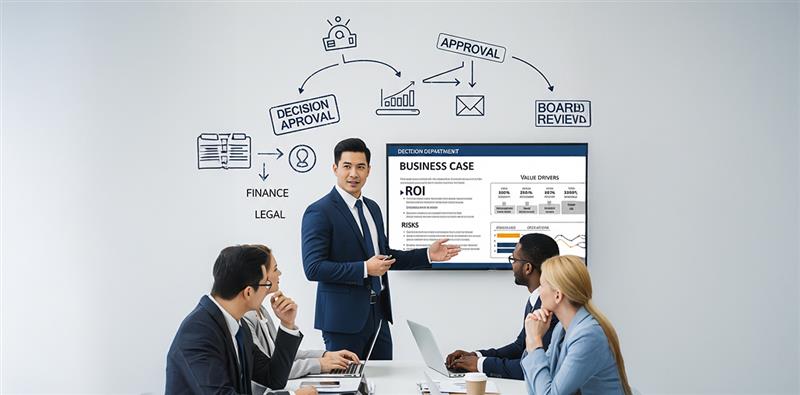
Purchasing decisions have become dramatically more complex across all deal sizes. Even mid-sized deals now resemble enterprise procurement with extensive approval processes. Channel sales teams must navigate these complexities alongside their partners effectively.
Many more stakeholders participate in buying teams across different departments today. Legal, IT, finance, and operations all contribute perspectives and requirements now. More voices mean different goals and higher chances of decision paralysis.
CFOs and board members now scrutinize even relatively small investment decisions closely. Every purchase requires a compelling business case with clear return projections. Channel sales partners must learn to build these cases for customers.
This complexity makes buyers increasingly likely to choose doing nothing new. When uncertainty exists, large buying committees frequently prefer maintaining current approaches. Partners must show how inaction costs more than investing in solutions.
Multi-threading skills become essential for navigating complex buying organizations effectively. Sellers must engage multiple decision-makers without alienating their primary contacts. Channel sales teams that master this approach close deals faster consistently.
How Does AI Reshape Skills Required for Channel Sales?
AI profoundly changes sales roles by automating many simple and repetitive tasks. Entry-level positions like inbound sales development representatives face significant displacement today. Channel sales organizations must adapt their talent development strategies accordingly.
AI handles lead qualification, scoring, and basic customer interactions with increasing accuracy. However, complex high-value sales still require human expertise and judgment. This creates a widening gap between skilled sellers and those lacking capabilities.
Previously, entry-level roles provided natural training grounds for developing sales skills. New professionals gradually learned through experience before advancing to complex positions. If AI eliminates these foundational roles, skill development pipelines break down.
Organizations must invest heavily in training and mentoring programs for channel sales. Partners need structured development paths building competence in complex selling techniques. Continuous learning becomes mandatory rather than optional for career sustainability.
Smart sellers use AI tools to handle low-value tasks freeing time strategically. They focus human effort on high-value activities like building trust and planning. Channel sales professionals who combine human skill with AI achieve superior results.

Why Is Advanced Partner Enablement Now Essential?
Traditional partner enablement through product sheets and basic training no longer suffices. Channel sales partners face the same challenging market conditions as direct teams. They need sophisticated tools and intelligence to compete effectively today.
Effective enablement provides partners with market facts and competitor intelligence continuously. Partners must understand buyer pain points and articulate value propositions convincingly. Channel sales teams should deliver customized resources matching current market conditions.
Partners need training on finding significant problems that keep business leaders awake. These must-solve issues justify spending even when organizational budgets remain tight. Showing how inaction costs money creates urgency that drives purchasing decisions.
Co-selling strategies pair vendor expertise with partner customer relationships for impact. Joint engagement helps partners navigate complex buying committees more confidently today. Partner relationship management platforms track these collaborative efforts systematically.
Channel sales enablement must evolve from one-time training to continuous development programs. Learning management systems deliver ongoing education across partner networks at scale. Partners who receive consistent support outperform those with sporadic engagement significantly.
What Strategies Build Resilient Channel Sales Programs?
Building resilient channel sales programs requires systematic approaches to partner development. Organizations must treat partners as strategic extensions rather than simple fulfillment channels. This mindset shift drives deeper collaboration and better market outcomes.
Constantly demonstrating partner profitability maintains engagement across the entire ecosystem today. Partners need clear visibility into how vendor relationships benefit their businesses. Channel sales teams must show revenue potential and ease of collaboration.
ROI-focused business cases become standard tools across all partner selling motions. Every customer interaction must quantify value in terms executives understand clearly. Partners trained in building compelling business cases close more deals consistently.
Agility in responding to market shifts separates successful programs from struggling ones. Channel sales organizations must monitor economic signals and adjust strategies rapidly. Partners who receive timely guidance navigate changing conditions more effectively today.
Technology adoption accelerates program effectiveness across diverse partner ecosystems consistently. Business planning tools align partner and vendor objectives through collaborative frameworks. Automated workflows ensure consistent execution while supporting rapid ecosystem scaling.
How Does ZINFI Support Modern Channel Sales Excellence?
ZINFI provides a comprehensive partner management platform designed for modern channel sales. The system automates partner onboarding, enablement, and performance tracking across ecosystems. A unified interface manages complexity across diverse global partner networks.
The platform enables organizations to build demand-creating distribution models at scale. Automated workflows support recruitment, training, and ongoing partner engagement systematically. Program managers focus on strategic value while technology handles operational execution.
- Advanced partner enablement. Structured certification and training programs build complex selling capabilities systematically.
- Co-sell program support. Joint deal registration and collaborative planning tools drive coordinated selling efforts.
- Multi-threading facilitation. Engagement tracking across stakeholders ensures comprehensive buying committee coverage effectively.
- Performance analytics. Real-time dashboards provide visibility into partner contribution and pipeline metrics.
- AI-powered insights. Intelligent analytics identify high-potential partners and optimize program investments continuously.
- ROI tool delivery. Business case builders help partners quantify and communicate customer value clearly.
| Capability | Traditional Model | Future-Ready Model |
|---|---|---|
| Demand approach | Passive fulfillment responding to existing customer interest | Active demand creation with proactive value demonstration strategies |
| Buying navigation | Single-contact selling with limited stakeholder engagement | Multi-threading across buying committees with tailored value messaging |
| Partner enablement | Product sheets and basic training delivered sporadically | Continuous development with market intelligence and ROI-focused tools |
| Skill development | Learn-on-the-job through entry-level role progression | Structured training programs compensating for AI-displaced learning paths |
| Value articulation | Feature-focused presentations highlighting product capabilities | Business case-driven selling quantifying customer outcomes and ROI |
| Technology usage | Manual processes with basic CRM and spreadsheet tracking | AI-augmented operations automating low-value tasks for efficiency |
| Partner engagement | Transactional relationships focused on order fulfillment | Strategic partnerships with shared planning and co-selling motions |
Frequently Asked Questions
How has the modern economy changed the focus of channel sales?
The shift to demand-neutral conditions requires teams to actively create demand instead.
What is multi-threading and why does it matter for partners?
Multi-threading engages multiple stakeholders to build alignment across buying organizations effectively.
How does AI impact skills required for channel sales professionals?
AI automates low-value tasks while elevating demand for complex human selling expertise.
Why do buyers increasingly choose to do nothing?
Uncertainty and large buying committees make maintaining the status quo feel safest.
What makes ROI-focused business cases essential for channel sales?
CFOs and boards require clear return projections before approving any investment decisions.
How should partner enablement programs evolve for current markets?
Programs must deliver continuous market intelligence and competitor data beyond product training.
What role does partner relationship management play in modern success?
PRM platforms unify tools and processes enabling scalable ecosystem collaboration and tracking.
How do co-selling strategies strengthen channel sales effectiveness?
Joint vendor-partner engagement helps navigate complex buying committees with combined expertise.
Why is continuous skill development mandatory for channel sales teams?
AI displacement of entry-level roles eliminates traditional learning paths requiring structured alternatives.
How does ZINFI help organizations modernize channel sales programs?
ZINFI automates enablement, co-selling, and performance tracking across diverse partner ecosystems.
About the author
Sugata Sanyal
Sugata loves solving complex industry problems in a way that creates hundreds of new jobs and opportunities. Over the past three decades, Sugata has worked in three large Fortune 100 organizations – Honeywell, Philips, and Dell SonicWALL – learning how to put together global teams that can work together to help customers win, create a wealth of new opportunities, and do amazing things. Sugata founded ZINFI with the mission of solving the entire challenge of marketing and selling, both directly and indirectly, through the channel. Over the past several years, his leadership on the ZINFI team has built a highly customer-focused global organization that constantly innovates and always asks how it can do better and deliver more for less.