Scaling Success: Your Ultimate Guide to Mastering Channel Sales
Channel sales is an indirect sales strategy using third-party partners to sell products. This model extends your market reach without directly expanding your internal sales force.
Companies leverage partners like resellers, distributors, and affiliates for this go-to-market approach. These partners already have established customer relationships and market presence in specific regions.
An effective program requires careful planning, robust enablement, and consistent management. Technology platforms play a crucial role in managing these complex partner relationships successfully.
By investing in a strong partner ecosystem, businesses can achieve scalable and sustainable growth. This guide explores the core components of building and refining your indirect sales efforts.
We will discuss creating a program, managing partners, and using technology for optimization. Mastering this model can provide a significant competitive advantage in today's crowded marketplace.
Key Takeaways
TL;DR
- Channel sales uses third-party partners like resellers to expand market reach.
- A successful strategy depends on careful partner selection, onboarding, and continuous training.
- Partner Relationship Management (PRM) software is essential for automating and scaling operations.
- Effective performance tracking relies on clear key performance indicators (KPIs) and data analytics.
- AI-powered tools are transforming partner management with predictive analytics and automation.
- Consistent communication and strong relationships are the foundation of a thriving partner ecosystem.
- Incentive programs must be well-structured to motivate partners and drive desired behaviors.
Why is developing a strong channel sales model important?
A strong channel sales model provides a pathway to rapid market expansion. It allows businesses to enter new geographical areas or vertical markets very quickly.
Partners already possess local knowledge and established customer bases in their respective territories. This existing presence significantly reduces the time and cost associated with direct entry.
Cost efficiency is another major benefit of a well-executed partner-led sales strategy. Building a direct sales team involves substantial investments in hiring, training, and infrastructure.
Leveraging partners shifts many of these costs to the partner, creating a more scalable model. This allows you to grow revenue without a proportional increase in your overhead expenses.
Furthermore, this approach enables companies to tap into specialized expertise from their partners. Many partners offer value-added services or have deep knowledge of a specific industry.
This expertise enhances your overall value proposition for the end customer. It creates a richer, more tailored solution than you could offer alone.
A diverse partner network also acts as a valuable source of market feedback. Partners are on the front lines, interacting with customers and observing market trends daily.
This direct feedback loop can inform your product development and overall business strategy. It helps you stay agile and responsive to the evolving needs of your target audience.
The credibility of a local or specialized partner can significantly boost your brand's reputation. Customers often trust recommendations from a familiar local expert over a distant corporation.
This borrowed trust accelerates the sales cycle and helps build a loyal customer base. Managing these relationships effectively is crucial for long-term success in the market.
An effective program relies on a solid foundation of partner management and engagement. Without proper systems, managing a large network of partners becomes nearly impossible to scale.
Platforms like ZINFI's Partner Management module provide the necessary structure. They help organize partner data and streamline communication across your entire partner ecosystem.
This systematic approach ensures that every partner gets the support they truly need. It also provides you with clear visibility into the health of your partnerships.
For businesses seeking long-term, sustainable growth, a robust channel sales strategy is essential. It diversifies your revenue streams and reduces dependency on a single sales motion.
This diversification makes your business more resilient to market shifts and economic downturns. It is a strategic investment in the future stability and success of your company.
According to Gartner, B2B buying behaviors are constantly evolving, favoring multiple interaction points. An indirect sales program directly addresses this trend by creating more ways for customers to engage.
This adaptability is critical for staying relevant in a competitive and changing landscape. It ensures your products and services are accessible through the methods customers prefer.
Ultimately, a strong model helps you focus on your core competencies, like product innovation. You can let partners handle the intricacies of selling in diverse markets.
This division of labor creates a powerful symbiotic relationship where everyone wins. The vendor, the partner, and the end customer all receive significant value from it.
How can you build an effective channel sales program?
Building an effective channel sales program begins with a clearly defined partner profile. You must identify the ideal characteristics of the partners you want to recruit.
Consider factors like industry expertise, geographical reach, company size, and cultural fit. This profile will guide your recruitment efforts and ensure you find the right partners.
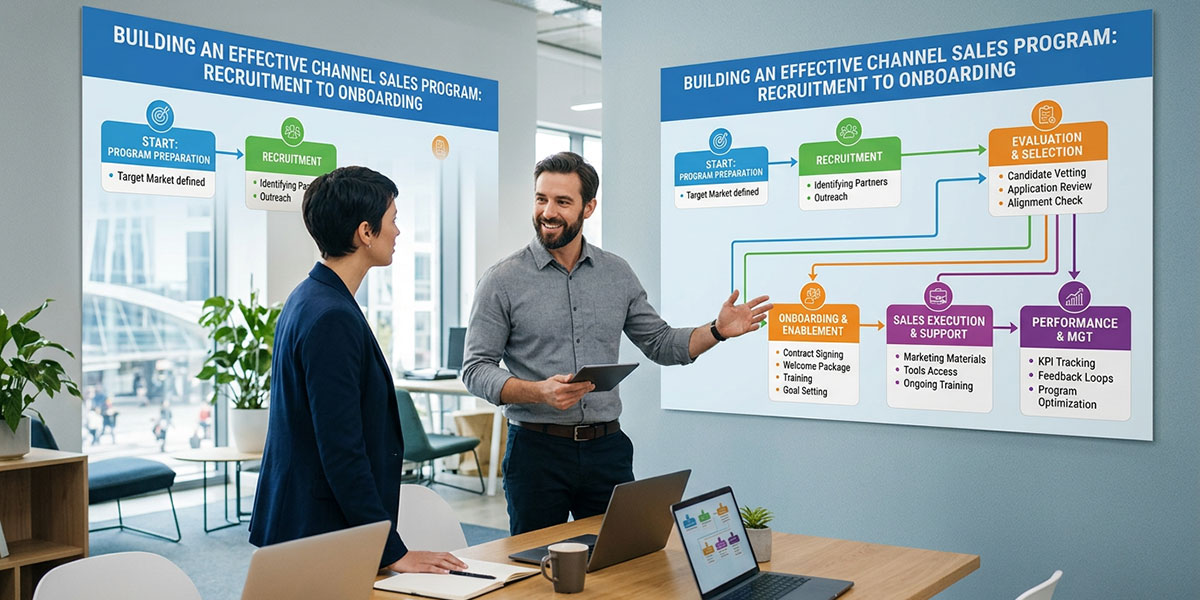
Once you know who you are looking for, you can begin the recruitment process. Actively seek out potential partners through industry events, online research, and professional networks.
A compelling value proposition is essential for attracting high-quality partners to your program. Clearly articulate what partners will gain by working with your company.
This includes potential revenue, marketing support, training, and access to your technology. A strong partner program is built on a foundation of mutual benefit and growth.
A structured onboarding process is the next critical step for your indirect strategy. New partners need comprehensive training on your products, sales process, and brand values.
This ensures they can represent your company accurately and effectively in the market. A robust onboarding experience sets the stage for a long and productive partnership.
Utilizing a dedicated platform simplifies this entire onboarding and enablement journey. Tools for partner learning management provide a centralized hub for all training materials and certifications.
This makes it easy for partners to access information whenever they need it. It also allows you to track their progress and ensure they complete required courses.
Defining clear program tiers and requirements is also a fundamental aspect of program design. A tiered structure provides a clear path for partner advancement and rewards performance.
Partners at different levels might receive varying benefits, such as higher margins or more marketing funds. This motivates partners to invest more deeply in the partnership with your brand.
Formalizing the relationship with clear agreements is essential for avoiding future misunderstandings. Your partner contracts should outline all roles, responsibilities, and expectations for both parties.
This legal framework protects your business and provides clarity for your partners. It should cover aspects like commissions, deal registration, and termination clauses for parties.
Joint business planning is another key component of a successful partner program. Work with your key partners to set shared goals and develop a strategy to achieve them.
A partner business planning tool can help facilitate this collaborative process. It ensures alignment and keeps both sides accountable for their commitments and growth.
Providing partners with high-quality marketing and sales collateral is equally important for success. Creating a content library makes it easy for them to find and use approved assets.
This includes co-brandable datasheets, presentations, and email templates for their use. Easy access to great content empowers partners to generate demand and close deals more effectively.
The success of your channel sales program depends on continuous communication and support. Establish regular check-ins and a dedicated point of contact for your partners.
This ensures their questions are answered promptly and they feel valued as part of your team. A strong relationship is the glue that holds a successful program together.
Ultimately, building an effective program is an ongoing process of refinement and adaptation. You must constantly gather feedback from partners and adjust your program accordingly.
This iterative approach ensures your program remains relevant, competitive, and valuable to partners. It is the key to creating a thriving and sustainable partner ecosystem.
What are the best practices for managing channel sales performance?
Managing channel sales performance effectively starts with establishing clear key performance indicators (KPIs). These metrics should align directly with your overall business objectives for the channel.
Common KPIs include partner-sourced revenue, deal registration volume, and sales cycle length. Tracking these metrics provides a quantitative view of your program's health and impact.
Regular performance reviews with partners are essential for maintaining alignment and driving improvement. These meetings provide an opportunity to discuss successes, challenges, and future goals.
Use these sessions to review progress against KPIs and collaboratively develop action plans. This fosters a sense of shared ownership and strengthens the partnership bond.

A data-driven approach is fundamental to modern performance management in this area. You need robust reporting and analytics to gain deep insights into what is working.
Dashboards give you a real-time view of partner activities and results. This allows you to identify top performers and pinpoint areas needing more support.
Implementing a comprehensive business intelligence and reports module is crucial. This provides both you and your partners with self-service access to critical performance data.
This transparency empowers partners to manage their own performance more effectively. It also reduces the administrative burden on your internal channel management team.
Beyond historical data, you should leverage predictive analytics to forecast future performance. These advanced tools can identify partners who are likely to succeed or those at risk.
This foresight allows you to intervene proactively with targeted support or incentives. It helps you optimize resource allocation and maximize the return on your partner investments.
Using performance analytics helps you understand the drivers behind your results. It can reveal which marketing campaigns or training modules have the greatest impact.
These insights allow you to refine your enablement strategies and provide better support. You can double down on effective tactics and eliminate ones that do not work.
A fair and transparent deal registration process is also critical for managing performance. It prevents channel conflict and ensures partners are rewarded for their lead generation efforts.
Automating this process removes ambiguity and builds trust within your partner ecosystem. Partners are more likely to invest in selling when they trust the system.
Motivating partners through well-designed incentive programs is another best practice to adopt. These can include market development funds (MDF), rebates, and sales performance incentive funds (SPIFFs).
These incentives should be directly tied to the KPIs you want to drive. ZINFI’s MDF Management tools help automate the allocation and tracking of these funds.
Recognizing and rewarding top-performing partners is essential for long-term motivation. Publicly celebrate their achievements within your partner community to foster healthy competition.
Awards, partner advisory councils, and exclusive events can make partners feel valued. This recognition strengthens their loyalty and encourages continued high performance from them.
Finally, your entire approach to managing channel sales performance must be consistent. All partners should be evaluated against the same clear and objective criteria.
This consistency builds a culture of fairness and accountability across your entire network. It is the foundation for a scalable and successful partner performance management system.
Traditional vs. AI-Powered Channel Sales Management
| Feature | Traditional Approach | AI-Powered Approach |
|---|---|---|
| Partner Recruitment | Manual outreach and subjective evaluation. | Data-driven identification of ideal partner profiles. |
| Partner Onboarding | Generic, one-size-fits-all training materials. | Personalized learning paths based on partner needs. |
| Lead Management | Manual lead distribution, often based on geography. | Automated, intelligent lead routing based on performance. |
| Content Enablement | Static content library with limited personalization. | Dynamic content recommendations based on sales stage. |
| Performance Tracking | Manual data collection with lagging indicators. | Real-time dashboards with predictive analytics. |
| Incentive Management | Complex, spreadsheet-based MDF and rebate tracking. | Automated workflows for proposing, approving, and claiming funds. |
| Forecasting | Based on historical data and anecdotal partner feedback. | AI models predict future sales with higher accuracy. |
What role does technology play in optimizing channel sales?
Technology plays a transformative role in optimizing modern channel sales operations. It automates repetitive tasks, enhances communication, and provides deep data insights.
At the core of this technological shift is the Partner Relationship Management (PRM) platform. This software acts as a central hub for all partner-related activities and information.
A unified platform streamlines everything from partner onboarding to performance management. It creates a single source of truth for both the vendor and its partners.
This eliminates data silos and ensures everyone is working with the same information. This consistency is vital for scaling a partner program effectively across different regions.

Automation is one of the most significant benefits that technology brings to this model. Workflow automation tools can handle routine processes like lead distribution and MDF approvals.
ZINFI’s Workflow Management solution, for example, reduces administrative overhead. It frees up your channel managers to focus on strategic relationship-building activities.
Content management is another area where technology delivers immense value for partners. A centralized and easy-to-navigate content portal is a must-have for every program.
Platforms like ZINFI’s Content Management system allow you to organize and distribute assets efficiently. Partners can quickly find the exact collateral they need for any sales situation.
Technology also facilitates better and more scalable partner enablement and training. A robust Learning Management System (LMS) can deliver on-demand training and certifications.
This ensures partners are always up-to-date on your latest products and messaging. A tool like Partner Learning Management PlusTracks progress and ensures compliance.
Effective marketing automation for partners, or through-channel marketing automation (TCMA), is critical. It empowers partners to execute sophisticated campaigns with minimal effort from their teams.
Tools for email marketing and social syndication let partners leverage your brand's marketing power. This generates more leads and builds a stronger local market presence for them.
Data analytics and reporting capabilities are perhaps the most strategic function of technology. They provide the insights needed to make informed decisions about your partner program.
Detailed performance analytics helps you understand which partners and activities drive the most revenue. This allows for the optimization of your entire channel sales strategy over time.
Finally, technology underpins the entire partner experience from start to finish. A simple, intuitive partner portal enhances engagement and makes it easy to do business.
This seamless experience is a competitive differentiator that attracts and retains top partners. Investing in the right technology is investing in the success of your partners.
How ZINFI Empowers Your Channel Sales Strategy
ZINFI's Unified Partner Management (UPM) platform provides a complete solution for your needs. It combines Partner Relationship Management, Partner Marketing Management, and Partner Sales Management.
This unified approach breaks down silos and creates a seamless experience for everyone. Here are some of the key ways ZINFI can empower your strategy:
- Complete Automation: ZINFI automates core processes from partner onboarding to lead management and incentive claims. This reduces manual effort and allows your team to focus on high-value strategic tasks.
- Deep Analytics: The platform offers powerful performance analytics and predictive analytics. These tools provide the insights needed to make data-driven decisions and optimize your program effectively.
- Integrated Marketing Tools: ZINFI includes a full suite of through-channel marketing automation (TCMA) tools. This empowers your partners to run effective marketing campaigns and generate more qualified leads.
- Modular and Scalable: You can start with the specific modules you need and add more as you grow. This flexibility ensures the platform can scale with your business and evolving program requirements.
- Global Capabilities: The platform supports multiple languages, currencies, and cultures for your partners. This makes it the ideal solution for managing a complex, global partner ecosystem successfully.
- Enhanced Partner Experience: A user-friendly, state-of-the-art partner portal improves partner engagement and satisfaction. It makes it easy for partners to access resources, collaborate, and grow their business with you.
By leveraging ZINFI's comprehensive platform, you can build a more efficient program. It drives greater partner engagement and accelerates revenue growth through your indirect channels.
Frequently Asked Questions (FAQ)
What is the difference between direct sales and channel sales?
Direct sales involve your own employees selling directly to customers for you. Channel sales uses third-party partners, like resellers or distributors, to sell products.
What are the different types of channel partners?
Common types include resellers, distributors, value-added resellers (VARs), and systems integrators. Others are managed service providers (MSPs), agents, and affiliates who earn commissions.
How do you motivate channel partners?
Motivation comes from clear financial incentives like margins, rebates, and MDF programs. Non-financial rewards like training, recognition, and strong relationships are also very critical.
What is a Partner Relationship Management (PRM) system?
A PRM system is a software solution designed to manage a partner ecosystem. It helps companies automate and streamline partner recruitment, onboarding, enablement, and performance management.
What is channel conflict?
Channel conflict happens when your direct sales team competes with a channel partner. Clear rules of engagement and a fair deal registration process can prevent this.
How do you measure the ROI of a channel sales program?
Measure ROI by tracking partner-sourced revenue against program costs for the year. Key costs include partner incentives, management overhead, and technology platform expenses incurred.
What is through-channel marketing automation (TCMA)?
TCMA platforms allow vendors to provide marketing campaigns and assets to their partners. Partners can then co-brand and execute these campaigns in their local markets.
Why is partner onboarding so important for success?
A structured onboarding process ensures partners understand your products, brand, and sales process. This initial training sets the foundation for a productive and long-lasting partnership.
How can AI improve channel sales performance?
AI can improve performance by offering predictive analytics for forecasting. It also personalizes partner training and intelligently routes leads to the best-suited partner.
What is the first step to starting a channel program?
The first step is creating a detailed strategy and business case for it. This includes defining the ideal partner profile and the value proposition for partners.
About the author
Sugata Sanyal
Sugata Sanyal is the Founder & CEO of ZINFI Technologies, a leader in Unified Partner Management. He has been a passionate advocate for the channel and channel partners for decades. His vision for ZINFI is to provide partner ecosystems with the tools they need to succeed.