The Future of Channel Marketing: Leveraging AI and Generational Shifts for Growth
Channel marketing leverages artificial intelligence and generational workforce shifts to deliver hyper-personalized partner engagement, self-service digital platforms, and data-driven execution that future-proofs ecosystem growth. Organizations relying on legacy manual processes face partner attrition and declining competitive relevance.
The IT channel is navigating a period of unprecedented transformation across global ecosystems. Channel marketing has shifted from simple lead generation to complex partner orchestration today. Two irreversible forces now define the next half-decade of ecosystem growth strategy.
Artificial intelligence integration and accelerating generational transitions reshape partner expectations across ecosystems fundamentally. Traditional engagement methods no longer meet rapidly changing demographic and technological demands today. Modern approaches must become more agile, data-centric, and focused on the partner experience.
This guide explores how organizations can modernize their partner engagement strategies for growth. Each section examines a specific capability that drives measurable competitive advantages consistently today. The result is a more intelligent marketing function that elevates overall partner success.
Key Takeaways
- Channel marketing powered by AI delivers hyper-personalized outreach tailored to individual partner needs.
- Self-service digital platforms meet next-generation partner expectations for autonomy and instant access.
- Generational workforce transitions require modernized engagement strategies that attract young digital-native talent.
- AI-driven analytics enable predictive insights that optimize campaign execution across partner segments.
- Continuous modernization of ecosystem engagement ensures resilience against accelerating market disruptions effectively.
- Partner enablement programs now include intelligence enablement teaching partners to leverage AI tools.
- Multi-generational strategies preserve legacy knowledge while embracing innovation from newer partners effectively.
How Does AI Enable Hyper-Personalization in Channel Marketing?
Traditional partner engagement relied on broad campaigns with uniform messaging distributed across partners. These generic approaches consistently failed to resonate with diverse partner business models and verticals. AI fundamentally transforms this paradigm through data-driven personalization capabilities delivered at ecosystem scale.
Machine learning models analyze vast amounts of partner data to surface actionable insights today. They predict partner needs, suggest optimal product mixes, and automate routine communications effectively. This analytical capability enables channel marketing teams to deliver highly tailored content consistently.
AI-driven hyper-personalization shifts distributors from passive suppliers to active strategic consulting partners. Partners receive content aligned with their specific business goals and current market contexts. These campaigns now resonate at the individual partner level rather than reaching audiences broadly.
Natural language processing adapts campaign materials for regional language and diverse cultural contexts. This approach eliminates production delays while ensuring brand consistency across all international markets. Persona-level messaging within each distinct partner segment improves engagement rates significantly today.
In practical terms, each partner receives resources precisely matched to their operational maturity. A mid-market reseller gets demand generation kits designed for their specific industry vertical. A large systems integrator receives strategic co-branding assets combined with analytics dashboards.
How Do Self-Service Platforms Transform Partner Engagement Delivery?
Modern solution providers expect intuitive digital experiences that mirror established consumer web standards. Channel marketing must be supported by scalable and integrated digital infrastructure platforms consistently. These platforms provide essential frameworks to manage personalized outreach and self-service tools simultaneously.
Robust digital platforms enable partners to manage their own engagement journeys fully independently. Partners access collateral, training modules, and technical support on demand without unnecessary delays. This level of autonomy is a key requirement for attracting digital-native generation partners.
Self-service within a comprehensive ecosystem strategy means delivering support in formats partners prefer. Partners choose how and when they consume resources without sacrificing content quality or accuracy. This approach increases engagement rates while reducing operational overhead costs for vendor organizations.
Platforms like integrated channel marketing management systems centralize all partner resources into unified portals. They enable data-driven execution through unified dashboards combined with automated workflows across regions. Scalable infrastructure supports both established and emerging partner needs without creating operational friction.
Digital infrastructure investment directly correlates with overall partner satisfaction and retention rates consistently. Organizations providing modern self-service tools attract younger partners more successfully than their competitors. These platforms become critical competitive differentiators within crowded distribution markets across regions.
How Does the Generational Workforce Transition Affect Partner Ecosystems?
The IT channel faces a profound demographic challenge requiring urgent and sustained strategic attention. An aging partner base necessitates effective strategies to attract and retain talented young professionals. This new generation has fundamentally different expectations for partner tools and support systems.
Younger professionals seek modern, intuitive platforms over traditional high-touch sales models quite consistently. They expect instant access to information, streamlined ordering processes, and robust digital support. Channel marketing must account for these shifting expectations to remain competitive in markets today.
Organizations failing to provide modern tools risk losing next-generation partners to more agile competitors. Digital-native solution providers evaluate distributors based on technological sophistication and overall platform quality. Engagement strategies must prioritize user experience design for younger professional audiences specifically today.
Successful generational transition requires carefully balancing veteran partner experience with newcomer innovation approaches. Multi-generational strategies preserve legacy knowledge while embracing new approaches and methodologies quite actively. AI facilitates knowledge transfer and provides common language for diverse partner groups effectively.
Training programs must evolve to include digital-first delivery formats and fully interactive content. Modern enablement now incorporates video, self-paced modules, and AI-powered coaching tools consistently today. These formats align with how younger professionals prefer to learn and grow professionally.
How Does Leadership Drive Partner Ecosystem Modernization?
Leadership plays a critical role in spearheading ecosystem transformation across modern partner organizations. Forward-thinking leaders position their companies as vital enablers of overall partner success strategically. Their vision determines whether channel marketing evolves or stagnates within competitive markets today.
Modern distribution leadership extends beyond logistics into strategic partner enablement and consulting roles. Leaders must champion AI integration while managing organizational change across all departments simultaneously today. Ecosystem modernization requires strong executive commitment to continuous technology investment and adoption.
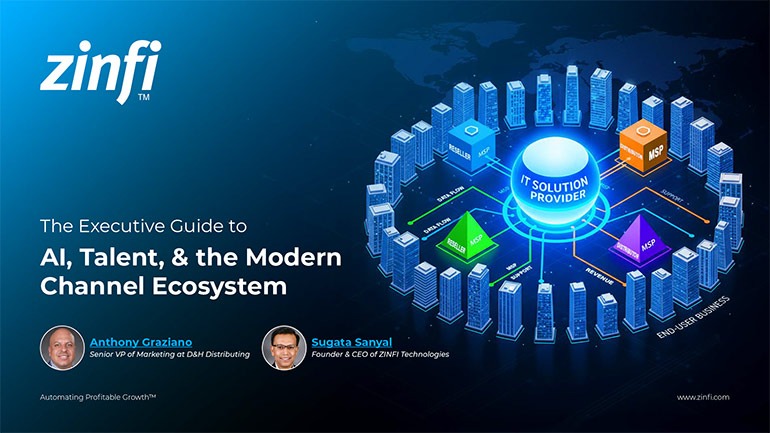
Industry leaders like Anthony Graziano of D&H Distributing demonstrate this forward-looking strategic approach. Their work focuses on positioning companies and partners ahead of evolving market curves today. Partner strategies benefit from leadership that prioritizes innovation over established operational inertia consistently.
Effective leaders create cultures of constant iteration and technological experimentation within their organizations. They refine AI algorithms and update interfaces to suit evolving partner demographics across regions. Operational excellence requires leadership that embraces change as a permanent organizational reality today.
Strategic leaders also invest in measuring ecosystem effectiveness through advanced analytics platforms today. They use data to justify continued modernization investments to organizational stakeholders and boards. This evidence-based approach ensures sustained organizational commitment to ongoing partner engagement evolution.
How Does Partner Enablement Evolve Through AI-Powered Ecosystems?
Partner enablement represents the ultimate goal of any channel marketing initiative across ecosystems today. It involves providing partners with resources, knowledge, and tools needed for effective selling. AI integration expands enablement to include intelligence enablement as a transformative new capability.
Distributors now teach partners how to use AI within their own daily business operations. These programs incorporate educational elements about AI tools and operational workflows quite actively today. This creates virtuous cycles where partner success directly fuels sustained distributor growth and revenue.
AI-powered enablement systems adapt training content based on individual partner behavior patterns continuously. Partners struggling with specific capabilities receive additional guidance and targeted walkthroughs from systems automatically. Those excelling gain access to advanced certification programs and valuable strategic planning resources.
Modern enablement now includes intelligent knowledge management capabilities designed specifically for all partners. AI-powered search helps partners access case studies and documentation both instantly and accurately. Machine learning improves these systems continuously by analyzing search intent and overall usage patterns.
Faster partner ramp-up times translate directly to earlier revenue contribution from partner ecosystems. The enablement engine scales responsively without requiring proportional support staff increases across organizations. Programs with AI-powered enablement outperform traditional approaches both measurably and consistently today.
How Does Continuous Modernization Sustain Ecosystem Effectiveness?
Continuous modernization of channel marketing is the most critical lever for managing ecosystem change. It ensures the industry remains dynamic and attractive to innovative technology adopters consistently. Without ongoing evolution, partner engagement efforts will quickly become stagnant and completely ineffective.
The pace of change in the IT sector demands a mindset of constant iteration today. Whether refining AI algorithms or updating user interfaces, the modernization work never truly finishes. Ecosystem engagement requires perpetual investment in technology, processes, and partner experience improvements.
Organizations must build institutional capabilities for rapid adaptation and technology adoption across departments. Agile development methodologies enable faster iteration on partner engagement platforms and associated tools today. This operational flexibility ensures responsiveness to emerging partner needs and fast-changing market shifts.
Future-proofing partner ecosystems requires proactive rather than reactive strategic approaches from all organizations. Companies must anticipate trends rather than responding after competitors have already adapted their operations. Predictive analytics and scenario modeling support this forward-looking strategic planning approach very effectively.
Investment in continuous modernization creates compounding returns over extended multi-year planning horizons consistently. Early adopters of AI-powered engagement gain sustainable competitive advantages in partner recruitment today. Organizations committed to evolution build resilient ecosystems prepared for future market challenges ahead.
| Capability | Traditional Approach | AI-Powered Approach |
|---|---|---|
| Partner personalization | Generic campaigns distributed uniformly across segments | Hyper-personalized content tailored to individual partner needs |
| Platform experience | Manual high-touch engagement with limited self-service | Intuitive self-service platforms mirroring consumer web standards |
| Talent attraction | Legacy processes unappealing to digital-native professionals | Modern digital tools attracting next-generation solution providers |
| Partner enablement | Static training materials and manual onboarding processes | AI-adaptive learning with intelligence enablement programs |
| Campaign execution | Manual launch with broad untargeted messaging | Automated deployment with predictive optimization and targeting |
| Performance measurement | Manual reporting with limited attribution accuracy | AI-driven analytics with predictive dashboards and insights |
| Modernization approach | Periodic updates driven by competitive pressure | Continuous iteration with proactive technology adoption |
How Does ZINFI Support AI-Powered Channel Marketing at Scale?
ZINFI provides a comprehensive channel marketing platform with fully integrated AI capabilities. The system automates campaign execution, content personalization, and performance analytics from one location. A unified interface delivers operational simplicity across all ecosystem marketing functions and workflows.
The platform leverages AI to deliver measurable partner engagement outcomes for organizations consistently. Intelligent automation handles campaign routing, asset customization, and budget optimization completely independently today. Program managers focus on strategy while the system executes campaigns at full ecosystem scale.
- AI-powered personalization. Dynamic content generation tailored to partner type, vertical, and buyer persona.
- Self-service digital platforms. Intuitive partner portals providing autonomous access to resources and support.
- Intelligent campaign automation. Predictive routing and autonomous execution eliminating manual campaign bottlenecks effectively.
- Partner intelligence enablement. AI-adaptive training programs that accelerate partner ramp-up and certification.
- Predictive analytics. Attribution dashboards surfacing performance correlations and forecasting campaign outcomes accurately.
- Continuous modernization support. Platform architecture supporting rapid iteration and technology adoption at scale.
Frequently Asked Questions
How does AI improve partner personalization in ecosystem engagement?
AI analyzes partner data to generate tailored content for each partner type and persona. Machine learning models predict needs and automate communications based on behavioral patterns.
What role do self-service platforms play in partner ecosystems?
Self-service platforms provide partners autonomous access to marketing collateral and training resources. They meet digital-native expectations for instant information access and streamlined processes.
How does channel marketing address the generational workforce transition?
It modernizes engagement tools to attract digital-native professionals to partner ecosystems effectively. Modern platforms replace legacy processes with intuitive digital-first engagement strategies.
What is intelligence enablement in partner programs?
Intelligence enablement teaches partners how to leverage AI tools within their operations. It expands traditional enablement beyond resources to include AI workflow training.
How does leadership drive ecosystem modernization effectively?
Leaders champion AI integration and create cultures of constant technological iteration. Their vision determines whether partner engagement evolves or stagnates competitively.
What benefits does AI-driven analytics provide for partner engagement?
AI automates attribution across multiple data systems and surfaces hidden trend correlations. Predictive dashboards visualize partner impact across campaigns, segments, and regions.
How do organizations support multi-generational partner ecosystems?
Multi-generational strategies preserve veteran partner knowledge while embracing newcomer innovation. AI facilitates knowledge transfer and provides common language across partner groups.
What digital infrastructure supports modern partner engagement execution?
Scalable integrated platforms centralize partner resources and enable data-driven execution today. They support personalized outreach and self-service tools through unified dashboards.
How does continuous modernization benefit partner programs?
Continuous modernization ensures ecosystem engagement remains dynamic and competitive against market shifts. Perpetual investment in technology creates compounding returns over multi-year horizons.
How does ZINFI's platform leverage AI for channel marketing?
ZINFI integrates AI-powered personalization, campaign automation, intelligence enablement, and predictive analytics. The unified platform delivers operational simplicity across all ecosystem marketing functions.
About the author
Sugata Sanyal
Sugata loves solving complex industry problems in a way that creates hundreds of new jobs and opportunities. Over the past three decades, Sugata has worked in three large Fortune 100 organizations – Honeywell, Philips, and Dell SonicWALL – learning how to put together global teams that can work together to help customers win, create a wealth of new opportunities, and do amazing things. Sugata founded ZINFI with the mission of solving the entire challenge of marketing and selling, both directly and indirectly, through the channel. Over the past several years, his leadership on the ZINFI team has built a highly customer-focused global organization that constantly innovates and always asks how it can do better and deliver more for less.