The 360-Degree View: Why Your Distributor Portal Software is Key to Channel Performance Analytics
Distributor portal software provides the unified data foundation that eliminates analytical silos across indirect sales channels, delivering complete partner scorecards that shift channel management from reactive revenue tracking to proactive performance optimization through integrated sales, enablement, marketing and engagement analytics. Organizations without unified distributor portal software manage channels through disconnected data puddles that prevent accurate forecasting.
Enterprise channel leaders face persistent uncertainty when managing large indirect sales operations globally. Critical performance data remains scattered across disconnected systems and isolated spreadsheets constantly. This fragmentation transforms the sales channel into an analytical black box resisting meaningful insight.
Modern business units govern operations through precise real-time data and continuous analytics. Yet indirect sales channels often rely on subjective intuition and anecdotal quarterly reports. Unified portal platforms resolve this gap by centralizing all partner data systematically.
Key Takeaways
- Distributor portal software eliminates data silos by centralizing all partner activities within one platform.
- Siloed channel data creates strategic liabilities including misallocated resources and inaccurate forecasting consistently.
- Leading indicators like certification rates predict future partner performance more accurately than revenue.
- The unified data model creates golden records connecting every partner activity to outcomes.
- Dynamic partner segmentation replaces static tier programs with behavior-based personalized engagement strategies.
- Real-time analytics enable agile incentive program design with rapid feedback loop optimization.
- Quarterly business reviews transform from subjective conversations into data-driven strategic coaching sessions.
Why Does Siloed Channel Data Create Strategic Liabilities?
How Do Disconnected Systems Undermine Channel Performance?
Channel data typically resides across multiple disconnected systems with incompatible formats and logic. Sales data lives in corporate CRM systems while training data remains sequestered in standalone platforms. Marketing lead information occupies separate automation systems disconnected from actual sales performance metrics entirely.
This fragmentation prevents organizations from identifying correlations between partner activities and outcomes. Manually stitching fractured data together consumes administrative effort without producing reliable analytical results. Implementing a unified portal platform resolves these integration challenges through architectural design fundamentally.
Why Are Lagging Indicators Dangerous for Channel Management?
Evaluating partner performance based solely on quarterly sales revenue provides dangerously insufficient insight. Revenue represents a lagging indicator that merely records historical outcomes without predicting future trends. Partners can achieve temporary high-revenue quarters while their leading indicators simultaneously deteriorate significantly.
Managing channels by revenue alone resembles driving while only looking in the rearview mirror. Channel managers constantly react to problems that have already occurred rather than preventing them. Modern distributor portal software shifts focus toward leading indicators that predict future performance accurately.
How Does Unified Data Architecture Transform Channel Analytics?
The core principle of advanced distributor portal software requires all partner activities within one system. Recruitment, onboarding, training, co-marketing, lead management and deal registration occur on unified platforms. This architecture eliminates expensive custom integration projects connecting separate specialized tools across organizations.
The platform automatically tracks causal relationships between partner activities and business outcomes continuously. When partners complete certifications, register deals and close opportunities the system connects events. This process establishes golden records enabling deep analysis of relationships across partner journeys.
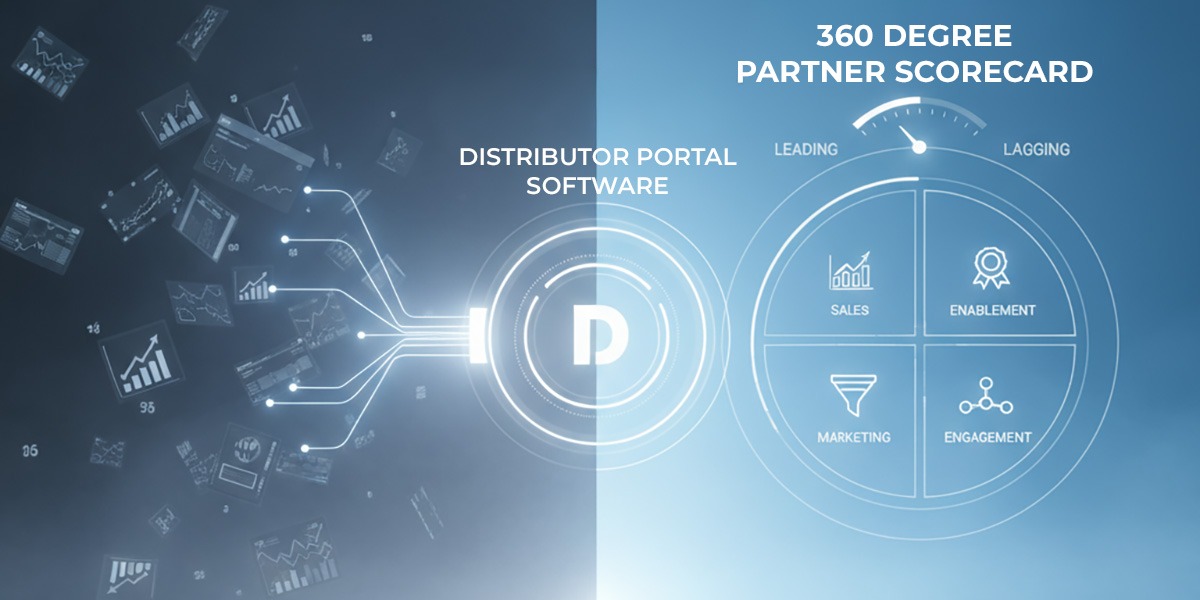
Integrated data capability defines world-class distributor portal software and forms the foundation for strategy. Channel organizations leverage this unified architecture to build comprehensive partner scorecards efficiently. These scorecards consolidate all performance dimensions onto single actionable dashboards for channel managers.
What Does the 360-Degree Partner Scorecard Reveal?
The unified data model enables creation of holistic real-time dashboards for every ecosystem partner. Channel account managers gain at-a-glance understanding of complete partner health and performance status. The scorecard moves beyond simple revenue figures to include metrics from every engagement facet.
Leading indicators within the scorecard allow managers to identify performance trends before they impact revenue. Declining certification rates signal future sales drops that proactive intervention can prevent effectively. This strategic shift from reactive to proactive management represents the fundamental value of modern platforms.
The scorecard integrates four analytical quadrants covering sales, enablement, marketing and engagement comprehensively. Each quadrant contributes distinct insights that combine into complete partner performance pictures automatically. This comprehensive view empowers data-driven decisions that subjective assessments simply cannot deliver reliably.
| Dimension | Without Unified Portal | With Distributor Portal Software |
|---|---|---|
| Data architecture | Disconnected data puddles across multiple isolated systems | Unified data lake with golden records for every partner |
| Performance indicators | Lagging revenue metrics reporting only historical outcomes | Leading indicators predicting future partner success proactively |
| Partner segmentation | Static tier programs based on revenue thresholds alone | Dynamic behavior-based segments with personalized engagement paths |
| Business reviews | Subjective relationship-based conversations lacking data support | Data-driven strategic coaching sessions with actionable insights |
| Incentive design | Program effectiveness unknown until months after launch | Real-time feedback loops enabling rapid strategic pivots |
| Resource allocation | Investment directed toward underperforming unprofitable partners | Precise allocation based on comprehensive performance analytics |
| Forecasting accuracy | Unreliable predictions making financial planning impossible | Data-backed forecasts grounded in leading indicator trends |
How Do the Four Analytical Quadrants Drive Channel Insight?
The sales performance quadrant transcends traditional metrics by incorporating real-time granular pipeline data. Consolidated views reveal partner win rates, deal sizes and sales cycle velocity across regions. This enables identification of partners who sell profitably rather than merely generating high volume.
The enablement quadrant measures partner investment in building skills through certification and training programs. Tracking completion rates and assessment scores reveals direct correlations between training and sales performance. Certified partners demonstrably achieve larger deal sizes than uncertified counterparts across most product categories.
The marketing engagement quadrant transforms investment from perceived expense into measurable growth drivers. Real-time tracking of MDF utilization rates and campaign performance proves return on investment. This data answers critical questions about pipeline generated per marketing dollar invested precisely.
How Does Engagement Analytics Predict Partner Retention Risk?
The engagement quadrant measures overall partner commitment and mindshare through behavioral metrics continuously. Portal login frequency, lead acceptance rates and speed-to-lead follow-up times reveal engagement levels. These metrics often provide the earliest indicators of retention risk or future growth potential.
Partners with historically high revenue but declining portal logins signal potential churn risk clearly. Significant drops in lead acceptance rates over sixty-day periods warrant immediate intervention from managers. Distributor portal software flags these patterns automatically enabling proactive retention strategies before revenue impacts.
Engagement analytics within distributor portal software connect behavioral patterns to business outcomes with clarity. Organizations can correlate communication engagement rates with pipeline health and conversion metrics effectively. This visibility transforms partner management from intuitive guesswork into systematic data-driven operations.
How Do Analytics Transform Quarterly Business Reviews?
The 360-degree scorecard fundamentally transforms channel account manager quarterly business review processes. Reviews shift from vague relationship-based conversations to data-driven strategic working sessions productively. Managers provide specific coaching linking past performance to immediate leading indicator weaknesses precisely.
Data-backed coaching identifies connections between strong revenue performance and emerging pipeline concerns directly. Managers propose targeted solutions like utilizing accrued MDF for specific strategic campaign initiatives. This approach builds partner trust through transparent evidence-based collaboration rather than subjective assessments.
Dynamic segmentation powered by unified portal platforms replaces static gold-silver-bronze tier programs entirely. High-growth nurture segments automatically identify partners with strong engagement but developing sales numbers. At-risk segments flag declining engagement patterns triggering intervention workflows before revenue deterioration occurs.
How Does Real-Time Analytics Enable Agile Incentive Design?
Continuous analytics create powerful real-time feedback loops for agile program design across channels. Previously incentive effectiveness remained unknown until months after initial program launch dates passed. Unified platforms reveal incentive impact on deal registration pipelines in near real-time immediately.
When incentives fail to drive desired partner behavior the data reveals this within weeks. Manufacturers pivot strategies and initiate corrective actions swiftly rather than waiting for quarterly reviews. This agility represents the core operational advantage that modern unified platforms deliver consistently.
Channel leaders use analytics to build concrete return on investment cases for executive stakeholders. Precise data connecting marketing investments to pipeline generation and closed revenue proves channel value. These financial conversations shift from defensive justification to strategic growth planning with confidence.
What Strategic Imperative Drives Distributor Portal Software Adoption?
Managing channels based solely on intuition is no longer viable in competitive global marketplaces. Manufacturers with the deepest partner understanding achieve market dominance through superior channel execution consistently. This understanding requires holistic visibility impossible within fragmented disconnected data environments fundamentally.
Establishing 360-degree partner performance views represents a strategic necessity for market survival today. Distributor portal software stands as the only unified platform capable of dismantling operational walls. It integrates sales, marketing and enablement analytics into truly holistic ecosystem views for leaders.
Channel leaders leveraging comprehensive analytics move from uncertainty into positions of strategic control permanently. Precise insights build and scale world-class channels operating as predictable engines for sustained growth. Organizations must select the right portal management platform to achieve this transformation.
Frequently Asked Questions
What is distributor portal software?
It is a unified platform centralizing all partner activities including recruitment, training, marketing and sales. This eliminates data silos and creates comprehensive partner performance analytics automatically.
Why does siloed channel data create strategic problems?
Disconnected data prevents identifying correlations between partner activities and business outcomes accurately. This leads to misallocated resources, inaccurate forecasting and missed growth opportunities consistently.
What are leading indicators in channel management?
Leading indicators include certification completion rates, lead acceptance rates and portal login frequency. These metrics predict future partner sales performance more accurately than historical revenue figures.
How does the 360-degree partner scorecard work?
The scorecard consolidates sales, enablement, marketing and engagement metrics onto single real-time dashboards. Channel managers gain complete visibility into partner health across all performance dimensions.
What is a golden record in channel analytics?
A golden record connects every partner activity within a unified system to track causal relationships. This enables deep analysis linking training completion to deal registration and revenue outcomes.
How does engagement analytics predict partner churn?
Declining portal logins and lead acceptance rates over sixty-day periods signal retention risk clearly. These behavioral metrics often provide the earliest warnings before revenue impacts become visible.
How do analytics transform quarterly business reviews?
Reviews shift from subjective conversations to data-driven strategic coaching sessions with specific actions. Managers link performance data to leading indicator weaknesses and propose targeted solutions.
What is dynamic partner segmentation?
Dynamic segmentation uses behavioral data to create personalized partner groups beyond static tiers. High-growth and at-risk segments trigger automated workflows tailored to specific partner needs.
How does real-time analytics improve incentive programs?
Unified platforms reveal incentive impact on deal registration pipelines within weeks of launch. Manufacturers pivot strategies quickly rather than waiting months to assess program effectiveness.
Why is unified portal software a strategic necessity?
Fragmented data environments make holistic partner understanding fundamentally impossible for channel leaders. Unified platforms provide the single source of truth required for predictable channel growth.
About the author
Suga Boron
Suga Boron is a seasoned channel management strategist with deep expertise in partner ecosystem development. She advises global organizations on building scalable channel programs that drive measurable revenue growth.