




Stop Relying on Playbooks: How First Principles Thinking Transforms Modern Partner Ecosystem Leaders
The world of business partnerships has evolved from linear channel models to the complex modern Partner Ecosystem, making old playbooks obsolete. Successful leaders must adopt First Principles Thinking, a strategic philosophy based on fundamental truths. This framework is built on three pillars: Customer Centricity, One Team alignment across all functions, and Proactive Orchestration using data, AI, and automation. Abandoning recycled tactics for principled leadership drives sustainable growth
Key Takeaways-
The shift from linear channel models to the complex modern Partner Ecosystem makes outdated playbooks an unreliable path to success.
-
Success requires First Principles Thinking, which means boiling problems down to fundamental truths rather than mimicking past strategies.
-
The three non-negotiable guiding principles are Unwavering Customer Centricity, which ensures every partner engagement solves a high-value customer problem.
-
Leaders must foster an Operating as One Team mentality to dismantle organizational silos and achieve amplified collective impact across all functions.
-
A leader must embrace the strategic role of General Manager, using data, AI, and automation for Proactive Orchestration of the complex, multi-layered go-to-market motions within the Partner Ecosystem.
🎥 Watch the Full Video Podcast
The world of business partnerships has undergone a seismic transformation, evolving from the relatively linear and predictable “channel” models of two decades ago into today’s deeply complex and multifaceted Partner Ecosystem. For years, leaders in this space built their careers on playbooks—collections of tactics and strategies that, having proven successful at one company, were expected to be universally applicable.
However, in the current landscape defined by the rapid evolution of B2B SaaS, the rise of AI, and the dominance of Product-Led Growth (PLG) motions, this lift-and-shift approach is no longer a viable path to success. The fundamental flaw in the playbook model is its failure to account for nuance; every organization possesses a unique Ideal Customer Profile (ICP), a distinct go-to-market engine, and a specific set of customer pain points that cannot be addressed with a generic, one-size-fits-all solution.
Nelson Wang, Founder of Partner Principles, argues that the most effective leaders are those who discard outdated tactical manuals and instead anchor their strategies in First Principles Thinking. This approach involves stripping away assumptions and focusing on foundational, universal truths to guide decision-making. For Wang, a "light bulb moment" came from mentors who taught him to move beyond tactics and embrace core frameworks, a shift that radically improved the quality and outcomes of his work.
By applying these immutable principles, leaders can develop robust and adaptable strategies that succeed regardless of the company’s size, industry, or specific partner profile. This paradigm shift is not merely a theoretical exercise; it is an essential evolution required to navigate the modern Partner Ecosystem, enabling leaders to cut through overwhelming complexity, allocate resources with precision, and, most importantly, deliver superior business outcomes for their customers through a well-orchestrated Partner Ecosystem.
First Principle: Customer Centricity
The absolute, non-negotiable foundation of any successful strategy within the modern Partner Ecosystem is an unwavering commitment to Customer Centricity. Too often, partnership strategies begin with an internal focus, immediately jumping to questions about which partner types to recruit or what revenue targets to set. This inside-out approach is fundamentally flawed because it prioritizes the company's needs over the market's reality.
First Principles Thinking completely inverts this model, forcing leaders to anchor every decision, every initiative, and every relationship back to the customer's journey, their challenges, and their desired business outcomes. This means the strategic process must begin with a series of critical, probing questions: Who, precisely, is our Ideal Customer Profile (ICP)? What is the specific, tangible pain they are experiencing in their business? And, crucially, what are the profound business implications for that customer if their pain is left unresolved?
Only after developing a deep and empathetic understanding of these core customer problems can a leader begin to construct a rational, practical, and high-impact partnership strategy. This customer-centric lens provides an invaluable filter, offering a clear, high-signal view that illuminates where the company must focus its finite energy and resources. It prevents the all-too-common mistake of spreading efforts too thinly across a dozen different partner types, most of which may not align with solving the most pressing customer needs.
By leading with the customer’s pain, a partner leader can intelligently and proactively identify and prioritize the specific partner types—be they SIs, ISVs, or MSPs—that possess the unique capabilities to solve those high-impact problems. This foundational principle is what elevates a Partner Ecosystem from a simple collection of logos to a powerful, value-driven engine designed to make customers massively successful. Every subsequent decision about the Partner Ecosystem must flow from this central truth.

Second Principle: Operate as One Team
Another foundational principle that is absolutely critical to thriving in the modern Partner Ecosystem is the commitment to operating as a single, unified team. A common failure point for many organizations is the tendency for partnership teams to function in isolation, operating as a siloed department detached from the core go-to-market functions of the business. These leaders fail to recognize that their most significant potential for impact comes not from their individual efforts but from their ability to work cross-functionally, integrating with and amplifying the work of Sales, Customer Success, Marketing, and Product teams.
The historical context explains why this has become such a critical, proactive responsibility. Twenty years ago, hardware-centric companies like Cisco and VMware routed a massive percentage of their business—often 80-90%—through the channel. In that environment, cross-functional alignment was almost organic; the entire organization was naturally oriented around the channel motion.
Today, the reality is vastly different. In many B2B SaaS and AI companies, partner-influenced revenue might account for a smaller, more nuanced portion of the overall business. Consequently, the modern partner leader cannot wait for alignment to happen organically; they must proactively build it. This involves establishing a clear and consistent operating cadence with other department heads, understanding their goals and strategies, and then clearly articulating how the Partner Ecosystem will help them achieve their desired outcomes.
The impact of this integrated approach is profound. Consider a simple marketing webinar: an initiative run solely by the marketing team might generate a certain level of attendance. However, by including a key partner in the event, that partner can promote it to their entire customer base, potentially doubling the registration and attendance.
This immediately doubles the business impact—more leads, a larger pipeline, and increased brand awareness—for a marginal increase in effort. This is the power of a "One Team" mindset in action. It transforms the Partner Ecosystem from a peripheral activity into a core component of the company’s growth engine, ensuring the collective efforts are magnified for the benefit of the customer and the business.
Third Principle: Be Proactive, Not Reactive
The final principle that distinguishes truly effective leaders in today's Partner Ecosystem is the shift from a reactive, reporting-focused posture to a proactive, forward-looking one. The archetype of the old-school channel chief was often that of a "rear-view mirror manager"—someone whose primary function was to report on what happened last quarter. The modern Chief Partner Officer (CPO), however, must operate as a forward-thinking General Manager, responsible for orchestrating complex motions and actively driving future revenue. This strategic foresight is crucial for navigating the immense complexity of the current landscape.
Unlike the straightforward resale channels of the past, today’s Partner Ecosystem is characterized by a sophisticated matrix of "swim lanes" tailored to specific needs. These can be defined by region, where an area like APAC might be entirely partner-led while the Americas are direct-sales-heavy; by segment, where partners handle the mid-market while the internal team takes enterprise; or by capability, where partners are engaged to fill a specific gap in the vendor's own product or service offering.
The CPO’s mandate is to look holistically at the entire customer lifecycle—from initial awareness and consideration through to purchase, implementation, and long-term retention—and proactively identify the gaps where partners can add the most value.

This requires a thorough, data-driven analysis of the business to inform strategic decisions on where to allocate resources. Furthermore, this proactive stance must extend to technology and operations. One of the biggest inhibitors to scale within a Partner Ecosystem is the reliance on manual, repetitive workflows managed in spreadsheets, which leads to poor data integrity and countless hours spent on low-value work. The forward-thinking CPO actively seeks to automate these processes.
For example, creating a Statement of Work (SOW) can be a week-long manual task. By leveraging AI, a meeting recording can be ingested and analyzed to produce a fully customized, 80%-complete SOW in just one or two hours. This represents a massive 10x productivity lift, leading directly to higher conversion rates, larger deal sizes, and improved customer satisfaction. This combination of strategic foresight and technological adoption is what defines the modern, proactive leader of a high-performing Partner Ecosystem.
Conclusion
The era of relying on borrowed playbooks and static tactical plans is definitely over. Achieving success in the intricate and dynamic modern Partner Ecosystem requires a profound ideological shift away from mimicry and toward a leadership philosophy grounded in strategic First Principles Thinking.
The three pillars of this new framework—unwavering Customer Centricity, operating as One Team, and engaging in Proactive Orchestration—serve as the indispensable guiding principles for any contemporary Chief Partner Officer aiming to drive meaningful and sustainable growth.
A successful leader must begin by obsessing over the customer's journey and their most critical business pain points, ensuring every partner engagement within the Partner Ecosystem is explicitly mapped to solving a high-value problem.
From that foundation, they must work diligently to dismantle the organizational silos that stifle progress, establishing a consistent operating cadence with all cross-functional teams to amplify collective impact. Finally, they must fully embrace the role of a forward-looking, strategic GM, using data to inform their decisions and leveraging AI and automation to orchestrate complex, multi-layered swim lanes that drive future revenue.
By internalizing and executing these first principles, leaders can not only navigate the complexities of today's B2B SaaS and AI partnerships but also drive success. Still, they can also transform their Partner Ecosystem into one of the most powerful and strategic drivers of their company's long-term success. The time for recycled tactics has passed; the time for principled leadership is now.
Best Practices Guidebook
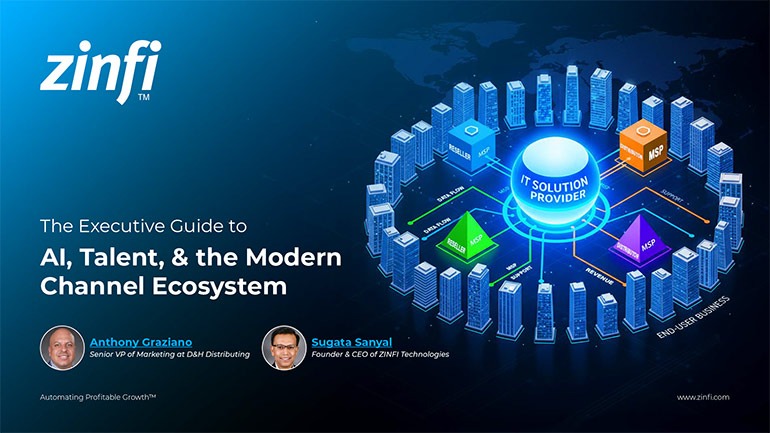 Modernizing Channel Marketing: AI and Ecosystem Enablement Best Practices
Download for FREE
 The Channel’s Shift to Partner-Led With AI Best Practices
Download for FREE
 Hyperscalers, ISVs, and AI: Shaping the Future of B2B Software Distribution
Download for FREE
 Definitive Guide to a Partner Ecosystem-First Sales Strategy
Download for FREE
 The Partner-Led Digital and AI Transformation Best Practices
Download for FREE
 Startup Talent Recruitment: Hiring Missionaries, Not Mercenaries
Download for FREE
 The Future of Partner Relationship Management with AI in Partnerships
Download for FREE
 Cybersecurity for the 99%: Strategies from the Frontline
Download for FREE
 Mastering Partner Relationships: A Strategic Approach to Business Growth
Download for FREE
 Mastering Partner Relationship Management: Keys to SaaS Channel Success
Download for FREE
 Navigating the AI Revolution: Guide for Partners in the Microsoft Ecosystem
Download for FREE
Mastering the Modern Buyers Journey: Sales Leader’s Guide to AI & EngagementDownload for FREE