New Channel Management Strategies for Collaborating with Partner Ecosystems
Effective channel management involves creating strategies to support complex partner ecosystems for mutual growth. It requires moving beyond traditional linear models to embrace dynamic, data-driven collaboration with all partner types.
Modern business landscapes are no longer defined by simple, one-to-one partner relationships. Instead, they thrive on intricate networks of diverse collaborators, forming a partner ecosystem.
This evolution demands a complete overhaul of traditional approaches to sales and marketing. Companies must adopt new strategies that foster true collaboration and drive collective success.
Effective oversight is essential for navigating this new terrain with confidence and clarity. It ensures all partners are aligned, enabled, and motivated to achieve shared objectives.
The transition from a channel to an ecosystem is a significant but necessary shift. This guide explores the new strategies that make successful collaboration possible in today's market.
Key Takeaways
TL;DR
- Modern channel management must adapt to complex, non-linear partner ecosystems.
- Data-driven decisions are critical for understanding partner performance and optimizing programs.
- Automation streamlines administrative tasks, freeing up more time for strategic relationship building.
- Personalization of the partner journey enhances engagement and boosts loyalty across the network.
- A unified platform is essential for managing an entire partner ecosystem from a single interface.
- New strategies like co-selling and co-marketing are vital for collaborative growth.
- Successful programs focus on enabling all partner types, not just traditional resellers.
How Has Channel Management Evolved with Partner Ecosystems?
The concept of a sales channel has fundamentally changed in the last decade. It has expanded from a linear chain of command to a dynamic, interconnected web.
This new structure is a partner ecosystem, featuring a wide variety of contributors. These partners include traditional resellers, referral partners, influencers, consultants, and technology partners.
This evolution requires a more sophisticated approach to channel management. The old methods, designed for simple reseller relationships, are no longer sufficient for success.
Companies must now manage relationships with both transacting and non-transacting partners. Both types contribute significant value to the overall growth of the business.
For example, an industry influencer might not sell products directly for your company. However, their endorsement can drive significant brand awareness and generate valuable leads.
Similarly, a technology partner may integrate their solution with yours. This integration creates a more compelling offering for customers and opens up new markets.
This ecosystem-based model recognizes that value comes from many different sources. An effective strategy must accommodate and nurture all of these unique contributions.
This shift makes partner relationship management more complex than ever before. You need tools and processes that can handle this diversity and scale accordingly.
The focus has moved from simple transaction management to holistic relationship orchestration. Success depends on building strong, collaborative bonds with every member of the ecosystem.
You need to provide different levels of support and resources based on partner type. A one-size-fits-all partner program will fail to engage a diverse ecosystem effectively.
Effective channel management now means understanding each partner's unique business model. It also means aligning your program with their specific goals and capabilities.
This partner-centric mindset is the cornerstone of modern ecosystem collaboration. It treats partners as true extensions of your own team rather than just sales outlets.
A great way to manage this complexity is through a dedicated partner management platform. Such a tool helps you segment and engage partners based on their roles.
It allows for the creation of tailored programs and incentives for different groups. This ensures that every partner feels valued and is motivated to contribute their best.
What Role Does Data Play in Modern Channel Management?
Data has become the most valuable currency in modern business and partnerships. It provides the insights needed to make informed decisions and optimize performance.
In the context of channel management, data is essential for understanding your ecosystem. It helps you identify what is working and where improvements are needed.
Without solid data, you are essentially flying blind in a very complex environment. You are forced to rely on assumptions and guesswork, which can be very costly.
A data-centric approach allows you to move from reactive problem-solving to proactive strategy. You can anticipate trends and address potential issues before they escalate into major problems.

Key performance indicators (KPIs) are at the heart of any data-driven strategy. They provide measurable benchmarks to track progress against your business goals.
For partner ecosystems, KPIs might include lead conversion rates and joint marketing campaign engagement. They may also include partner satisfaction scores and training completion rates.
Tracking these metrics reveals which partners are high performers and which may need more support. This information is crucial for allocating resources effectively and efficiently.
This is where tools for analyzing partner performance become incredibly valuable. These tools help you see trends and patterns in the data more clearly.
Performance analytics dashboards can consolidate data from multiple sources into a single view. This provides a holistic picture of your ecosystem's health and productivity.
You can see which marketing assets are most effective or which training modules lead to higher sales. This level of insight allows for continuous program improvement and optimization over time.
Furthermore, predictive analytics can take your strategy to the next level. It uses historical data and algorithms to forecast future outcomes with high accuracy.
This can help you identify partners with high growth potential. It can also help you predict which deals are most likely to close successfully.
A centralized data source is fundamental for achieving this level of insight. Siloed data stored in disparate systems makes comprehensive analysis nearly impossible to achieve.
A unified platform with strong business intelligence and reports capabilities is the solution. It ensures all partner-related data is accessible from one central location.
This unified view empowers managers to make faster, more accurate decisions. It fosters a culture of transparency and accountability throughout the entire partner ecosystem.
Ultimately, a robust data strategy transforms channel management from an art into a science. It provides the objective insights needed to build a thriving and productive partner network.
Which New Strategies Improve Channel Management Collaboration?
To succeed in a partner ecosystem, companies must adopt collaborative strategies. These strategies move beyond simply managing partners to actively working with them.
Co-selling and co-marketing are two of the most powerful collaborative approaches today. They involve joining forces with partners to pursue shared market opportunities.
Co-selling occurs when your direct sales team works alongside a partner's sales team. Together, they engage a customer to close a deal that benefits both organizations.
This approach requires clear rules of engagement to avoid channel conflict. A deal registration management system is essential for managing this process fairly.
Effective co-selling also requires seamless communication and information sharing between teams. A platform that supports partner co-selling management can facilitate this collaboration effectively.
It provides a shared space for teams to track progress on joint opportunities. It also allows them to share customer insights and coordinate their sales activities.
Co-marketing involves pooling resources with partners to launch joint marketing campaigns. This can dramatically increase reach and generate more high-quality leads for everyone.
Examples of co-marketing activities include joint webinars, co-branded eBooks, or shared event booths. These efforts amplify the marketing message of both companies involved.
To facilitate these activities, you need a robust content management system. A system for co-branded assets management lets partners easily customize marketing materials.
This ensures brand consistency while empowering partners to tailor campaigns for their local markets. Tools for email marketing management can then help distribute these assets at scale.
Another key strategy is the personalization of the partner journey itself. Just as you personalize the customer journey, you should also personalize the partner experience.
This begins with the onboarding process, which should be tailored to the partner's type. It should also be tailored to their level of experience with your products and programs.
A flexible learning management system can deliver personalized training paths. This ensures partners get the specific knowledge they need without being overwhelmed.
Personalization should extend to all aspects of the partner relationship. This includes communication, incentive programs, and the level of support provided.
By tailoring the experience, you show partners that you understand and value their business. This deepens their engagement and fosters a stronger, more loyal partnership over time.
These new collaborative strategies are a core part of modern channel management. They transform the vendor-partner relationship from a transactional one to a true partnership.
Traditional vs. AI-Powered Channel Management
| Feature | Traditional Approach | AI-Powered Approach |
|---|---|---|
| Partner Onboarding | Manual, one-size-fits-all process. | Automated, personalized onboarding paths. |
| Lead Distribution | Manual assignment based on territory. | Automated, rules-based lead routing. |
| Performance Tracking | Manual reports using spreadsheets. | Real-time dashboards with performance analytics. |
| Partner Tiering | Based on historical revenue only. | Dynamic, based on multiple KPIs and potential. |
| Content Delivery | Static content library. | Personalized content recommendations. |
| Issue Resolution | Reactive support via email and phone. | Proactive support with AI-powered chatbots. |
| Forecasting | Based on manager intuition and past sales. | Uses predictive analytics for accuracy. |
How Can Automation Streamline Key Channel Management Processes?
Automation is a game-changer for modern channel management. It eliminates repetitive, manual tasks, freeing up your team for more strategic work.
Many core processes in a partner program are ripe for automation. These include partner onboarding, lead distribution, and managing marketing funds.
Consider the partner onboarding process, which can be very time-consuming. It often involves sending contracts, providing access to portals, and assigning initial training.
Automating this workflow ensures a consistent and efficient experience for every new partner. It reduces administrative errors and gets partners up to speed much faster.
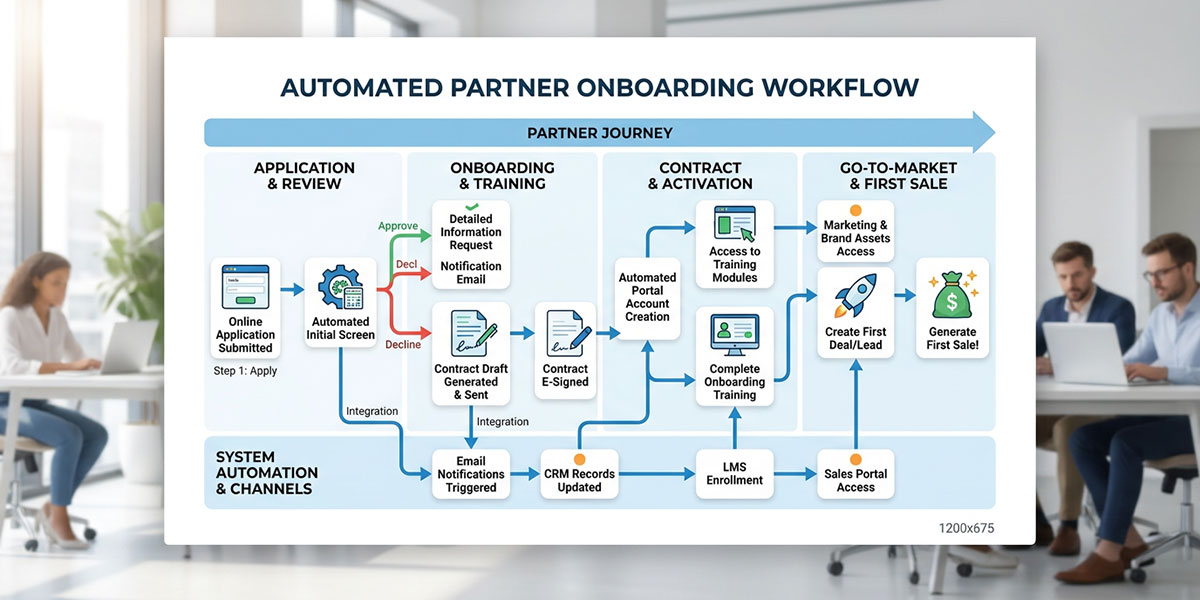
A sophisticated workflow management tool can orchestrate these complex multi-step processes. It triggers actions based on predefined rules, ensuring nothing falls through the cracks.
For instance, once a partner signs a contract, the system can automatically grant portal access. It can also enroll them in the appropriate introductory training courses.
Lead distribution is another area where automation provides immense value. Manually assigning leads is slow and can often lead to accusations of favoritism.
An automated lead distribution system routes opportunities to the right partner instantly. This is based on factors like geography, expertise, partner tier, or certification level.
This ensures that leads are handled quickly by the most qualified partner. This speed can significantly increase the chances of closing a deal successfully.
A system for referral management can automate the entire lifecycle of a referred lead. It tracks it from submission all the way through to the final payout.
Managing financial incentives like Market Development Funds (MDF) is also very complex. The process of submitting proposals, gaining approvals, and claiming funds can be burdensome.
Automating this process with a dedicated MDF management solution brings transparency and efficiency. Partners can easily submit requests and track their status in real-time.
This reduces the administrative overhead for both you and your partners. It makes it easier for them to use the funds you provide to grow their business.
Similar benefits apply to automating rebates and commissions. A clear, automated system for partner commissions management builds trust and reduces payment disputes.
By automating these core functions, your team can shift its focus. They can move away from administrative tasks toward high-value activities like relationship building.
They have more time to spend on strategic planning with top partners. They can also dedicate more effort to coaching and enabling partners who need more help.
This improved efficiency is a critical component of successful ecosystem collaboration. Automation is no longer a luxury, but a necessity for effective channel management.
Why Is a Unified Platform Crucial for Effective Channel Management?
Managing a diverse partner ecosystem requires a powerful, centralized technology stack. Using a collection of disconnected tools creates data silos and process inefficiencies.
A unified platform solves this problem by bringing all partner-related functions together. It provides a single source of truth for your entire partner program.
This integration connects Partner Relationship Management (PRM) with other critical systems. These systems include Partner Marketing Management (PMM) and Partner Sales Management (PSM).
This holistic approach ensures a seamless experience for both partners and internal teams. Everyone is working from the same data and using the same set of tools.

A unified approach to channel management allows for a 360-degree view of each partner. You can see their sales performance, marketing activities, and training status in one place.
This comprehensive view is impossible when data is scattered across multiple systems. A unified platform eliminates the need to manually piece together information from spreadsheets.
This single pane of glass view is a major strategic advantage. It empowers your team to have more meaningful conversations with partners about their business.
Consider the process of developing a partner business plan. A unified system allows you to create a plan based on real performance data.
You can use a partner business planning module to set goals. You can then track progress against those goals using live data from the platform.
This unified structure also greatly improves the partner experience. Partners no longer need to log in to multiple portals to access different tools.
They can access training materials from the content library, register a deal, and launch a marketing campaign from one interface. This convenience increases portal adoption and partner engagement significantly.
A unified platform also streamlines administration and reduces total cost of ownership. You only have to manage one system instead of integrating and maintaining several.
According to research from leading analysts, technology integration is a major challenge for channel leaders. A Gartner market guide highlights the importance of integrated platforms for managing partner ecosystems.
This consolidation simplifies user management and access management. It ensures that partners only see the information and tools relevant to them.
Ultimately, a unified approach to channel management is about creating alignment. It aligns your people, processes, and technology to support your partner ecosystem effectively.
This alignment drives greater efficiency, deeper collaboration, and better business outcomes. It is the foundation upon which a successful modern partner program is built.
How ZINFI's Unified Partner Management Can Help
ZINFI provides a comprehensive suite of tools built on a unified platform. It is designed to help organizations master modern channel management and collaboration.
With ZINFI, you can move beyond disconnected point solutions to a fully integrated approach. Our platform combines Partner Relationship Management, Partner Marketing Management, and Partner Sales Management.
- End-to-End Automation: Streamline everything from partner onboarding to incentive payouts. ZINFI's workflow management tools reduce manual effort and improve efficiency across the board.
- Deep Performance Insights: Leverage powerful dashboards and reporting tools for a complete view of your ecosystem. Make data-driven decisions using real-time performance analytics to optimize your programs.
- Seamless Partner Enablement: Provide partners with the training and content they need to succeed. Our learning management and content syndication tools ensure your partners are always prepared.
- Collaborative Sales and Marketing: Foster true partnership with tools for co-selling and co-marketing. Manage joint campaigns and shared opportunities with ease to drive mutual growth.
- Personalized Partner Experience: Tailor every aspect of the partner journey, from portal access to communication. Use our platform to create unique experiences for different partner types and tiers.
- Scalable and Flexible Platform: Start with the modules you need today and add more as your program evolves. Our platform is built to scale with your business and adapt to your changing needs.
ZINFI empowers you to embrace the complexities of the modern partner ecosystem. Our unified solution provides the control, visibility, and flexibility needed to thrive.
Frequently Asked Questions
What is the main goal of modern channel management?
The main goal is to build and orchestrate a diverse partner ecosystem for mutual growth. It focuses on collaboration and value creation beyond simple sales transactions.
How is a partner ecosystem different from a traditional channel?
A traditional channel is linear, usually involving resellers and distributors in a chain. An ecosystem is a complex web of diverse partners, including non-transacting influencers and alliances.
Why is a unified platform so important for partner success?
A unified platform provides a single source of truth for the entire program. It eliminates data silos, improves efficiency, and offers a seamless experience for partners.
What are some examples of automation in channel management?
Common examples include automated partner onboarding and lead distribution. Other examples include automated approval workflows for MDF and automated commission payments.
What is co-selling with a partner?
Co-selling is a collaborative sales process where a vendor's direct sales team works with a partner's team. They jointly pursue and close a deal with a customer.
How does data analytics improve channel management?
Data analytics provides insights into partner performance and program effectiveness. It enables data-driven decision-making, helping to optimize resource allocation and overall strategy.
What is partner journey personalization?
It involves tailoring the partner experience based on their type, tier, and needs. This includes personalized onboarding, training paths, content, and communications to improve engagement.
How can I manage channel conflict in a partner ecosystem?
Clear rules of engagement and a robust deal registration system are essential. These tools ensure transparency and fairness when multiple partners are involved in an opportunity.
What is the role of a PRM system?
A Partner Relationship Management (PRM) system is the core platform for managing the partner lifecycle. It handles recruitment, onboarding, business planning, and day-to-day partner communications and support.
Why should I enable non-transacting partners?
Non-transacting partners like influencers or consultants can generate valuable leads and build brand awareness. Enabling them expands your market reach and adds value to your ecosystem.
About the author
Sugata Sanyal
Sugata Sanyal is the Founder & CEO of ZINFI Technologies, a leader in Unified Partner Management. He has been a passionate advocate for the channel and channel partners for decades. His vision for ZINFI is to provide partner ecosystems with the tools they need to succeed.